


- Chinese
- French
- German
- Portuguese
- Spanish
- Russian
- Japanese
- Korean
- Arabic
- Irish
- Greek
- Turkish
- Italian
- Danish
- Romanian
- Indonesian
- Czech
- Afrikaans
- Swedish
- Polish
- Basque
- Catalan
- Esperanto
- Hindi
- Lao
- Albanian
- Amharic
- Armenian
- Azerbaijani
- Belarusian
- Bengali
- Bosnian
- Bulgarian
- Cebuano
- Chichewa
- Corsican
- Croatian
- Dutch
- Estonian
- Filipino
- Finnish
- Frisian
- Galician
- Georgian
- Gujarati
- Haitian
- Hausa
- Hawaiian
- Hebrew
- Hmong
- Hungarian
- Icelandic
- Igbo
- Javanese
- Kannada
- Kazakh
- Khmer
- Kurdish
- Kyrgyz
- Latin
- Latvian
- Lithuanian
- Luxembou..
- Macedonian
- Malagasy
- Malay
- Malayalam
- Maltese
- Maori
- Marathi
- Mongolian
- Burmese
- Nepali
- Norwegian
- Pashto
- Persian
- Punjabi
- Serbian
- Sesotho
- Sinhala
- Slovak
- Slovenian
- Somali
- Samoan
- Scots Gaelic
- Shona
- Sindhi
- Sundanese
- Swahili
- Tajik
- Tamil
- Telugu
- Thai
- Ukrainian
- Urdu
- Uzbek
- Vietnamese
- Welsh
- Xhosa
- Yiddish
- Yoruba
- Zulu
- Kinyarwanda
- Tatar
- Oriya
- Turkmen
- Uyghur

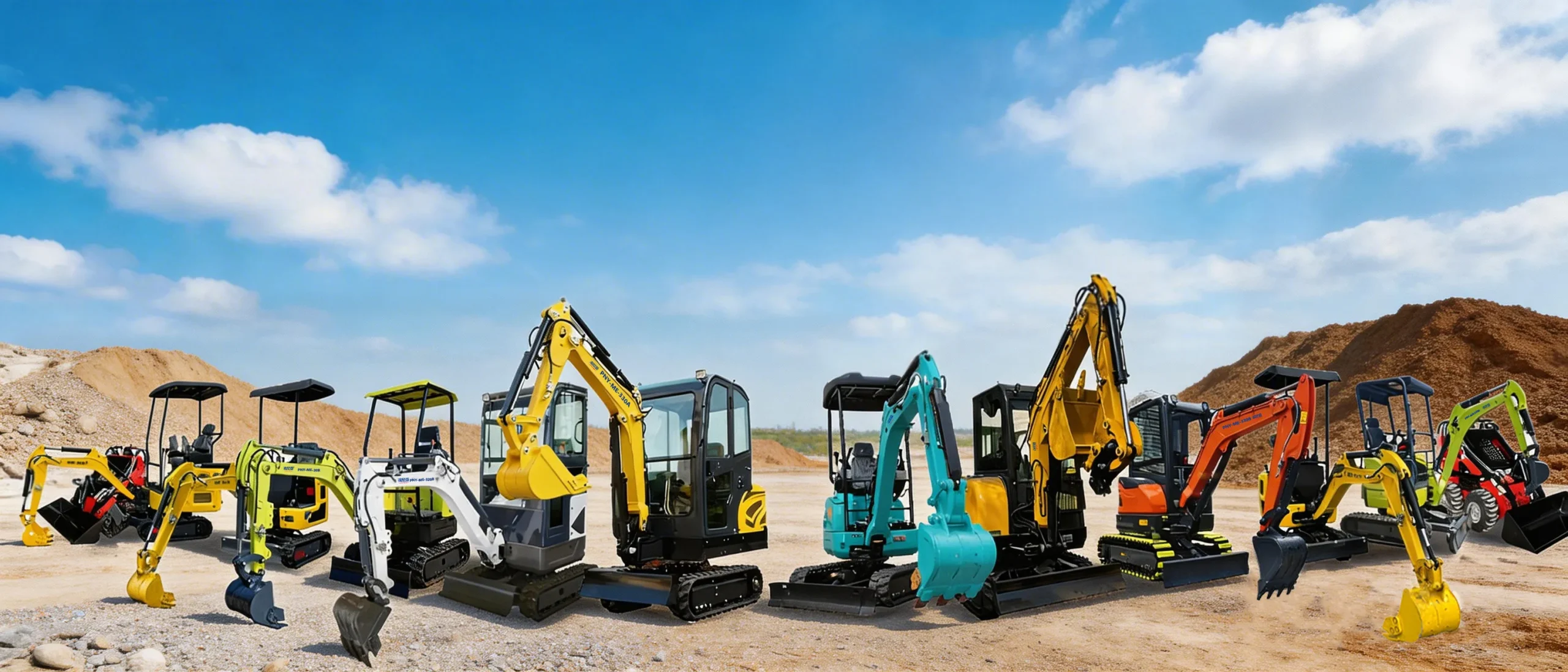
ODM excavator
When most people hear 'ODM excavator', they think it's just about slapping a different brand name on a generic machine. That's the biggest misconception. The reality is more nuanced—it's about deep, collaborative engineering where the ODM partner's expertise fundamentally shapes the product. It's not a white-label commodity; it's a co-developed asset. I've seen too many buyers get burned thinking they're just buying a cheaper 'CAT or Komatsu look-alike'. The value—and the risk—lies in the details of that partnership.
The Core of Real ODM: It's a Process, Not a Product
True ODM work isn't about having a catalog of ready-to-stamp machines. It starts with a blank sheet of paper, or more often, a client's rough performance spec sheet. They come with a market need: We need a 20-tonner that can handle extreme cold, with a focus on quick attachment changes for municipal work in Scandinavia. The job is then to translate that into a viable machine. This is where many first-timers stumble. They focus on the final price per unit but underestimate the NRE (Non-Recurring Engineering) costs and timeline for prototyping and validation. I recall a European client who wanted a compact excavator with an entirely novel control layout. The initial quote for the engineering hours made them balk, but trying to shortcut it by modifying an existing design led to ergonomic failures in the first prototype. We had to go back to square one, which cost more time and money.
The manufacturing side is another layer. You're not just buying a factory's free capacity; you're buying its engineering discipline. For instance, at a facility like Shandong Pioneer Engineering Machinery Co., Ltd, which has been operating since 2004, the two-decade shift from basic manufacturing to integrated development is key. Their recent relocation and expansion in 2023 to a new site in Tai’an isn't just about more space—it signals an investment in more sophisticated production lines and likely, R&D facilities. This is critical for ODM. When a partner has its own robust manufacturing arm (like their associated Shandong Hexin), it creates a tighter feedback loop between the design engineers on the ODM side and the factory floor. Problems get solved faster, and design-for-manufacturability is baked in earlier.
This process demands transparency. A good ODM partner will walk you through their supply chain for critical components—hydraulic pumps, valves, ECUs. The choice here defines the machine's lifespan. Will you use a mainstream brand like Kawasaki or Parker for hydraulics, or a cost-optimized domestic equivalent? Each decision tree has ramifications for performance, serviceability, and ultimately, the brand reputation you're trying to build. I've advised clients to never let the ODM partner make these core choices in a black box. You have to be involved.
Case in Point: The Pioneer Model of Integrated ODM
Looking at Shandong Pioneer's structure offers a practical blueprint. They operate with Shandong Hexin handling manufacturing and Pioneer focusing on overseas trade and, by extension, ODM collaboration. This isn't an uncommon setup in Shandong, but the effectiveness varies wildly. What makes a setup like this work for ODM is the seamlessness between the two entities. When the trade/ODM team in Pioneer is negotiating specs with a client from, say, Germany or Australia, they need direct, real-time access to the manufacturing engineering team at Hexin. Can that undercarriage design be welded as efficiently as modeled? Is the specified cylinder bore achievable with the available tooling?
Their website, https://www.sdpioneer.com, showcases the outcome—machines in varied markets. But the behind-the-scenes reality is the constant negotiation between the ideal (the client's dream spec) and the achievable (within cost, timeline, and technical constraints). A successful ODM project here means Pioneer's team has acted as a true interpreter and project manager, not just a sales agent. Their two-decade history suggests they've navigated these cycles before. The trust they mention from global clients isn't won by price alone; it's won by delivering a machine that doesn't become a liability in the field.
I remember a project for a North American client wanting a mid-size excavator for rental fleets. The key demand was extreme durability and simplified maintenance. The ODM excavator we developed started with a reinforced boom design, but the factory feedback was that our initial welding sequence would create too much thermal distortion. The solution came from a veteran floor manager who suggested a different jigging approach. That kind of practical, experience-based input is gold in ODM, and you only get it with a mature, integrated partner.
Pitfalls and How to Sidestep Them
Not all ODM journeys are smooth. The most common pitfall is the spec creep. The client, excited by the possibilities, keeps adding one more feature during development. This kills budgets and timelines. A professional ODM partner must be firm about change control processes from day one. Another is over-customization. Designing a unique main control valve for a low-volume model is a recipe for astronomical future service costs and parts nightmares. Sometimes, the right answer is to steer the client toward a smart, modular attachment system instead of re-engineering the machine's core.
Quality consistency is the silent killer. The first 50 units might be perfect, but will unit 501 have the same fit and finish? This is where the partner's production area and management systems matter. A 1,600-square-meter facility (as Pioneer started with) has limits. Their 2023 relocation likely addresses scale and modern quality control infrastructure. You need to ask about their QC process: Is there a full functional test for every machine, or just sampling? How are hydraulic leaks tested? What's the electrical diagnostic protocol? The answers separate true partners from assemblers.
Finally, intellectual property. A clear, watertight agreement defining who owns what design elements is non-negotiable. If you're co-funding the development of a new cooling system architecture, you need to own that IP. A reputable ODM partner will respect this and have a standard framework to build upon.
The Unspoken Details: What Really Matters in the Field
Brochure specs are one thing; mud, cold, and operator abuse are another. A good ODM excavator project thinks about these from the start. For example, we once had a client for the Canadian market. The spec called for a standard cold-start package. But through discussion, we learned their operators often left machines idling for hours in -30°C. We proposed an automatic engine idle shutdown timer and a higher-capacity alternator to handle continuous cab heating, changes not in the original spec but critical for real-world success. This is the value-add of experienced ODM.
Serviceability is another. Can the daily greasing points be reached without the operator contorting themselves? Is there a common tool size for all filter changes? We designed a side panel on one model that hinged fully open, giving mechanics unparalleled access to the pump bank. It added a small cost but became a major selling point for the client's service network. These details aren't glamorous, but they're what fleet managers remember.
It also comes down to communication. The ODM partner must have technical staff who can communicate clearly in your language, both linguistically and professionally. Misunderstandings over a torque specification or a software parameter can lead to field failures. The long-term export experience of a company like Pioneer, dealing with markets from the US to Australia, builds this essential competency.
Wrapping It Up: The ODM Mindset
So, what's the takeaway? Viewing an ODM excavator as a simple procurement exercise is a path to mediocrity or failure. It must be viewed as a technical partnership. It requires the client to be engaged, knowledgeable about their own market needs, and ready to invest time in the development process. It requires the ODM partner to be transparent, technically competent, and possess deep, practical manufacturing integration.
Companies that have evolved from pure export to integrated ODM, like the ecosystem around Shandong Pioneer, represent a capable segment of the industry. Their longevity and reported client trust are testaments to navigating this complex process. But due diligence is always key—audit the facility, meet the engineering team, and dissect a past ODM project from blueprint to delivery.
In the end, a successful ODM excavator doesn't just carry your badge. It carries the DNA of a collaborative, problem-solving partnership between your vision and their execution. That's the real product you're buying.
Related Products
Related Products