- Chinese
- French
- German
- Portuguese
- Spanish
- Russian
- Japanese
- Korean
- Arabic
- Irish
- Greek
- Turkish
- Italian
- Danish
- Romanian
- Indonesian
- Czech
- Afrikaans
- Swedish
- Polish
- Basque
- Catalan
- Esperanto
- Hindi
- Lao
- Albanian
- Amharic
- Armenian
- Azerbaijani
- Belarusian
- Bengali
- Bosnian
- Bulgarian
- Cebuano
- Chichewa
- Corsican
- Croatian
- Dutch
- Estonian
- Filipino
- Finnish
- Frisian
- Galician
- Georgian
- Gujarati
- Haitian
- Hausa
- Hawaiian
- Hebrew
- Hmong
- Hungarian
- Icelandic
- Igbo
- Javanese
- Kannada
- Kazakh
- Khmer
- Kurdish
- Kyrgyz
- Latin
- Latvian
- Lithuanian
- Luxembou..
- Macedonian
- Malagasy
- Malay
- Malayalam
- Maltese
- Maori
- Marathi
- Mongolian
- Burmese
- Nepali
- Norwegian
- Pashto
- Persian
- Punjabi
- Serbian
- Sesotho
- Sinhala
- Slovak
- Slovenian
- Somali
- Samoan
- Scots Gaelic
- Shona
- Sindhi
- Sundanese
- Swahili
- Tajik
- Tamil
- Telugu
- Thai
- Ukrainian
- Urdu
- Uzbek
- Vietnamese
- Welsh
- Xhosa
- Yiddish
- Yoruba
- Zulu
- Kinyarwanda
- Tatar
- Oriya
- Turkmen
- Uyghur


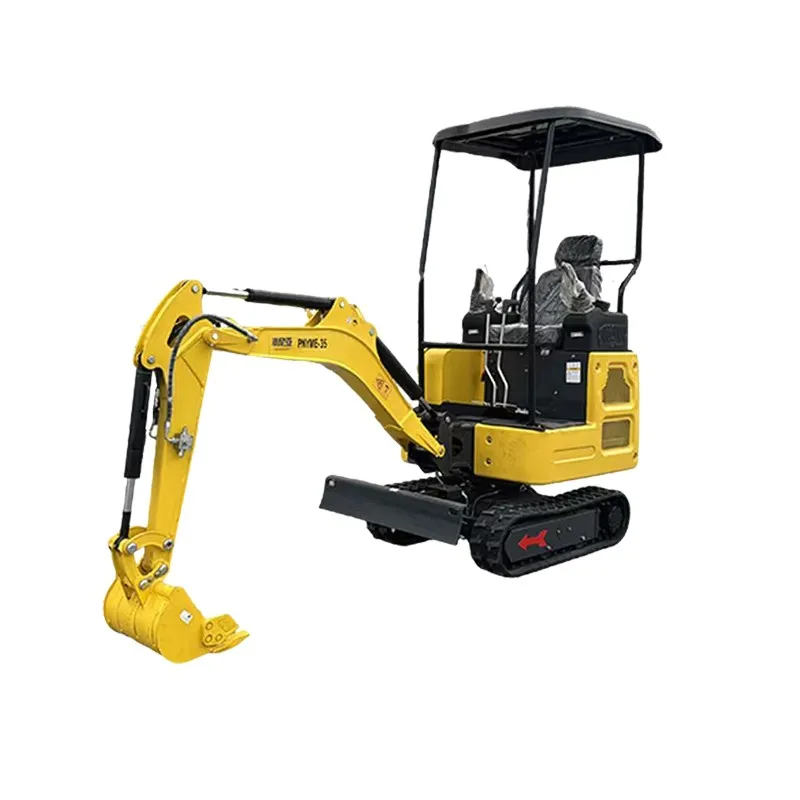
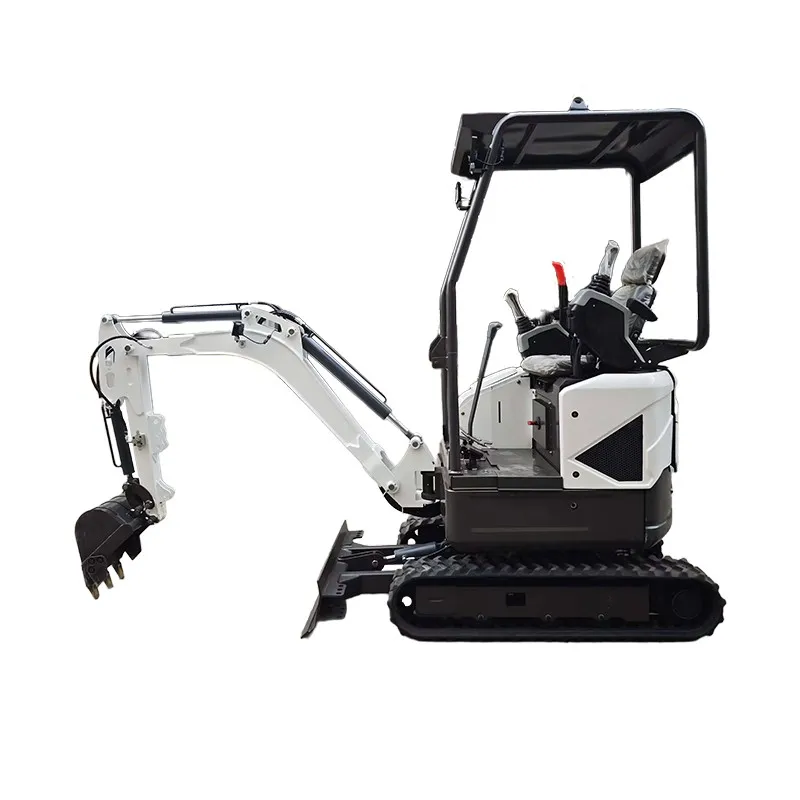
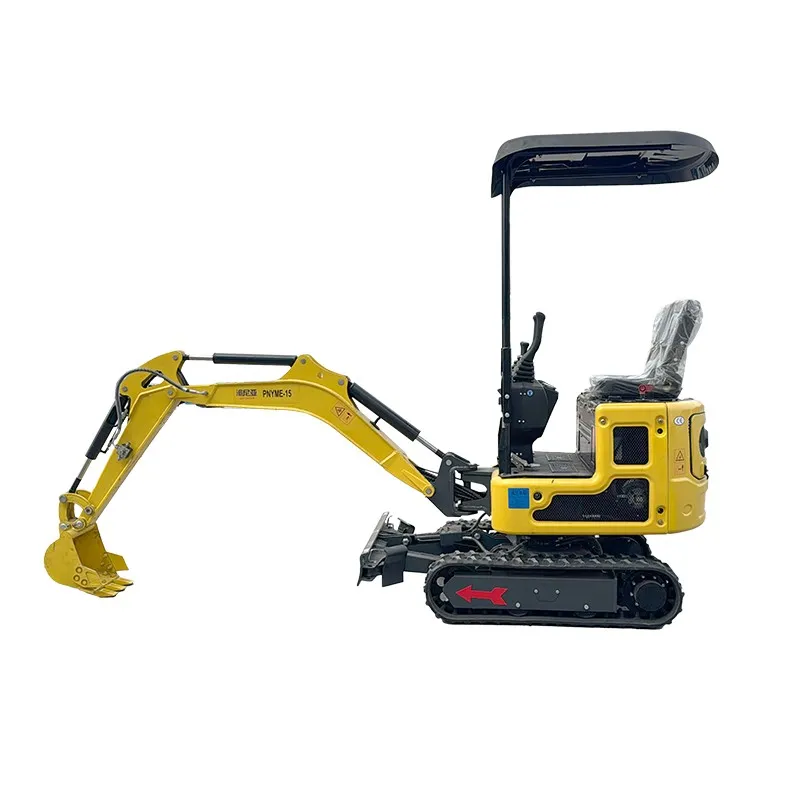
ODM mini excavator
When you hear 'ODM mini excavator', what comes to mind? For many, it's just a cheaper, unbranded machine. That's the biggest misconception. The reality is more nuanced. It's not just about slapping a buyer's logo on a generic chassis. It's a complex dance of engineering compromise, supply chain logistics, and, frankly, understanding what the end-user actually does with the machine. I've seen projects fail because the buyer only focused on the unit price, ignoring the total cost of ownership that a poorly specified ODM machine can bring.
The Core of a True ODM Partnership
An authentic ODM relationship isn't transactional; it's collaborative. It starts with a blank sheet of paper, or more often, a heavily marked-up CAD drawing. The client might want a specific hydraulic pump from Kawasaki, but the lead time is 16 weeks. The ODM partner's job is to propose a viable alternative—a pump from Parker or Eaton that meets the performance envelope but keeps the production line moving. This is where experience matters. A good ODM manufacturer doesn't just say yes to everything; they push back, they advise. I remember working with a European client who insisted on a particular brand of joystick controllers for their ODM mini excavator line. The cost was astronomical. We spent weeks testing three different alternatives, providing side-by-side performance data, until we found one that matched 95% of the performance at 60% of the cost. They agreed. That's value.
The factory's capability is everything. You can't just walk into any plant and expect a tailored machine. The facility needs the flexibility for short runs, custom paint booths, and engineering staff that can interpret often-vague international requests. I've visited places that claim to do ODM, but their customization stops at changing the color. Then you see a place like the new facility for Shandong Pioneer Engineering Machinery Co., Ltd. Relocating and expanding after 20 years, as they did in 2023 to Ningyang County, isn't just about more space—it's a statement of intent for higher-volume, more complex ODM projects. That 1,600 square meters of production area needs to be smartly organized for agility.
It's in the details. The plumbing of the hydraulic lines, the routing of the wiring harness, the placement of the grease points—these are what separate a job site-ready machine from a headache. An experienced ODM partner thinks about the mechanic who will service it in Germany or the operator in Canada facing -20°C mornings. Will the battery be accessible? Are the track tensioners easy to adjust with standard tools? We once had a prototype where the auxiliary hydraulic quick coupler was placed right where the operator's heel would naturally rest. A total oversight in the CAD model, caught only because someone sat in the cab and pretended to work. That's the kind of practical scrutiny that defines good ODM.
Pitfalls and the Copy-Paste Temptation
The most common failure in ODM projects is the copy-paste specification. A buyer brings a bill of materials from a major brand and says, build this. It never works perfectly. Different hydraulic component interfaces, slight variations in steel grades affecting weld integrity, cumulative tolerances that throw off the entire geometry. I've seen machines where the boom couldn't reach full extension because the cylinder stroke was a few millimeters off, a direct result of not re-engineering the system as a whole. The ODM process must be iterative, with validation at each stage.
Another pitfall is underestimating certification and compliance. It's not just CE or EPA Tier 4. It's country-specific regulations on sound levels, safety markings, and operator manual formats. A partner like Shandong Pioneer, which exports to markets like the U.S., Canada, Germany, and Australia, has to navigate this maze constantly. Their trade arm, handling overseas logistics, must be deeply integrated with the manufacturing side. A machine can be perfectly built but sit in a warehouse for months because the documentation wasn't aligned with a customs requirement. Trust from global customers isn't just about the product; it's about delivering a compliant, turnkey solution.
Cost engineering is where many get burned. The drive to hit a target price point can lead to questionable substitutions. A lower-grade hose might save $15 per unit but fails at 900 hours instead of the expected 2,000. The reputational damage to the buyer's brand is immense. A reliable ODM manufacturer will be transparent about the cost-performance trade-off. They might say, We can use this cheaper valve block, but the response time will be slower, and the reliability data is limited. The decision then rests with the buyer, fully informed. That's professional integrity.
The Reality of Performance Validation
Bench specs on paper are one thing; a muddy trench on a Tuesday morning is another. Any serious ODM partner must have a rigorous testing protocol. It's not just a 4-hour run on a concrete pad. It's cyclic load testing on the boom and arm, pressure spike tests on the hydraulic system, and thermal testing in an environmental chamber. We implement a first article inspection process for every new ODM configuration. The first machine off the line is torn down almost completely—bearings are measured, welds are inspected, hydraulic fluid is sampled for contamination.
Field testing is non-negotiable. We've sent prototypes to contracted operators on real job sites—landscaping, utility work, interior demolition. Their feedback is brutal and invaluable. The step is too high when the dozer blade is up. There's no good place to put my coffee cup. The automatic idle function is too aggressive. This is the gold. Incorporating this feedback before full production is what builds a machine that feels considered, not just assembled. For a company exporting worldwide, this feedback loop must be global. Conditions in Australia test cooling systems; operations in Canada test cold-start reliability.
The goal is predictability. When that mini excavator leaves the port in Tianjin, the buyer should have a high degree of certainty about its performance envelope, its service intervals, and its weak points. This comes from data. A mature ODM partner tracks failure modes across hundreds of machines in the field. They know if a certain swing motor seal tends to weep after 1,500 hours, and they can proactively upgrade the specification or adjust the maintenance guide. This lifecycle perspective transforms the relationship from a supplier to a technical partner.
Logistics and the Hidden Challenges
Getting the machine built is only half the battle. The logistics chain for an ODM mini excavator is fraught with hidden costs. Crating is an art form. A poorly designed crate can lead to damage in transit, or worse, make it impossible to unload with standard equipment at the destination port. We learned this the hard way early on with a shipment to the U.S. Gulf Coast. The crates were too tall for the container, requiring special flat-rack shipping, which doubled the freight cost. Now, crate design is part of our initial engineering review.
Parts support is the ultimate test. An ODM agreement must clearly define the parts supply strategy. Will the manufacturer hold a consignment stock of wear parts (filters, seals, tracks) in a European warehouse? Who manages the parts database and cross-references? I advocate for a collaborative portal where dealers can check part numbers, diagrams, and stock levels directly. Shandong Pioneer's structure, with a dedicated manufacturing entity (Hexin) and a trade entity (Pioneer), suggests they've institutionalized this separation of production and supply chain management, which is crucial for efficient after-sales support.
Finally, there's the intellectual property dance. A good ODM partner respects design confidentiality but also needs to protect their own engineering investments. The contract must be clear: the custom boom geometry is the buyer's IP, but the improved hydraulic circuit designed to power it efficiently might be the manufacturer's. This allows the manufacturer to reuse that circuit solution for other clients, driving down development costs for everyone. It's a balance, but one that fosters long-term innovation.
Looking Forward: The Evolving ODM Landscape
The future of ODM isn't just about building a cheaper version of today's machine. It's about integrating new technologies on a flexible platform. We're getting more requests for electric drive options, remote diagnostics telematics, and even semi-autonomous functions like grade control. The ODM manufacturers who will thrive are those with the R&D bandwidth to prototype these systems and integrate them cleanly, not as afterthoughts. It requires a different kind of engineering talent and closer collaboration with component tech leaders.
Furthermore, sustainability is moving from a buzzword to a specification. It's not just about emissions. It's about designing for disassembly, using more recyclable materials, and extending rebuild cycles. An ODM partner needs to have a voice in material selection and processes to meet these evolving demands. The relocation and expansion of a factory, as undertaken by Shandong Pioneer, often coincides with adopting more modern, efficient, and cleaner production technologies, which becomes a selling point in itself for environmentally conscious buyers.
In the end, a successful ODM mini excavator program leaves everyone feeling like they got a fair deal. The buyer gets a machine that carries their brand with pride, performs reliably, and generates profit. The manufacturer gets a stable, long-term order and deepens their engineering expertise. It's the opposite of a spot purchase. It's a partnership built on a mutual understanding of dirt, steel, hydraulics, and the real world of construction. And that's something you can't just badge-engineer.
Related Products
Related Products