- Chinese
- French
- German
- Portuguese
- Spanish
- Russian
- Japanese
- Korean
- Arabic
- Irish
- Greek
- Turkish
- Italian
- Danish
- Romanian
- Indonesian
- Czech
- Afrikaans
- Swedish
- Polish
- Basque
- Catalan
- Esperanto
- Hindi
- Lao
- Albanian
- Amharic
- Armenian
- Azerbaijani
- Belarusian
- Bengali
- Bosnian
- Bulgarian
- Cebuano
- Chichewa
- Corsican
- Croatian
- Dutch
- Estonian
- Filipino
- Finnish
- Frisian
- Galician
- Georgian
- Gujarati
- Haitian
- Hausa
- Hawaiian
- Hebrew
- Hmong
- Hungarian
- Icelandic
- Igbo
- Javanese
- Kannada
- Kazakh
- Khmer
- Kurdish
- Kyrgyz
- Latin
- Latvian
- Lithuanian
- Luxembou..
- Macedonian
- Malagasy
- Malay
- Malayalam
- Maltese
- Maori
- Marathi
- Mongolian
- Burmese
- Nepali
- Norwegian
- Pashto
- Persian
- Punjabi
- Serbian
- Sesotho
- Sinhala
- Slovak
- Slovenian
- Somali
- Samoan
- Scots Gaelic
- Shona
- Sindhi
- Sundanese
- Swahili
- Tajik
- Tamil
- Telugu
- Thai
- Ukrainian
- Urdu
- Uzbek
- Vietnamese
- Welsh
- Xhosa
- Yiddish
- Yoruba
- Zulu
- Kinyarwanda
- Tatar
- Oriya
- Turkmen
- Uyghur


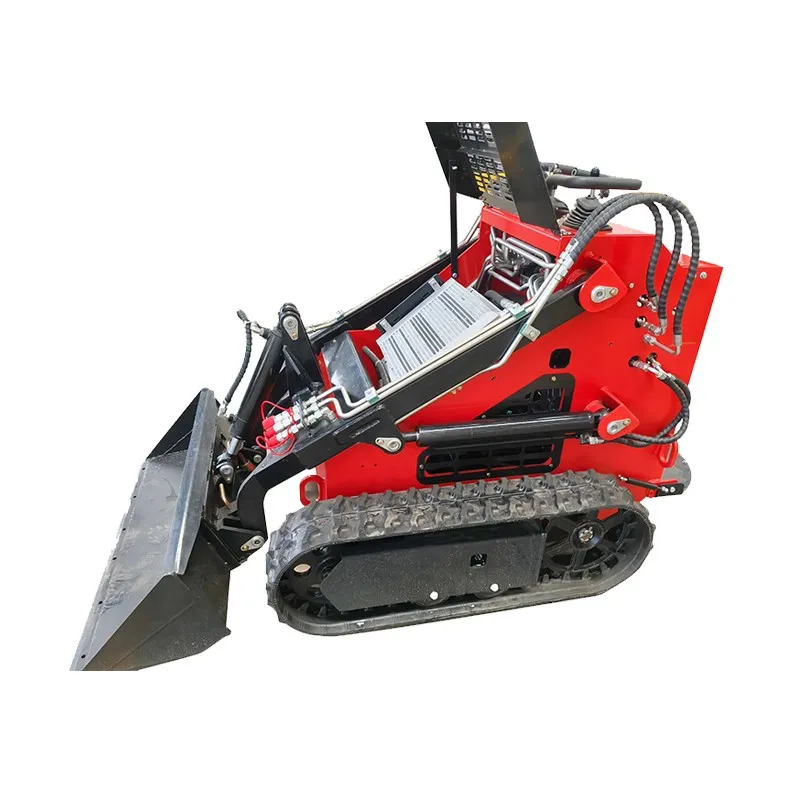
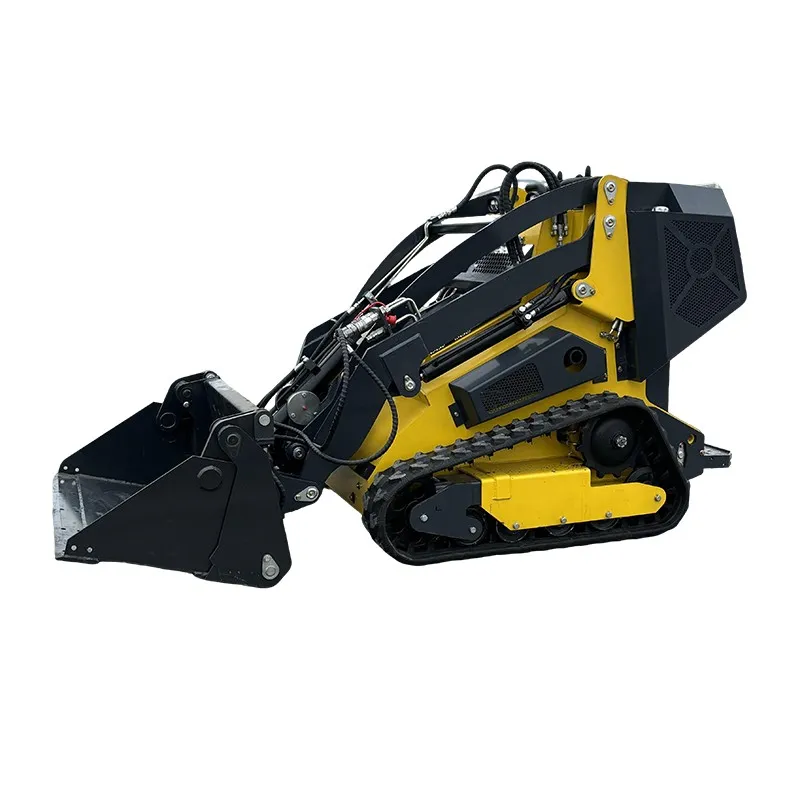
OEM Compact Track Loader
Let’s be real—when most people hear ‘OEM Compact Track Loader,’ they think of a generic, white-label machine, maybe a step down from the big brands. That’s the first misconception. The reality is more nuanced. An OEM CTL isn’t just about slapping a different logo on a standard chassis. It’s a whole ecosystem of engineering compromise, supply chain logistics, and, crucially, understanding what the end-user actually needs versus what the glossy brochure sells. I’ve seen projects where the choice of the OEM Compact Track Loader platform made or broke the job’s profitability, and it rarely came down to horsepower alone.
The Core of the Matter: What You're Really Buying
When a company decides to source an OEM machine, they're buying a platform. The base machine—the undercarriage, the mainframe, the hydraulics—comes from a manufacturer like Shandong Pioneer. Their new facility in Ningyang, which they moved to in 2023, is built for this kind of contract manufacturing. But here’s the thing: the quality delta between OEMs can be massive. Some focus on hitting a rock-bottom price point, which shows in the component choices. Others, and Pioneer’s long history exporting to markets like the U.S. and Germany suggests they fall here, build to a specification that can withstand rebranding as a ‘premium’ model by their partners.
The critical detail isn't the brand name on the side; it's the serviceability. I remember evaluating a unit where the hydraulic hose routing was a nightmare. To change one pump line, you practically had to disassemble the entire rear compartment. That’s an OEM design flaw, pure and simple. A good OEM Compact Track Loader partner designs with the mechanic in mind. Are common service points accessible? Are the electrical connectors sealed against dust and moisture? These are the questions that matter after the sales rep has left.
Another point often glossed over is the ‘option’ list. An OEM client isn’t just picking a color. They’re specifying the auxiliary hydraulic flow rate, the control pattern (ISO vs. SAE), the type of joysticks, and the lighting package. I’ve worked with a client who, to save $800 per unit, opted for a cheaper, non-regenerative hydraulic circuit. On paper, it met the spec. On a sloping job site moving heavy material, the machine was noticeably slower and burned more fuel. That’s the hidden cost of a spec sheet decision.
The Integration Trap and Real-World Testing
This is where many first-time buyers get burned. You get your shiny new OEM Compact Track Loader, bolt on a familiar attachment from a major brand, and expect it to perform. Sometimes it does. Often, it doesn’t. The issue is hydraulic flow and pressure compatibility, but more subtly, it’s the control system’s responsiveness. The OEM’s valve bank and the attachment’s demands need to be in sync.
We had a case with a mulching head on a 75-horsepower unit. The head was top-tier, the machine specs were perfect. Yet, performance was sluggish. The problem? The OEM’s hydraulic system had a slight lag in pressure buildup at the auxiliary couplers. It wasn't a defect, just a characteristic of their chosen component. The solution wasn't in the manual; it involved tweaking the attachment’s own relief valve settings—a fix that required deep knowledge of both systems. This is the kind of hands-on, cross-disciplinary knowledge that defines successful OEM implementations.
Durability testing is another area of quiet difference. A company like Shandong Pioneer, exporting to demanding markets like Australia and Canada, knows their machines will face extreme conditions. But as an integrator or end-user, you can’t just take their word for it. We developed a brutal, 50-hour ‘break-in’ test for new OEM models: alternating between high-flow, high-pressure attachment use (like a breaker) and fine, low-speed grading work. It’s designed to stress every joint, hose, and sensor. You’d be surprised how many ‘teething problems’—loose fittings, software glitches, sensor faults—this process reveals before the machine ever reaches a customer.
The Business Logic Behind the Badge
Why does the OEM Compact Track Loader market even exist? It’s not just about cost. For a regional rental house, having a fleet with their own branding creates customer loyalty and a unique market position. For a large contractor, it can mean getting a machine spec’d exactly for their primary task—say, land clearing with extra guarding and a specific cooling package—without paying for the R&D overhead of a major brand.
I’ve seen the business model from the other side too. A visit to a manufacturer’s facility, like the one Pioneer runs, is enlightening. It’s not a chaotic workshop; it’s a structured production line for flexibility. One station might be building a standard unit for stock, while the next is assembling a batch for a European client who requires CE-certified components and a completely different operator interface. Their ability to manage this complexity, backed by two decades of accumulation as noted in their company timeline, is what separates a parts assembler from a true engineering partner.
The risk, of course, is parts and support. The most beautifully spec’d machine is a paperweight if you can’t get a drive motor in two weeks. This is where the OEM’s global network is tested. A company that merely exports containers is different from one that has established a parts pipeline. The trust they’ve won worldwide, as Pioneer mentions, isn’t just about selling machines; it’s about supporting them years down the line. I always advise clients to ask for specific parts lead-time guarantees for critical components before signing any OEM contract.
Looking at the Undercarriage: The True Test
If you want to judge an OEM Compact Track Loader, ignore the cab comforts for a minute and get under it. The undercarriage is the profit center—or the money pit. The choice of track system (rubber, steel, hybrid), the idler and roller design, the ease of tension adjustment… these details dictate lifetime cost.
We ran identical land-clearing operations with two different OEM machines, similar specs. One used a common, off-the-shelf roller design. The other, from a partner that emphasized heavy-duty applications, had rollers with a different seal and bearing package. After 1,000 hours, the first machine needed a full set of rollers and idlers. The second was just getting broken in. The OEM’s design philosophy is crystallized in these components. It’s not something you see in a brochure photo.
Maintenance accessibility is part of this. A well-designed OEM frame will have grease zerks you can actually reach with a gun, and track tension systems that can be adjusted without a torch and a hammer. I’ve cursed at designs where you need three different socket extensions at weird angles just to check a final drive bolt. These are the decisions made on the factory floor in Ningyang or any other manufacturing hub that separate a thoughtful partner from a simple vendor.
Final Thoughts: It's a Partnership, Not a Purchase
So, what’s the takeaway? Sourcing an OEM Compact Track Loader is fundamentally a technical partnership. You’re aligning your business with another company’s engineering and manufacturing philosophy. It requires due diligence far beyond price-per-horsepower. You need to audit their supply chain, understand their design priorities, and stress-test their machines in your specific applications.
The companies that do this well, like the established exporters in this field, become invisible partners to successful fleets around the world. Their product is the platform upon which another business builds its reputation. The machine that rolls off the line at a facility like Shandong Pioneer isn’t an end product; it’s a starting point. Its real value is determined by how well it disappears into the job, becoming just a reliable, capable tool that gets the work done without drama. That’s the ultimate goal, and it’s what separates a savvy equipment decision from an expensive mistake.
In the end, the badge on the side fades. What’s left is the steel, the hydraulics, and the sweat equity of the operator. The right OEM choice makes sure that equation adds up to profit, year after year.
Related Products
Related Products