- Chinese
- French
- German
- Portuguese
- Spanish
- Russian
- Japanese
- Korean
- Arabic
- Irish
- Greek
- Turkish
- Italian
- Danish
- Romanian
- Indonesian
- Czech
- Afrikaans
- Swedish
- Polish
- Basque
- Catalan
- Esperanto
- Hindi
- Lao
- Albanian
- Amharic
- Armenian
- Azerbaijani
- Belarusian
- Bengali
- Bosnian
- Bulgarian
- Cebuano
- Chichewa
- Corsican
- Croatian
- Dutch
- Estonian
- Filipino
- Finnish
- Frisian
- Galician
- Georgian
- Gujarati
- Haitian
- Hausa
- Hawaiian
- Hebrew
- Hmong
- Hungarian
- Icelandic
- Igbo
- Javanese
- Kannada
- Kazakh
- Khmer
- Kurdish
- Kyrgyz
- Latin
- Latvian
- Lithuanian
- Luxembou..
- Macedonian
- Malagasy
- Malay
- Malayalam
- Maltese
- Maori
- Marathi
- Mongolian
- Burmese
- Nepali
- Norwegian
- Pashto
- Persian
- Punjabi
- Serbian
- Sesotho
- Sinhala
- Slovak
- Slovenian
- Somali
- Samoan
- Scots Gaelic
- Shona
- Sindhi
- Sundanese
- Swahili
- Tajik
- Tamil
- Telugu
- Thai
- Ukrainian
- Urdu
- Uzbek
- Vietnamese
- Welsh
- Xhosa
- Yiddish
- Yoruba
- Zulu
- Kinyarwanda
- Tatar
- Oriya
- Turkmen
- Uyghur


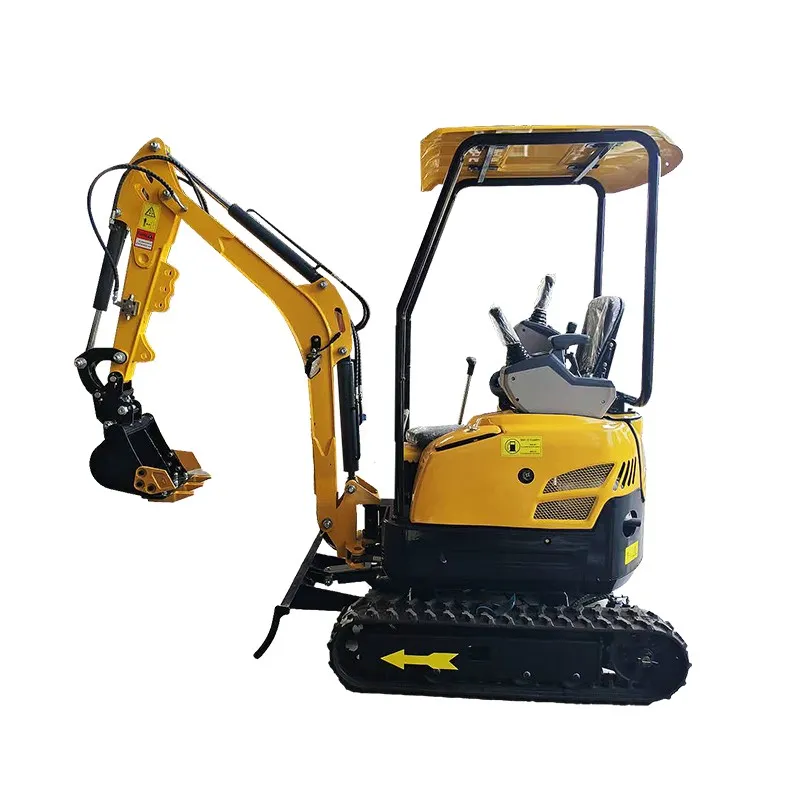
OEM mini digger
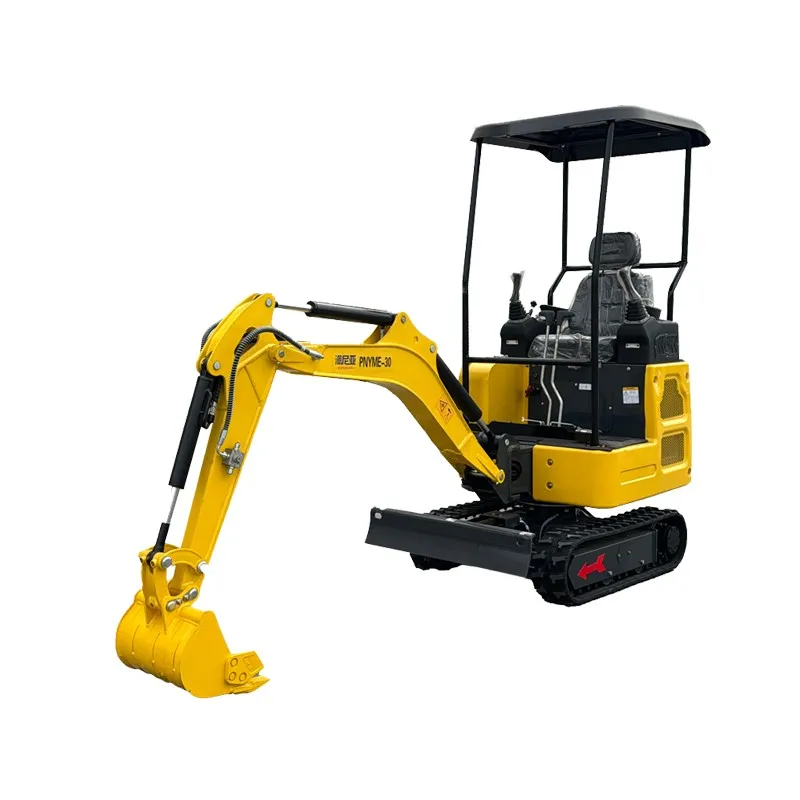
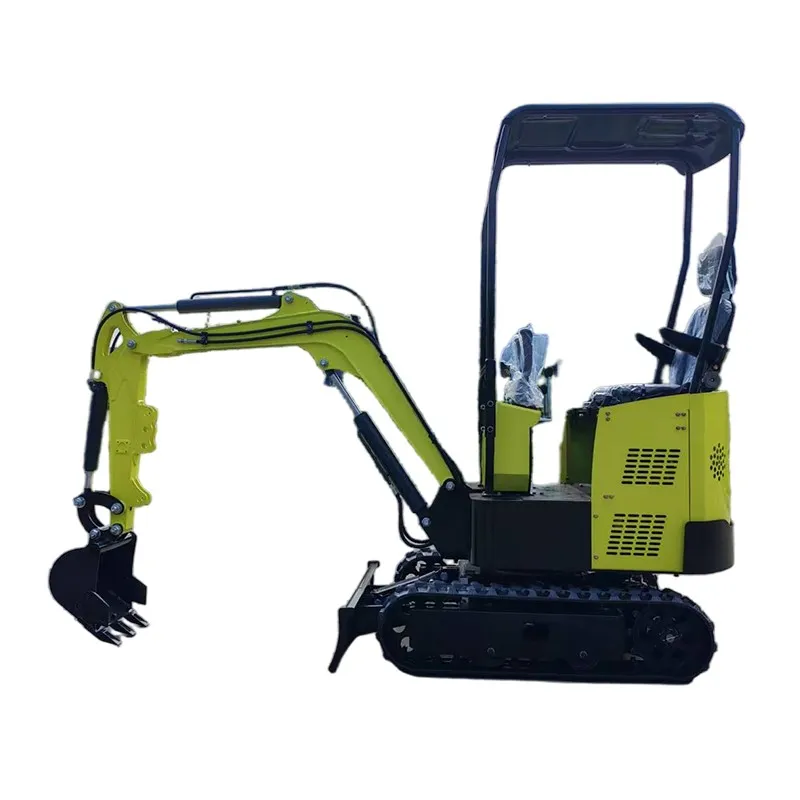
When you hear 'OEM mini digger', what comes to mind? For many, it's just a generic, cheaper machine from a factory. That's the first misconception. In my experience, the OEM tag isn't about anonymity; it's about a specific, often complex, partnership. It means the design, the specs, the performance envelope are built to a partner's exacting blueprint. The real challenge isn't finding a factory—it's finding one that understands the nuance between a drawing and a machine that works in the mud for 10 hours straight. I've seen companies get this wrong, focusing solely on unit cost and ending up with a digger whose hydraulic system can't handle sustained pressure, leading to premature pump failure. The label is just the start.
The Foundation: What OEM Really Demands
It starts with engineering dialogue, not just a purchase order. A proper OEM project for a mini digger involves months of back-and-forth on load charts, component sourcing, and compliance frameworks. I recall a project where the European client demanded a specific slew motor torque for their grading attachment. The initial factory prototype used a standard motor, arguing the difference was marginal. We had to push hard, providing third-party test data to show that 'marginal' meant a 15% loss in efficiency on a slope. That's the grind. It's not assembly; it's adaptation.
This is where longevity in the business matters. A company that's been through multiple product cycles has seen these issues before. Take Shandong Pioneer Engineering Machinery Co., Ltd. They've been operating since 2004, and that two-decade stretch isn't just a number. It means they've likely iterated on countless chassis designs, weathered supply chain shifts for hydraulic valves, and learned which welding techniques hold up under torsional stress. Their recent move to a new facility in Ningyang in 2023 suggests growth and reinvestment—a good sign of stability for an OEM partner. You can check their operational footprint at their website, https://www.sdpioneer.com.
The company's structure, with Hexin handling manufacturing and Pioneer focusing on overseas trade, is a classic yet effective model for this space. It allows the factory to concentrate on production rigor while the trade arm interfaces with global client needs, navigating the specific certification requirements for markets like Australia or Canada. This split focus is crucial for OEM work, where communication is as vital as the metallurgy.
Pitfalls in the Prototype Phase
Nothing tests a partnership like the first prototype. The excitement of seeing a physical machine quickly fades when you start the validation. One common failure point is the operator's cabin. A drawing might specify dimensions and glass thickness, but the real test is ergonomics and noise levels. I've been in a prototype where the joystick placement caused fatigue after an hour—something no CAD model predicts. The factory fix was a simple bracket adjustment, but identifying it required actual seat time, not just a checklist.
Another subtle trap is climate adaptation. A mini digger destined for Germany needs different hydraulic fluid viscosity and cold-start provisions than one for the Middle East. An inexperienced OEM might overlook this, using a one-size-fits-all fluid reservoir. The result? Sluggish operation in winter and accelerated wear. The solution involves deeper collaboration with the factory's procurement team to source the right tier-1 components from the start, which a seasoned player like Pioneer would have established channels for.
Electronics integration is now the biggest headache. Adding a modern display for diagnostics or telematics seems straightforward, but EMI (electromagnetic interference) from the alternator can scramble signals. I spent weeks with engineers once, shielding cables and rerouting harnesses away from the main hydraulic lines. It's these unglamorous, painstaking fixes that separate a functional OEM product from a great one.
The Component Sourcing Puzzle
You can't talk about building a reliable OEM mini digger without diving into the component web. The engine is the obvious heart, but the debate between Japanese and Chinese-branded engines is oversimplified. It's about the intended duty cycle and service network. For a rental fleet machine in the US, a Kubota engine is a sensible choice for part availability. For a cost-sensitive market where service is localized, a reliable Chinese brand like Weichai or Yuchai, properly derated for continuous output, can be a smarter OEM choice. The factory's relationship with engine suppliers is key here.
Then come the hydraulics. The trend is toward integrated valve blocks for compactness, but they're a nightmare to repair in the field. I lean towards modular valve setups for easier maintenance, even if they take up more space. This is a classic OEM negotiation point: the partner wants sleek and integrated; the factory might advocate for serviceability. A good factory will have experience with both and advise on the long-term cost of ownership.
Undercarriage is another silent differentiator. The choice between rubber and steel tracks is obvious, but the quality of the rollers and idlers is not. I've seen machines where the track tensioning system wears out prematurely because the idler bushings were a lower-grade material. A factory with a strong quality control ethos, often built over years like the 20-year history noted for Pioneer, will have strict protocols for these sub-components, even if they're sourced from a secondary supplier.
Beyond the Machine: Logistics and Compliance
The machine passing final inspection is only half the battle. OEM exporting is a logistical beast. Crating for ocean freight to prevent corrosion from salt air is a science in itself. We once had a batch arrive in Canada with surface rust on the cylinder rods because the vapor-corrosion inhibitor bags inside the crates were punctured. The lesson was to double-wall the critical components. This is the kind of granular detail a trading company with extensive export history to countries like the US, Germany, and Australia would have institutional knowledge of.
Compliance is a moving target. CE, EPA Tier 4 Final, ROPS/FOPS certifications—they're not just stickers. They require documented test reports, material traceability, and sometimes pre-shipment audits. A factory acting as an OEM must have this documentation pipeline streamlined. Their ability to efficiently manage this for their partners, as suggested by Pioneer's global export record, directly impacts time-to-market and cost.
Finally, there's the documentation pack: parts manuals, service intervals, wiring diagrams. A poorly translated manual can doom a product. The best OEM outputs I've seen include clear, illustrated breakdowns and a sensible spare parts kit recommendation for the first 500 service hours. This post-production support is what turns a transaction into a long-term partnership.
Concluding Thoughts: The OEM Relationship
So, circling back to the term OEM mini digger. It's not a product you simply buy off a shelf. It's a process you co-create. It's choosing a manufacturing base that combines engineering capability with practical field wisdom. It's about expecting problems—with cooling, with wiring, with a bracket—and having a partner with the patience and skill to solve them iteratively.
The value of a company in this space isn't just its square footage or its list of export countries, though a 1,600-square-meter production area and a history of shipping to demanding markets are strong indicators of capacity. It's the embedded knowledge from projects that worked and those that failed. It's the ability to look at a spec sheet and ask, Yes, but how will the operator actually use this?
In the end, the machine that rolls off the line is a testament to that collaboration. It's a piece of equipment that should feel considered, where the choices in components and layout tell a story of intended use and durability. That's the real goal of the OEM journey—to build not just to a specification, but to a standard of reliability that earns trust in the field, wherever that field may be.
Related Products
Related Products