- Chinese
- French
- German
- Portuguese
- Spanish
- Russian
- Japanese
- Korean
- Arabic
- Irish
- Greek
- Turkish
- Italian
- Danish
- Romanian
- Indonesian
- Czech
- Afrikaans
- Swedish
- Polish
- Basque
- Catalan
- Esperanto
- Hindi
- Lao
- Albanian
- Amharic
- Armenian
- Azerbaijani
- Belarusian
- Bengali
- Bosnian
- Bulgarian
- Cebuano
- Chichewa
- Corsican
- Croatian
- Dutch
- Estonian
- Filipino
- Finnish
- Frisian
- Galician
- Georgian
- Gujarati
- Haitian
- Hausa
- Hawaiian
- Hebrew
- Hmong
- Hungarian
- Icelandic
- Igbo
- Javanese
- Kannada
- Kazakh
- Khmer
- Kurdish
- Kyrgyz
- Latin
- Latvian
- Lithuanian
- Luxembou..
- Macedonian
- Malagasy
- Malay
- Malayalam
- Maltese
- Maori
- Marathi
- Mongolian
- Burmese
- Nepali
- Norwegian
- Pashto
- Persian
- Punjabi
- Serbian
- Sesotho
- Sinhala
- Slovak
- Slovenian
- Somali
- Samoan
- Scots Gaelic
- Shona
- Sindhi
- Sundanese
- Swahili
- Tajik
- Tamil
- Telugu
- Thai
- Ukrainian
- Urdu
- Uzbek
- Vietnamese
- Welsh
- Xhosa
- Yiddish
- Yoruba
- Zulu
- Kinyarwanda
- Tatar
- Oriya
- Turkmen
- Uyghur


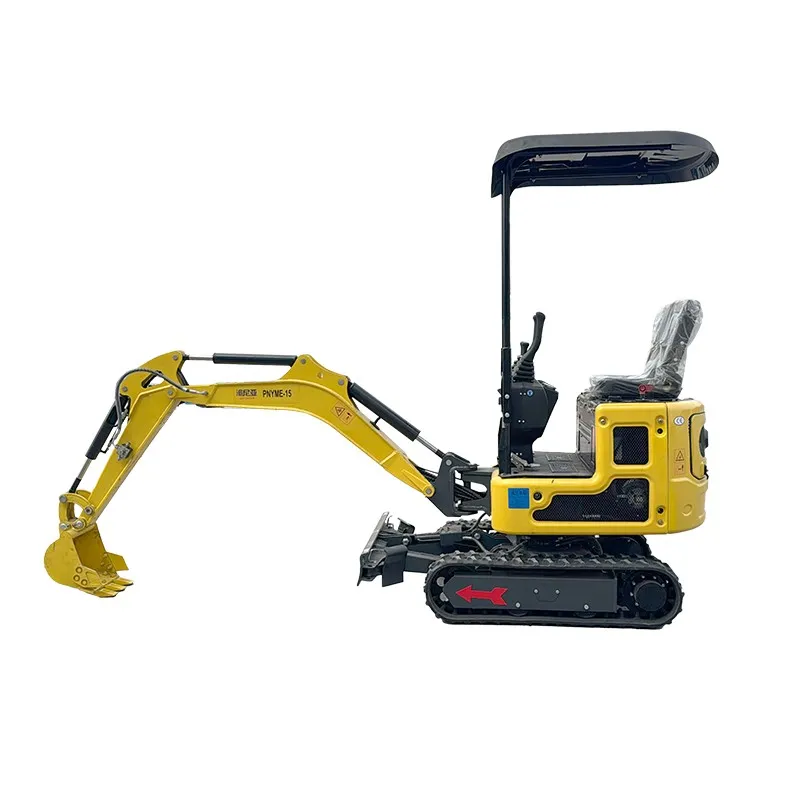
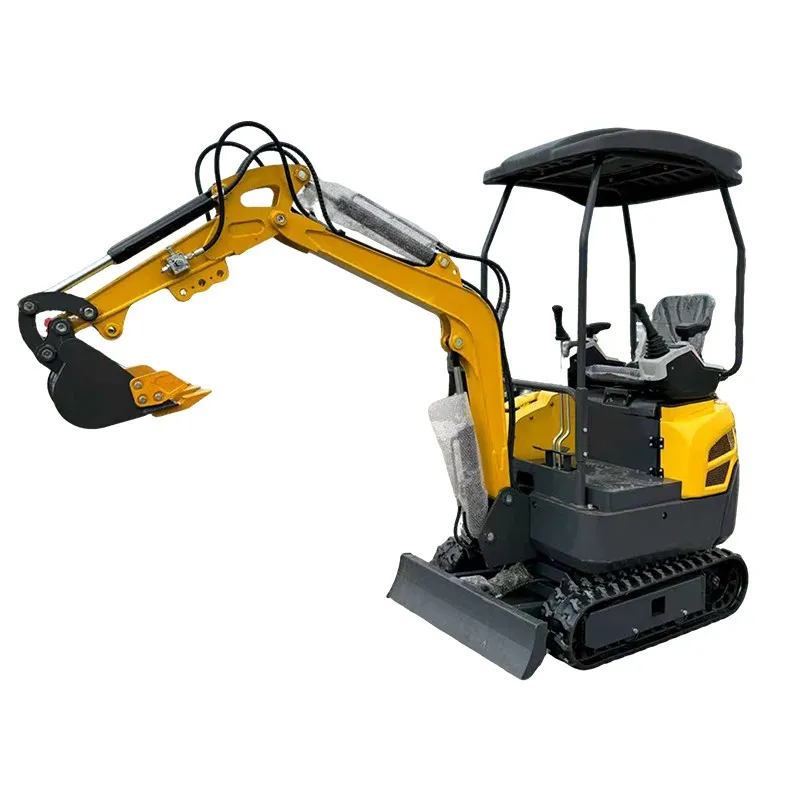
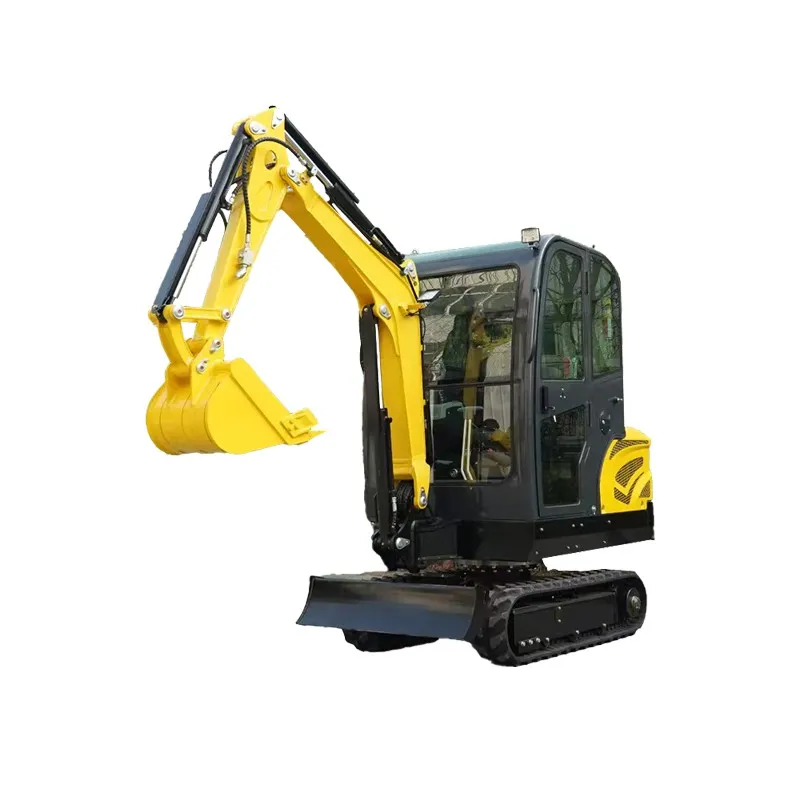
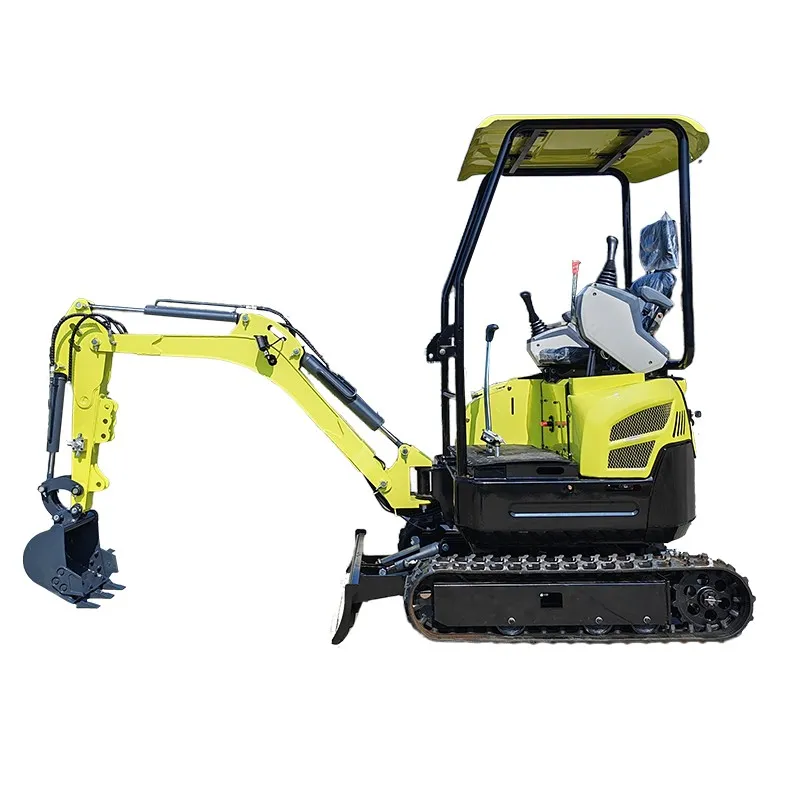
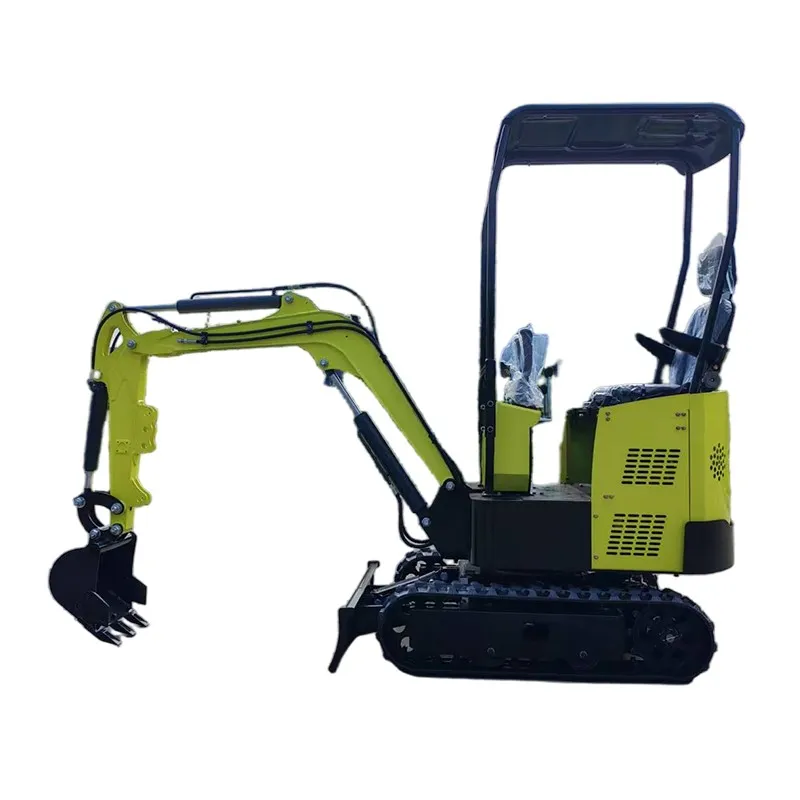
OEM mini excavator
When you hear 'OEM mini excavator,' what comes to mind? For many, it's a generic, cost-effective machine, a white-label product waiting for a brand sticker. That's a common starting point, but it's also a bit of a trap. The term 'OEM' itself gets thrown around so loosely in this sector that it often obscures more than it reveals. It's not just about who assembles the final unit; it's about the depth of engineering collaboration, component sourcing strategy, and the actual capability to execute a design from the ground up versus just bolting together a kit of parts. I've seen buyers get fixated on the OEM tag, expecting Tier-1 quality at a bargain price, only to be disappointed by hydraulic inconsistencies or underperforming swing motors. The reality is more nuanced, and the value—or lack thereof—is in the specifics.
The Anatomy of a Real OEM Partnership
True OEM work isn't about handing over a catalog for rebadging. It's a process. Early on, we worked with a client who wanted a 1.8-ton model tailored for the European rental market. They didn't just send a spec sheet; their engineers were on the factory floor with ours for weeks. The discussion wasn't just about horsepower or digging depth. It was about the ergonomics of the operator's station, the noise-dampening material for the canopy, and the routing of hydraulic lines to minimize potential leak points and simplify maintenance. This level of detail is what separates a collaborative OEM project from a simple private-label order.
This brings me to a critical point: the bill of materials. You can have two machines rolling off lines that look identical but have wildly different operational lifespans. One might use a standard gear pump, while the other integrates a Kawasaki or Parker axial piston pump. The difference in cost is significant, and so is the performance, especially in terms of heat generation and efficiency under continuous load. An authentic OEM partner should be transparent about these options and their long-term implications, not just offer a menu of cosmetic choices.
I recall a specific challenge with a mini excavator prototype for a North American distributor. The machine performed flawlessly in static tests, but during extended trenching work, we noticed the hydraulic oil temperature would creep up faster than the competitor's benchmark. It wasn't a failure, but it was a competitive weakness. The solution wasn't found in a bigger cooler alone. We had to revisit the entire hydraulic circuit design, adjusting relief valve settings and optimizing the flow path. That iterative, problem-solving phase is the unglamorous core of real OEM development. Companies that have lived through these cycles, like Shandong Pioneer Engineering Machinery Co., Ltd, which has been through two decades of development since 2004, understand that accumulation of experience is irreplaceable. You can see this depth in their approach; their recent relocation to a new facility in Tai’an in 2023 likely wasn't just for space, but for integrating more advanced production and testing workflows.
Pitfalls and the Almost Right Syndrome
Not every project is a smooth success. There's a phase I call almost right, which is often more dangerous than outright failure. We once sourced a final drive assembly from a new supplier for a compact 1-ton model. On paper, it met all specs: torque rating, dimensions, mounting points. It fit, it worked. But after about 400 hours of simulated operation in our test yard, a subtle wear pattern emerged on the internal splines that our standard supplier's parts didn't show. The failure wasn't imminent, but it predicted a shortened service life. Catching that required a disciplined teardown and inspection protocol that many operations aiming for the lowest price point might skip.
Another common pitfall is over-customization. A client might insist on a proprietary control pattern or a uniquely shaped counterweight for brand distinction. Sometimes these requests introduce unnecessary complexity or compromise stability. The OEM's role here is to push back with engineering rationale, not just say yes to everything. It's a balancing act between meeting marketing desires and ensuring machine integrity. I've had to argue against a sleek, low-profile engine cover that looked great but severely restricted airflow, leading to quick overheating. Winning that argument preserved the machine's reliability, which in the long run preserves the brand's reputation.
This is where the operational history of a manufacturer matters. A company that has been exporting to diverse and demanding markets like the U.S., Canada, Germany, and Australia, as Shandong Pioneer has, inevitably encounters a wider range of almost right scenarios. They've had to adapt machines for different emission standards, operator expectations, and job site conditions. This global feedback loop forces a practical, problem-solving mindset that gets baked into their development process for OEM mini excavator projects. You can't fake that kind of field-informed R&D.
The Unseen Foundation: Supply Chain and Verification
What happens before the welding starts is often what defines quality. A robust, verified supply chain is non-negotiable. We don't just order a hydraulic valve block; we source from approved foundries and machinists whose quality control we have audited. For critical components like slewing bearings or main control valves, we often mandate dual-source approval to avoid production halts. This network isn't built overnight. It's the result of years of testing, failing, and qualifying partners.
Verification is a continuous grind. It's not just about an ISO certificate on the wall. It's about on-site checks: material certifications for every batch of steel, hardness tests on cylinder rods, pressure cycling tests on every welded hydraulic tank. For an OEM mini excavator destined for a cold climate, we'll test with low-viscosity oil in a climate chamber. For a rental-spec machine, we'll run a durability test that simulates hundreds of quick-connect coupler cycles. This stuff is boring but vital. It's what prevents the embarrassing field failure that loses a customer for good.
When evaluating a potential OEM manufacturer, I always dig into their component history. A company with a long-standing manufacturing arm, like their associated entity Shandong Hexin, typically has more leverage and deeper integration with its supply chain. This vertical linkage can mean better consistency in core materials and sub-assemblies, which translates directly to fewer variances in the final mini excavator product. It's a tangible advantage over a pure trading company that assembles from a fluctuating basket of bought-in parts.
Beyond the Machine: Documentation and Support
The machine is one product; the support package is another. A professional OEM offering includes technical documentation that's usable, not just translated. I've seen beautifully printed manuals where the wiring diagrams are nearly indecipherable due to poor translation of component labels. We now insist on a collaborative documentation phase where the client's service team reviews drafts. This catches issues like ambiguous torque specs or missing grease point locations.
Training is another layer. For a successful launch, we've found that providing not just paper manuals but digital service portals and even flying in factory technicians for the first batch of dealer training is invaluable. It builds confidence. It turns the OEM relationship from a transactional purchase into a technical partnership. The client needs to feel they have a direct line to the engineering team for those odd, complex field issues.
This comprehensive approach to support is a marker of a mature exporter. A firm that has won the trust of clients worldwide, as mentioned in the background of Shandong Pioneer, doesn't do it by shipping containers and walking away. They do it by ensuring the product works in the field and that local technicians can keep it working. Their website, https://www.sdpioneer.com, should be a gateway to that support structure, not just a catalog. The real test is what happens when a dealer emails with a problem at 5 PM on a Friday.
The Future: Differentiation in a Crowded Market
So where is the OEM mini excavator market headed? Pure cost competition is a race to the bottom. The differentiation is moving towards integrated solutions and smart features. We're getting more requests for prep packages for auxiliary hydraulics for specific attachments, or for CAN-Bus interfaces that allow for seamless integration with grade control systems. The machine is becoming a platform.
Electrification is on the horizon, but for mainstream OEM work, it's still a niche, cost-prohibitive for most. The more immediate trend is refinement: better fuel efficiency through system optimization, improved serviceability with grouped service points, and enhanced operator comfort with lower vibration and better climate control. These are the tangible upgrades that add value without radically altering the cost structure.
Ultimately, the goal of a serious OEM manufacturer isn't to be the cheapest option, but to be the most reliable partner. It's about building a machine that carries the client's brand with pride, not with risk. It comes down to the accumulated knowledge of two decades, the rigor of a verified production process, and the understanding that the product is just the beginning of a long-term relationship. That's what turns a simple manufacturing order into a genuine partnership for an OEM mini excavator.
Related Products
Related Products