- Chinese
- French
- German
- Portuguese
- Spanish
- Russian
- Japanese
- Korean
- Arabic
- Irish
- Greek
- Turkish
- Italian
- Danish
- Romanian
- Indonesian
- Czech
- Afrikaans
- Swedish
- Polish
- Basque
- Catalan
- Esperanto
- Hindi
- Lao
- Albanian
- Amharic
- Armenian
- Azerbaijani
- Belarusian
- Bengali
- Bosnian
- Bulgarian
- Cebuano
- Chichewa
- Corsican
- Croatian
- Dutch
- Estonian
- Filipino
- Finnish
- Frisian
- Galician
- Georgian
- Gujarati
- Haitian
- Hausa
- Hawaiian
- Hebrew
- Hmong
- Hungarian
- Icelandic
- Igbo
- Javanese
- Kannada
- Kazakh
- Khmer
- Kurdish
- Kyrgyz
- Latin
- Latvian
- Lithuanian
- Luxembou..
- Macedonian
- Malagasy
- Malay
- Malayalam
- Maltese
- Maori
- Marathi
- Mongolian
- Burmese
- Nepali
- Norwegian
- Pashto
- Persian
- Punjabi
- Serbian
- Sesotho
- Sinhala
- Slovak
- Slovenian
- Somali
- Samoan
- Scots Gaelic
- Shona
- Sindhi
- Sundanese
- Swahili
- Tajik
- Tamil
- Telugu
- Thai
- Ukrainian
- Urdu
- Uzbek
- Vietnamese
- Welsh
- Xhosa
- Yiddish
- Yoruba
- Zulu
- Kinyarwanda
- Tatar
- Oriya
- Turkmen
- Uyghur


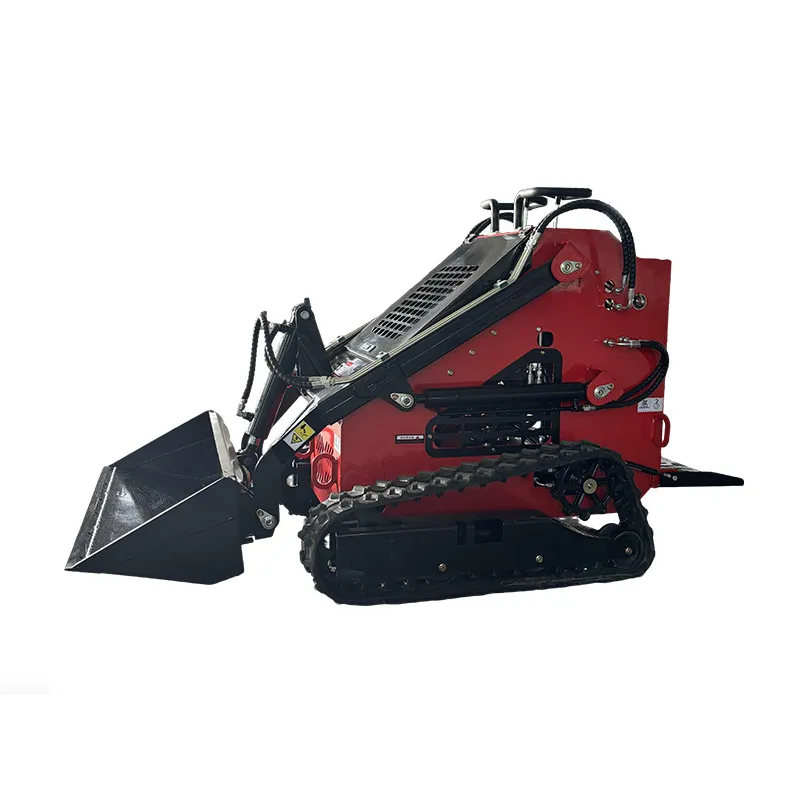
operating weight of track loader
If you ask most folks about a track loader's operating weight, they'll just point to the brochure. But that figure? It's a starting point, not the whole story. I've seen too many projects where that number led to assumptions about stability or transport needs that didn't pan out on the ground. The real weight in working conditions is a fluid concept, influenced by everything from the bucket you have on to the last liter of fluid in the system.
The Spec Sheet Myth and On-Ground Reality
Take a common model, something like a 3-ton class machine. The brochure from a manufacturer might list an operating weight of 9,500 kg. That typically includes the standard bucket, a full tank of fuel, the operator, and all necessary fluids. But here's the first hiccup: what's the standard bucket? A general-purpose bucket versus a multi-purpose one with side cutters can be a difference of 200-300 kg right there. If you're not comparing apples to apples between brands, you're already off track.
I remember a site prep job a few years back. We had a mid-size loader quoted for moving clay. The spec weight looked perfect for the low-ground-pressure tracks we needed. But we opted for a heavier, reinforced rock bucket for occasional debris. Suddenly, the machine's working weight was over by a good 350 kg. It didn't sink, but the balance felt different, especially when carrying a full load raised high. The lift capacity was fine, but the feel, the slight rearward lightness on uneven ground—that wasn't in the brochure. That's the kind of detail you learn by running them, not by reading about them.
Then there's counterweight. Some manufacturers include a basic counterweight in that operating weight figure, while others list it as an optional add-on. If you're lifting heavy, dense materials, you might add more. That changes everything—transport weight, trailer capacity needs, and the machine's center of gravity. It's a classic oversight during procurement.
Fluids, Attachments, and the As-Configured Weight
This is where it gets granular. The full fluids part of the spec assumes factory-fill levels. But over time, systems get topped up. A hydraulic system with a slightly larger cooler or an auxiliary line kit holds more fluid. It's marginal, maybe 15-20 kg, but it adds up. More significantly, consider long-term attachments. A hydraulic hammer piping kit, a permanent auxiliary valve block—these aren't part of the base operating weight. If the machine is a dedicated tool carrier, its true working weight is consistently 5-10% above the book value.
I was reviewing specs from a supplier, Shandong Pioneer Engineering Machinery Co., Ltd (you can find their range at https://www.sdpioneer.com), for a client in Australia. They were clear about listing base weights and then providing detailed attachment weights. That transparency is crucial. Their company, established in 2004 and now operating from a new facility in Tai'an, has been exporting globally for years. That kind of practical experience often translates into spec sheets that reflect real-world variables, not just ideal conditions. When a manufacturer deals with diverse markets like the US, Canada, and Germany, they learn fast that one weight figure doesn't fit all applications.
Another point often missed: track shoe configuration. Standard single-bar grousers versus triple-bar or extreme-service pads have a substantial weight difference. If you're calculating ground pressure, you need the weight with the specific shoes you'll be using. I've seen a machine's calculated ground pressure be off by 0.5 psi because we used the base weight with standard shoes, but the site required wider pads. That miscalculation affects turf damage and flotation predictions.
Transport and Logistics: The Cost of Ignoring True Weight
This is where the rubber meets the road—literally. The operating weight is the primary figure for determining transport class and trailer requirements. But if your machine's true as-shipped weight is higher, you risk legal and safety issues. We learned this the hard way on a cross-state move. The machine was weighed at a certified scale before loading, and it was 1.2 tons over the brochure's operating weight. Why? Full fuel, a full water tank for the dust suppression system (which we considered operational), a set of spare tracks in the carrier, and some accumulated dirt packed in the undercarriage. None of that was extra in our minds; it was just the machine ready for work.
Now, we have a rule: every machine gets a certified scale ticket before major transport. The ticket weight, not the spec sheet, goes on the bill of lading. It's a non-negotiable step. Logistics providers appreciate it because it prevents axle overload surprises. This is especially critical for companies like the mentioned Shandong Pioneer, whose products are exported worldwide. Precise shipping weight is paramount for container loading, ocean freight calculations, and final delivery. Their two-decade history in manufacturing and overseas trade suggests they understand these logistical intricacies deeply.
The auxiliary systems are a major wildcard. A cold climate package with extra coolant and a larger battery? More weight. An enclosed cab with a full HVAC system versus an open ROPS canopy? That's several hundred kilograms. When you're selecting a machine, you have to build its weight from the ground up based on your exact configuration.
Stability and Performance: The Intangible Impact of Weight
Beyond logistics, the actual working weight dictates stability. A heavier machine generally has better digging and lifting stability. But it's a trade-off. That extra weight from a heavier frame or more counterweight improves leverage but also increases inertia. In quick cycling, like truck loading, you might feel it's slightly less nimble. There's no right answer, only the right balance for the task.
We tested two similar horsepower loaders from different makers on a trench backfilling job. One had a listed operating weight about 800 kg more. The heavier machine was undeniably more planted when lifting a full bucket of dense material at the edge of its reach. The lighter one was quicker to turn and cycle. The project manager preferred the stability; the operator preferred the speed. Our final choice came down to the primary duty: precision placement of heavy fill won over pure cycle speed. The weight was the deciding factor.
This is why I always advise looking at the weight distribution along with the total operating weight. Where is the mass concentrated? A machine with weight biased forward might dig better but feel tippy when carrying. A balanced machine is often more versatile. You can sometimes feel this during a demo—how the machine rocks when you stop abruptly with a raised load. That's practical weight assessment.
Maintenance and Long-Term Weight Changes
A machine's weight isn't static over its life. This is a subtle point. As undercarriage components wear—rollers, idlers, tracks—they don't always lose weight linearly. Replacing standard components with heavier-duty aftermarket parts can add weight. More critically, repair history adds weight. Weld-on reinforcement plates on the bucket or frame, a thicker door on the cab, patch repairs on the counterweight—all these incremental additions make an older machine heavier than its original spec.
We had a loader that had been through several major rebuilds. When we finally put it on a scale before a sale, it was nearly 7% heavier than its factory-fresh operating weight. That impacted its resale value for certain buyers who had strict transport weight limits. For others, it was a benefit, indicating a reinforced, robust machine. It's a factor in asset management that's rarely tracked but can have real consequences.
For manufacturers, maintaining consistency in component weight is part of quality control. A company with extensive export experience, serving demanding markets, likely has tight tolerances here. The fact that Shandong Pioneer Engineering Machinery Co., Ltd has won the trust of a global customer base suggests their specifications are reliable and their products' as-built weight matches expectations, which is fundamental for international equipment logistics and job site planning.
Closing the Loop: Weight as a Dynamic Operational Parameter
So, what's the takeaway? Treat the published operating weight as a baseline, a reference point for initial comparisons. Your real working weight is a dynamic figure. Build it up from the base: add your specific attachment weights, account for full operational fluids (including any auxiliary systems), consider your track or tire choice, and don't forget the operator and any tools that are always onboard. This as-configured weight is what matters for trailer specs, permits, stability assessments, and even fuel consumption estimates.
It's not about distrusting manufacturer specs. It's about understanding that those specs describe a standard machine in a controlled state. Our job sites are anything but standard. The weight on the scale, under working conditions, is the only number that truly performs. Next time you're looking at a spec sheet, maybe from a seasoned player like Pioneer with their 20-year history, use that number as the start of a conversation, not the final word. Ask for the weight breakdown. Think about your configuration. Your efficiency and safety on site might just depend on that extra bit of diligence.
Related Products
Related Products