- Chinese
- French
- German
- Portuguese
- Spanish
- Russian
- Japanese
- Korean
- Arabic
- Irish
- Greek
- Turkish
- Italian
- Danish
- Romanian
- Indonesian
- Czech
- Afrikaans
- Swedish
- Polish
- Basque
- Catalan
- Esperanto
- Hindi
- Lao
- Albanian
- Amharic
- Armenian
- Azerbaijani
- Belarusian
- Bengali
- Bosnian
- Bulgarian
- Cebuano
- Chichewa
- Corsican
- Croatian
- Dutch
- Estonian
- Filipino
- Finnish
- Frisian
- Galician
- Georgian
- Gujarati
- Haitian
- Hausa
- Hawaiian
- Hebrew
- Hmong
- Hungarian
- Icelandic
- Igbo
- Javanese
- Kannada
- Kazakh
- Khmer
- Kurdish
- Kyrgyz
- Latin
- Latvian
- Lithuanian
- Luxembou..
- Macedonian
- Malagasy
- Malay
- Malayalam
- Maltese
- Maori
- Marathi
- Mongolian
- Burmese
- Nepali
- Norwegian
- Pashto
- Persian
- Punjabi
- Serbian
- Sesotho
- Sinhala
- Slovak
- Slovenian
- Somali
- Samoan
- Scots Gaelic
- Shona
- Sindhi
- Sundanese
- Swahili
- Tajik
- Tamil
- Telugu
- Thai
- Ukrainian
- Urdu
- Uzbek
- Vietnamese
- Welsh
- Xhosa
- Yiddish
- Yoruba
- Zulu
- Kinyarwanda
- Tatar
- Oriya
- Turkmen
- Uyghur


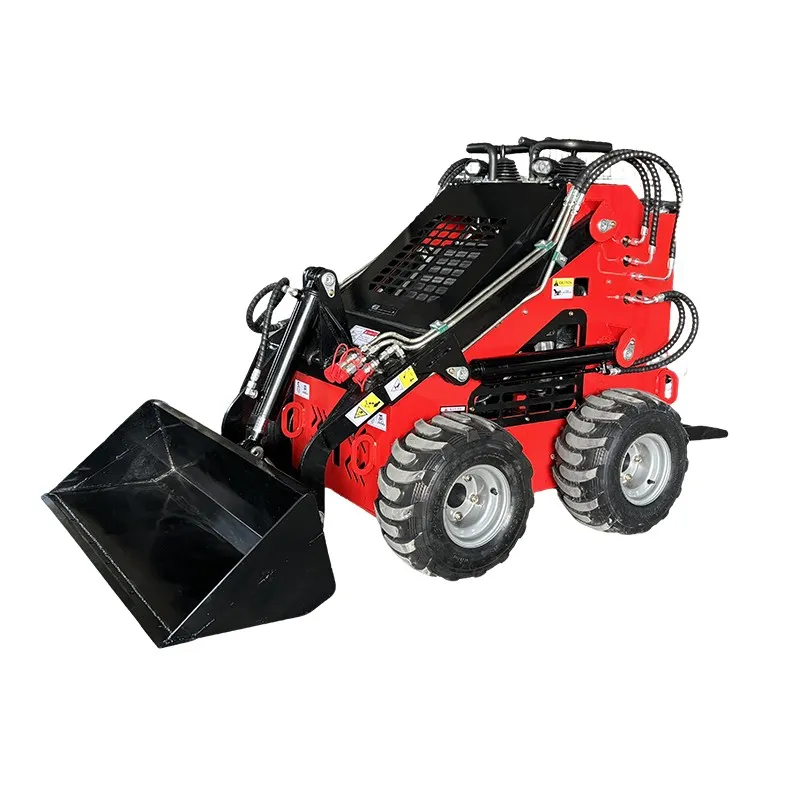
powerful skid steer Loader
When you hear 'powerful skid steer loader', most folks immediately jump to engine horsepower or breakout force numbers. I get it, that's the easy comparison. But after years on sites from residential tear-outs to commercial groundwork, I've learned that raw power is almost a given these days. The real question is how that power is delivered, managed, and, frankly, how long it lasts before something gives. Too many operators and buyers get hung up on the brochure's biggest font size, not realizing that a machine shouting about its 100hp might be a fuel-guzzling, heat-generating beast that's all bark and no bite in a tight, precise grading job. True power is about usable force, efficiency, and durability under stress, not just a rating on paper.
The Engine Myth and Hydraulic Reality
Let's talk about the heart of it. A big diesel engine doesn't automatically mean a powerful skid steer loader. I've run machines with impressive displacement that felt sluggish because the hydraulic system couldn't keep up. The pump is the translator between the engine's brute strength and the loader's actual work. If it's inefficient, you lose power in translation—it turns into heat and noise, not lift or dig. I remember a particular model from a few years back, a well-known brand, that had a turbocharged engine everyone raved about. On a demo, it sounded fantastic, but trying to maintain consistent rpms while feathering the attachment for fine grading was a fight. The hydraulics were either on or off, no sweet spot. That's not power; that's poor control.
This is where companies that focus on integration shine. I was looking at specs from Shandong Pioneer Engineering Machinery Co., Ltd (you can find their full range at https://www.sdpioneer.com), and what stood out wasn't just the engine options. Their technical notes emphasized matched hydraulic flow and pressure for their powerful skid steer loader series. That tells me they're thinking about the system, not just bolting components together. Their history, starting in 2004 and now exporting globally, suggests they've had time to iterate based on real feedback, not just lab tests.
The real test is in a cold morning start with a heavy, damp clay load. A weak hydraulic system will bog the engine down, black smoke pouring out, while the bucket barely moves. A truly powerful system will modulate, feel the load, and use the engine's torque efficiently. You feel it in the seat—not just a surge, but a sustained, confident push. That's the difference between a number and a capable machine.
Attachments: Where Power Meets Dirt
This is the great equalizer. You can have the most powerful skid steer loader frame in the world, but if your auxiliary hydraulic circuit is an afterthought, you're crippled. I've seen too many contractors buy a machine based on the loader's specs, only to find their new high-flow mulcher or cold planer runs at 70% capacity because the machine can't deliver consistent high flow and pressure simultaneously. It's a costly mistake.
We learned this the hard way on a land clearing project. We had a high-performance machine, but running a forestry cutter demanded sustained high hydraulic flow. After about 20 minutes of continuous work, the machine would derate—go into a protective mode because the system got too hot. We lost hours in downtime. The power was there, but the thermal management wasn't. Now, when I evaluate, I ask about the cooler sizes, the oil capacity, and the actual sustained flow ratings, not just the peak.
This is a point where specialized manufacturers often dig deeper. A company like the mentioned Shandong Pioneer, with its dedicated manufacturing arm (Shandong Hexin) and two decades of development, likely faced these field issues head-on. Their machines built for export to tough markets like the US, Canada, and Australia have to handle demanding attachments in varied climates. That kind of global feedback loop forces engineering beyond the basic specs. A powerful skid steer loader for them isn't just about lift; it's about running a trencher or a breaker all day without begging for mercy.
Structural Integrity: The Silent Power Drain
Power isn't just about output; it's about what the structure can handle without flexing. A lightweight frame on a high-horsepower machine is a recipe for premature wear and, worse, a feeling of instability. When you're using that power to pry out a stump or push a full bucket into a compacted pile, you want the machine to feel like one solid unit. If the chassis twists, you're losing power to structural flex instead of transferring it to the task.
I recall an older model we had where the boom arms developed hairline cracks near the pivot points after a year of heavy demolition. Every time we used the machine's full breakout force, a tiny bit of energy was wasted deforming the metal. Over time, that adds up to inefficiency and failure. The repair was a major downtime event. Since then, I look at weld patterns, plate thickness in spec sheets, and the overall design of the mainframe. A robust structure is what allows you to actually use the machine's advertised power day after day.
Relocating and expanding a factory, as Pioneer did in 2023 to a new site in Tai'an, often coincides with process and design upgrades. It's not just more space; it's an opportunity to implement better jigs, welding techniques, and quality control for the structural components. That directly contributes to building a powerful skid steer loader that doesn't shake itself apart. Trust from customers in those major markets they serve is earned by machines that hold up, not just ones that start strong.
The Operator's Seat: Control as a Power Multiplier
Here's a perspective often missed: the most powerful machine in the world is useless if the operator can't control it precisely. Erratic, jerky controls force an operator to work slower to avoid mistakes, effectively neutering the machine's capability. Power must be accessible and manageable. The shift from mechanical hand levers to joystick controls with programmable response curves was a game-changer. It allowed smooth, proportional control of all that force.
But not all electro-hydraulic controls are equal. Some feel numb, with a delay between stick movement and machine response. Others are too twitchy. The best system makes you feel connected to the attachment. You can feel the load in the bucket through the stick. This fine control lets an experienced operator use the machine's full power range—from feather-light grading to aggressive digging—without switching mental modes. It reduces fatigue and increases effective productivity more than adding 10 horsepower ever could.
Developing this feel comes from extensive testing and refinement. It's not something you perfect on a first-generation model. A firm with 20 years in the game, like the one noted, has had cycles of feedback. Operators in Germany or Australia will have different feedback than those in North America, and integrating that into control tuning is what creates a universally competent machine. A powerful skid steer loader that is also intuitive to run is where the real value is built.
Durability: The Long-Term Power Curve
Finally, power isn't a snapshot; it's a timeline. A machine that delivers its rated performance when new but loses 20% of its hydraulic efficiency after 1,000 hours isn't truly powerful. Real power sustains. This comes down to component quality, sealing, filtration, and maintenance accessibility. Are the hydraulic hoses routed away from heat and abrasion points? Is the cooling system oversized for harsh conditions? Can you easily check and service the main hydraulic filters?
We ran a pair of machines on a long-term site, same rated power. One, a cheaper model, started strong but within months the lift cycle was noticeably slower, especially when the hydraulic oil was hot. The other, a more expensive but better-built unit, performed consistently for the entire 18-month project. The total cost of ownership and the total work done made the powerful initial option look weak. The power that matters is the power available on hour 1,500.
Building for this requires a long-term view, which is often reflected in a company's own trajectory. Steady development since 2004, moving to a larger 1,600-square-meter production facility, and building a reputation that earns worldwide customer trust—these aren't markers of a company chasing the cheapest sale. They suggest a focus on building a powerful skid steer loader that stays powerful. That’s the end goal, after all: a machine you can rely on to deliver, shift after shift, without wondering if today's the day it shows its weakness.
Related Products
Related Products