


- Chinese
- French
- German
- Portuguese
- Spanish
- Russian
- Japanese
- Korean
- Arabic
- Irish
- Greek
- Turkish
- Italian
- Danish
- Romanian
- Indonesian
- Czech
- Afrikaans
- Swedish
- Polish
- Basque
- Catalan
- Esperanto
- Hindi
- Lao
- Albanian
- Amharic
- Armenian
- Azerbaijani
- Belarusian
- Bengali
- Bosnian
- Bulgarian
- Cebuano
- Chichewa
- Corsican
- Croatian
- Dutch
- Estonian
- Filipino
- Finnish
- Frisian
- Galician
- Georgian
- Gujarati
- Haitian
- Hausa
- Hawaiian
- Hebrew
- Hmong
- Hungarian
- Icelandic
- Igbo
- Javanese
- Kannada
- Kazakh
- Khmer
- Kurdish
- Kyrgyz
- Latin
- Latvian
- Lithuanian
- Luxembou..
- Macedonian
- Malagasy
- Malay
- Malayalam
- Maltese
- Maori
- Marathi
- Mongolian
- Burmese
- Nepali
- Norwegian
- Pashto
- Persian
- Punjabi
- Serbian
- Sesotho
- Sinhala
- Slovak
- Slovenian
- Somali
- Samoan
- Scots Gaelic
- Shona
- Sindhi
- Sundanese
- Swahili
- Tajik
- Tamil
- Telugu
- Thai
- Ukrainian
- Urdu
- Uzbek
- Vietnamese
- Welsh
- Xhosa
- Yiddish
- Yoruba
- Zulu
- Kinyarwanda
- Tatar
- Oriya
- Turkmen
- Uyghur

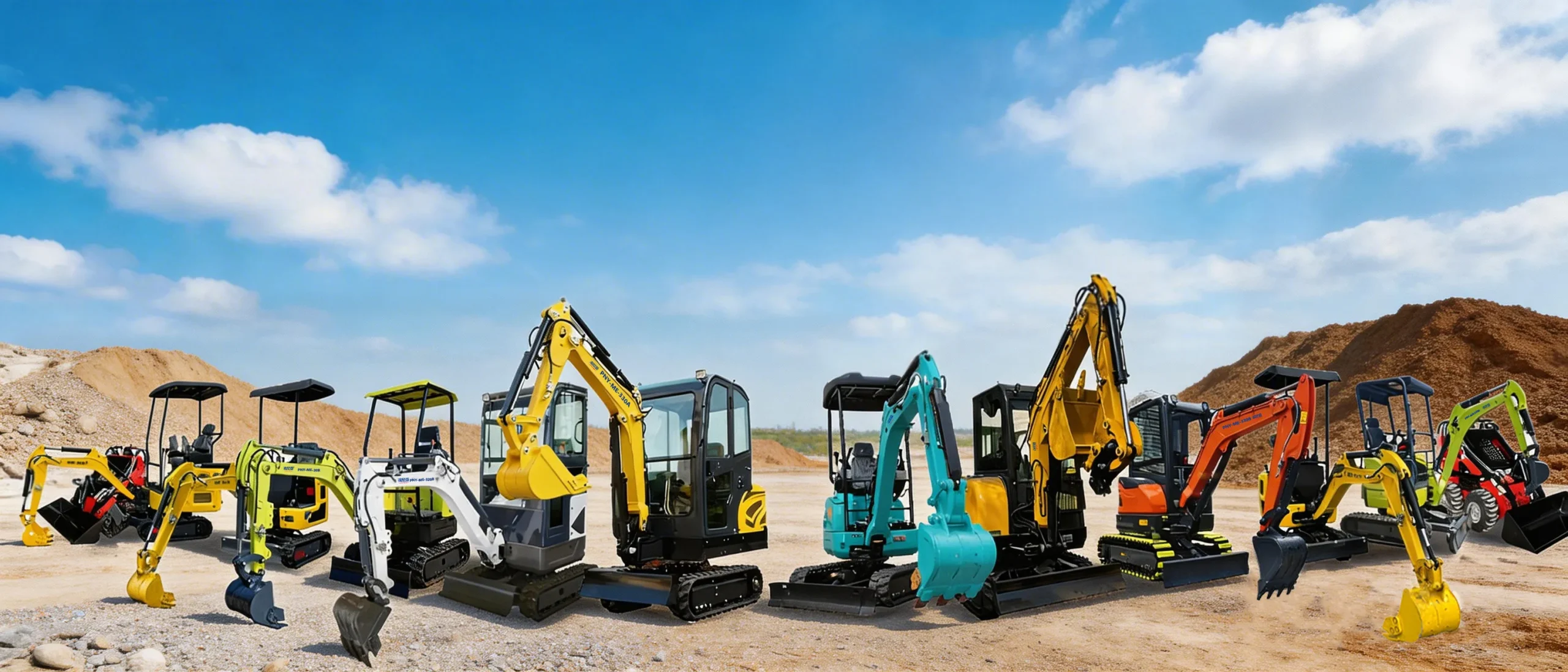
reputable excavator factory
When you hear 'reputable excavator factory,' most people immediately think of the big global brands—Caterpillar, Komatsu, Hitachi. That's the first misconception. Reputation in this industry isn't just a legacy name; it's a living thing built on consistent output, post-sale support, and the ability to solve real, muddy, on-site problems. I've seen factories with gleaming brochures that couldn't manage consistent hydraulic hose routing. Conversely, I've visited workshops in places like Shandong, where the floor isn't spotless, but the foreman could tell you the exact torque sequence for every bolt on a swing bearing, and that knowledge translates directly into machine longevity. That's where the real reputation is forged, often away from the spotlight.
The Foundation: More Than Just Square Meters
A factory's age and footprint are data points, but they're passive. What matters is the evolution they represent. Take a company like Shandong Pioneer Engineering Machinery. Established in 2004 in Jining, that's two decades of navigating China's explosive infrastructure boom. A 1,600-square-meter start-up space tells you they began with focused, probably custom or niche assembly. The key event is their relocation in 2023 to Ningyang County. You don't undertake a move like that lightly. It signals growth, a need for more systematic production lines, and often, a strategic shift towards higher volume or more complex models. That move itself is a marker of a factory transitioning from a small player to a more established, scalable operation. It's a tangible investment in becoming a reputable excavator factory.
The structure of having 'Shandong Hexin' for manufacturing and 'Shandong Pioneer' dedicated to overseas trade is a classic and smart separation. It shows an understanding of the distinct skill sets needed. Manufacturing focuses on QC, cost control, and engineering. The trade arm focuses on logistics, export compliance, and—critically—customer interface. When the sales team in 'Pioneer' feeds back specific requests from Australia or Germany about emission compliance or operator cabin preferences, and Hexin's manufacturing line can adapt, that's the feedback loop of a responsive, reputable operation. It’s not monolithic; it’s specialized.
I remember visiting a factory once that listed a huge area, but half of it was storing finished machines waiting for missing parts. Space means nothing without flow. The fact that Pioneer's trade arm lists specific, demanding markets like the US, Canada, Germany, and Australia is a stronger reputation proxy than any square footage. Those markets have stringent regulations and savvy buyers. You don't get trust and appreciation there with just a cheap price tag. You get it by passing their dealers' pre-shipment inspections, by having parts documentation that meets Tier 4 final standards, and by your machines not failing in the first 500 hours. That list of countries is a de facto audit report.
The Product: Where Reputation is Built or Broken
Everyone talks about the engine and the pump. The true test is in the integration and the so-called 'commodity' parts. A reputable excavator factory has its own philosophy on hydraulic line routing, wire harness bracketing, and access panels. I've opened up excavators from unknown workshops where you need three different socket sizes just to check the battery, and the main valve block is buried under a nest of hoses. Then you look at a machine from a factory that's learned through export, and you'll see color-coded harnesses, service points aligned, and common bolt sizes. This doesn't happen by accident. It happens because the engineering team has spent time with service technicians, and because the factory floor has jigs and templates that enforce this discipline.
They might not manufacture their own cylinders or final drives. Very few do. But their reputation hinges on their sourcing and validation process. Do they just buy the cheapest planetary gear from a local supplier, or do they have a long-term partnership with a known brand like Kawasaki or Linde for hydraulics, even if it's a cost-tiered model? The factory's nameplate goes on the machine, so their reputation is tied to every component's failure. A good factory will have a failure mode analysis for every major bought-in part. They'll know the mean time between failures for their chosen swing motor, not just its price.
We tried a value-line excavator from a new supplier on a light-duty site once. The specs were perfect on paper: same bucket capacity, same engine horsepower. The failure was a $2 seal in the pilot control valve that failed repeatedly, causing jerky movement. The factory's response? They airmailed us a bag of 50 of the same seals, suggesting we replace them as needed. A reputable factory would have dispatched an engineer to understand why the specific seal was failing—was it a material issue, a contamination problem in their assembly line?—and would have upgraded the part for all future production. That incident wasn't about the seal; it was about the factory's quality culture. Pioneer's mention of global customer trust implies they've moved beyond that reactive stage.
The Invisible Backbone: Documentation and Support
This is the unsexy pillar that separates marketing from reputation. Any factory can produce a basic operator's manual. A reputable one produces service manuals with actual torque specs, hydraulic test port locations, and diagnostic fault code trees that are accurate. I've seen manuals that are clearly translated by someone who's never seen an excavator, with hilarious and dangerous results. The documentation that comes with a machine, especially for overseas clients, is a direct reflection of the factory's technical maturity and its respect for the end-user.
Parts availability is the other half. It's easy to promise the world. It's hard to maintain a logically numbered, digitally accessible parts catalogue for machines built 10 years ago. Does the factory have a dedicated parts portal, like the one you might find at https://www.sdpioneer.com, where dealers can look up exploded views? Or is it all done over WeChat with grainy photos? The former shows system investment. When a fuse box blows in Western Australia, the dealer needs the right diagram now, not after a 12-hour time-zone delay. A factory's backend systems for parts identification and global logistics are a huge part of its operational reputation.
I recall a project in Southeast Asia where we needed a proprietary controller for a 7-year-old machine. The original factory had rebranded and disowned the model. We were stuck. A factory that maintains support for its legacy products, even if it charges for the parts, is building decades-long loyalty. It signals they see their machines as 10,000-hour assets, not just products to be sold and forgotten. That long-term view is fundamental.
The Human Element: Experience on the Floor
You can sense a factory's caliber in the first five minutes on the assembly floor. Not by how quiet it is, but by the rhythm. In a mature factory, there's a sequence. The undercarriage is mounted, the slew ring is fitted and torqued in stages with calibrated tools, the mainframe is lowered onto it—it's a ballet. In a less reputable one, it's chaotic; you'll see an engine being shoehorned into a frame that's already fully plumbed, risking hose damage. The 20 years of development mentioned for Pioneer isn't just a number. It means the lead welder has seen a thousand booms, knows where the stress points are, and his team has a procedure for post-weld heat treatment to relieve stress. That's intangible capital.
Another tell is the test area. Does every machine get a basic functional check, or a full performance curve test? A serious factory will have a test pit where machines cycle through digging functions, slew under load, and travel, with sensors checking for hydraulic leaks, abnormal noises, and pressure drops. They'll have a data sheet for each machine that comes off the line. This final gatekeeping is where pride in workmanship becomes a deliverable. It's expensive in time and resources, but it's what prevents a Monday morning machine from being shipped to a customer.
Finally, the interaction with the factory's own people. Can their sales engineers read a hydraulic schematic? Or do they just parrot fuel consumption figures? When you ask a technical question, does it get answered by someone who can explain the trade-off between a variable displacement pump and a load-sensing system for a specific application? That depth of knowledge across the organization is the hallmark of a reputable excavator factory. It suggests accumulated, institutional knowledge, not just a sales operation with a manufacturing subcontractor.
Reputation is a Cycle, Not a Destination
So, circling back. A factory's reputation isn't a static badge it earns once. It's a cycle. It starts with a disciplined build process, resulting in a reliable product. That product performs in the field with minimal downtime, building trust with end-users and dealers. That trust generates repeat orders and valuable feedback. The factory then invests that revenue back into better processes, engineering, and support systems, like the expansion and relocation undertaken by Shandong Pioneer. This, in turn, leads to a more reliable product, and the cycle reinforces itself.
The opposite is a death spiral: cut corners to cut price, leading to field failures, leading to a burned reputation and a retreat to only the most price-sensitive markets. The fact that a company can sustain and grow its export footprint across advanced markets over two decades is the ultimate empirical evidence of reputation. It means they've kept the cycle turning.
When you're evaluating, look past the glossy photos. Look at the company's history of relocation and expansion—signs of reinvestment. Look at the market list—signs of sustained acceptance. Look for clues about their process separation between manufacturing and trade. And if you can, get a look at their service documentation or talk to a long-term dealer. That's where the story of a truly reputable excavator factory is written, not in the brochure, but in the day-to-day grind of building machines that just work, year after year, from the quarries of Texas to the mines of Western Australia. That's the reputation that matters.
Related Products
Related Products