- Chinese
- French
- German
- Portuguese
- Spanish
- Russian
- Japanese
- Korean
- Arabic
- Irish
- Greek
- Turkish
- Italian
- Danish
- Romanian
- Indonesian
- Czech
- Afrikaans
- Swedish
- Polish
- Basque
- Catalan
- Esperanto
- Hindi
- Lao
- Albanian
- Amharic
- Armenian
- Azerbaijani
- Belarusian
- Bengali
- Bosnian
- Bulgarian
- Cebuano
- Chichewa
- Corsican
- Croatian
- Dutch
- Estonian
- Filipino
- Finnish
- Frisian
- Galician
- Georgian
- Gujarati
- Haitian
- Hausa
- Hawaiian
- Hebrew
- Hmong
- Hungarian
- Icelandic
- Igbo
- Javanese
- Kannada
- Kazakh
- Khmer
- Kurdish
- Kyrgyz
- Latin
- Latvian
- Lithuanian
- Luxembou..
- Macedonian
- Malagasy
- Malay
- Malayalam
- Maltese
- Maori
- Marathi
- Mongolian
- Burmese
- Nepali
- Norwegian
- Pashto
- Persian
- Punjabi
- Serbian
- Sesotho
- Sinhala
- Slovak
- Slovenian
- Somali
- Samoan
- Scots Gaelic
- Shona
- Sindhi
- Sundanese
- Swahili
- Tajik
- Tamil
- Telugu
- Thai
- Ukrainian
- Urdu
- Uzbek
- Vietnamese
- Welsh
- Xhosa
- Yiddish
- Yoruba
- Zulu
- Kinyarwanda
- Tatar
- Oriya
- Turkmen
- Uyghur


request compact track loader quote
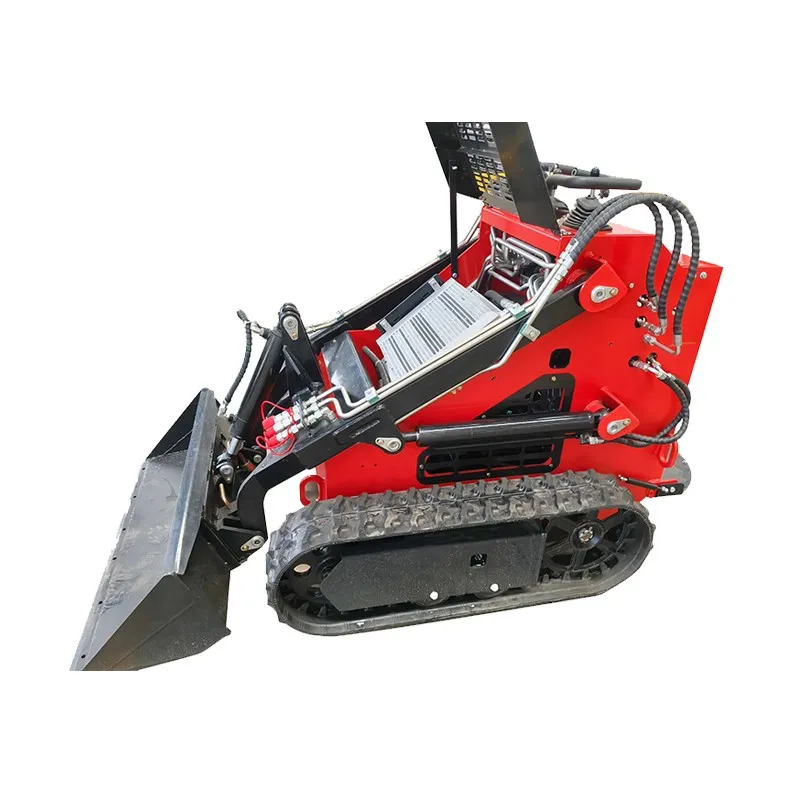
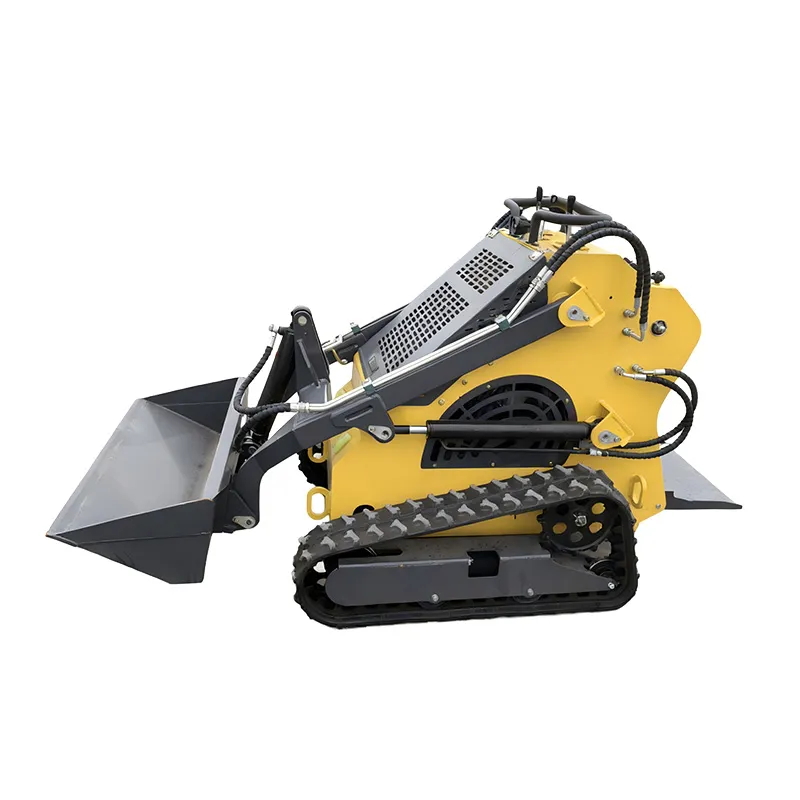
When someone types 'request compact track loader quote' into a search bar, I imagine they're hoping for a simple price list. That's the first mistake. A quote isn't just a number; it's a snapshot of a machine's entire value proposition—or lack thereof—at a specific point in time, for a specific job. Most buyers focus on the sticker price, but the real cost is buried in the attachments, the shipping terms, and the dealer's ability to support that model five years down the line. I've seen too many projects get a great deal on a machine that couldn't handle the ground pressure or lacked the hydraulic flow for a cold planer, turning a perceived savings into a massive operational headache.
The Foundation: Specs Beyond the Brochure
Let's start with the machine itself. You're not just buying horsepower and lift capacity. You're buying a system. For instance, when we evaluated models for a large landscaping contractor, the key wasn't the top radial-lift machine on paper. It was the vertical-lift path of a competing model that gave them the reach and dump height for loading higher-sided trucks efficiently. That single spec, often glossed over in initial request compact track loader quote inquiries, changed the entire productivity math.
Then there's the undercarriage. Not all rubber tracks are equal. The compound, the number of layers, the width—it all matters immensely for wear life. I recall a situation where a client opted for a cheaper, narrower track option for a muddy demo site. The machine spent more time getting stuck and chewing through tracks than working. The quote they saved 5% on was obliterated in three months of downtime and replacement costs. The real quote should always factor in anticipated wear items for your specific application.
Hydraulics are another silent quote killer. Standard auxiliary flow might run a grapple, but what about a forestry mulcher or a trencher? You need high-flow options, and that's not a simple add-on later. It changes the pump, the cooling system, sometimes even the frame. If your request for a compact track loader doesn't specify the intended attachments and their flow requirements, you're almost guaranteed to get a base-model quote that's functionally useless for your needs.
The Hidden Variables in the Quote
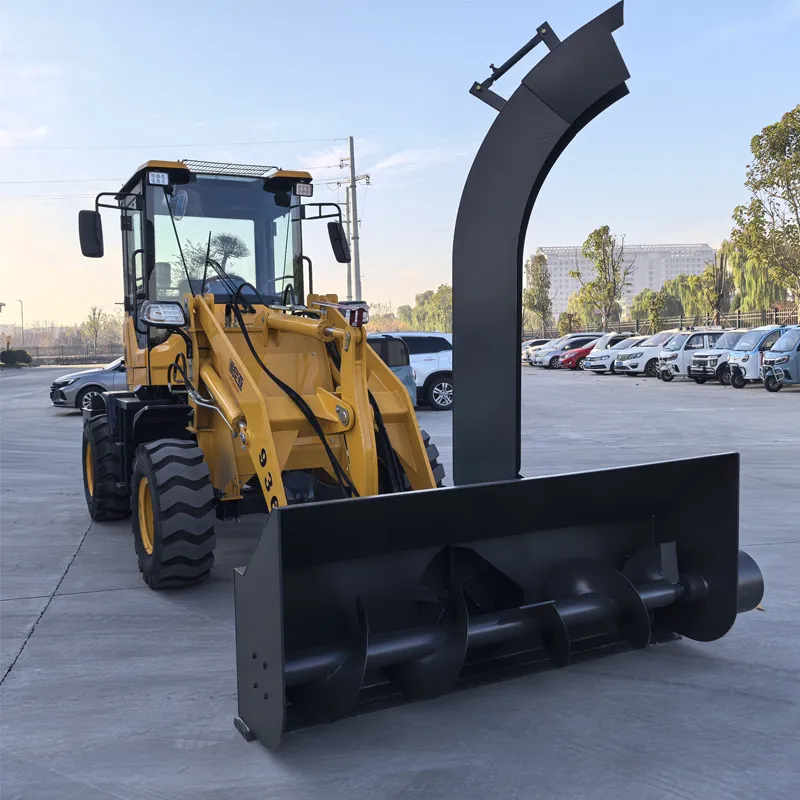
This brings me to attachments. The loader is just the power unit. The real work is done by the bucket, the hammer, the auger. A common pitfall is getting a quote for the machine alone. A meaningful quote must be bundled. I've worked with manufacturers who understand this synergy. For example, when sourcing for a rental fleet, we needed a machine that could seamlessly switch between a dozen attachments. The quote from Shandong Pioneer Engineering Machinery Co., Ltd (you can find their full range at https://www.sdpioneer.com) stood out because they didn't just sell a loader; they provided a compatibility matrix for their own line of grapples, breakers, and snow blowers, with certified flow rates and mounting hardware included. That's a professional quote.
Logistics is where quotes either solidify or fall apart. FOB Factory sounds cheap until you're arranging ocean freight, customs clearance, and final trucking. A quote that includes CIF (Cost, Insurance, and Freight) to a major port, or even delivered to your site, provides a complete financial picture. I remember a project in Australia where the machine price was fantastic, but the shipping and import duties added nearly 30%. The client's budget was blown because the initial compact track loader quote request was myopic.
Warranty and support terms are part of the quote, legally speaking, but often treated as fine print. A one-year/2,000-hour warranty is standard, but what does it cover? Track failure? Hydraulic leaks? More importantly, what's the parts availability? A company with a long track record like Pioneer, established in 2004 and now exporting to the US, Canada, and Germany, typically has a more developed global parts network than a brand-new outfit. That stability translates to less downtime risk, which is an economic value you're buying in the quote.
Case Point: Learning from a Good Quote
Let me give you a concrete example. A civil contractor needed a CTL for backfilling and material handling on a tight urban site. They requested quotes from four suppliers. Three came back with machine price, standard bucket, and a delivery date. The fourth, which they nearly dismissed for being slightly higher, included a site visit recommendation, suggested a wider, low-ground-pressure track option for the soft soil, quoted a high-flow hydraulic circuit prepped for a future vibratory roller, and outlined a 3-year extended warranty option with a local service partner.
They went with the cheaper quote. Six months in, the machine was sinking, the standard-flow hydraulics couldn't run the roller they eventually rented, and they faced a two-week wait for a simple hydraulic hose. The total cost of ownership skyrocketed. The expensive quote was, in reality, the more accurate and economical forecast. This is why a savvy request for quote must dictate the terms: ask for alternative configurations, ask for total delivered cost, ask for a parts lead-time guarantee.
The lesson? A quote is a diagnostic tool. A vague request gets a vague, often useless, response. A detailed request that specifies application, soil conditions, attachment plans, and required support forces the supplier to engage at a technical level. It separates the part-pushers from the solution providers.
The Global Supply Angle
In today's market, your compact track loader quote might come from halfway across the world, and that's not inherently bad. It introduces complexity but also opportunity. Dealing with an export-focused manufacturer requires a different diligence. You're not just evaluating a machine; you're evaluating a company's export competency. Do they understand CE/EPA certifications for your market? Can they provide compliant documentation? Their company history matters.
Take the entity behind sdpioneer.com. Their background shows a 20-year evolution from a 1,600 sqm facility to a recent relocation and expansion in 2023. That signals growth and reinvestment. Their structure—with Shandong Hexin handling manufacturing and Shandong Pioneer handling overseas trade—is a classic and efficient model for serving international markets. When you request a quote from such a source, you're tapping into a dedicated export channel. Their experience shipping to demanding markets like Germany and Australia suggests they're familiar with navigating strict quality and logistics hurdles.
However, this global route demands you ask specific questions in your RFQ: Is this machine EPA Tier 4 Final certified for the USA? What is the lead time for a replacement swing motor in Canada? Can you provide references for projects in similar climates? Their ability to answer these promptly is part of the de facto quote. A manufacturer that has won the trust and appreciation of customers worldwide, as their intro states, should be able to provide that evidence seamlessly.
Bringing It All Together
So, how do you craft a request that gets a real quote? Don't just ask for a price on a CTL. Structure your inquiry like a mini-specification. Lead with your primary application (e.g., land clearing with a mulcher attachment). List your must-have specs (minimum operating weight, high-flow hydraulics, cab type). Define your commercial terms (target delivery port, preferred Incoterm). Ask for the total package price (loader, two key attachments, mounting hardware, and delivery). And finally, request the support details (warranty document, nearest service center, estimated parts lead time).
This approach transforms the process from a price-check into a procurement partnership. It filters out suppliers who can't or won't provide that level of detail. The quote you receive back will be longer, more complex, and infinitely more valuable. It will allow for an apples-to-apples comparison not just on price, but on total project suitability.
In the end, the act of requesting a quote is the first critical step of ownership. A lazy request gets you a number, often a misleading one. A detailed, application-driven request gets you a plan—a financial and operational blueprint for the machine's role in your business. That's the difference between buying a piece of equipment and investing in a productive asset. The next time you go to request that compact track loader quote, remember you're not just asking for a cost; you're soliciting a proposal for a business solution. Frame it accordingly.
Related Products
Related Products