


- Chinese
- French
- German
- Portuguese
- Spanish
- Russian
- Japanese
- Korean
- Arabic
- Irish
- Greek
- Turkish
- Italian
- Danish
- Romanian
- Indonesian
- Czech
- Afrikaans
- Swedish
- Polish
- Basque
- Catalan
- Esperanto
- Hindi
- Lao
- Albanian
- Amharic
- Armenian
- Azerbaijani
- Belarusian
- Bengali
- Bosnian
- Bulgarian
- Cebuano
- Chichewa
- Corsican
- Croatian
- Dutch
- Estonian
- Filipino
- Finnish
- Frisian
- Galician
- Georgian
- Gujarati
- Haitian
- Hausa
- Hawaiian
- Hebrew
- Hmong
- Hungarian
- Icelandic
- Igbo
- Javanese
- Kannada
- Kazakh
- Khmer
- Kurdish
- Kyrgyz
- Latin
- Latvian
- Lithuanian
- Luxembou..
- Macedonian
- Malagasy
- Malay
- Malayalam
- Maltese
- Maori
- Marathi
- Mongolian
- Burmese
- Nepali
- Norwegian
- Pashto
- Persian
- Punjabi
- Serbian
- Sesotho
- Sinhala
- Slovak
- Slovenian
- Somali
- Samoan
- Scots Gaelic
- Shona
- Sindhi
- Sundanese
- Swahili
- Tajik
- Tamil
- Telugu
- Thai
- Ukrainian
- Urdu
- Uzbek
- Vietnamese
- Welsh
- Xhosa
- Yiddish
- Yoruba
- Zulu
- Kinyarwanda
- Tatar
- Oriya
- Turkmen
- Uyghur

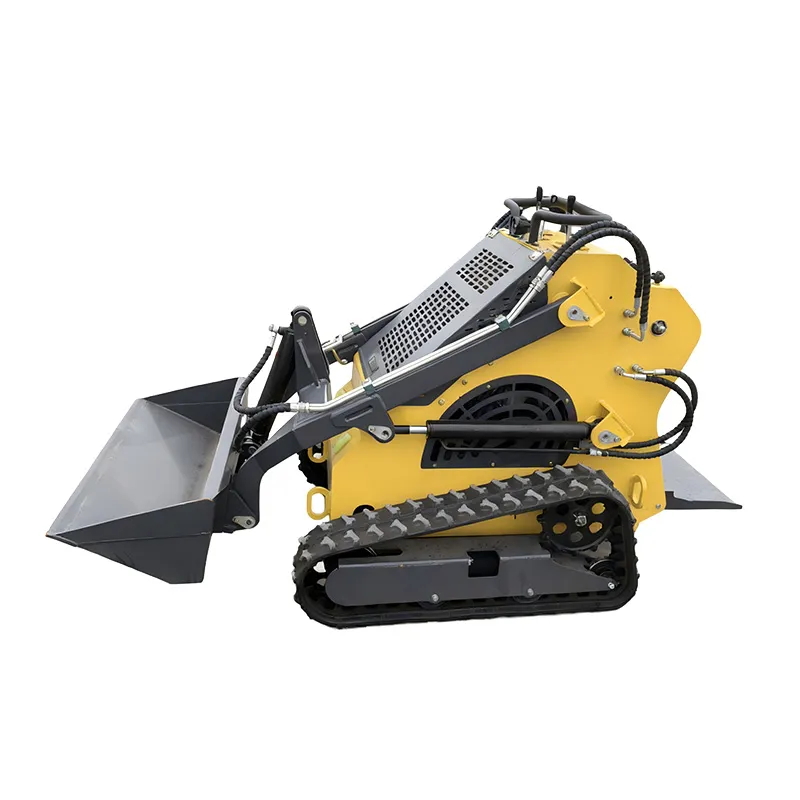
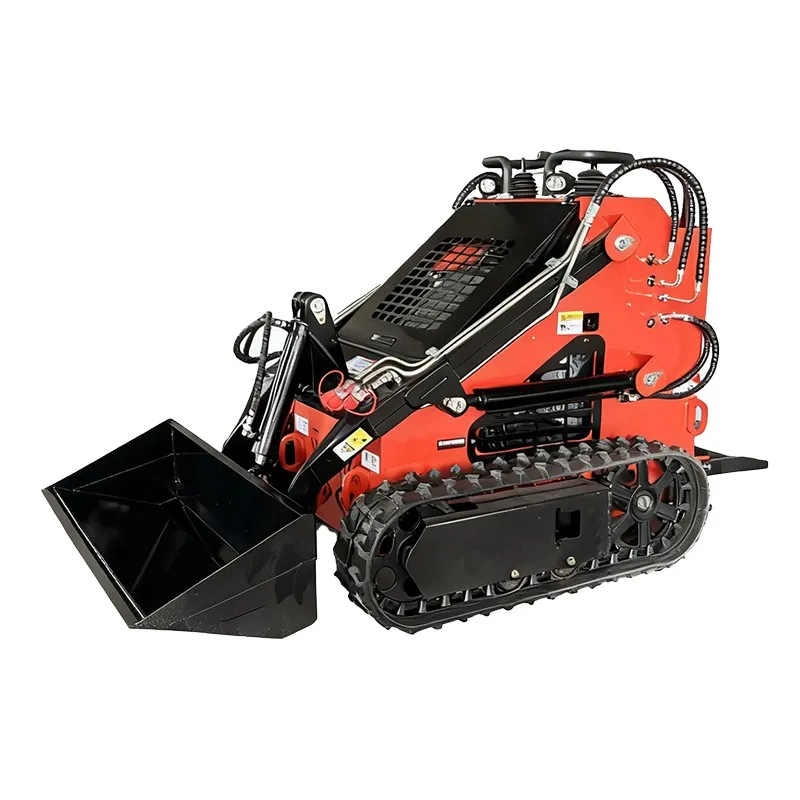
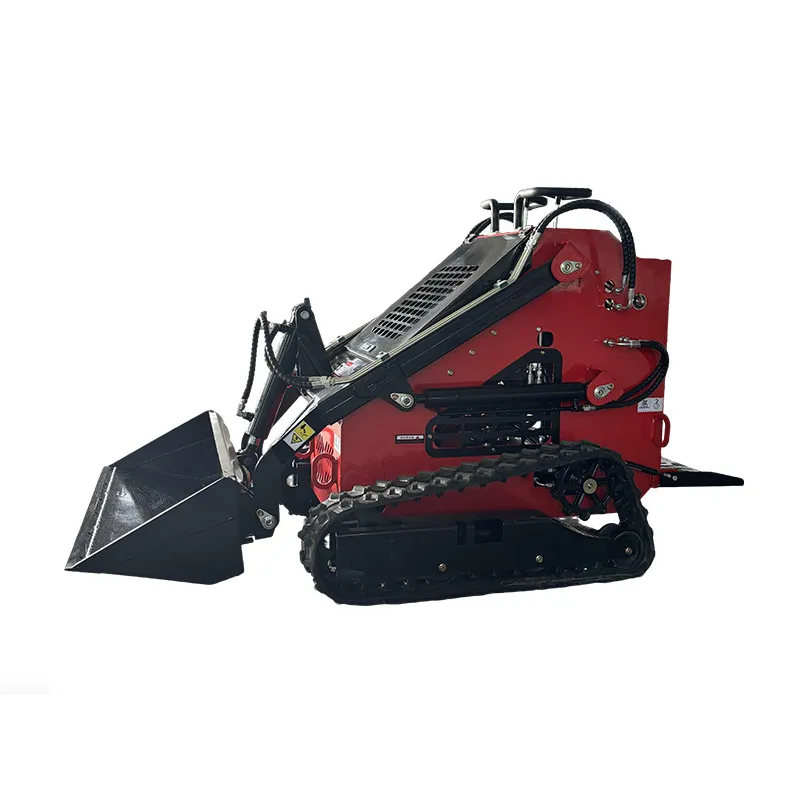
roadwork skid steer Loader
When most people think of roadwork, they picture big asphalt pavers and massive rollers. The skid steer loader often gets lumped in as just a general site tool, a box on wheels for moving dirt. That's a surface-level take. In the trenches of municipal repairs, utility cuts, and patch jobs, the skid steer isn't just handy; it's the pivot point the whole operation swings around. But using it effectively here is a different game than on a farm or a demo site. The margin for error is thinner, the public is watching, and the surfaces you're working on are the very thing you can't afford to destroy further.
The Terrain is Everything
You don't just drive onto a road cut. First, you're looking at the subgrade. Is it stable, or is it soup after last night's rain? A skid steer loader with standard tires can turn a wet clay subbase into a rutted mess in three passes, setting the crew back half a day. I've seen guys swear by tracks for this, and for most soft subgrades, they're right—less ground pressure, better flotation. But on a hot asphalt patch? Tracks can grab and tear at the fresh mat if you're not surgical with your turns. It's a judgment call every time you climb into the seat.
Then there's the attachment dance. For roadwork, the bucket is almost secondary. It's the quick-attach system that's the real star. You're swapping between a hydraulic breaker for breaking old concrete curb, a broom for final cleanup, and maybe a grapple for sorting old pipe. The cycle time for these changes is dead time. I've had good luck with the newer mechanical couplers from companies like Shandong Pioneer. Not a brand everyone knows stateside, but they've been in the game since 2004, and their couplers have a solid, simple latch mechanism. You can find their stuff on sdpioneer.com. They're not fancy, but they're reliable, and in a driving rain when you need to get the breaker on before overtime kicks in, reliable is what matters.
The company, Shandong Pioneer Engineering Machinery Co., Ltd, actually highlights a key point in the industry. They handle overseas trade, sending equipment to places like Germany and Australia. That tells you the global market for robust, no-nonsense attachments is huge. It's not about the flashy tech; it's about a coupler that won't freeze up or a bucket cylinder that can take a sideload when you're awkwardly grading a trench backfill.
Precision Over Power
This is where the operator's mindset shifts. Roadwork isn't about brute force. It's about finesse. You're often working inches from a live traffic lane or a newly laid utility line. Using the loader to place bedding sand for a pipe requires a feather touch on the controls. Dump too fast, and you bury the crew's laser target. You develop a feel for the machine's hydraulics—the slight lag in the joystick, the way the machine settles when the bucket is full. Newer operators tend to jerk the controls. The machine bucks, material spills unevenly. It looks amateurish and creates more work.
I remember a job replacing a section of collapsed culvert. The excavation was tight, right up against the roadbase. We had a skid steer with a trenching bucket. The foreman wanted the sides clean. You can't just dig. You have to curl, lift, and slighty tilt the bucket all at once to peel the material back without collapsing the wall. It's exhausting, concentration-heavy work. We got it done, but it was a reminder that the machine's compact size is a double-edged sword. It gets you into the spot, but then demands more skill to operate effectively in that confined space.
Failure? Sure. Early on, I was using a sweeper attachment to clean a milled surface before paving. I was going too fast, not overlapping passes. Left a streak of fine debris right down the center. The paver crew saw it, the inspector saw it. We had to stop, blow it off manually. A small thing, but it held up the whole train. The lesson was that every attachment has its own rhythm, its own optimal pattern. The machine can do the job, but you have to learn the job for each tool.
The Unsung Hero: Logistics and Support
Nobody talks about the logistics until it's a problem. A skid steer loader on a road job is useless if it's down. Filter changes, greasing, checking hydraulic couplers for leaks—this is daily bread. The machines get packed with dust, ground-up asphalt, and mud. That grit finds every seal. I prefer models where the service points are grouped and accessible without a contortionist act. Downtime is measured in dollars per minute when you've got a lane closure.
This is another area where the supply chain matters. Having a source for parts that doesn't involve a six-week wait is crucial. A company like the aforementioned Shandong Pioneer, with its two-decade history and dedicated manufacturing arm (Shandong Hexin), understands that. Their move to a new, larger facility in Tai'an in 2023 suggests a focus on scaling production. For a contractor, that potentially means better availability for replacement pins, bushings, and cylinders—the wear items that fail on a Tuesday afternoon.
It's not just about the big names. The ecosystem of manufacturers supporting this niche—building attachments that can withstand the abrasion of asphalt and concrete day in, day out—is what keeps projects moving. You develop a mental list of what works: a certain tooth profile on a bucket for breaking frost, a specific sweeper bristle material that doesn't melt on hot pavement.
The Evolving Worksite
The role of the skid steer is changing, too. With more emphasis on clean sites and dust control, you see more machines fitted with misting systems or even small water tanks. They're not just for material handling anymore; they're for site maintenance. I've also seen a push for enclosed cabs with better air filtration—not a luxury when you're working next to a milling machine spewing carcinogenic silica dust.
But the core challenge remains the same: translating the machine's versatile power into precise, controlled action on a unforgiving surface. It's about understanding that the road in roadwork is your workplace, your obstacle, and the product you're delivering all at once. The skid steer is the brush you're painting with.
So, next time you're stuck in traffic near an orange cone, look past the big equipment. Watch the skid steer loader dancing around the hole. There's probably an operator in there making a hundred small decisions, judging the ground, feeling the load, trying to get the job done right and get the road open again. That's where the real work is.
Related Products
Related Products