- Chinese
- French
- German
- Portuguese
- Spanish
- Russian
- Japanese
- Korean
- Arabic
- Irish
- Greek
- Turkish
- Italian
- Danish
- Romanian
- Indonesian
- Czech
- Afrikaans
- Swedish
- Polish
- Basque
- Catalan
- Esperanto
- Hindi
- Lao
- Albanian
- Amharic
- Armenian
- Azerbaijani
- Belarusian
- Bengali
- Bosnian
- Bulgarian
- Cebuano
- Chichewa
- Corsican
- Croatian
- Dutch
- Estonian
- Filipino
- Finnish
- Frisian
- Galician
- Georgian
- Gujarati
- Haitian
- Hausa
- Hawaiian
- Hebrew
- Hmong
- Hungarian
- Icelandic
- Igbo
- Javanese
- Kannada
- Kazakh
- Khmer
- Kurdish
- Kyrgyz
- Latin
- Latvian
- Lithuanian
- Luxembou..
- Macedonian
- Malagasy
- Malay
- Malayalam
- Maltese
- Maori
- Marathi
- Mongolian
- Burmese
- Nepali
- Norwegian
- Pashto
- Persian
- Punjabi
- Serbian
- Sesotho
- Sinhala
- Slovak
- Slovenian
- Somali
- Samoan
- Scots Gaelic
- Shona
- Sindhi
- Sundanese
- Swahili
- Tajik
- Tamil
- Telugu
- Thai
- Ukrainian
- Urdu
- Uzbek
- Vietnamese
- Welsh
- Xhosa
- Yiddish
- Yoruba
- Zulu
- Kinyarwanda
- Tatar
- Oriya
- Turkmen
- Uyghur


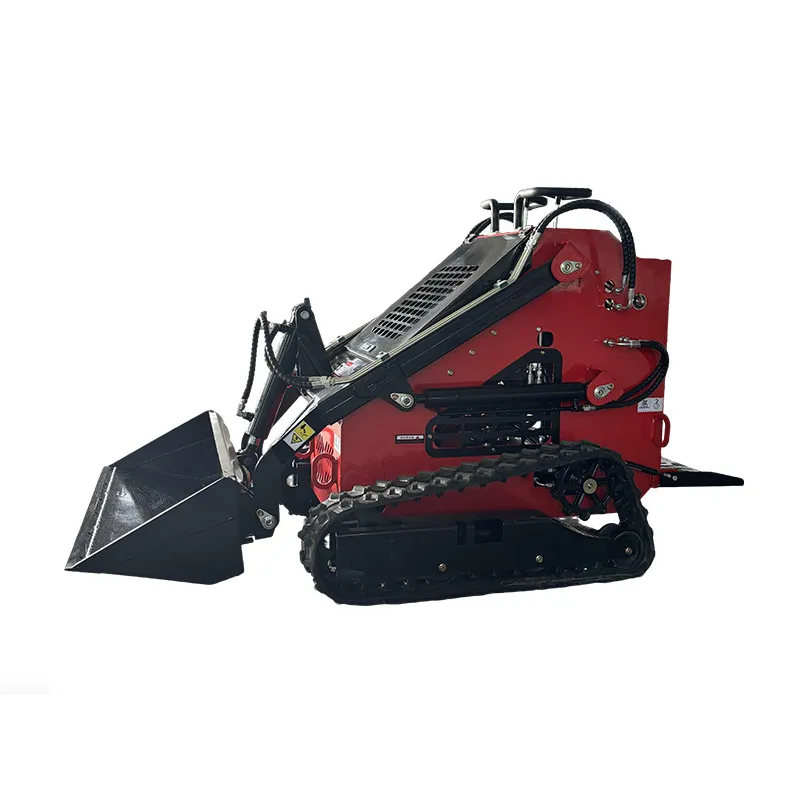
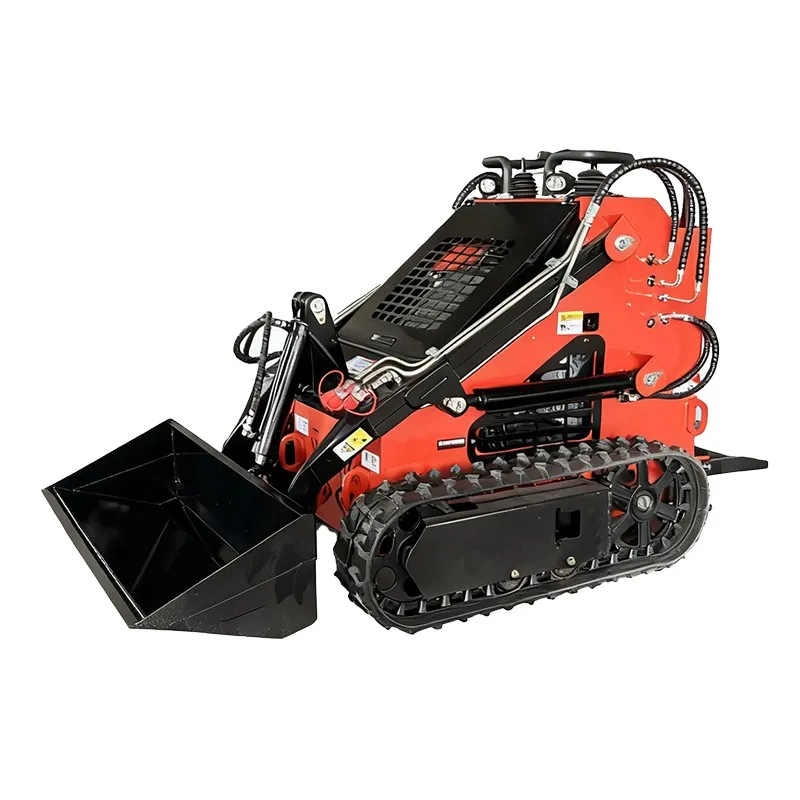
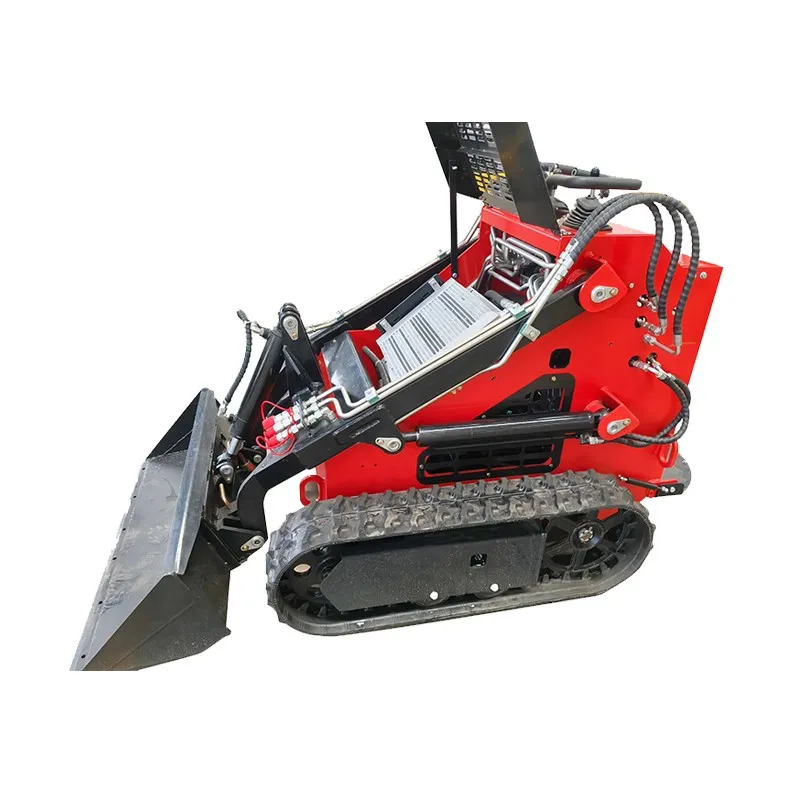
robot skid steer loader
When you hear 'robot skid steer loader', the immediate image is often a sleek, fully autonomous machine gliding silently across a perfectly prepped site. That's the marketing dream, and frankly, a common industry misconception. The reality on the ground is far messier, more incremental, and frankly, more interesting. It's not about replacing the operator with a sci-fi bot overnight; it's about solving specific, gritty problems—like material handling in a confined, hazardous demo site or repetitive tasks in extreme temperatures—where putting a person in the cab is inefficient or outright dangerous. The jump from a standard skid steer loader to a robotic one isn't just a software upload; it's a fundamental rethinking of machine architecture, control systems, and most importantly, the work process itself.
The Core Challenge: More Than Just Autonomy
The biggest hurdle isn't the autonomous navigation tech itself—that's advanced rapidly. It's making that tech survive the brutal operating envelope of a real skid steer loader. We're talking about intense, constant vibration from the hydraulic system and uneven terrain, dust that can coat LiDAR sensors in minutes, and electromagnetic interference from the machine's own powerful actuators. I've seen early prototypes where the localization system would simply 'jump' a few centimeters every time the auxiliary hydraulics kicked in, making precision bucket work impossible. The robot part is delicate; the skid steer environment is vicious. The engineering challenge is in the marriage of the two.
This leads to a critical design philosophy split. Do you retrofit an existing OEM machine with a 'kit', or do you build the robot skid steer loader from the ground up? Retrofitting seems faster and cheaper, and companies like Shandong Pioneer Engineering Machinery Co., Ltd have the deep catalog of proven skid steer chassis to work from. Their two-decade experience in manufacturing and exporting globally means they understand machine durability. But bolting on sensors and controllers often creates a fragile system. The clean-sheet approach allows for integrated wiring harnesses, vibration-damped sensor mounts, and redundant systems, but you lose the benefit of a battle-tested mechanical platform. It's a trade-off between robustness and integration.
In practice, most successful applications I've witnessed start with a very narrow focus. Not a fully autonomous loader for any task, but a robotic machine for moving wood chips from Point A to Point B along a fixed, geofenced path in a recycling yard. Limiting the operational design domain (ODD) is key. It allows you to harden the system for that specific set of conditions. The machine from Shandong Pioneer or others might form a solid base, but the value is added by tightly defining what, exactly, this robot is built to do. A jack-of-all-trades autonomous loader is still a fantasy on most real-world sites.
Practical Applications and the Dull, Dirty, Dangerous Rule
The real proving grounds aren't tech demos; they're unpleasant jobs. Take interior demolition. Confined space, poor air quality, risk of collapse. Sending a tele-operated or semi-autonomous skid steer loader in to break concrete and load debris is a perfect use case. Here, the operator stays outside in a clean air-conditioned van, controlling the machine via a feed from its multiple cameras. This isn't full AI autonomy, but it's a crucial step. It shifts the operator from an onboard driver to a site supervisor, potentially managing multiple machines. This is where export-focused manufacturers have an edge, as they're often more agile in creating custom, application-specific machine configurations for such niche markets.
Another area is in extreme environments. Think asphalt plants or fertilizer storage facilities. The heat and fumes in one, and the corrosive dust in the other, are terrible for human operators. A robotic loader tasked with routine stockpile management can run on a pre-set schedule, monitored remotely. The failure point here is often not the autonomy, but the machine's endurance. Can the seals withstand the temperature? Can the electronics be purged and sealed against corrosive agents? This is where the manufacturing pedigree of a company with 20 years in the game, like the one behind sdpioneer.com, becomes relevant. Their experience in building machines that survive long-term in varied global climates translates directly to building a platform that can be robotized reliably.
I recall a trial at a large composting facility. The goal was to have a robotic machine turn windrows. The navigation worked fine on a dry day. But after a rain, the soft, uneven ground caused enough wheel slip that the machine's odometry was completely off, and it would drift out of its intended path, threatening to collapse the windrow walls. The solution wasn't more advanced AI; it was a combination of better traction (wider, more aggressive tires) and a secondary, simple ultrasonic sensor to keep a fixed distance from the guide wall. It was a mechanical and sensor fusion fix, not a software miracle. This is the unglamorous reality of field robotics.
The Critical Role of Base Machine Quality
You cannot build a reliable robotic application on an unreliable machine. This seems obvious, but it's often overlooked in the rush to showcase autonomy. If a standard loader has chronic hydraulic overheating issues or electrical gremlins, automating it just creates an unreliable robot. The base machine must be over-engineered for consistency. When I evaluate a platform, I look at the simplicity and robustness of its core systems. Are the hydraulic valve banks easily accessible? Is the wiring loom organized and protected? Companies that have evolved through years of export, dealing with the logistical nightmare of overseas breakdowns, tend to build more serviceable and durable machines out of necessity. A robot skid steer loader is a terrible thing to have stuck in a remote location because of a failed $50 sensor that requires disassembling half the cab to reach.
This is why the move of a manufacturer like Shandong Pioneer Engineering Machinery to a new, larger production facility in 2023 is a noteworthy data point. It signals an investment in scaling and potentially modernizing production lines. For robotics, consistent manufacturing quality is non-negotiable. Slight variations in frame alignment or hydraulic hose routing between unit 1 and unit 100 can play havoc with sensor calibration and mounting brackets. A mature, quality-controlled manufacturing process is a silent enabler for scalable robotic conversion.
The export history to markets like the US, Canada, Germany, and Australia is also telling. Meeting the regulatory and performance expectations of these markets requires a certain baseline of machine quality and documentation. It creates a foundation of compliance (think ROPS/FOPS, emission standards) that a robotics integrator doesn't have to solve from scratch. When you start with a machine that already has a CE mark or meets ANSI standards, you're ahead of the game.
Looking Ahead: Incremental Integration, Not Revolution
The future of the robot skid steer loader isn't a sudden flip of a switch. It's the gradual integration of automated functions into otherwise standard machines. We're already seeing it: return-to-dig functions, auto-leveling buckets, and even simple perimeter following for repetitive tasks. These are building blocks. The next step might be assisted tramming, where the operator drives to a dig face, then engages an auto-dig and dump cycle before manually tramming to the next location.
The full-blown, lights-out robotic site is decades away for most applications. The variability is too high. But the targeted, task-specific robotic machine is here now, and its success hinges on the unsexy details: hardened sensor packages, ultra-reliable base machines from experienced manufacturers, and a brutally practical focus on a single, well-defined job. It's less about artificial intelligence and more about engineered resilience. The companies that will lead won't necessarily be the Silicon Valley startups, but the traditional equipment makers who deeply understand machine endurance and can partner effectively with tech firms to integrate solutions that actually work in the mud, dust, and chaos of a real worksite.
In the end, the keyword is loader. It must first and foremost be an excellent, durable, capable loader. The robot prefix is a modifier that adds specific functionality for specific cases. Forget the glossy videos. Go visit a site where one is actually working, and you'll hear the same clatter of hydraulics, see the same bucket digging into the same dirt. The only difference might be the empty cab. And that, when applied to the right task, is progress enough.
Related Products
Related Products