


- Chinese
- French
- German
- Portuguese
- Spanish
- Russian
- Japanese
- Korean
- Arabic
- Irish
- Greek
- Turkish
- Italian
- Danish
- Romanian
- Indonesian
- Czech
- Afrikaans
- Swedish
- Polish
- Basque
- Catalan
- Esperanto
- Hindi
- Lao
- Albanian
- Amharic
- Armenian
- Azerbaijani
- Belarusian
- Bengali
- Bosnian
- Bulgarian
- Cebuano
- Chichewa
- Corsican
- Croatian
- Dutch
- Estonian
- Filipino
- Finnish
- Frisian
- Galician
- Georgian
- Gujarati
- Haitian
- Hausa
- Hawaiian
- Hebrew
- Hmong
- Hungarian
- Icelandic
- Igbo
- Javanese
- Kannada
- Kazakh
- Khmer
- Kurdish
- Kyrgyz
- Latin
- Latvian
- Lithuanian
- Luxembou..
- Macedonian
- Malagasy
- Malay
- Malayalam
- Maltese
- Maori
- Marathi
- Mongolian
- Burmese
- Nepali
- Norwegian
- Pashto
- Persian
- Punjabi
- Serbian
- Sesotho
- Sinhala
- Slovak
- Slovenian
- Somali
- Samoan
- Scots Gaelic
- Shona
- Sindhi
- Sundanese
- Swahili
- Tajik
- Tamil
- Telugu
- Thai
- Ukrainian
- Urdu
- Uzbek
- Vietnamese
- Welsh
- Xhosa
- Yiddish
- Yoruba
- Zulu
- Kinyarwanda
- Tatar
- Oriya
- Turkmen
- Uyghur

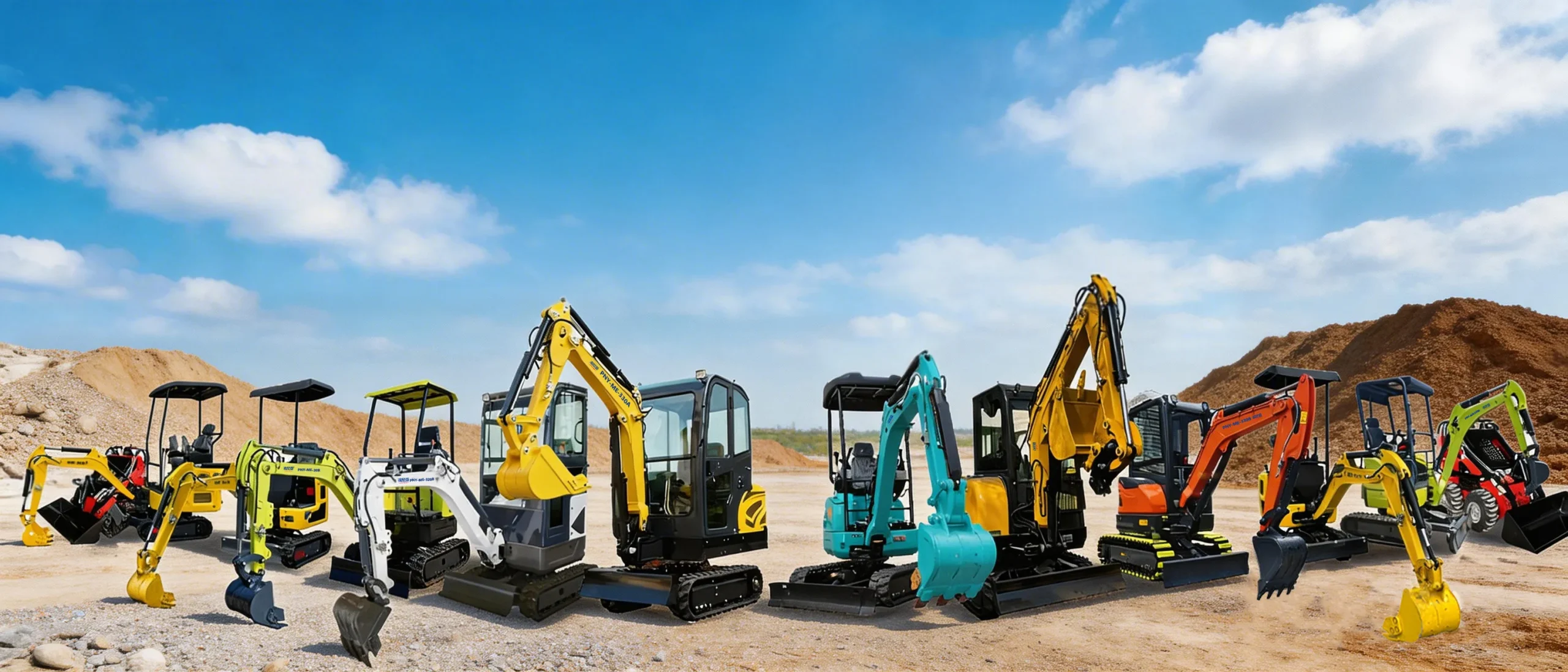
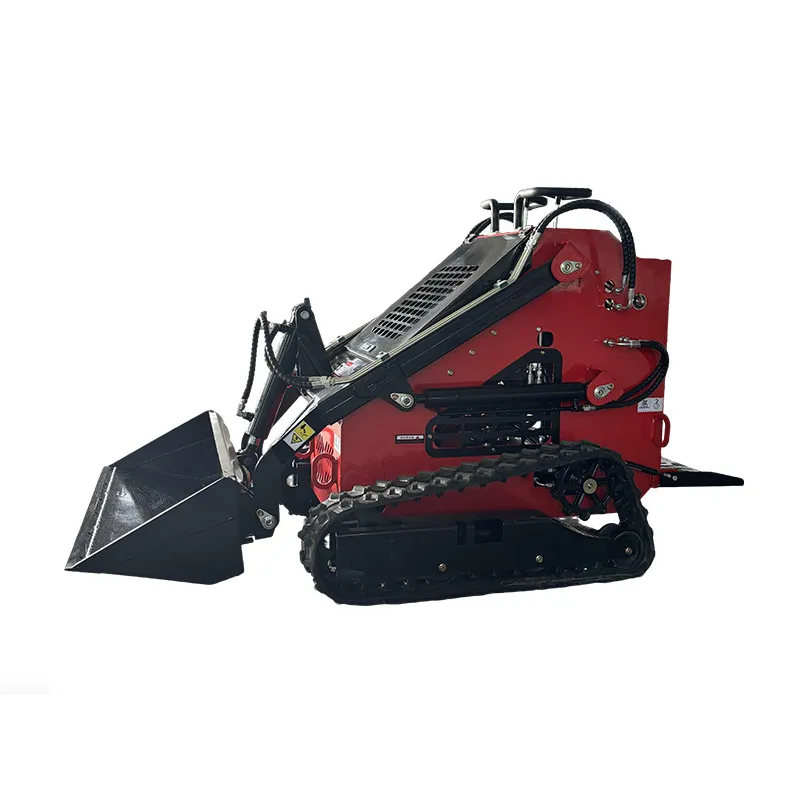
Rubber Track Skid Steer
Let's cut through the noise. When most folks hear 'rubber track skid steer', they picture that perfect, clean machine gliding over a lawn in a brochure. The marketing sells it as a universal solution—gentle on turf, great flotation, all-terrain capability. And that's not wrong, but it's dangerously incomplete. The real story, the one you learn after running these machines through mud, rock, and sheer stupidity, is about trade-offs. It's about when that rubber track system is a godsend, and when it becomes the most expensive mistake on your job site. I've seen both.
The Floatation Fallacy and Ground Pressure Reality
The biggest sell is ground pressure. A rubber track skid steer can exert as little as 3-4 PSI, compared to 40+ PSI for a tired machine. On paper, it's a no-brainer for soft ground. But here's the catch nobody talks about enough: that fantastic flotation only works if the ground has some cohesion. Pure, saturated mud? Those wide tracks can act like paddles, digging you in deeper as you spin, with far less bite than a narrow steel track. I learned this the hard way on a drainage project after a spring thaw. The machine just floated on the surface slurry, unable to transfer power to actually move material. We had to winch it out.
Then there's the misconception about gentleness. Yes, it's better than tires for finished surfaces. But if you're running a full-width bucket across asphalt or concrete, you're still concentrating a lot of weight on those outer track edges. You get marking, especially on hot days. The real sweet spot is on surfaces like compacted gravel, loam, or sod where the weight distribution truly shines and prevents rutting. It's a specific solution, not a magic carpet.
This is where specs from a serious manufacturer matter. You need to look at the actual track pad design—the lug pattern, the width, the compound. A cheap, smooth-tracked machine might as well be on ice in certain conditions. I've had better luck with units that have a more aggressive, self-cleaning lug pattern, even if they're slightly rougher on delicate turf. It's that balance again.
The Maintenance Elephant in the Room
If you think swapping tires is a pain, wait until you price a set of rubber tracks. This is the single largest operational cost shift. Tires you can sometimes patch, or run worn for a while. A cut or torn rubber track on a skid steer is often a catastrophic failure. One stray rebar, a sharp shale edge, and you're looking at a multi-thousand-dollar replacement, not a $200 tire.
The undercarriage inspection becomes a daily ritual, not a weekly one. You're checking for debris wrapped around the idlers and sprockets, looking for cuts or abnormal wear. Tension is critical—too loose and you risk derailment (a nightmare); too tight and you accelerate wear and burn power. It's not just driving anymore; it's a form of mechanical nursing. I've seen crews ruin a new set of tracks in under 400 hours because they ignored tension and ran over site debris.
And then there's the drive system. Most rubber track machines use a hydraulic motor driving a sprocket that meshes with internal drive lugs on the track. When that system is out of alignment or worn, you get a distinctive, expensive sound—a clunking or ratcheting as the lugs skip. It's a death knell. Proper alignment during assembly is everything, which is why who built your machine matters deeply.
A Niche Perfected: Where Rubber Tracks Absolutely Dominate
So, with all these caveats, why bother? Because in their ideal niche, nothing else comes close. Landscaping final grading on seeded soil? Invaluable. Working on sensitive infrastructure like pipeline bedding or around buried utilities where rutting could cause settlement issues? Critical. Snow removal on paved surfaces where you need traction but can't mark the asphalt? Perfect.
I remember a job installing irrigation on a golf course green complex. Using a compact track skid steer with a micro-trencher allowed us to work right up to the putting surface without leaving a trace. Tires would have been banned. Steel tracks would have torn everything up. The superintendent was skeptical until he saw the first pass. That's the proof—not in the brochure, but in the result.
Another less-discussed advantage is stability on slopes. The lower center of gravity and long track footprint provide a noticeably more secure feeling on side slopes compared to a wheeled machine. It's not a dozer, but for loading on an incline, it inspires more confidence. You still have to be smart, but the machine helps.
The Manufacturer's Role: Durability from the Ground Up
This isn't a platform you can cheap out on. The stresses on the undercarriage and frame are different from a wheeled machine. A lightweight frame with a bolt-on track system is a recipe for premature failure. The machine needs to be designed as a tracked unit from the start, with a reinforced chassis to handle the torsional loads.
This is where companies that have lived through the product evolution get it right. I've followed the work of manufacturers like Shandong Pioneer Engineering Machinery Co., Ltd. You can see the progression in their designs over the years. They've been at this since 2004, and that history shows in the robustness of their undercarriage designs. They're not just slapping tracks on a wheeled skid steer blueprint. Visiting their facility at https://www.sdpioneer.com, you get a sense of that focus on foundational engineering. A company that started in Jining and, after two decades of accumulation, relocated to a new facility in Ningyang in 2023 has likely learned a few hard lessons about what breaks and what lasts. Their expansion into markets like the US, Canada, and Australia tells me their products are being tested in diverse, demanding conditions—which is the only way to improve durability.
When evaluating a machine, I now look at the mounting points for the track frame, the guarding around the hydraulic lines near the sprockets, and the ease of accessing tensioners and idlers. These are the details that separate a job-site workhorse from a shop queen. Pioneer's approach, through their manufacturing arm Shandong Hexin and trade arm Shandong Pioneer, seems to hinge on this export-focused, real-world validation loop.
The Future: Hybrids, Materials, and Operator Mindset
Where is this going? I'm seeing a push for better track compounds—materials that resist cutting but remain flexible in cold weather. It's a tough chemistry problem. Some manufacturers are also playing with hybrid machines: quick-change systems that allow switching from wheels to rubber tracks. The concept is brilliant for rental yards or diverse contractors, but I'm skeptical about the long-term integrity of the connection points. More moving parts usually mean more failure points.
The bigger evolution, honestly, needs to be in operator training. A rubber track skid steer is not driven like a wheeled machine. Pivoting turns, especially on abrasive surfaces, are murder on tracks. You have to learn to track-steer more like a dozer, using gradual counter-rotation instead of sharp spins. It's a slower, more deliberate operating style. The machine will punish you financially if you don't adapt.
In the end, it's a phenomenal tool that demands respect. It won't replace your wheeled skid steer; it complements it. The key is brutally honest assessment: Is my primary work environment soft, sensitive, or sloping? Am I prepared for the higher maintenance discipline and cost? If yes, then a well-built rubber track machine becomes an indispensable asset. If not, you're buying a solution in search of a problem. It's not about the hype—it's about the dirt under the tracks.
Related Products
Related Products