- Chinese
- French
- German
- Portuguese
- Spanish
- Russian
- Japanese
- Korean
- Arabic
- Irish
- Greek
- Turkish
- Italian
- Danish
- Romanian
- Indonesian
- Czech
- Afrikaans
- Swedish
- Polish
- Basque
- Catalan
- Esperanto
- Hindi
- Lao
- Albanian
- Amharic
- Armenian
- Azerbaijani
- Belarusian
- Bengali
- Bosnian
- Bulgarian
- Cebuano
- Chichewa
- Corsican
- Croatian
- Dutch
- Estonian
- Filipino
- Finnish
- Frisian
- Galician
- Georgian
- Gujarati
- Haitian
- Hausa
- Hawaiian
- Hebrew
- Hmong
- Hungarian
- Icelandic
- Igbo
- Javanese
- Kannada
- Kazakh
- Khmer
- Kurdish
- Kyrgyz
- Latin
- Latvian
- Lithuanian
- Luxembou..
- Macedonian
- Malagasy
- Malay
- Malayalam
- Maltese
- Maori
- Marathi
- Mongolian
- Burmese
- Nepali
- Norwegian
- Pashto
- Persian
- Punjabi
- Serbian
- Sesotho
- Sinhala
- Slovak
- Slovenian
- Somali
- Samoan
- Scots Gaelic
- Shona
- Sindhi
- Sundanese
- Swahili
- Tajik
- Tamil
- Telugu
- Thai
- Ukrainian
- Urdu
- Uzbek
- Vietnamese
- Welsh
- Xhosa
- Yiddish
- Yoruba
- Zulu
- Kinyarwanda
- Tatar
- Oriya
- Turkmen
- Uyghur

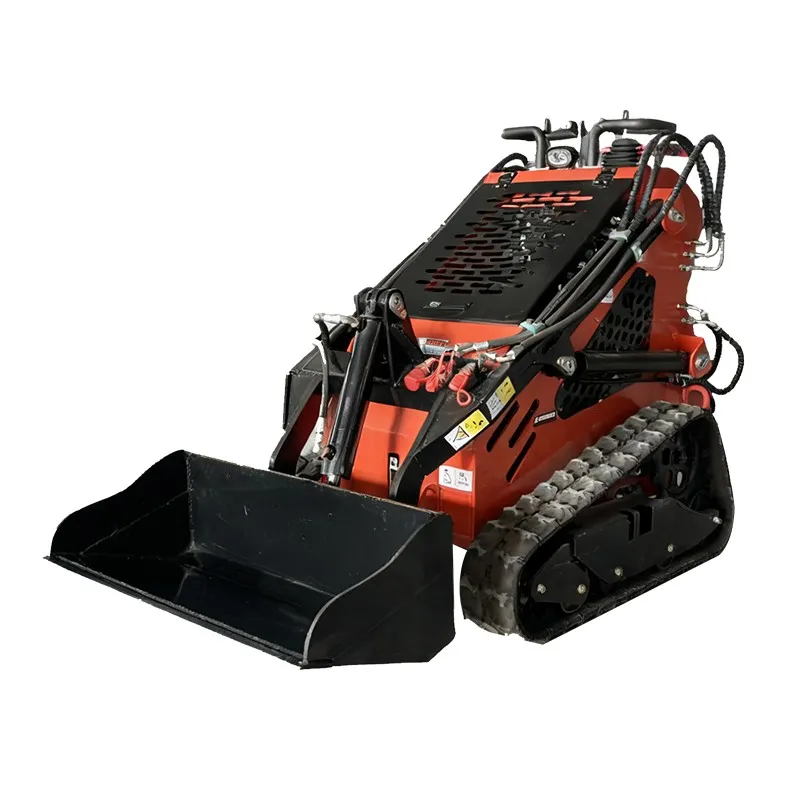
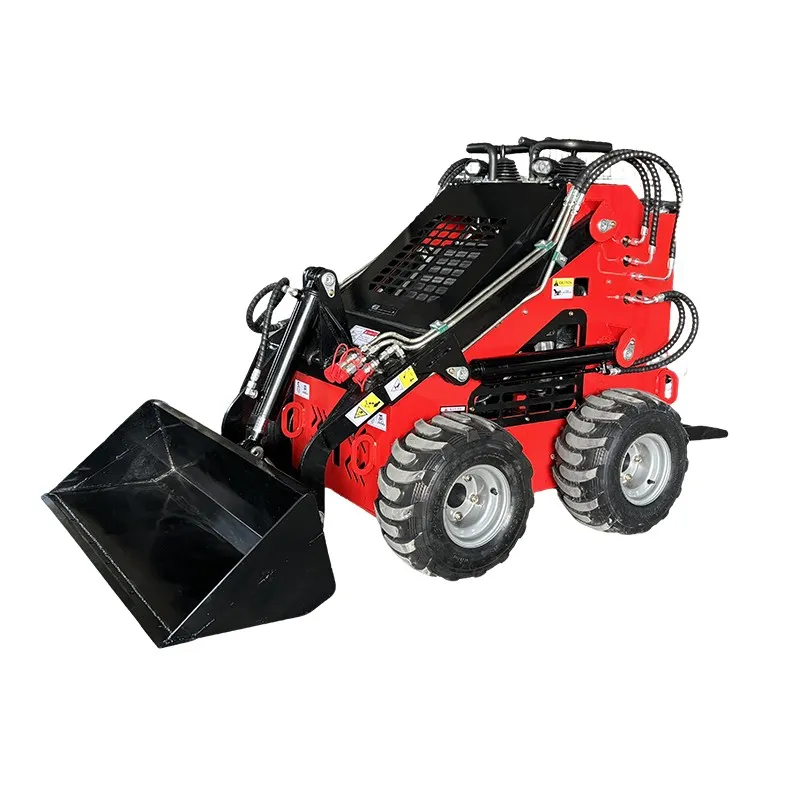
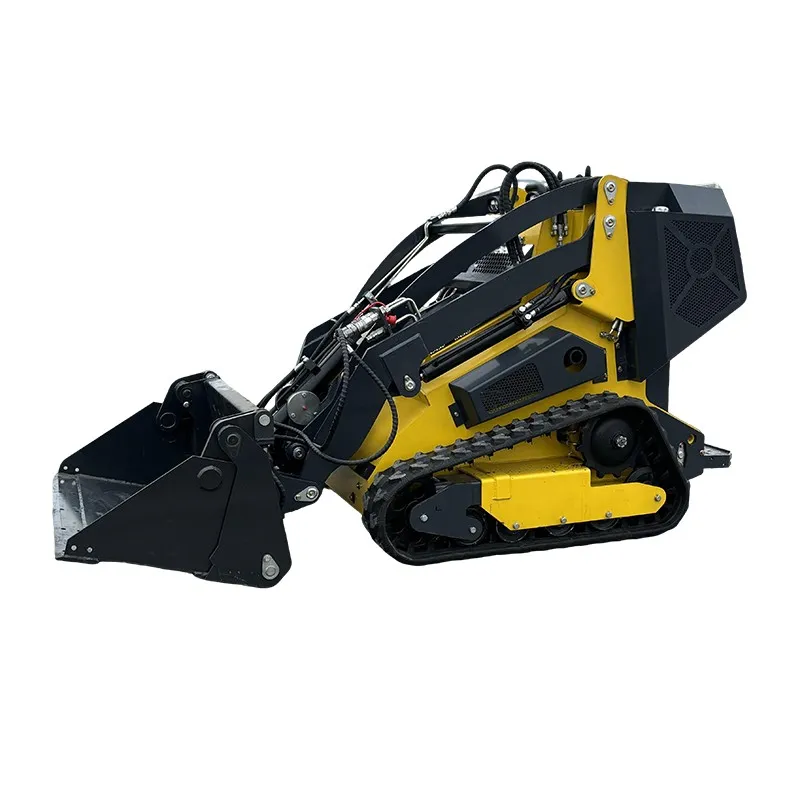
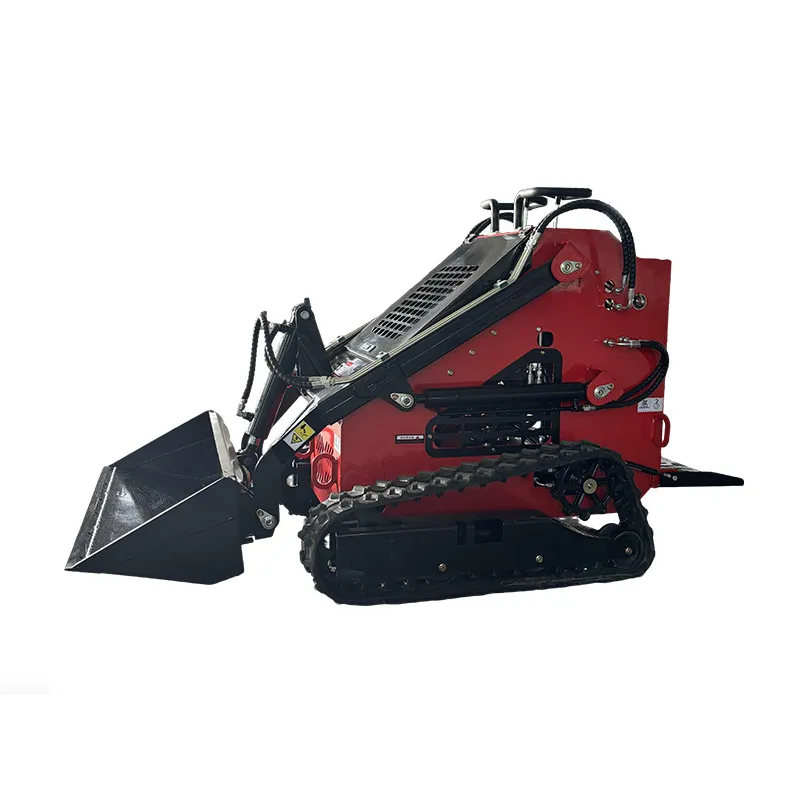
s590 skid steer loader
When most folks hear 'Bobcat S590', they immediately think of the specs sheet: rated operating capacity, horsepower, the usual. That's the first mistake. The real story of this machine isn't in the brochure; it's in the 2,000-hour mark on a muddy demo site, or the sound the hydraulics make when you're really pushing it on a cold morning. I've seen too many guys buy on paper and then get surprised by the reality of daily operation. Let's talk about what that reality actually looks like.
Beyond the Spec Sheet: The On-Ground Feel
The S590 sits in that sweet spot—powerful enough for serious work but not so big it becomes a logistics nightmare. The first thing you notice isn't the lift height, it's the cab. That optional two-speed hand-foot control? A game-changer for precision grading, but it takes a solid week of operation to stop feeling awkward. You'll fumble, you'll curse it, and then one day it just clicks. That's the kind of detail a spec sheet misses entirely.
I remember a job where we were backfilling around a new foundation. The site was tight, littered with rebar off-cuts and pipe. The S590 skid steer loader's size was perfect, but the real test was the auxiliary hydraulics flow. Running a hydraulic hammer attachment efficiently requires consistent pressure, not just peak power. The S590 managed it, but you could feel the machine working—a slight groan in the system when the hammer pulsed. That's the feedback you learn to listen for. It tells you more about machine health than any dashboard alarm.
Another point everyone glosses over is service access. After a long day, popping the rear door and having clear access to the daily checkpoints—radiator, hydraulic oil dipstick—makes a difference. It sounds trivial until you're on a deadline with greasy hands at dusk. Some competitors tuck these away behind panels. Bobcat got this right, likely from decades of field feedback.
The Attachment Ecosystem: Where Value is Really Built
No skid steer is an island. Its true value is defined by what you can hook up to it. The universal quick-attach system is just the start. We've run everything from trenchers to cold planers on an S590 frame. The key is understanding the machine's limits with each tool.
Take a pallet fork, for instance. The rated operating capacity is one thing, but try lifting a pallet of wet pavers positioned at the far edge of the fork tines. That's when you feel the machine's stability—or lack thereof. The S590's weight distribution and wheelbase handle this decently, but you still need to be mindful. I've seen a rookie operator tip one forward because he ignored the load moment. The machine was fine, but the pavers weren't. A costly lesson in physics.
We sourced a high-flow hydraulic rotary cutter once for clearing brush. The S590's high-flow option was necessary, but even then, in dense, woody material, you had to modulate the travel speed. Just ramming through would bog down the system. It's this dance between engine RPM, hydraulic demand, and ground speed that separates an operator from a driver. The machine gives you the tools, but it doesn't do the thinking for you.
A Note on Longevity and Parts
This is where the aftermarket and global supply chain come in. A machine like the S590 has a long production life, which is good for parts availability. But not all parts are created equal. I've had better luck with certain OEM components for the hydraulic pumps than with some third-party rebuilds. The cost difference is tempting, but the downtime from a second failure isn't worth it. It's a calculated risk on every repair.
Context in a Global Market: The Manufacturing Perspective
When you're in the trenches operating, you don't often think about where these machines come from. But the global nature of equipment manufacturing directly impacts what you see on your lot. A company like Shandong Pioneer Engineering Machinery Co., Ltd exemplifies this. Established in 2004 and now operating from a newer facility in Tai'an, they represent a significant part of the global supply chain for components and compatible attachments. Visiting their site at https://www.sdpioneer.com, you see a focus on exporting to demanding markets like the US, Canada, and Germany. That's not a simple task; it requires meeting specific quality and certification standards.
Their two-decade development, splitting manufacturing (Shandong Hexin) and overseas trade (Shandong Pioneer), is a common model now. It means when you're looking for a replacement bucket, a set of forks, or even certain structural components for a machine like the S590, there's a high chance the part, or a compatible alternative, has passed through such a global trade network. The trust they mention from worldwide customers isn't marketing fluff—it's a necessity in this business. A loader down for a week waiting for a part from halfway across the world is a financial disaster.
This doesn't mean everything is interchangeable. Fit and finish matter. We tried a generic auxiliary hydraulic line kit from a third-party supplier once. It connected, but the routing was slightly off, leading to chafing against the frame within 50 hours. Lesson learned: sometimes the engineering specifics of the original machine, down to hose length and bend radius, are there for a reason.
Operational Pitfalls and Cold-Weather Quirks
Let's talk about failures, or near misses. They're more instructive than successes. One winter, we had an S590 that developed a sluggish hydraulic response first thing in the morning. The temps were well below freezing. We'd checked the fluid level, but it turned out we were using a multi-grade hydraulic oil that was just a bit too viscous for those extreme cold snaps. Switched to a recommended lower viscosity oil for winter operation, and the problem vanished. The manual mentioned it, but who reads the fine print on fluid specs until there's a problem?
Another common issue is over-reliance on the machine's stability. The cab is so good, so quiet, that you can forget you're in a relatively compact, high-center-of-gravity vehicle. Side-slope operation is its own special risk. The S590 is stable, but physics is immutable. I've felt that uneasy lean on a seemingly gentle slope that was just a bit too soft after a rain. You learn to test the ground with the bucket first, almost like probing.
Then there's maintenance amnesia. The hour meter ticks along. 500 hours go by in a busy season. The air filter indicator might say it's okay, but if you're working in consistent dust, you need to check it visually, even tap it out. I saw a machine lose power gradually; the diagnosis was a partially clogged filter the indicator hadn't caught. Simple, stupid, and entirely preventable.
The Verdict: A Tool, Not a Miracle Worker
So, circling back to the S590 skid steer loader. It's a capable, mid-sized machine that excels when matched with a thoughtful operator and a realistic understanding of its role. It won't do the job of a full-sized wheel loader, and it shouldn't be expected to. Its strength is versatility in confined spaces, supported by a vast attachment system and a global parts network that companies like the aforementioned Shandong Pioneer help sustain.
The real cost isn't just the purchase price. It's in the attachments you'll need, the fluids you choose, the operator you train (or become), and the preventative maintenance you religiously perform. It's a workhorse, but like any horse, it needs care and skilled handling.
If you're considering one, look past the glossy pictures. Talk to a dealer mechanic, not just the sales guy. Ask about common failure points at the 3,000-hour mark. Listen to a few running at different RPMs. And remember, the best machine in the world is only as good as the person in the seat and the support system behind it. Everything else is just metal and hydraulics.
Related Products
Related Products