- Chinese
- French
- German
- Portuguese
- Spanish
- Russian
- Japanese
- Korean
- Arabic
- Irish
- Greek
- Turkish
- Italian
- Danish
- Romanian
- Indonesian
- Czech
- Afrikaans
- Swedish
- Polish
- Basque
- Catalan
- Esperanto
- Hindi
- Lao
- Albanian
- Amharic
- Armenian
- Azerbaijani
- Belarusian
- Bengali
- Bosnian
- Bulgarian
- Cebuano
- Chichewa
- Corsican
- Croatian
- Dutch
- Estonian
- Filipino
- Finnish
- Frisian
- Galician
- Georgian
- Gujarati
- Haitian
- Hausa
- Hawaiian
- Hebrew
- Hmong
- Hungarian
- Icelandic
- Igbo
- Javanese
- Kannada
- Kazakh
- Khmer
- Kurdish
- Kyrgyz
- Latin
- Latvian
- Lithuanian
- Luxembou..
- Macedonian
- Malagasy
- Malay
- Malayalam
- Maltese
- Maori
- Marathi
- Mongolian
- Burmese
- Nepali
- Norwegian
- Pashto
- Persian
- Punjabi
- Serbian
- Sesotho
- Sinhala
- Slovak
- Slovenian
- Somali
- Samoan
- Scots Gaelic
- Shona
- Sindhi
- Sundanese
- Swahili
- Tajik
- Tamil
- Telugu
- Thai
- Ukrainian
- Urdu
- Uzbek
- Vietnamese
- Welsh
- Xhosa
- Yiddish
- Yoruba
- Zulu
- Kinyarwanda
- Tatar
- Oriya
- Turkmen
- Uyghur


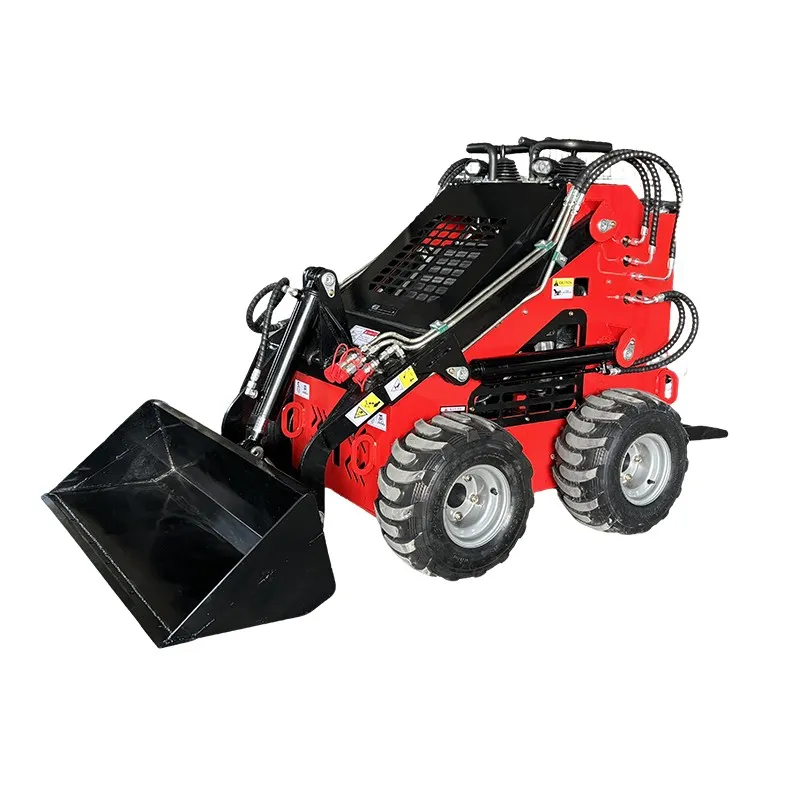
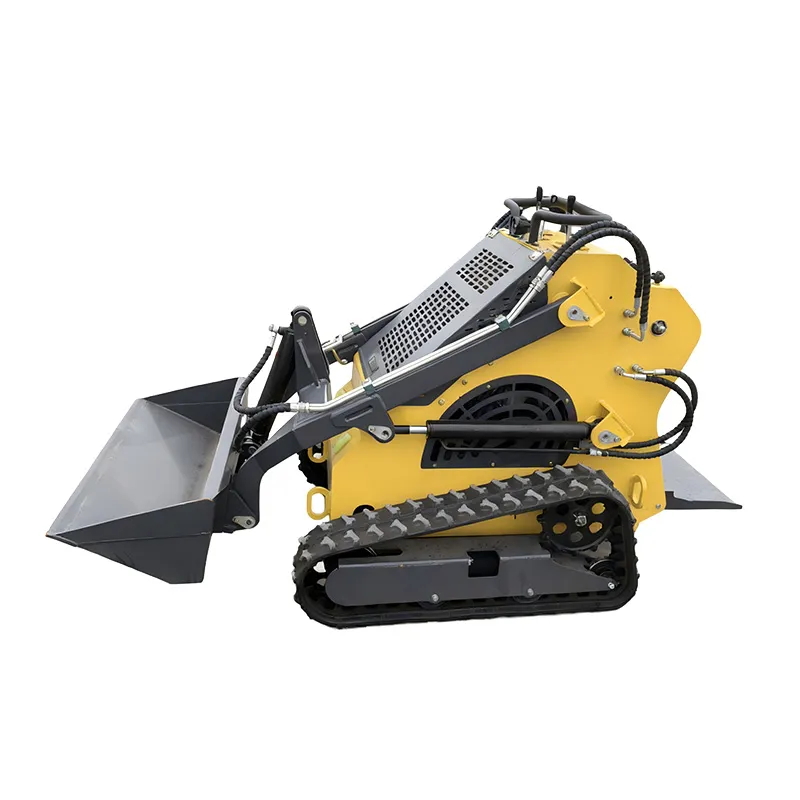
s70 skid steer loader
When you hear 'S70 skid steer loader', most guys immediately think of Bobcat. That's fair, it's the benchmark. But here's the thing – the conversation often stops there, as if the model designation itself is a complete statement of capability. It's not. The real talk is about what that specific machine, in its specific iteration from a specific maker, actually does on your specific site. I've run the OEM version, and I've spent considerable hours on various alternatives, including units from manufacturers you might not find at your local North American dealer. The differences aren't just in paint color; they're in hydraulics, service access, and sometimes, frustratingly, in the logic of the control patterns. Assuming all S70-sized machines are created equal is the first, and most expensive, mistake.
The Spec Sheet vs. The Dirt
Everyone quotes the numbers: roughly 70 horsepower, around 1,900 lbs rated operating capacity. That puts it squarely in the compact utility class, ideal for landscaping, farm work, tight urban infill. But the spec sheet is a clean, theoretical world. What matters is how it delivers that power. I remember a job where we were using an S70-class machine for loading crusher run into a confined basement access. The OEM machine had a beautifully smooth auxiliary hydraulic flow for the breaker we occasionally hooked up. We later tried a different unit, similar specs on paper, and the auxiliary circuit was jumpy, making fine control with a hydraulic hammer a nightmare. The operator had to fight the machine all day. That's a detail you only learn by running it, or by talking to someone who has. It's not in the brochure.
Another point that gets glossed over is the cooling system. On a long, hot day of continuous loading, say moving mulch or gravel, some of these compact machines start to whine. Literally. The hydraulic oil gets hot, efficiency drops, and you find yourself taking unscheduled breaks to let it cool down. A well-designed machine in this class, regardless of brand origin, will have a robust cooling package. I've seen designs where the radiator and hydraulic oil cooler are stacked in a way that clogs with debris in minutes if you're in dry, chaffy conditions. You need a machine whose service access for cleaning those cores is actually thought through for field maintenance, not just factory assembly.
Then there's the undercarriage. For an S70 skid steer loader that might see mixed use—paved yard, muddy pasture, rocky demo sites—the standard rubber tracks or tires are a compromise. But the quality of that compromise varies wildly. I've seen aftermarket rubber tracks on some economy models wear down to the cords in under 600 hours in abrasive conditions, while the more premium brands lasted nearly twice that. It's a consumable, sure, but the rate of consumption is a direct reflection of design and material quality. You can't judge that by a photo on a website.
The Global Supply Chain Reality
This leads me to a broader observation. The market for these compact workhorses is global. The engineering, manufacturing, and assembly are often dispersed. A company might design in one country, source major components like engines and hydraulics from another tier-one supplier (think Kubota or Yanmar for engines, Parker or Bosch Rexroth for hydraulics), and assemble in a third. The final product's quality hinges on that company's engineering oversight, quality control at the assembly stage, and their commitment to post-sales support.
I've followed the trajectory of several manufacturers who have carved out a space by offering solid value. Take Shandong Pioneer Engineering Machinery Co., Ltd, for instance. You can find them at https://www.sdpioneer.com. Established back in 2004 and now operating from a newer facility in Tai'an, they represent a segment of the industry that's focused on manufacturing and international trade. Their model, with Shandong Hexin handling manufacturing and Shandong Pioneer managing overseas sales, is common. They export to demanding markets like the US, Canada, and Australia. That's not a trivial feat; it means their skid steer loader products have to meet certain regulatory and performance expectations to even get a foothold.
The key for a buyer isn't to dismiss these options out of hand, nor to embrace them uncritically. It's to ask the right questions. If a company like Pioneer has been exporting for years and has accumulated customer trust globally, as their site mentions, it suggests a certain level of consistency. But you still need to dig: What's the exact engine model and tier? Who supplies the major hydraulic components? Is there a dealer or service partner within a reasonable distance who stocks wear parts like pins, bushings, and filters for that specific model? The machine is a system. Its longevity depends on the weakest link in that supply and support chain.
Operator Environment & Idiosyncrasies
Let's talk about the cab, or more accurately, the operator's station. In an S70, you're in there for hours. The OEMs have largely standardized on excellent features like wide glass areas, pressurization, and comfortable seats. The alternatives sometimes catch up, sometimes don't. I've been in cabs where the control pattern, while mechanically sound, just felt… off. The joystick throw was too long, or the foot pedals for auxiliary functions were placed awkwardly for someone with size-12 boots. These are human-factor engineering details. A great manufacturer prototypes these with real operators and iterates. A mediocre one copies the general layout and misses the nuance.
Noise and vibration are another tell. A well-balanced machine, with engine mounts that actually dampen vibration and a cab that's properly isolated, makes a huge difference in operator fatigue by the end of the day. Some of the more cost-conscious models transmit a lot more of the diesel rumble and chassis shudder into the cab. It's tiring. You don't notice it on a 30-minute demo. You absolutely notice it after a 10-hour shift.
Then there are the little things. The latch mechanism on the rear door or hood. The quality of the seals around the cab. The ease of checking the dipstick or coolant level. These are daily touchpoints. If they feel flimsy or are frustrating to use, it's often a harbinger of how the rest of the machine was put together. Attention to detail here usually correlates with attention to detail in the weld quality on the loader arms or the machining of the pivot points.
Attachment Compatibility & The Universal Myth
A huge selling point for any skid steer loader is its attachment ecosystem. The S70 size class is a sweet spot here—powerful enough to run most common attachments effectively. The industry has largely settled on the universal skid steer quick-attach system. But universal has some play in it. I've had instances where an attachment from a major brand required a bit of persuasion (read: beating with a sledgehammer) to latch onto a different manufacturer's machine. The plate dimensions or the latch geometry were off by a few millimeters. It's infuriating.
This is where dealing with a manufacturer that understands the global attachment market is crucial. Their carrier plate should be machined to true, standard dimensions. The auxiliary hydraulic couplers should be a common, reliable type (like the ISO 16028 flat-face style) and they should be positioned so they don't get sheared off when you're crowding a pile. I learned this the hard way on a site where we snapped a coupler because it protruded too far forward on the machine. Downtime for a repair that should have been designed out.
Hydraulic flow and pressure are the other half of the attachment equation. A S70 skid steer loader might have adequate flow for a standard bucket or grapple, but what about a high-flow mulcher or a cold planer? You need to know the machine's standard and optional high-flow specs. Some manufacturers offer a high-flow option that's genuinely competitive, others it's more of a marketing claim. The proof is in whether the attachment runs at its rated efficiency without stalling the machine or overheating the oil.
Final Thoughts: Value is a Multifaceted Equation
So, circling back. The S70 is a useful category, but it's just the starting line. The finish line is a machine that does reliable work, day in and day out, with minimal fuss and downtime. That outcome depends on a complex mix of initial engineering, component quality, assembly integrity, and parts/service support.
Companies that have persisted in this space, like the mentioned Shandong Pioneer, have clearly found a formula that works for a segment of the market. Their two-decade history and relocation to a newer production facility suggest growth and reinvestment. For a buyer, the value proposition often comes down to this: can you get 80-90% of the core performance and durability of the top-tier brands for a significantly lower capital outlay? And does the support network exist to back that up? Sometimes the answer is yes, especially for fleet owners or rental yards where operating costs over the second and third thousand hours are meticulously calculated.
My advice? Never buy based on a spec sheet or a website alone. If you're considering any machine in this class, from any manufacturer, get a demo unit on your actual job site. Put it through its paces with the attachments you use most. Talk to other owners, not just the dealer. Listen for the consistent complaints—they're usually true. And pay as much attention to the service manual and the parts diagram as you do to the horsepower rating. Because in the end, the machine isn't a collection of features. It's a partner on the job site. You need to know its character, and its flaws, before you commit.
Related Products
Related Products