- Chinese
- French
- German
- Portuguese
- Spanish
- Russian
- Japanese
- Korean
- Arabic
- Irish
- Greek
- Turkish
- Italian
- Danish
- Romanian
- Indonesian
- Czech
- Afrikaans
- Swedish
- Polish
- Basque
- Catalan
- Esperanto
- Hindi
- Lao
- Albanian
- Amharic
- Armenian
- Azerbaijani
- Belarusian
- Bengali
- Bosnian
- Bulgarian
- Cebuano
- Chichewa
- Corsican
- Croatian
- Dutch
- Estonian
- Filipino
- Finnish
- Frisian
- Galician
- Georgian
- Gujarati
- Haitian
- Hausa
- Hawaiian
- Hebrew
- Hmong
- Hungarian
- Icelandic
- Igbo
- Javanese
- Kannada
- Kazakh
- Khmer
- Kurdish
- Kyrgyz
- Latin
- Latvian
- Lithuanian
- Luxembou..
- Macedonian
- Malagasy
- Malay
- Malayalam
- Maltese
- Maori
- Marathi
- Mongolian
- Burmese
- Nepali
- Norwegian
- Pashto
- Persian
- Punjabi
- Serbian
- Sesotho
- Sinhala
- Slovak
- Slovenian
- Somali
- Samoan
- Scots Gaelic
- Shona
- Sindhi
- Sundanese
- Swahili
- Tajik
- Tamil
- Telugu
- Thai
- Ukrainian
- Urdu
- Uzbek
- Vietnamese
- Welsh
- Xhosa
- Yiddish
- Yoruba
- Zulu
- Kinyarwanda
- Tatar
- Oriya
- Turkmen
- Uyghur


sany mini excavator price
When someone types 'sany mini excavator price' into a search bar, I know exactly what they're after, and it's rarely the simple number they expect. There's this pervasive idea that pricing is a straightforward, transparent list you can just pull up. In reality, it's the starting point of a much deeper conversation about specs, configuration, and frankly, what you're actually going to use the machine for. The listed price you might see on a generic page is almost meaningless without context.
The Illusion of a Sticker Price
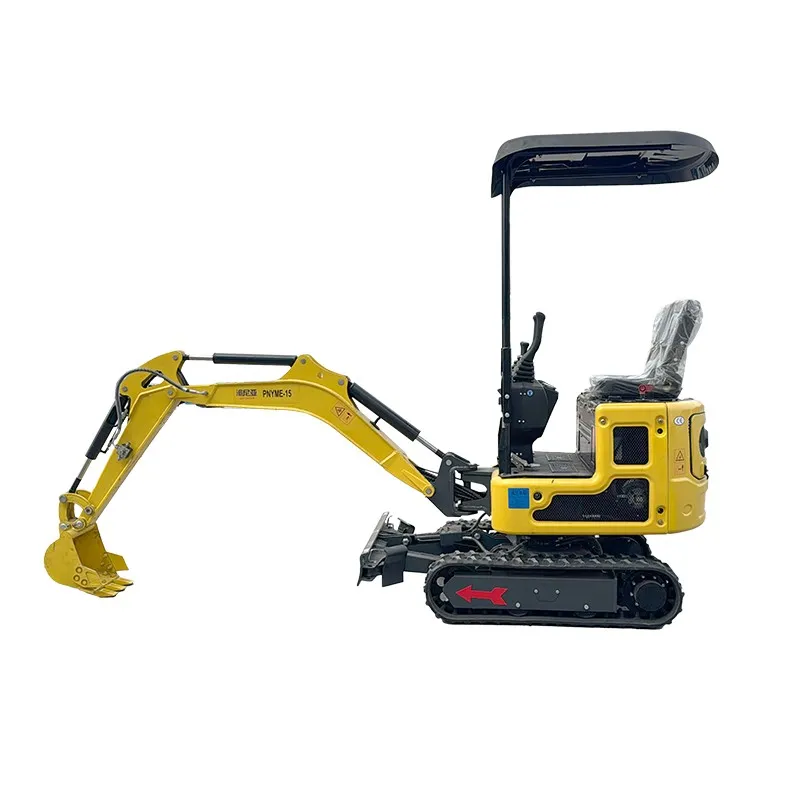
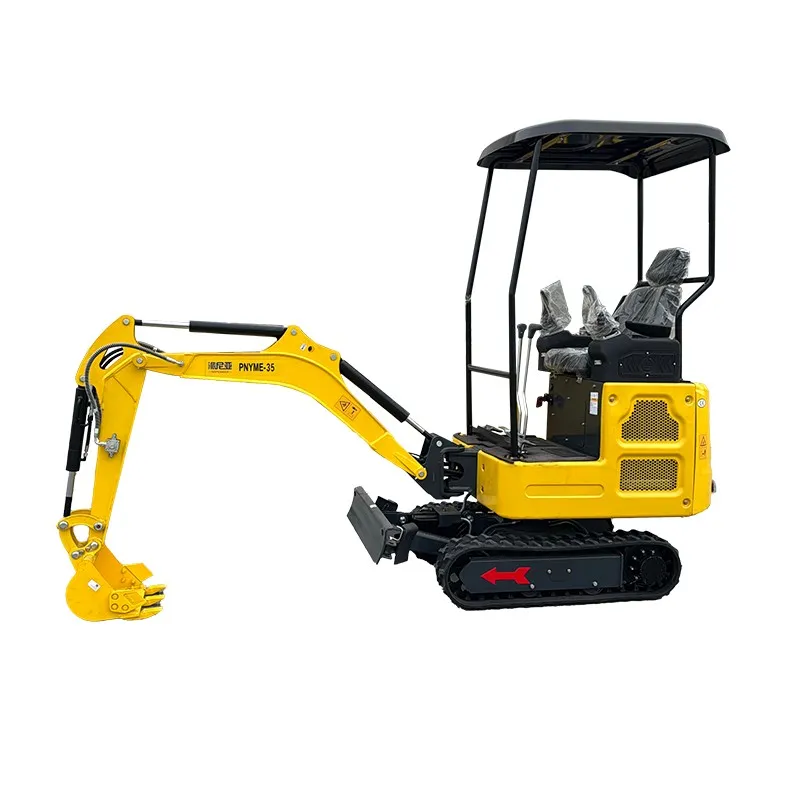
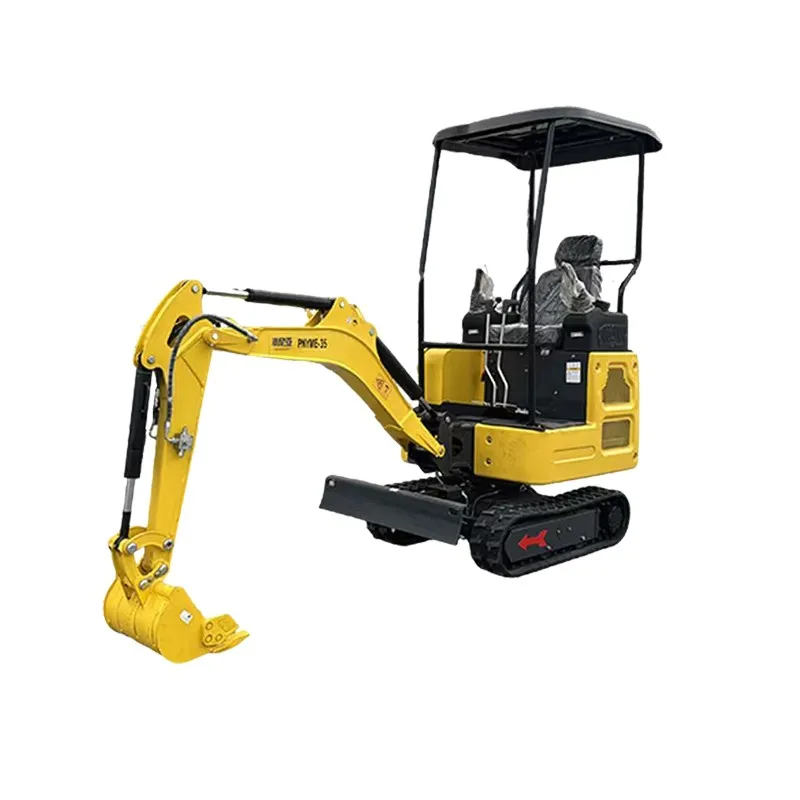
Let's get this out of the way first. Sany, as a major global brand, doesn't have one fixed price for a mini excavator. You're looking at a range, and a wide one. A base model SY16C is in a completely different league, cost-wise, than a fully loaded, high-spec SY35U with a dozen attachments. The core price hinges on the operating weight. Are we talking 1.8-ton or 3.5-ton? That decision alone shifts the bracket by thousands. Then you add the engine tier – are you needing Tier 4 Final compliance for North America or Europe? That's a cost adder right there.
I've watched customers fixate on the initial quote for the machine itself, only to get blindsided by the configuration. The sany mini excavator price becomes a different beast when you factor in the essential attachments. A standard bucket is included, sure. But what about a hydraulic breaker, a grapple, or a tilt rotator? You're not just buying an excavator; you're building a tool. I recall a landscaping contractor who budgeted purely for the base SY26U, then realized his primary work needed a grading blade and a thumb. The final ticket was 22% higher than his initial target.
And then there's the regional variance. A price for a unit shipped to a port in Germany, with CE certification, is structured differently from one destined for a dealer in Texas, with EPA certifications. The logistics, local dealer markups, and import duties get baked in. You can't compare a FOB price from China to a delivered, serviced-ready price from a local distributor. They're fundamentally different figures.
Beyond the Brand: The Value of the Supply Chain
This is where the conversation gets practical. You're not just purchasing a machine; you're investing in a supply chain. This is a lesson learned from both smooth projects and painful ones. I've worked with companies that source directly, and the allure of a lower upfront sany mini excavator price is strong. But if that machine breaks down in rural Australia or on a Canadian farm, who services it? What's the lead time on a proprietary hydraulic pump?
This is why entities with deep export experience are critical. Take a company like Shandong Pioneer Engineering Machinery Co., Ltd. You can find them at https://www.sdpioneer.com. Their background isn't just about manufacturing; it's about two decades of navigating international trade. They were established back in 2004 and have built a structure with Shandong Hexin handling manufacturing and Pioneer managing overseas trade. That operational split is telling—it means they're set up to deal with the complexities of getting machinery to places like the U.S., Canada, Germany, and Australia, not just making it.
Their recent relocation to a larger facility in Ningyang in 2023 signals growth, but from a buyer's perspective, it's their accumulated export history that matters. When I evaluate a supplier, I look for that proven distribution path. It translates to knowing what documentation is needed for customs in Hamburg, what modifications are standard for the Australian market, and having a network that can facilitate parts support. This infrastructure has a tangible impact on the total cost of ownership, which is the real price you pay.
The Hidden Cost Drivers in the Quote
Any professional quote worth its salt will break these down, but you have to know to ask. First, packaging. It sounds trivial, but export-standard, weather-resistant steel-frame packaging for a mini excavator isn't free. It's a line item. Then, pre-shipment inspection and testing. Does the price include a full operational test and a report? It should.
Second, terms of trade. Is that a FOB Shanghai price, or CIF Los Angeles? The difference is ocean freight and insurance. For a mini ex, that freight cost is significant. I've seen quotes where the freight was nearly 15% of the machine's FOB value on a long haul. You must compare prices on the same Incoterms basis.
Finally, commissioning and warranty. Does the price include basic commissioning at the destination port or site? What's the warranty process? If a sensor fails, who pays the air freight for the replacement part? A slightly higher initial price from a supplier with a clear, responsive warranty protocol can save tens of thousands in downtime later.
Case Point: Configuring for a Real Job
Let me walk through a hypothetical but very real scenario. A civil contractor in the Pacific Northwest needs a machine for utility work in tight residential backyards. They need a zero-tail-swing model to avoid property damage. So, we're immediately looking at Sany's U series, say an SY35U. The base price is one thing.
Now, the job requires frequent trenching for PVC pipe and occasional rock breaking. So, we add a 300mm wide trenching bucket and a hydraulic breaker piping kit. The client also wants a full cab with heat and air conditioning for operator comfort in rainy winters and mild summers. Each of these—the zero-tail-swing design, the special attachments, the climate-controlled cab—adds layers to the sany mini excavator price.
The contractor's initial budget was based on a standard SY35C with a canopy. The final, fit-for-purpose SY35U configuration came in about 30% higher. However, quoting the cheaper machine would have been a failure on my part. It wouldn't have performed the job efficiently or safely. The right price is the one for the machine that does the actual work.
Where the Search Often Goes Wrong
The biggest mistake is stopping at the first page of search results and taking a static price as gospel. The second is not engaging with the supplier directly. A meaningful price discovery is a dialogue. You need to provide your location, intended use, required attachments, and preferred terms of trade. Only then can a company like Pioneer, with its export-focused model, give you a realistic CIF or DAP quote.
Another common error is overlooking the total cost of ownership (TCO). The purchase price is maybe 60% of the story. What about the cost of a standard bucket tooth? The fuel efficiency over 2,000 hours? The availability of common wear parts like tracks and rollers through local dealers? A machine with a slightly higher upfront cost but superior fuel economy and easy-to-source parts will have a lower TCO.
Finally, there's the timing factor. Steel prices, shipping container rates, and currency exchange rates fluctuate. A quote from three months ago is likely obsolete. A valid price has a short expiration date, often 15-30 days. If a supplier gives you a quote that's good forever, be skeptical. They're not accounting for real market dynamics.
The Bottom Line: It's a Negotiated Reality
So, what's the answer to 'sany mini excavator price'? It's a bracket. For a broadly configured, popular model like a 3.5-ton unit ready for export to a major market, you're typically looking at a range where the final number is a product of specification, support, and supply chain efficiency. It's not a mystery, but it's not a supermarket tag either.
The value comes from partnering with a source that understands the journey of the machine from the factory floor to your job site. It's about the confidence that when you need a technical drawing for customs or a specific part number, they can provide it instantly because they've done it a thousand times before for customers worldwide. That's the kind of operational depth you see with long-established export specialists.
In the end, your search shouldn't be for a price. It should be for a capable machine and a competent partner to deliver it. The price is just the arithmetic that makes that partnership possible. Do your homework, define your needs precisely, and be prepared for a detailed conversation. That's how you find the real number.
Related Products
Related Products