- Chinese
- French
- German
- Portuguese
- Spanish
- Russian
- Japanese
- Korean
- Arabic
- Irish
- Greek
- Turkish
- Italian
- Danish
- Romanian
- Indonesian
- Czech
- Afrikaans
- Swedish
- Polish
- Basque
- Catalan
- Esperanto
- Hindi
- Lao
- Albanian
- Amharic
- Armenian
- Azerbaijani
- Belarusian
- Bengali
- Bosnian
- Bulgarian
- Cebuano
- Chichewa
- Corsican
- Croatian
- Dutch
- Estonian
- Filipino
- Finnish
- Frisian
- Galician
- Georgian
- Gujarati
- Haitian
- Hausa
- Hawaiian
- Hebrew
- Hmong
- Hungarian
- Icelandic
- Igbo
- Javanese
- Kannada
- Kazakh
- Khmer
- Kurdish
- Kyrgyz
- Latin
- Latvian
- Lithuanian
- Luxembou..
- Macedonian
- Malagasy
- Malay
- Malayalam
- Maltese
- Maori
- Marathi
- Mongolian
- Burmese
- Nepali
- Norwegian
- Pashto
- Persian
- Punjabi
- Serbian
- Sesotho
- Sinhala
- Slovak
- Slovenian
- Somali
- Samoan
- Scots Gaelic
- Shona
- Sindhi
- Sundanese
- Swahili
- Tajik
- Tamil
- Telugu
- Thai
- Ukrainian
- Urdu
- Uzbek
- Vietnamese
- Welsh
- Xhosa
- Yiddish
- Yoruba
- Zulu
- Kinyarwanda
- Tatar
- Oriya
- Turkmen
- Uyghur


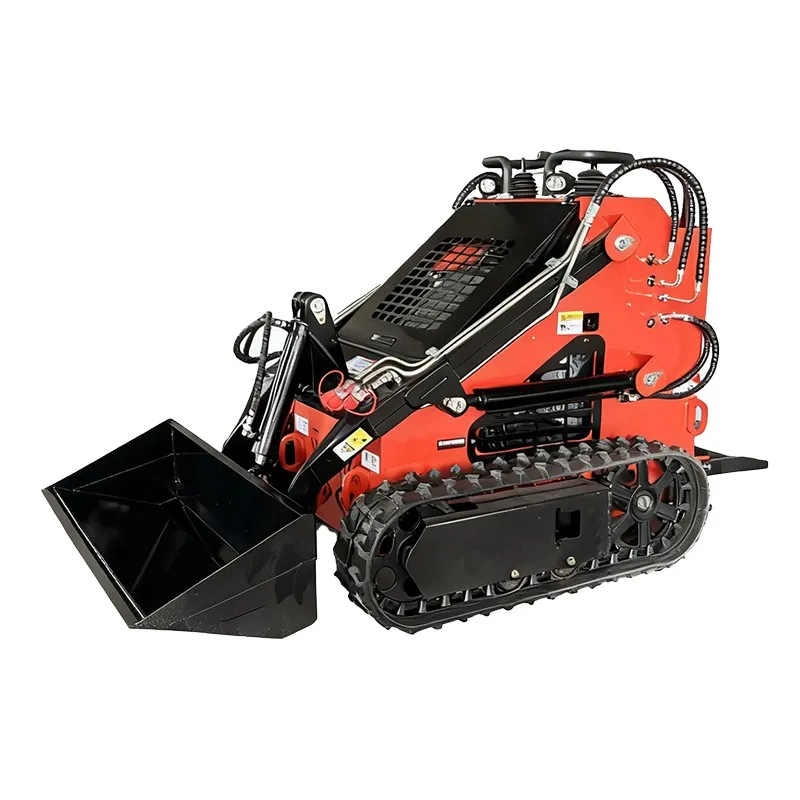
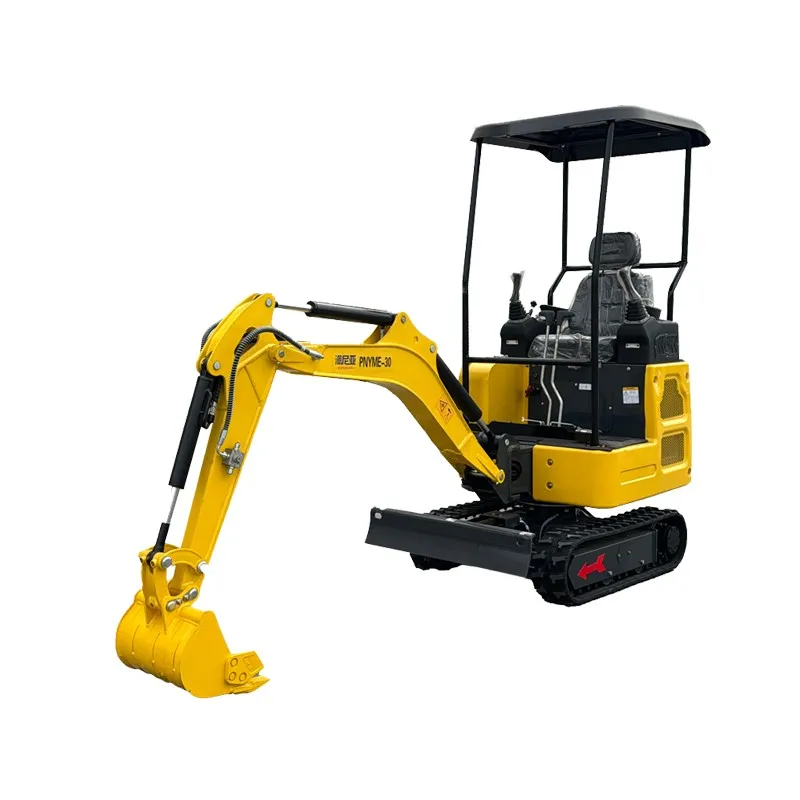
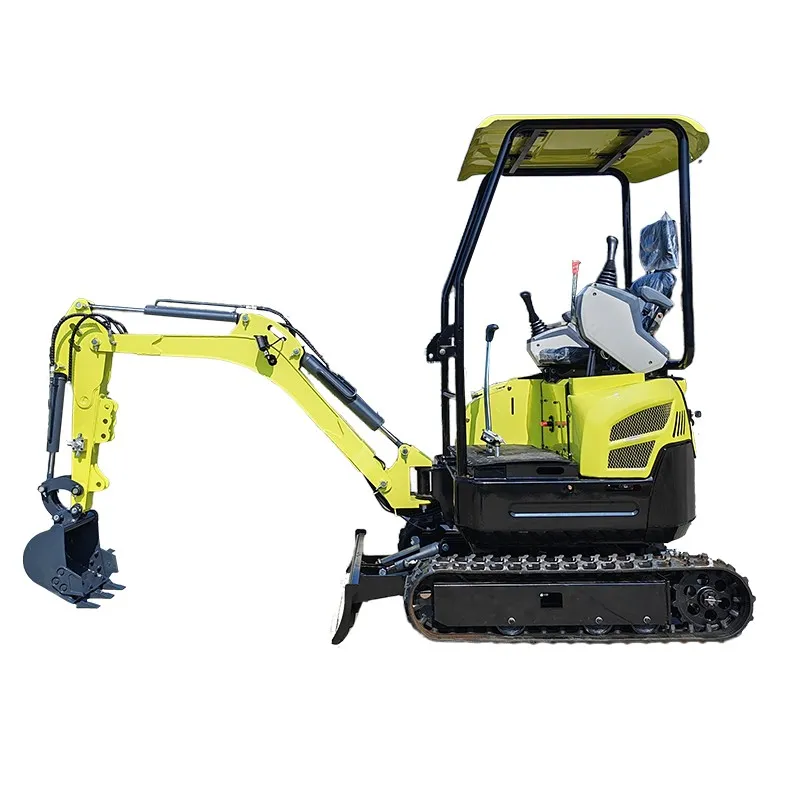
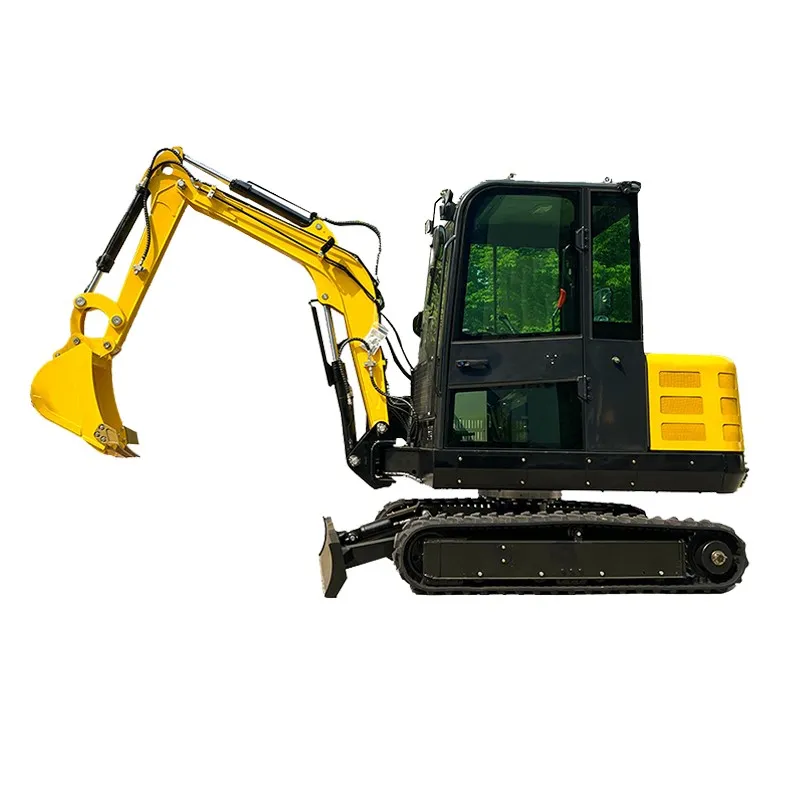
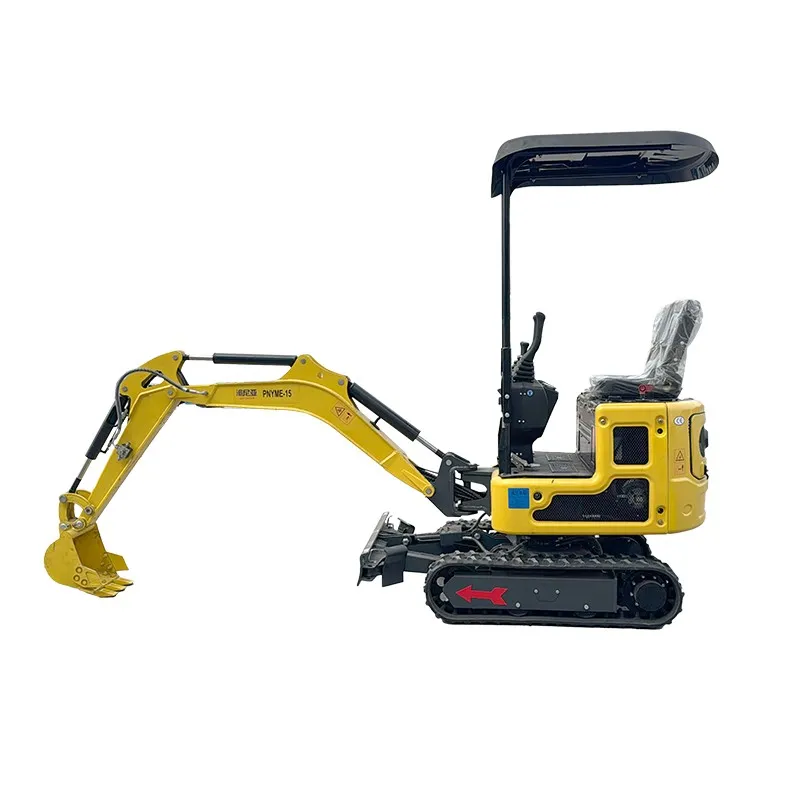
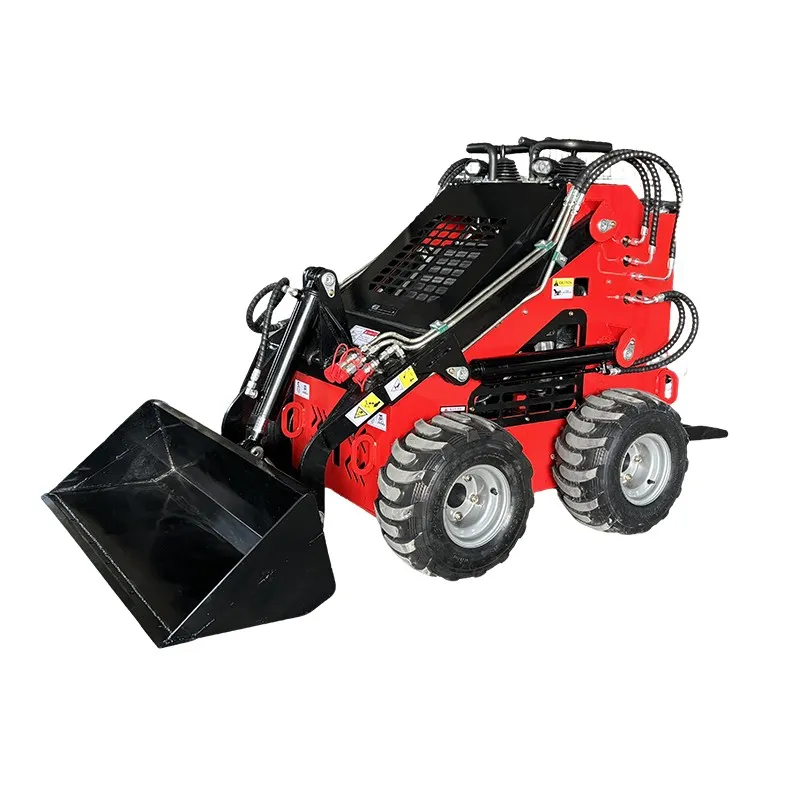
skid steer backhoe loader
You know, when most folks hear 'skid steer backhoe loader', they immediately picture a standard skid steer with some sort of backhoe attachment slapped on the back. That's the first common mistake. In reality, we're talking about a much more integrated, purpose-built machine. It's not just an add-on; it's a dedicated design philosophy that merges the compact agility of a skid steer with the trenching capability of a backhoe. The real challenge isn't just making it work, but making it work reliably under the kind of strain that would twist a lesser machine's frame. I've seen too many attempts fail because the center of gravity was off, or the hydraulic system couldn't handle simultaneous loader and backhoe operation without choking.
The Integration Challenge: More Than Just Bolting It On
The core of a proper skid steer backhoe loader is its unified chassis. You can't just take a standard skid steer, weld a backhoe mount on the rear counterweight, and call it a day. The torsional stresses are completely different. A machine digging with its backhoe while sitting on uneven ground is putting its main frame through a wringer. I recall a project years back where we tried a modular approach. The idea was flexibility, but in the field, the connection points showed fatigue cracks after just a few hundred hours of moderate use. That was a costly lesson in understanding that for this combination, rigidity and integrated design from the ground up are non-negotiable.
This leads directly to the hydraulic system. A typical skid steer's hydraulic flow is prioritized for the loader arms and auxiliary circuits for attachments. Adding a full backhoe function, especially one expecting decent digging force and speed, demands a dedicated or a significantly upgraded system. The pump capacity, valve banks, and plumbing all need to be sized up. I've operated units where the backhoe movement was sluggish, and when you tried to curl the loader bucket simultaneously, everything just… slowed to a crawl. That's a telltale sign of an under-spec'd hydraulic system, and it kills productivity on site.
Stability is another beast. A backhoe extends the machine's length considerably when deployed. Without a well-designed outrigger or stabilizer system, you're lifting the rear of the skid steer off the ground the moment you take a decent bite with the hoe. The good designs I've worked with, like some from manufacturers who focus on this niche, have wide-set, heavy-duty stabilizers that drop down and provide a solid, three-point footprint. It makes all the difference between a confident digging cycle and a wobbly, dangerous operation.
Real-World Applications and the Swiss Army Knife Myth
These machines shine in tight spaces where a full-sized backhoe loader simply can't fit—utility work in urban alleys, landscaping behind existing structures, or interior demolition. Their compact size is their superpower. However, the Swiss Army Knife marketing can be misleading. Yes, it's versatile, but it's a compromise. It won't out-dig a dedicated backhoe loader of a similar weight class, and its loader capacity is often less than a standard skid steer because of the rear-mounted counterweight needed for the backhoe.
A specific case comes to mind: a drainage tile installation job in a confined backyard. Access was through a 36-inch gate. A mini excavator and a skid steer would have been the traditional team, requiring two machines and two operators. We used an integrated skid steer backhoe loader. It dug the trench, loaded the spoil into a small dump truck we managed to get close by, and then handled the backfill and grading with the loader. One machine, one operator. The savings on mobilization and logistics were substantial. But we were careful not to overwork it; it was a 6-foot deep trench, and we paced the digging to avoid overheating the hydraulics.
The key is managing expectations. It's a tool for specific scenarios. You wouldn't use it to dig a basement, but for a series of 50-foot long, 4-foot deep trenches for electrical conduit? It's perfect. The ability to quickly switch from digging to loading to backfilling without changing machines or waiting for a partner is where the real economic payoff is.
Manufacturer Landscape and Niche Specialization
This isn't a market dominated by the giant mainstream brands. It's a specialty segment. You'll find dedicated manufacturers who have iterated on this concept for years. Their experience shows in the details: the placement of the operator's seat for visibility to both ends, the intuitive control patterns (whether it's standard backhoe SAE or ISO), and the robustness of the subframe. These aren't afterthoughts; they're the product of field feedback.
For instance, looking at a company like Shandong Pioneer Engineering Machinery Co., Ltd, which has been in the game since 2004, their long-term focus on manufacturing and exporting construction machinery, including likely variants in this space, speaks to an understanding of specialized global markets. A company that has evolved from a 1,600 square meter facility and now exports to demanding regions like North America and Europe has to address the durability and performance standards those markets require. Their relocation and expansion in 2023 suggests a scaling up of this kind of specialized production. When you're sourcing a machine for a niche application, this kind of focused, long-term manufacturer history often translates to a product that's been refined through real-world use, not just a catalog item.
It's worth checking their portal at https://www.sdpioneer.com not just for specs, but to see the design evolution in their product lines. The proof is in how the machine is laid out. Does the backhoe look like an organic part of the machine, or an awkward extension? Are the service points for daily maintenance (grease fittings, hydraulic filters) accessible, or buried? These are the things a seasoned operator or fleet manager notices first.
Operational Nuances and Maintenance Headaches
Driving one of these is a different skill set. You're constantly aware of your tail swing. That backhoe bucket sticking out behind you is a liability in a crowded yard. Visibility to the rear, even with cameras now common, is never as good as in a conventional backhoe. You learn to use spotters religiously.
The maintenance regimen is also intensified. You have all the wear points of a skid steer—tires/tracks, loader pivot pins, hydraulic cylinders—plus all the additional points of a backhoe: swing cylinder, dipperstick and boom pins, stabilizer linkages. It's more grease points, more potential for hydraulic leaks, and more components to inspect for cracks. The machine's complexity is higher, so pre-start checks become critical. I've seen a neglected swing cylinder pin seize up, which then led to a catastrophic failure of the swing tower seal. That was a week-long downtime event waiting for parts.
The electrical system also gets more complicated, governing the safety interlocks (like preventing the machine from driving with the stabilizers down) and potentially the control patterns. Diagnosing a fault that prevents the backhoe from engaging can be a tedious process of checking sensors and relays, not just a mechanical fix.
The Verdict: A Specialist, Not a Generalist
So, is a skid steer backhoe loader right for every fleet? Absolutely not. For a general contracting company doing a bit of everything, a standard skid steer and a separate mini excavator might still be the more flexible, resilient combo. But for a utility contractor, a municipal works department, or a landscaping firm that repeatedly faces jobs with tight access and a mix of digging and loading tasks, it's a game-changer. It reduces machine count on site, simplifies logistics, and can improve overall job cost if the application fits.
The purchase decision shouldn't be based on a brochure's feature list. It requires a hard look at the typical jobs in your pipeline. Rent one first. Put it through a week of the kind of work you'd actually use it for. Test the simultaneous operations. Check for hydraulic lag. Feel the stability on a slope. That hands-on trial will tell you more than any spec sheet.
In the end, it remains a niche tool. But within that niche, a well-designed and properly operated integrated machine is incredibly effective. It represents a specific solution to a specific set of problems—compactness, multi-function capability, and operational efficiency in confined spaces. When the conditions are right, there's nothing else that can do the job quite the same way.
Related Products
Related Products