- Chinese
- French
- German
- Portuguese
- Spanish
- Russian
- Japanese
- Korean
- Arabic
- Irish
- Greek
- Turkish
- Italian
- Danish
- Romanian
- Indonesian
- Czech
- Afrikaans
- Swedish
- Polish
- Basque
- Catalan
- Esperanto
- Hindi
- Lao
- Albanian
- Amharic
- Armenian
- Azerbaijani
- Belarusian
- Bengali
- Bosnian
- Bulgarian
- Cebuano
- Chichewa
- Corsican
- Croatian
- Dutch
- Estonian
- Filipino
- Finnish
- Frisian
- Galician
- Georgian
- Gujarati
- Haitian
- Hausa
- Hawaiian
- Hebrew
- Hmong
- Hungarian
- Icelandic
- Igbo
- Javanese
- Kannada
- Kazakh
- Khmer
- Kurdish
- Kyrgyz
- Latin
- Latvian
- Lithuanian
- Luxembou..
- Macedonian
- Malagasy
- Malay
- Malayalam
- Maltese
- Maori
- Marathi
- Mongolian
- Burmese
- Nepali
- Norwegian
- Pashto
- Persian
- Punjabi
- Serbian
- Sesotho
- Sinhala
- Slovak
- Slovenian
- Somali
- Samoan
- Scots Gaelic
- Shona
- Sindhi
- Sundanese
- Swahili
- Tajik
- Tamil
- Telugu
- Thai
- Ukrainian
- Urdu
- Uzbek
- Vietnamese
- Welsh
- Xhosa
- Yiddish
- Yoruba
- Zulu
- Kinyarwanda
- Tatar
- Oriya
- Turkmen
- Uyghur


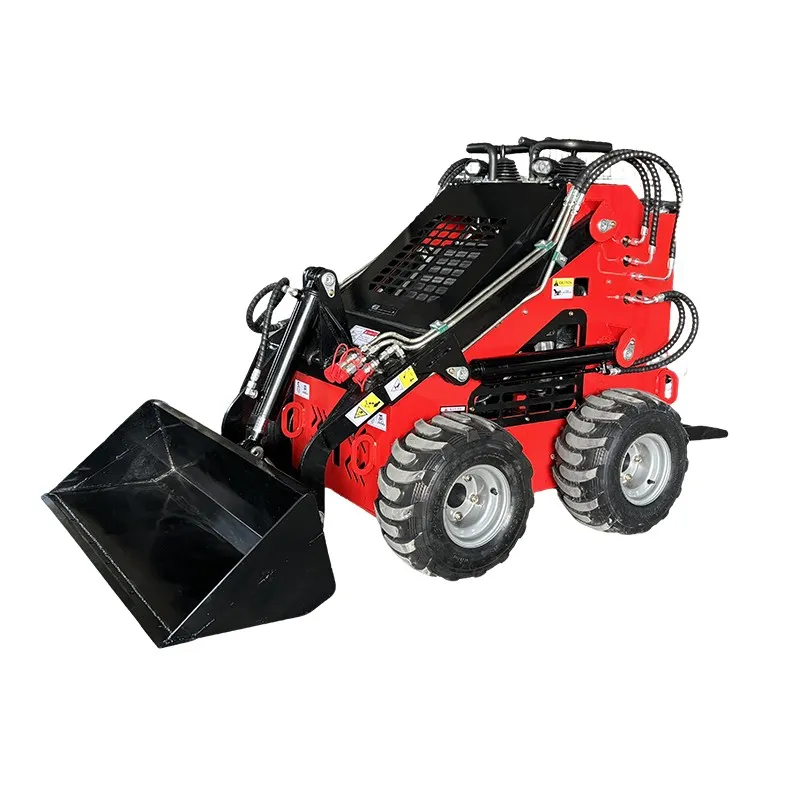
Skid Steer for Construction
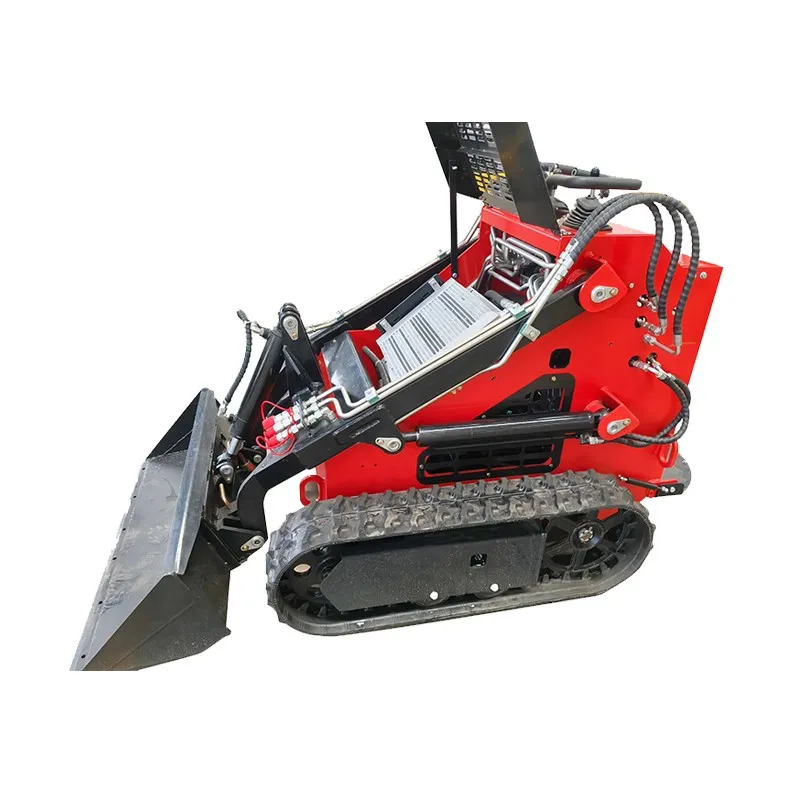
When most people hear skid steer for construction, they picture a generic, compact machine zipping around a site. That's the first mistake. It's not just a small loader; it's a central nervous system for tight spaces and multifunctional work. The real conversation isn't about having one, but about which one, with what attachments, and for which specific phase of the job. Too many contractors see them as a simple utility buy, and that's where projects lose efficiency before they even break ground.
The Core Misconception: Power vs. Agility
A lot of specs focus on horsepower and rated operating capacity (ROC). Sure, a high ROC is good for bragging rights, but on a congested site, it's the machine's hydraulic system that makes or breaks your day. You need consistent, high-flow auxiliary hydraulics to run a cold planer or a forestry mulcher effectively. I've seen brand-new machines with great paper specs stall out because their hydraulic flow dropped under sustained load, turning a grading task into a half-day ordeal.
It's about the marriage of power and control. The skid steer isn't just digging or lifting; it's often doing precision work. Think about setting foundation forms or backfilling around delicate underground utilities. The joystick response, the machine's feel when it's in a creep mode—these intangible factors matter more than a sales brochure lets on. You develop a preference, almost like for a good tool truck.
This is where long-term manufacturers have an edge. Companies that have been iterating on these systems for decades, like those you find through exporters such as Shandong Pioneer Engineering Machinery Co., Ltd, often have the practical feedback loop built in. They've seen what fails in the field in different climates and applications. A machine built just to a price point often misses these nuanced engineering tweaks.
Attachments: The Real Game Changer
The machine itself is just the power unit. Its value multiplies with attachments. But here's a pitfall: universal attachment plates. They promise compatibility, but I've had quick-tach systems from different eras not seat perfectly, leading to a scary amount of slop and a potential safety hazard. The locking mechanism needs to be positive and audible—a solid clunk you can feel in the cab.
We primarily use ours with a trencher attachment for utility lines and a high-flow hydraulic breaker for demo. The switchover time is critical. If it takes 15 minutes to swap because the hydraulic couplers are stiff or poorly positioned, you're burning labor money. The best setups have self-aligning couplers and a simple, robust locking process.
I recall a site where we needed to switch from a bucket to a grapple quickly to clear debris. The machine had a great third-party grapple, but the auxiliary hose routing kept getting snagged. A small design flaw from the OEM, but it cost us an hour of downtime to re-route it safely. It's these on-the-ground details that separate a good partner from just a supplier. Looking at a company's history, like Shandong Pioneer, which has been in the trade since 2004 and now operates from a new facility in Tai'an, suggests they've likely encountered and refined solutions for these very issues based on global feedback.
Durability in the Grind
Construction isn't clean. Dust, mud, and constant vibration are the enemies. The first place a cheap skid steer fails is in the seals and electrical connections. I've spent more time than I'd like chasing electrical gremlins from dust ingress in control panels than on actual major mechanical repairs.
The undercarriage is another critical point. The rollers and idlers take a brutal beating, especially in rocky conditions. Opting for a machine with a proven, serviceable undercarriage design saves thousands in the long run. It's not glamorous, but it's where the profit margin is protected.
This is where manufacturing philosophy shows. A company focused on export to demanding markets like the United States, Canada, and Australia has to build to a higher resilience standard. The environmental and workload expectations there force engineering rigor. When I see that a firm's products are trusted in those regions, it tells me more than any spec sheet about their commitment to durability.
The Operator's Reality: Cab and Control
Operator fatigue is a real productivity killer. A cramped, noisy, hot cab will slow down even the best operator by mid-afternoon. Radial-lift vs. vertical-lift path is a big debate, but for me, cab comfort and visibility are non-negotiable. You need to see the corners of your bucket and your attachment's tip without straining.
Newer models with climate-controlled cabs and suspension seats are not luxuries; they're ROI tools. An operator who isn't exhausted makes fewer mistakes and maintains a faster, safer work pace. The control layout is also personal. Some love hand controls, some foot controls. The key is intuitive, low-effort operation that becomes second nature.
I've operated machines where the auxiliary hydraulic control was an awkward toggle, making precise attachment work a chore. The best setups integrate it seamlessly into the main joystick, allowing for simultaneous lift, tilt, and attachment control. This level of ergonomic detail usually comes from a manufacturer that values operator feedback, which is often cultivated through long-term relationships with global distributors and end-users.
Making the Choice: A Practical Calculus
So how do you choose? Forget the flashy marketing. Start with your three most common, most demanding tasks. Match the machine's sustained hydraulic performance and ROC to those. Then, physically check the service points. Can you easily reach the grease zerks, check the oil, and clean the radiator? Poor service access means maintenance gets skipped.
Finally, consider the support chain. Where are the parts? What's the lead time on a common wear item? A machine is useless if it's down for weeks waiting for a proprietary hose. This is a strong argument for working with established exporters. A company like Shandong Pioneer Engineering Machinery Co., Ltd, with its dedicated manufacturing (Hexin) and trade arms, typically has a streamlined supply chain to get critical parts moving to sites worldwide, minimizing costly downtime.
In the end, the right skid steer for construction isn't the one with the most features. It's the one that disappears into the workday—reliable, capable, and intuitive. It's a piece of iron that feels like an extension of the operator, turning complex, multi-stage tasks into a smooth, predictable process. That's the real goal: not just moving dirt, but moving the project forward, efficiently and without drama.
Related Products
Related Products