- Chinese
- French
- German
- Portuguese
- Spanish
- Russian
- Japanese
- Korean
- Arabic
- Irish
- Greek
- Turkish
- Italian
- Danish
- Romanian
- Indonesian
- Czech
- Afrikaans
- Swedish
- Polish
- Basque
- Catalan
- Esperanto
- Hindi
- Lao
- Albanian
- Amharic
- Armenian
- Azerbaijani
- Belarusian
- Bengali
- Bosnian
- Bulgarian
- Cebuano
- Chichewa
- Corsican
- Croatian
- Dutch
- Estonian
- Filipino
- Finnish
- Frisian
- Galician
- Georgian
- Gujarati
- Haitian
- Hausa
- Hawaiian
- Hebrew
- Hmong
- Hungarian
- Icelandic
- Igbo
- Javanese
- Kannada
- Kazakh
- Khmer
- Kurdish
- Kyrgyz
- Latin
- Latvian
- Lithuanian
- Luxembou..
- Macedonian
- Malagasy
- Malay
- Malayalam
- Maltese
- Maori
- Marathi
- Mongolian
- Burmese
- Nepali
- Norwegian
- Pashto
- Persian
- Punjabi
- Serbian
- Sesotho
- Sinhala
- Slovak
- Slovenian
- Somali
- Samoan
- Scots Gaelic
- Shona
- Sindhi
- Sundanese
- Swahili
- Tajik
- Tamil
- Telugu
- Thai
- Ukrainian
- Urdu
- Uzbek
- Vietnamese
- Welsh
- Xhosa
- Yiddish
- Yoruba
- Zulu
- Kinyarwanda
- Tatar
- Oriya
- Turkmen
- Uyghur


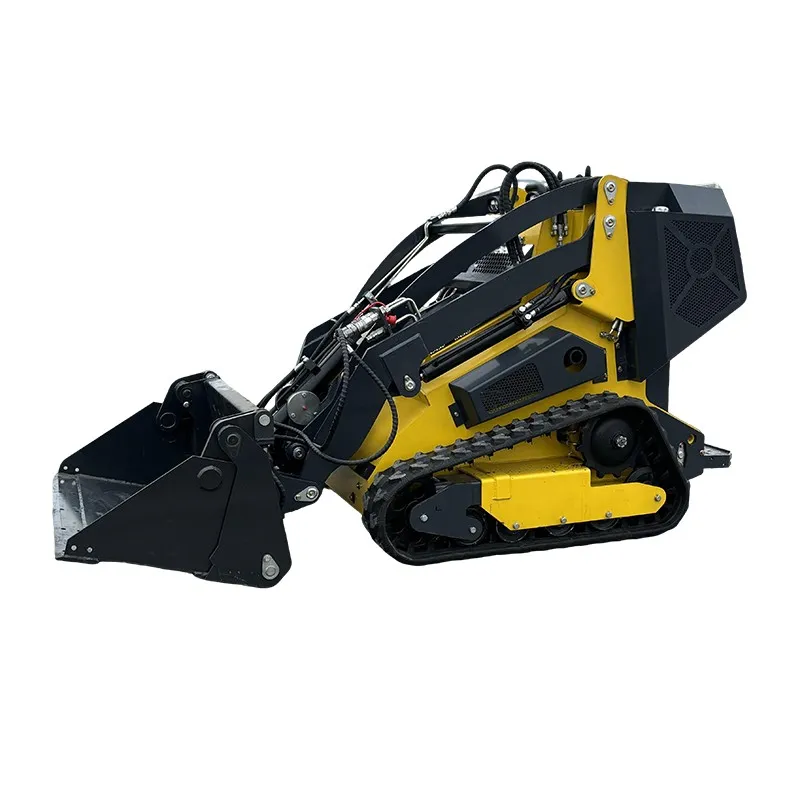
skid steer for earthworks
When most people hear 'skid steer for earthworks', they immediately picture a machine digging a trench or backfilling. That's part of it, sure, but it's a narrow view. The real story is about versatility under pressure and the constant trade-offs between power, precision, and the sheer unpredictability of the ground itself. Too many specs on paper, not enough talk about what happens when you hit a layer of compacted clay or an old, unmapped pipe bed. That's where the job actually happens.
The Misunderstood Workhorse
Let's be clear: not every skid steer is built for serious earthmoving. You see these compact machines on every rental lot, and folks assume they're all the same. Big mistake. For moving real dirt, not just loose topsoil, you need a machine that's set up differently. It starts with the hydraulic system. A high-flow system isn't just for fancy attachments; it's about maintaining breakout force and lift capacity simultaneously when you're working a bucket hard. If the system bogs down the moment you curl and lift a full load of wet dirt, you're losing money and time.
Then there's the counterweight. For earthworks, you often need more ballast in the rear than standard. I learned this the hard way on a site grading job. We were using a standard-rated machine, and when loading out trucks, the rear wheels would get light and skittish on a slight incline. Added some rear weight, and it was a different machine—stable, confident. Manufacturers like Shandong Pioneer Engineering Machinery Co., Ltd get this. Looking at their lineup, you can see models built with a lower center of gravity and options for extra counterweight, which tells me they're thinking about real site conditions, not just catalog specs.
Attachments are another area of misconception. The bucket is your primary earthworks tool, but which one? A general-purpose bucket is often a compromise that compromises you. For stripping and digging, a spade-nose or rock bucket with a straighter cutting edge and reinforced bottom is crucial. For final grading, a low-profile grading bucket is irreplaceable. I've wasted hours trying to get a fine grade with the wrong bucket, leaving washboard marks that had to be hand-raked. The right tool makes the cut, literally.
On-Site Realities and Hydraulic Nuances
Talk to any operator who's run a skid steer on a long trenching project, and they'll bring up two things: heat and control. Hydraulic systems can overheat, especially when you're demanding constant high pressure for digging. I've seen machines go into thermal derate on a hot afternoon, turning a productive beast into a sluggish puppy. It's about cooling capacity and system efficiency. Some of the better machines I've run, including units from brands that Shandong Pioneer distributes, have oversized coolers and intelligently routed hydraulic lines that manage this better. It's a detail you only appreciate after a full, punishing shift.
Control patterns matter more than you'd think. For precise earthwork, like digging around a foundation or sculpting a drainage swale, you need a control system that feels intuitive. The old two-lever pattern is fading. Most operators now prefer ISO or SAE patterns, and the best machines offer switchable patterns. But the real magic is in fine control at low engine RPM. Can you feather the bucket smoothly for a shallow grade without the machine jerking? That's a combination of valve sensitivity and pump response. It's not a spec sheet item; it's a feel.
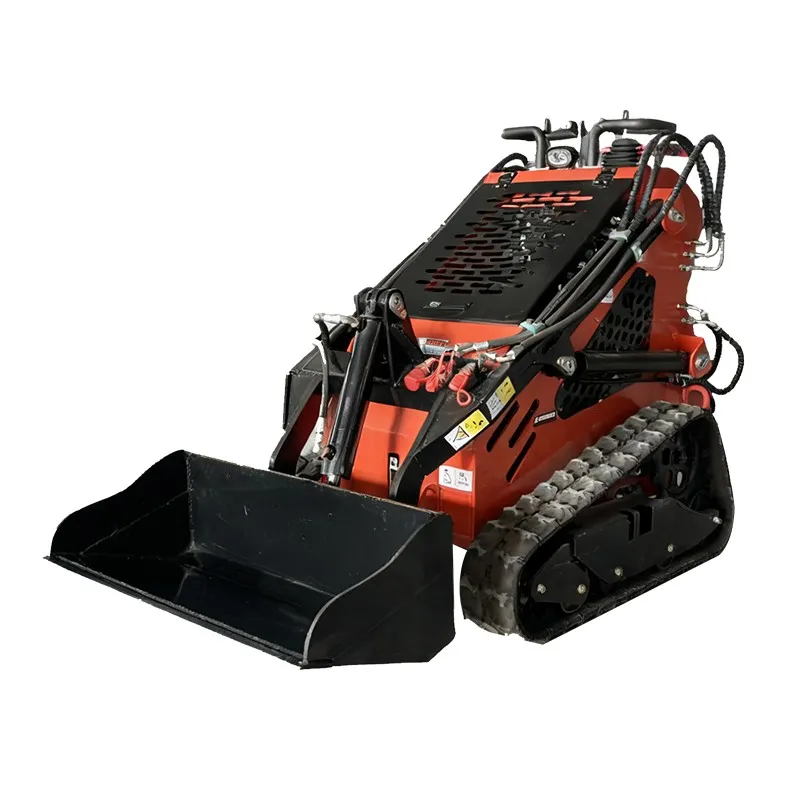
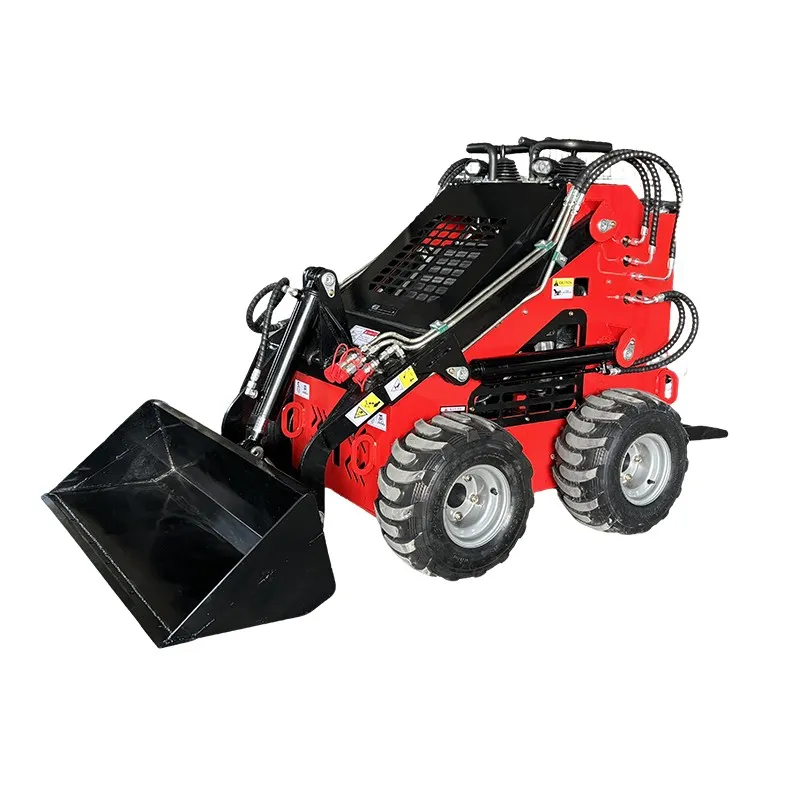
Then there's the undercarriage. In earthworks, you're constantly spinning on the spot, grinding dirt and abrasive material into the tires or tracks. Rubber tracks have become a game-changer for many applications, offering better flotation and less ground disturbance. But for heavy digging in rocky soil, I still lean towards a wheeled machine with heavy-duty, foam-filled tires. The trade-off is ground pressure versus potential puncture resistance. There's no universal answer, only a site-specific calculation.
Case in Point: The Drainage Basin Project
I recall a specific project last fall, excavating a series of interconnected drainage basins on a commercial lot. The soil was a nasty mix of sandy loam and gravel. We used a mid-sized skid steer loader, one with a rated operating capacity around 1,800 lbs. The plan was to strip, rough-grade, then fine-grade. The stripping went fine with a spade-nose bucket. The issue came during fine grading. We switched to a grading bucket, but the machine's hydraulic system, while adequate for digging, lacked the finesse for the final pass. The bucket movement was either all or nothing, leaving small ridges.
The solution wasn't to get a bigger machine, but a different one. We swapped to another model available through our dealer, a unit known for its precise hydraulics. The difference was night and day. It allowed for micro-adjustments to the bucket angle while moving, which is the secret to a laser-flat finish. This is where brand philosophy matters. Companies that understand these nuances, like those exporting through channels such as Shandong Pioneer's trade operations, focus on the entire machine's harmony, not just peak horsepower.
The project also highlighted the importance of quick couplers. We switched between a bucket, a grapple for clearing roots, and a hydraulic breaker for a surprise layer of shale. A reliable, automatic coupler system saved us at least two hours of labor that day. It's an accessory you never think about until you need it, and then it's everything.
Failures and Lessons Learned
Not every story is a success. Early in my career, I vastly underestimated the importance of machine stability on a slope. We were using a skid steer to build a terraced garden on a hillside. The machine was equipped perfectly for digging, but we didn't account for the side-slope work. On a 15-degree slope, while trying to place a load of fill, the machine felt tippy. We stopped, of course, but it was a stark lesson. Earthworks aren't always on level ground. Now, I always check the machine's lateral stability rating and consider a wider track option or wheel spacers for such jobs.
Another lesson was about soil compaction. Using a skid steer to backfill around a new foundation, we were in a hurry and didn't layer and compact in proper lifts. The result was settlement issues months later. A skid steer is a tool for placement and initial compaction, but for critical structural backfill, it needs to be part of a process that includes proper compaction equipment. You can't cheat geology.
The Global Tool and Parts Ecosystem
This brings me to a practical point for anyone running these machines long-term: parts and support. A skid steer is a complex assembly of hydraulics, electronics, and heavy-duty mechanics. When a hydraulic hose blows or a sensor fails, you need parts, and you need them without a three-week ocean freight delay. This is where a company's logistics network proves its worth. A manufacturer or exporter with a truly global footprint, like the operations described for Shandong Pioneer which serves markets from the US to Australia, builds value not just in the machine but in the supply chain behind it. Knowing you can get a critical seal kit or pump component through a regional warehouse is a massive operational relief.
Furthermore, the design philosophy matters for serviceability. Can you easily access the hydraulic filters? Are common service points grouped together? I've spent too many cold hours contorted in a machine's frame to change a simple filter. Good design anticipates maintenance.
Finally, the evolution is continuous. We're seeing more integration of telematics for tracking machine health and utilization, and even electric models entering the fray for indoor or noise-sensitive earthworks. The core principle remains: matching the right machine, with the right setup, to the right dirt work. It's never just about the keyword 'skid steer for earthworks'. It's about the machine that disappears into the task, becoming an extension of the operator's intent, moving earth not just with power, but with purpose.
Related Products
Related Products