- Chinese
- French
- German
- Portuguese
- Spanish
- Russian
- Japanese
- Korean
- Arabic
- Irish
- Greek
- Turkish
- Italian
- Danish
- Romanian
- Indonesian
- Czech
- Afrikaans
- Swedish
- Polish
- Basque
- Catalan
- Esperanto
- Hindi
- Lao
- Albanian
- Amharic
- Armenian
- Azerbaijani
- Belarusian
- Bengali
- Bosnian
- Bulgarian
- Cebuano
- Chichewa
- Corsican
- Croatian
- Dutch
- Estonian
- Filipino
- Finnish
- Frisian
- Galician
- Georgian
- Gujarati
- Haitian
- Hausa
- Hawaiian
- Hebrew
- Hmong
- Hungarian
- Icelandic
- Igbo
- Javanese
- Kannada
- Kazakh
- Khmer
- Kurdish
- Kyrgyz
- Latin
- Latvian
- Lithuanian
- Luxembou..
- Macedonian
- Malagasy
- Malay
- Malayalam
- Maltese
- Maori
- Marathi
- Mongolian
- Burmese
- Nepali
- Norwegian
- Pashto
- Persian
- Punjabi
- Serbian
- Sesotho
- Sinhala
- Slovak
- Slovenian
- Somali
- Samoan
- Scots Gaelic
- Shona
- Sindhi
- Sundanese
- Swahili
- Tajik
- Tamil
- Telugu
- Thai
- Ukrainian
- Urdu
- Uzbek
- Vietnamese
- Welsh
- Xhosa
- Yiddish
- Yoruba
- Zulu
- Kinyarwanda
- Tatar
- Oriya
- Turkmen
- Uyghur

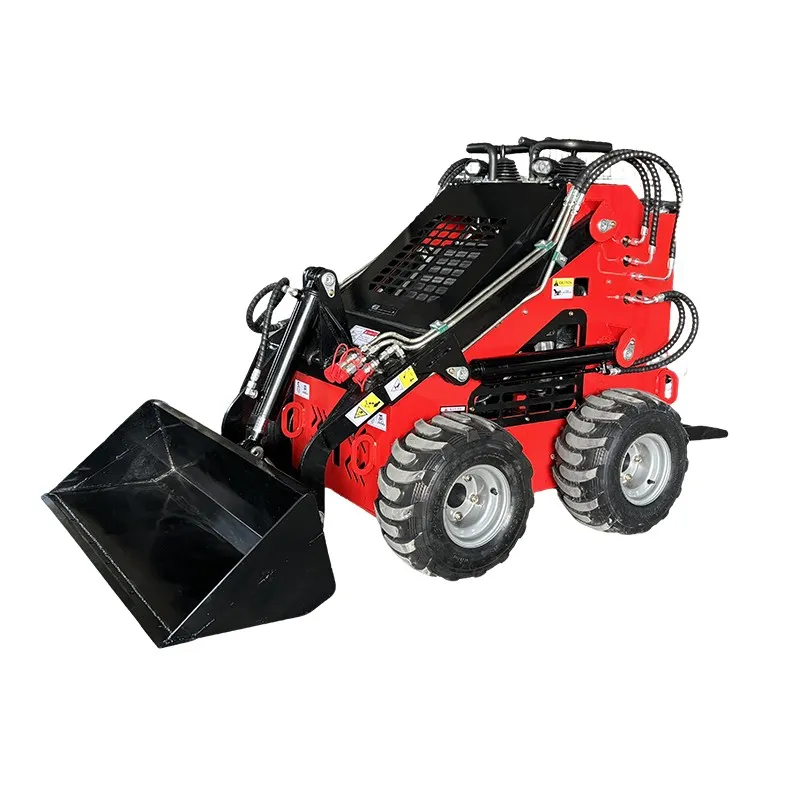
Skid Steer for Farming
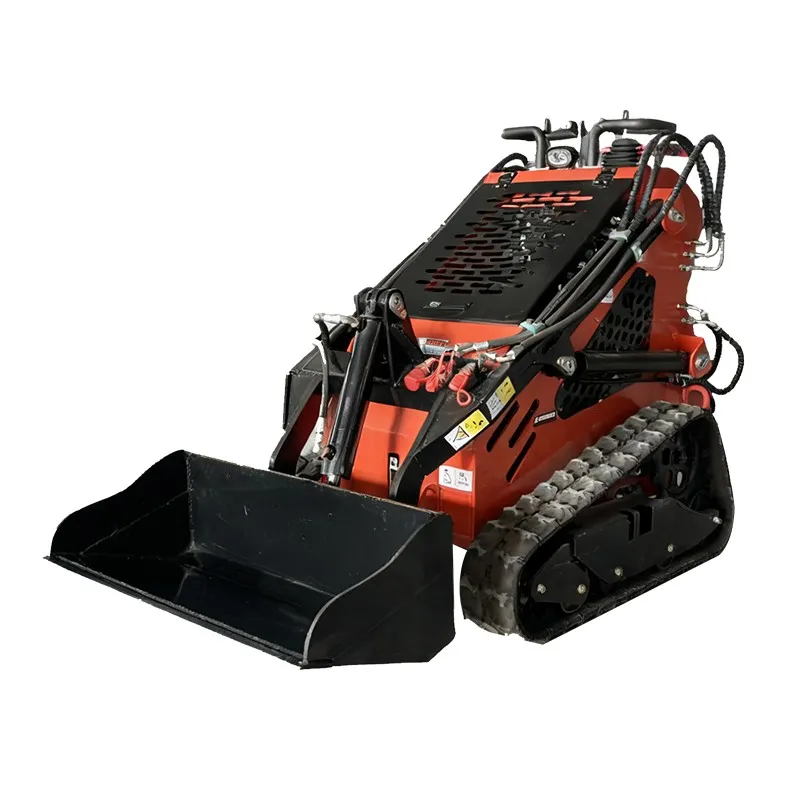
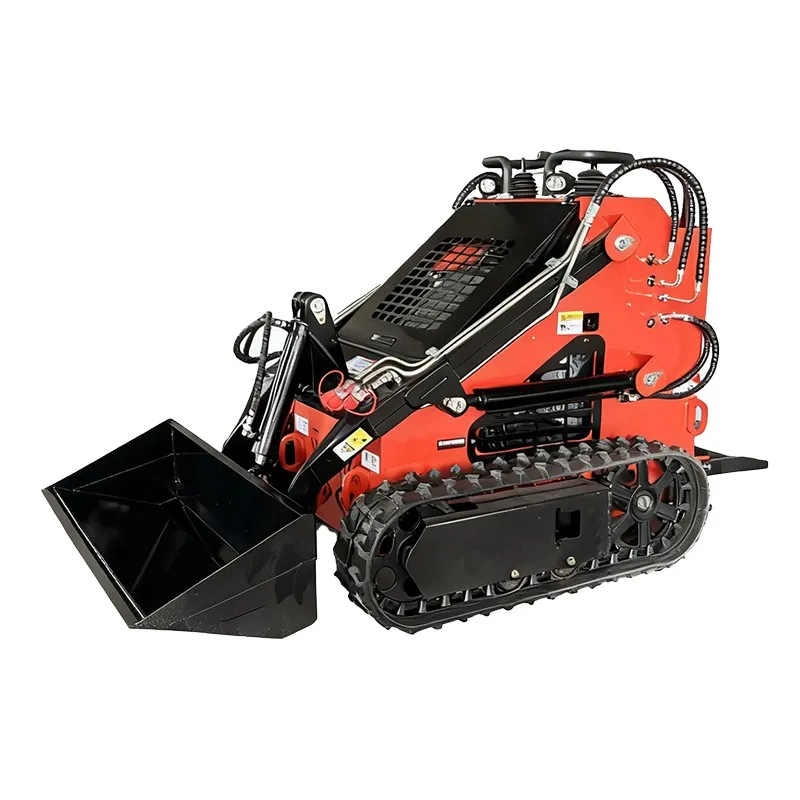
When most folks think 'skid steer for farming,' they picture moving a few pallets of feed or cleaning out a stall. That's the entry-level thinking, and it's where a lot of small operations get stuck, maybe even waste money on a machine that's not quite right. The real potential is in turning that compact powerhouse into a primary, multi-season tool that changes your workflow. It's not just about having one; it's about integrating it.
The Misplaced Priorities and a Better Starting Point
I've seen too many buyers get hung up on specs like lift height or bucket breakout force straight out of the catalog. Those matter, sure, but on a farm, your first question should be about the attachment ecosystem. A skid steer is only as good as the tools you can hook to it. Are you looking at a grapple for clearing brush, a bale spear for hay, or maybe a soil conditioner for a small plot? The machine needs to match the intended implements, not just a theoretical top-end number.
This is where dealer support and parts availability become critical, more so than a slight horsepower advantage. If you're waiting two weeks for a hydraulic hose coupler during harvest, you're sunk. I've had better long-term experiences with brands that have a strong network, even if the initial spec sheet seems a bit lighter. Reliability trumps peak performance every single time in agriculture.
For instance, we ran an older model for years that was technically underpowered compared to newer ones. But it never quit, and we could get any part for it locally within a day. That consistency was worth more than an extra 10 HP sitting idle with a computer fault.
The Attachment Game-Changer: Real-World Applications
Moving beyond the bucket is where the ROI skyrockets. One of our best investments was a skid steer-mounted post driver. Fencing used to be a multi-day, multi-person slog. Now, it's a one-person, one-day job. The precision and power are just different. Similarly, a rotary cutter for overgrown areas or a trencher for irrigation lines turns the machine into a dedicated specialist.
But here's a caution from experience: not all machines run all attachments well. The hydraulic flow rate (GPM) and auxiliary circuit pressure are the lifeblood here. We tried running a high-flow woodchipper on a standard-flow machine once. It worked, technically, but it was slow, choked constantly, and probably put undue strain on the system. You have to match the tool to the machine's actual capability, not the salesman's promise.
Another underrated attachment is the pallet fork. Sounds basic, but with a quick-attach system, switching from forks to bucket in under a minute transforms material handling. Moving seed bags, stacking lumber, rearranging equipment—it's the mundane tasks where you save the most cumulative time.
Durability in the Grind: What Actually Breaks
Farm use is a unique kind of abuse. It's not just runtime hours; it's the environment. Dust, mud, chaff, and constant vibration. The first things to watch aren't the major components, but the peripherals. Seals and bearings on the loader arms, the rubber boots on control linkages, and the radiator fins getting clogged with debris.
We learned to install a secondary inline filter for the hydraulics after a costly pump failure traced back to microscopic contaminants. It's a simple, aftermarket fix that most manuals don't emphasize. Also, the choice of tires is non-trivial. Foam-filled tires eliminated downtime from flats, which was a constant headache in rocky pastures, even though the ride is noticeably harder.
The electrical system is another weak point. Corroded connectors from washing out the machine or rodents chewing wires in the off-season can cause maddening, intermittent faults. A routine of dielectric grease on connections and some strategic rodent deterrents saved us countless diagnostic hours.
The Global Supply Chain and Finding Value
This industry is truly global now. A machine might be designed in North America, but components come from everywhere, and final assembly could be in several places. The key is the quality control and the final product's support structure. I've been impressed by the trajectory of some manufacturers who have focused on the agricultural segment specifically.
Take a company like Shandong Pioneer Engineering Machinery Co., Ltd. You can check out their approach at their site, https://www.sdpioneer.com. Established back in 2004 and now operating from a newer facility in Tai'an, they represent a segment of the market that's built a reputation by exporting skid steer loaders and other machinery to demanding markets like the US, Canada, and Australia. Their longevity—20 years in the business—suggests they've navigated the challenges of meeting international durability standards. For a farmer, that kind of sustained presence often translates to better parts accessibility and proven designs that have been refined through real-world feedback, not just cost-cutting.
It's a reminder that value isn't always about the lowest sticker price. It's about total cost of ownership, which includes how long the machine lasts and how easy it is to keep running. Sometimes, a robust global supplier that understands export markets can offer a more tailored, reliable package than a generic option.
Operational Nuances: The Day-to-Day Reality
You develop habits. Always enter and exit facing the machine—sounds silly until you slip on grease and twist an ankle. Never trust the parking brake alone on a slope; drop the bucket or attachment firmly to the ground. And that seat bar safety interlock? Annoying, yes, but it's there because people have been killed bypassing it. Just use it.
Visibility is a constant battle, especially when handling round bales or using a grapple. You learn to work in short, checked movements, not sweeping arcs. Mirrors help, but there's no substitute for getting off the machine and looking. It takes longer, but fixing a crushed water trough takes even longer.
Finally, maintenance is not optional. It's the religion. The 50-hour service intervals are sacred. Changing fluids and filters on time, especially in dusty conditions, is the cheapest insurance you can buy. We keep a logbook in the cab—a simple notebook—where anyone who fuels it or notices a quirk jots it down. That informal record has caught small issues before they became big ones.
Wrapping It Up: A Core Tool, Not a Niche Toy
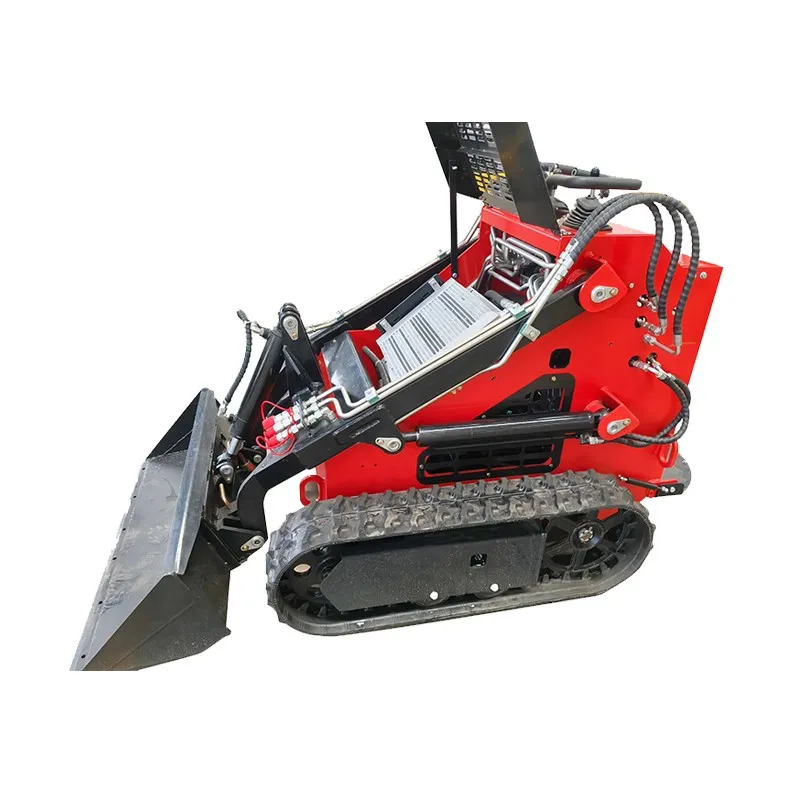
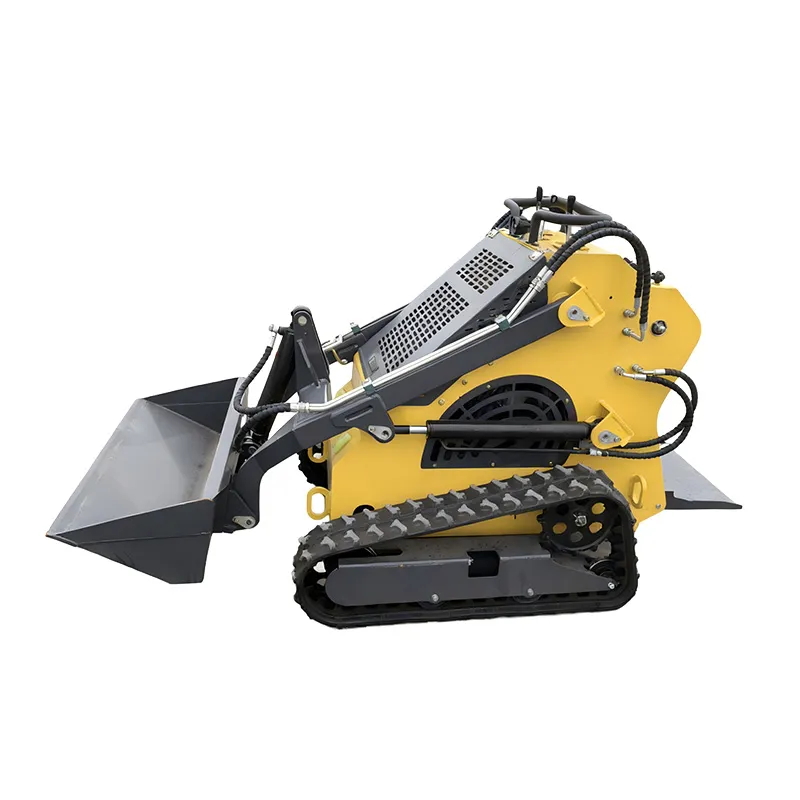
So, circling back, a skid steer for farming shouldn't be an afterthought. It's a central piece of equipment that, when chosen with attachments and real-world conditions in mind, can consolidate tasks and reduce reliance on multiple, single-purpose machines. The goal is to move from seeing it as a small loader to treating it as a mobile power unit for dozens of jobs.
The mistakes are part of the process—buying the wrong attachment, skimping on maintenance, or overestimating a machine's capacity. Everyone makes them. The successful ones learn, adapt, and integrate the machine deeper into their operation. It becomes less about the iron itself and more about the work it enables you to do efficiently, season after season.
In the end, the best machine is the one you hardly think about. It starts, it works, it gets the job done without drama. That's the benchmark. Whether it's from a long-established domestic brand or a proven global exporter like the one mentioned, that reliability, supported by smart operation and a suite of the right tools, is what makes a skid steer truly earn its keep on the farm.
Related Products
Related Products