- Chinese
- French
- German
- Portuguese
- Spanish
- Russian
- Japanese
- Korean
- Arabic
- Irish
- Greek
- Turkish
- Italian
- Danish
- Romanian
- Indonesian
- Czech
- Afrikaans
- Swedish
- Polish
- Basque
- Catalan
- Esperanto
- Hindi
- Lao
- Albanian
- Amharic
- Armenian
- Azerbaijani
- Belarusian
- Bengali
- Bosnian
- Bulgarian
- Cebuano
- Chichewa
- Corsican
- Croatian
- Dutch
- Estonian
- Filipino
- Finnish
- Frisian
- Galician
- Georgian
- Gujarati
- Haitian
- Hausa
- Hawaiian
- Hebrew
- Hmong
- Hungarian
- Icelandic
- Igbo
- Javanese
- Kannada
- Kazakh
- Khmer
- Kurdish
- Kyrgyz
- Latin
- Latvian
- Lithuanian
- Luxembou..
- Macedonian
- Malagasy
- Malay
- Malayalam
- Maltese
- Maori
- Marathi
- Mongolian
- Burmese
- Nepali
- Norwegian
- Pashto
- Persian
- Punjabi
- Serbian
- Sesotho
- Sinhala
- Slovak
- Slovenian
- Somali
- Samoan
- Scots Gaelic
- Shona
- Sindhi
- Sundanese
- Swahili
- Tajik
- Tamil
- Telugu
- Thai
- Ukrainian
- Urdu
- Uzbek
- Vietnamese
- Welsh
- Xhosa
- Yiddish
- Yoruba
- Zulu
- Kinyarwanda
- Tatar
- Oriya
- Turkmen
- Uyghur

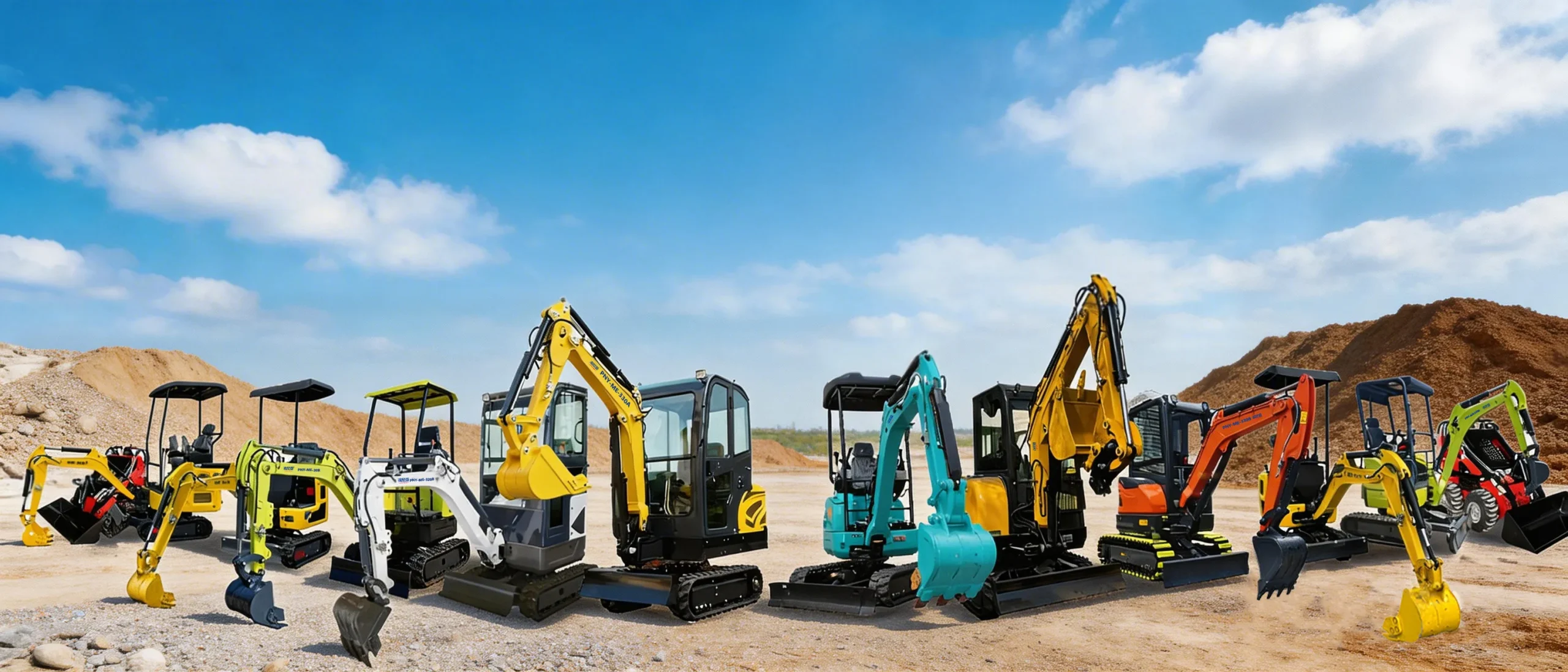
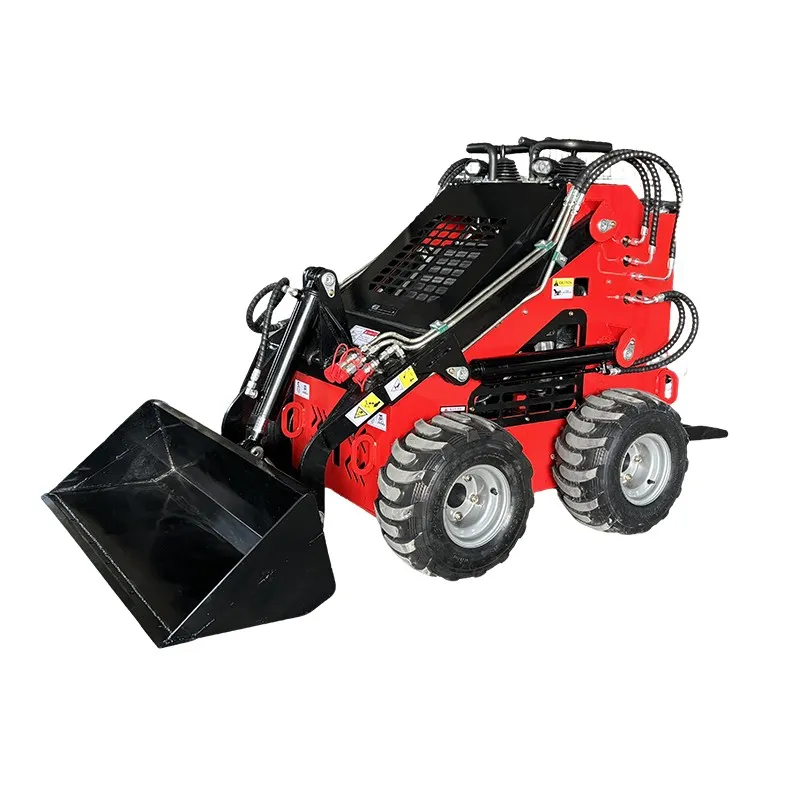
Skid Steer for Material Handling
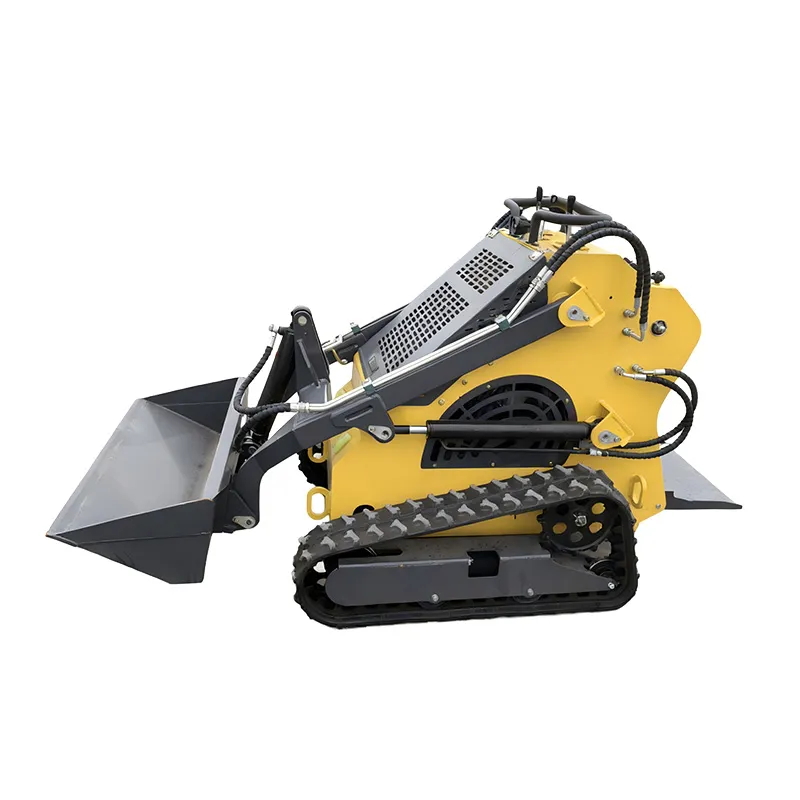
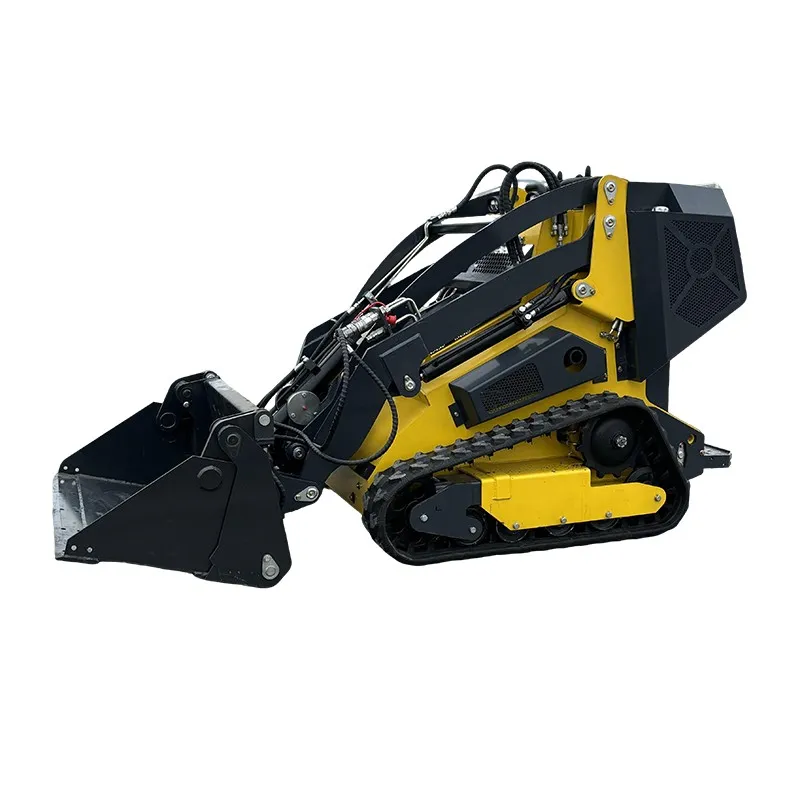
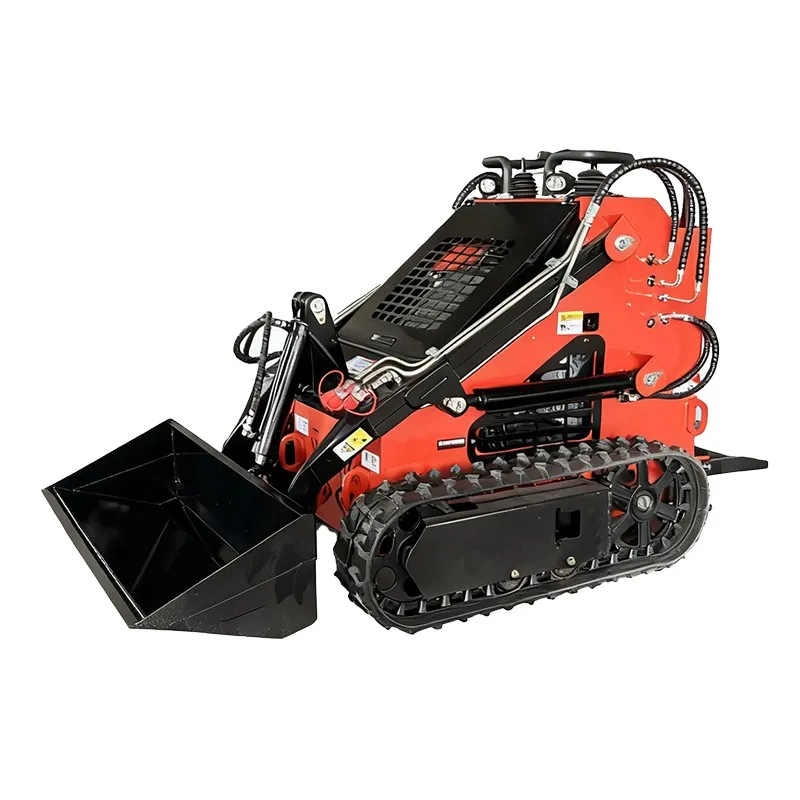
When most folks hear 'skid steer for material handling,' they immediately picture a machine with a bucket moving dirt or gravel. That's the classic image, sure, but it's also the biggest misconception. It makes people underestimate the machine's real versatility. In my years on sites, from tight urban renovations to sprawling agricultural yards, I've seen skid steers do jobs that would otherwise need three different pieces of equipment. The key isn't the machine itself—it's the attachment ecosystem and, more critically, the operator's mindset about what's possible. Too many companies just see them as small, agile loaders, and that's where they miss the efficiency gains.
The Attachment Game-Changer
This is where the real conversation starts. The bucket is just the default. For true material handling, you're looking at pallet forks, grapple buckets, industrial sweepers, and even conveyor belt attachments. I remember a warehouse retrofit job where we used a Bobcat S770 with high-flow hydraulics and a material handling grapple to unload and precisely place bundles of insulation and drywall from trucks into a designated staging area inside the building. The forklifts couldn't maneuver in the cramped, unfinished space, but the skid steer could spin on a dime. The cost savings on manual labor and time were stark.
But here's the catch: not all machines are set up for this. You need the right auxiliary hydraulic system—standard flow vs. high flow—to power these more demanding attachments. I've seen guys try to run a brush cutter or a cold planer with a standard flow system, and it just bogs down, wastes fuel, and damages the attachment. It's a classic false economy. You have to match the tool to the task, and that starts with the machine's specs, not just its brand name.
Another detail often overlooked is the quick-attach system. The global standard is the Bobcat-style vertical pin system, but you still run into older machines or regional variations. On a multi-contractor site, this can be a nightmare. We once had a scheduled material handling day with a rented sweeper and a trencher, only to find the rental skid steer had a different coupler. Lost half a day and ate the rental cost. Now, verifying the coupler type is as fundamental as checking the fuel level.
Operator Skill: The Hidden Variable
Anyone can make a skid steer move forward and lift a load. Effective, safe material handling is a different skill entirely. It's about finesse. Using a pallet fork to pick up a stack of lumber without toppling it requires a feel for the machine's center of gravity and a gentle touch on the controls. New operators tend to be jerky, which is dangerous and damages materials. I've trained guys who were great at excavation but had to completely re-learn their control inputs for precision placement tasks.
The cab environment plays into this, too. Modern machines with sealed, pressurized cabs and advanced climate control aren't just about comfort—they directly impact operator fatigue and, therefore, precision over an 8-hour shift. Trying to do delicate work while being jostled in an open cab, breathing dust, is a recipe for mistakes. I'd argue that for indoor or sensitive-site material handling, cab quality is a higher priority than sheer horsepower.
One failure that sticks with me was using a skid steer to move delicate ceramic tiles on a pallet. The ground was slightly uneven, and the operator, though experienced in rough terrain, didn't adjust his approach. The pallet tilted just enough for the top layer to slide and shatter. The lesson wasn't about the machine's capability; it was about task-specific risk assessment. Sometimes, even if the skid steer can do it, the environment dictates a more manual or specialized approach.
Real-World Scenarios and Niche Applications
Beyond construction, some of the most innovative uses I've seen are in agriculture and logistics. A dairy farm I worked with used a Cat 289D with a custom-built bucket/forks combo to move feed bales and clean out stalls. The machine's small footprint was perfect for navigating between barns. In a port-side storage yard, I saw a Takeuchi TL12 with a rotating fork attachment handling oddly shaped metal coils. The operator could pick, rotate 90 degrees, and slot the coil into a tight storage rack—a maneuver impossible for a standard forklift.
Then there's the issue of maintenance in these roles. Material handling often means constant use of the hydraulic functions—lifting, tilting, opening grapples. This puts sustained pressure on hoses, seals, and cylinders. We found our maintenance intervals for hose inspection had to be shortened compared to machines used primarily for digging. Abrasive environments, like handling recycled concrete or scrap metal, also chew through tires and undercarriage components at an alarming rate. You can't just follow the standard service schedule; you have to adapt it to the actual wear profile.
This is where working with a manufacturer that understands these varied applications pays off. I've followed the work of companies like Shandong Pioneer Engineering Machinery Co., Ltd for a while. They've been in the game since 2004, and their recent relocation and expansion in 2023 suggest a focus on scaling production. What's notable is their dual-structure with Shandong Hexin handling manufacturing and Shandong Pioneer managing overseas trade to markets like the US, Canada, and Australia. For a global user, that often translates to machines and attachments built with export standards and specifications in mind, which can simplify parts sourcing and compatibility down the line.
Cost Considerations and Long-Term Value
The upfront price tag is just the entry fee. The total cost of ownership for a skid steer in a dedicated material handling role needs a different calculus. Fuel efficiency matters, but hydraulic efficiency matters more if you're constantly running attachments. A machine that can operate at a lower RPM while delivering the needed hydraulic power will save significantly on fuel over thousands of hours. Telematics systems that track idle time and attachment usage are no longer a luxury; they're a tool for optimizing machine assignment and spotting inefficient practices.
Resale value is also impacted by how the machine was used. A well-maintained machine from a material handling application, which typically sees less shock loading to the frame than a hard-rock digging machine, can sometimes hold its value better, provided the interior and hydraulic systems are in good order. Buyers are getting smarter about checking hydraulic oil condition and cylinder rod scoring.
It's tempting to buy the biggest machine you can afford, but for material handling, often a compact model with the right specs is more effective. A smaller machine like a Kubota SVL65-2 or a model from a manufacturer like the aforementioned Shandong Pioneer can often access spaces a larger unit can't, and its lower operating cost improves your margin on the handling task itself. The goal is to move material profitably, not just powerfully.
The Future is in Integration
Looking ahead, the role of the skid steer in material handling is becoming more integrated into digital workflows. I'm starting to see prototypes and high-end models with systems that can remember lift heights and dump locations for repetitive tasks, reducing operator cognitive load. The potential for semi-automated material movement in controlled environments, like moving stock from a receiving bay to a preset storage location, is very real.
However, the core principle won't change: it's a tool of adaptability. Its value is directly proportional to the operator's understanding of its limits and the planner's creativity in deploying it. The machine itself is just iron. The process—the seamless, efficient, and safe movement of material from point A to point B—is where the real skill and experience come in. That's what separates a simple equipment operator from a material handling specialist.
So, next time you see a skid steer, don't just see a loader. See a potential forklift, a sweeper, a conveyor, a precision placement tool. Its true capability is defined not by its brochure, but by the problem you need to solve on site today. And sometimes, that means knowing when not to use it, which is perhaps the most professional judgment of all.
Related Products
Related Products