- Chinese
- French
- German
- Portuguese
- Spanish
- Russian
- Japanese
- Korean
- Arabic
- Irish
- Greek
- Turkish
- Italian
- Danish
- Romanian
- Indonesian
- Czech
- Afrikaans
- Swedish
- Polish
- Basque
- Catalan
- Esperanto
- Hindi
- Lao
- Albanian
- Amharic
- Armenian
- Azerbaijani
- Belarusian
- Bengali
- Bosnian
- Bulgarian
- Cebuano
- Chichewa
- Corsican
- Croatian
- Dutch
- Estonian
- Filipino
- Finnish
- Frisian
- Galician
- Georgian
- Gujarati
- Haitian
- Hausa
- Hawaiian
- Hebrew
- Hmong
- Hungarian
- Icelandic
- Igbo
- Javanese
- Kannada
- Kazakh
- Khmer
- Kurdish
- Kyrgyz
- Latin
- Latvian
- Lithuanian
- Luxembou..
- Macedonian
- Malagasy
- Malay
- Malayalam
- Maltese
- Maori
- Marathi
- Mongolian
- Burmese
- Nepali
- Norwegian
- Pashto
- Persian
- Punjabi
- Serbian
- Sesotho
- Sinhala
- Slovak
- Slovenian
- Somali
- Samoan
- Scots Gaelic
- Shona
- Sindhi
- Sundanese
- Swahili
- Tajik
- Tamil
- Telugu
- Thai
- Ukrainian
- Urdu
- Uzbek
- Vietnamese
- Welsh
- Xhosa
- Yiddish
- Yoruba
- Zulu
- Kinyarwanda
- Tatar
- Oriya
- Turkmen
- Uyghur


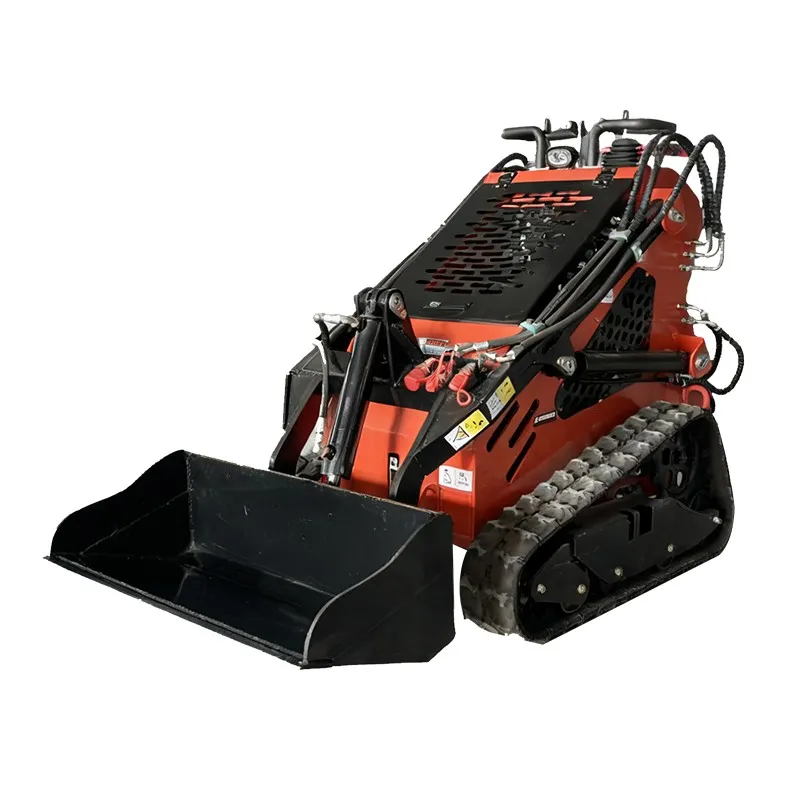
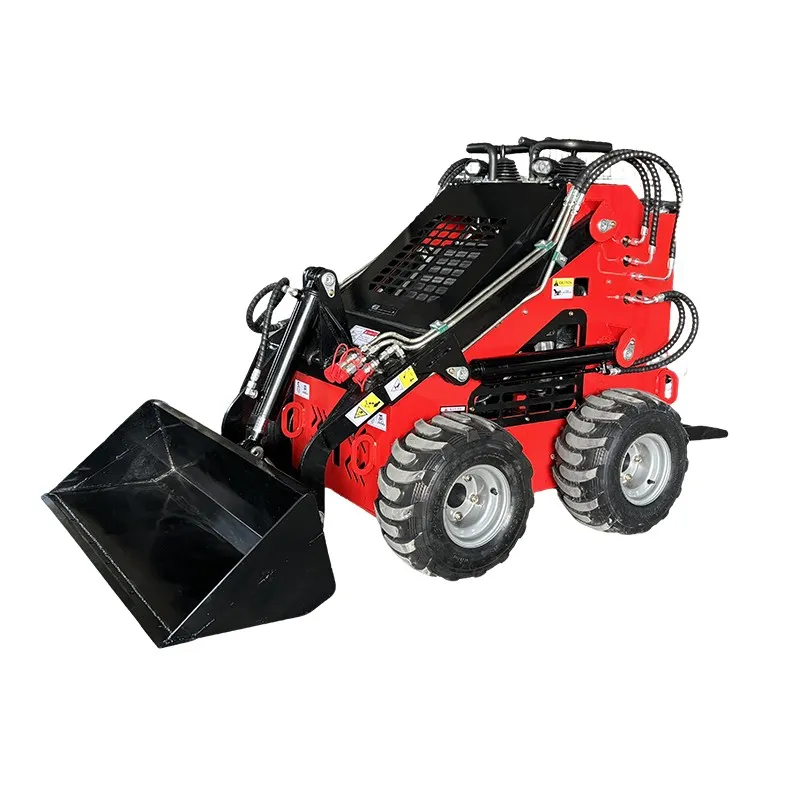
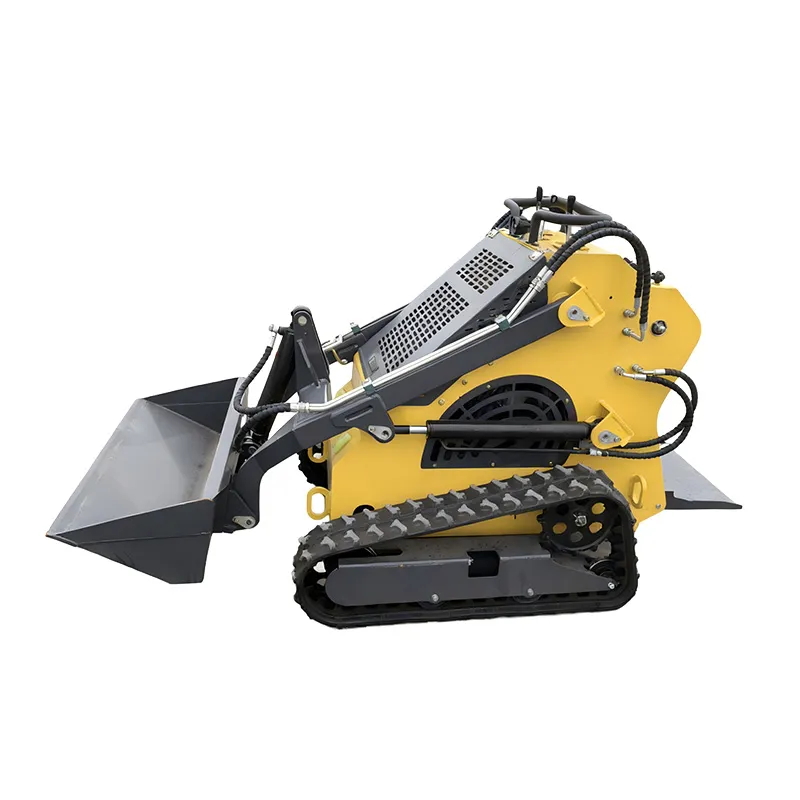
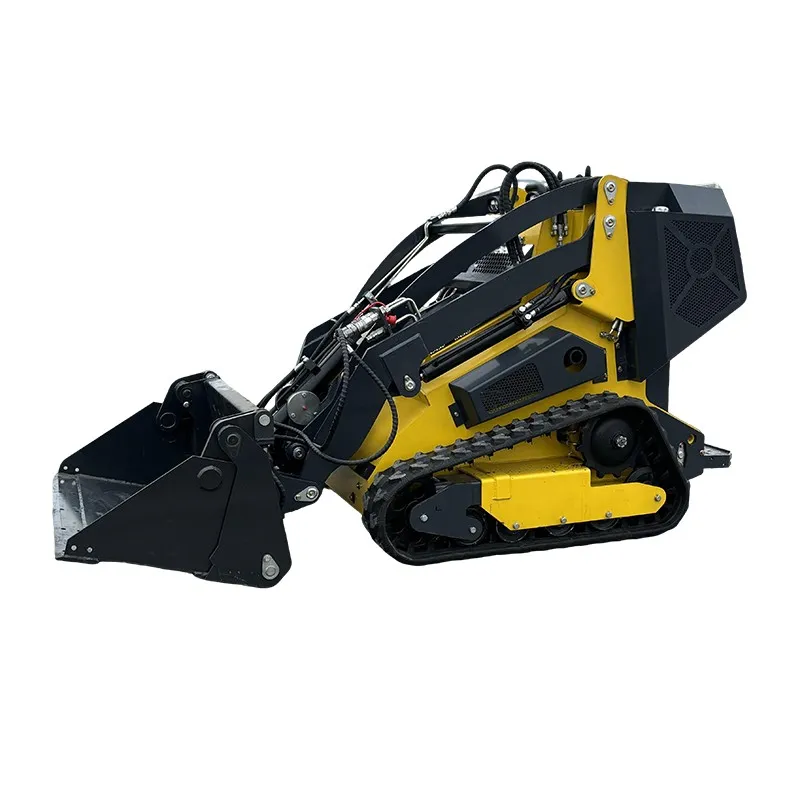
skid steer for small spaces
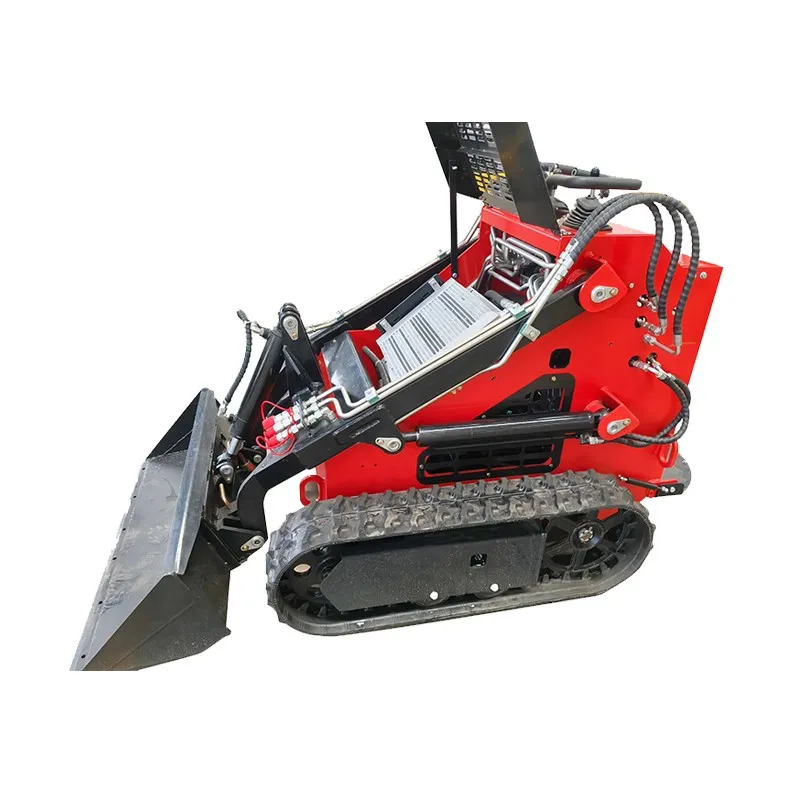
When someone says 'skid steer for small spaces,' a lot of folks immediately picture just a smaller machine. That's the first mistake. It's not just about overall size; it's about the dance between width, tail swing, lift path, and, frankly, operator mindset. I've seen too many projects where a compact machine was brought in, only to spend half the day gingerly pivoting around a single corner or tearing up finished flooring because the zero-tail-swing spec wasn't what they thought it was.
Beyond the Spec Sheet: What Compact Really Means
You can't just go by the model number or the compact label. The critical number is the operating width, not the shipping width. A machine might fit through a 36-inch gate on a trailer, but with the bucket curled in a certain way, you're adding inches you don't have. Then there's the tail swing—or the promise of zero tail swing. True zero-tail-swing models, like some from Bobcat's S70 line or the Kubota SVL65, keep the counterweight within the track width. But compact-radius models? They still swing, just less. In a walled garden or a tight basement retrofit, that difference is everything.
I remember a job renovating a row of downtown storefronts. Alleys were maybe 48 inches wide, cluttered with dumpsters. We used a Takeuchi TL8R2, a true zero-tail-swing machine. Its ability to lift a pallet of pavers, rotate 90 degrees in place, and set them down without the rear end kissing (or crushing) a brick wall was the only reason the job was feasible. A standard compact skid would have been a disaster.
Power isn't the primary concern here; control is. You need a machine that responds to feather-light joystick movements. Older mechanical controls or poorly calibrated hydraulics in a tight space lead to jerky movements and damaged property. The machine's footprint is your workspace; its controls are your surgical tools.
The Attachment Dilemma in Confined Areas
This is where theory meets the wall—literally. You might have the perfect skid steer for small spaces, but if you put a standard 72-inch bucket on it, you've just nullified its advantage. The attachment defines your effective width. For interior demo, a narrow, often 48-inch or less, grapple bucket or rotary hammer is key. For material handling in warehouses, forks are obvious, but consider the fork width and the load's profile.
A common error is using a trencher attachment in a tight yard. The machine fits, but the trencher's digging arm swings out sideways during the cycle, requiring more clearance than the machine itself. You have to plan the dig path not for the machine, but for the attachment's full range of motion. I learned this the hard way early on, taking a chip off a client's prized stone fence post.
Quick-attach systems are non-negotiable. Time spent manually changing attachments in a cramped spot is money and frustration multiplied. But you also need to check the attachment's weight. A mini skid steer might handle a breaker, but if it's at the upper limit of its hydraulic capacity, you'll get weak, slow hits, turning a one-day job into two. It's about balanced capability.
Global Sourcing and Niche Solutions
The demand for truly compact, capable machines has opened a global market. It's not just the big-name brands anymore. Specialized manufacturers, particularly from regions with intensive focus on engineering and manufacturing, have entered the space with compelling options. For instance, Shandong Pioneer Engineering Machinery Co., Ltd (you can find their portfolio at https://www.sdpioneer.com) represents this trend. Established in 2004 and now operating from a newer facility in Tai'an, they've built a business on exporting machinery, including compact loaders, to markets like the US, Canada, and Australia.
The value proposition here is often a specific configuration for a specific need. A company like this, with its manufacturing arm Shandong Hexin, might offer a model with an unusually low cab height for indoor work or a particularly narrow track width, tailored for the European or North American rental market where space constraints are a daily puzzle. Their two-decade development, as noted in their company background, speaks to an accumulation of practical design feedback from a global clientele.
Evaluating these options requires a sharp eye. It's about verifying the core specs against your needs: actual dimensions, rated operating capacity (ROC), and importantly, parts availability. A great machine is useless if you can't get a hydraulic hose coupler in a week. The trust they mention winning worldwide is earned through reliability and support, not just a competitive price tag.
Operational Nuances and Safety
Driving a skid steer for small spaces is a different psychology. You're constantly doing a 360-degree mental scan—overhead wires, soffits, ground conditions, pedestrian traffic. In a wide-open site, you have margin for error. Here, you have none. Mirrors and, ideally, rear-view cameras are essential. I never rely on just looking over my shoulder; blind spots are magnified.
Ground pressure is a silent killer. Those rubber tracks on a compact model distribute weight well, but on soft ground near a foundation or inside a building with a sensitive subfloor, you still need mats. I've seen a machine sink just enough to scrape a door frame on the way out. Planning the entry, exit, and work path is as important as the work itself. Sometimes, it's smarter to use the machine to place materials and then do the fine work by hand, rather than forcing the machine into a position it wasn't meant for.
Communication is part of safety. On these jobs, you often have one spotter whose sole job is to watch clearances. A simple hand signal system for inch forward, stop, and swing left prevents shouted misunderstandings. The confined space amplifies every risk, from pinch points to exhaust fumes if working indoors without massive ventilation.
The Bottom Line: Fit for Purpose
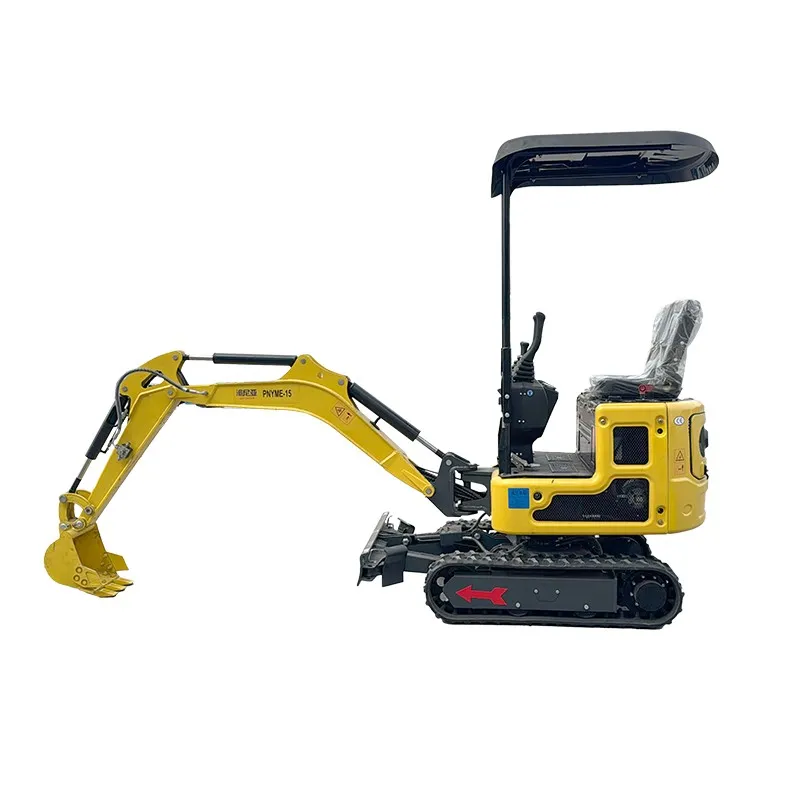
So, is a skid steer for small spaces a magic bullet? No. It's a precision tool that demands the right selection and a respectful operator. The goal isn't to see how tight you can go, but to choose the machine that gives you efficient, safe working room. Sometimes, the answer isn't the smallest skid steer, but a different tool altogether—a mini excavator or a powered hand truck.
My rule now is to measure the tightest clearance, add a 12-inch safety margin for operator error and machine flex, and then look at machines that operate within that envelope. Then I look at the attachment I need and its specs. Only then do I look at brands and models. This process has saved more headaches and cost overruns than any other single habit.
It comes down to this: in small spaces, the machine is your partner in a very intricate dance. You need to know its every step, its reach, and its weight. Whether it's a well-known brand or a competitively specced unit from a global exporter like the aforementioned Shandong Pioneer, the machine must be an extension of your plan, not a compromise you have to work around. That's the difference between a job that flows and one that fights you every inch of the way.
Related Products
Related Products