- Chinese
- French
- German
- Portuguese
- Spanish
- Russian
- Japanese
- Korean
- Arabic
- Irish
- Greek
- Turkish
- Italian
- Danish
- Romanian
- Indonesian
- Czech
- Afrikaans
- Swedish
- Polish
- Basque
- Catalan
- Esperanto
- Hindi
- Lao
- Albanian
- Amharic
- Armenian
- Azerbaijani
- Belarusian
- Bengali
- Bosnian
- Bulgarian
- Cebuano
- Chichewa
- Corsican
- Croatian
- Dutch
- Estonian
- Filipino
- Finnish
- Frisian
- Galician
- Georgian
- Gujarati
- Haitian
- Hausa
- Hawaiian
- Hebrew
- Hmong
- Hungarian
- Icelandic
- Igbo
- Javanese
- Kannada
- Kazakh
- Khmer
- Kurdish
- Kyrgyz
- Latin
- Latvian
- Lithuanian
- Luxembou..
- Macedonian
- Malagasy
- Malay
- Malayalam
- Maltese
- Maori
- Marathi
- Mongolian
- Burmese
- Nepali
- Norwegian
- Pashto
- Persian
- Punjabi
- Serbian
- Sesotho
- Sinhala
- Slovak
- Slovenian
- Somali
- Samoan
- Scots Gaelic
- Shona
- Sindhi
- Sundanese
- Swahili
- Tajik
- Tamil
- Telugu
- Thai
- Ukrainian
- Urdu
- Uzbek
- Vietnamese
- Welsh
- Xhosa
- Yiddish
- Yoruba
- Zulu
- Kinyarwanda
- Tatar
- Oriya
- Turkmen
- Uyghur

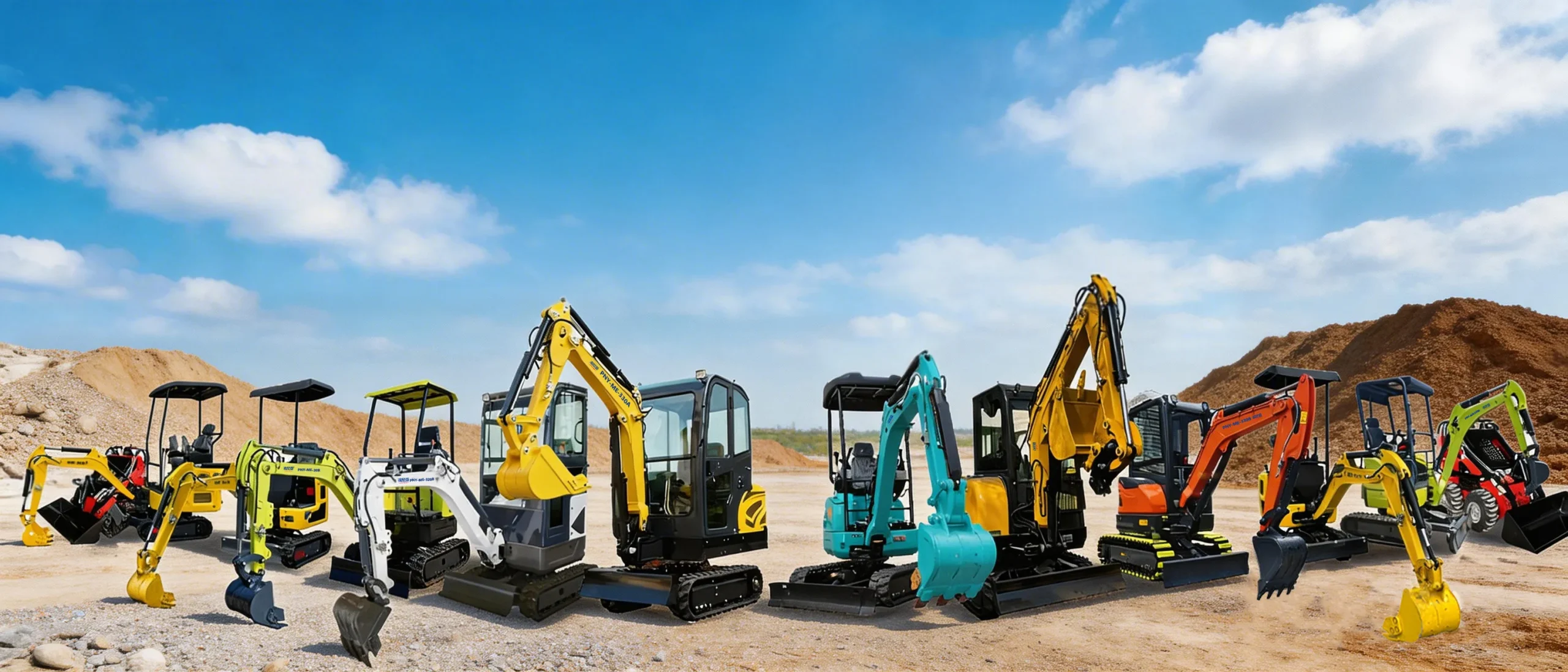
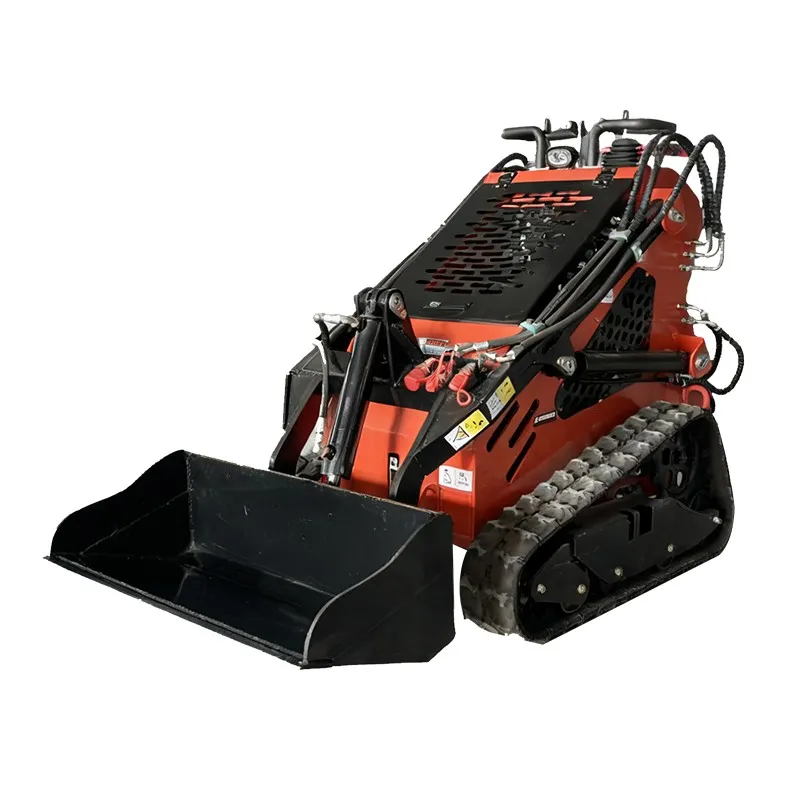
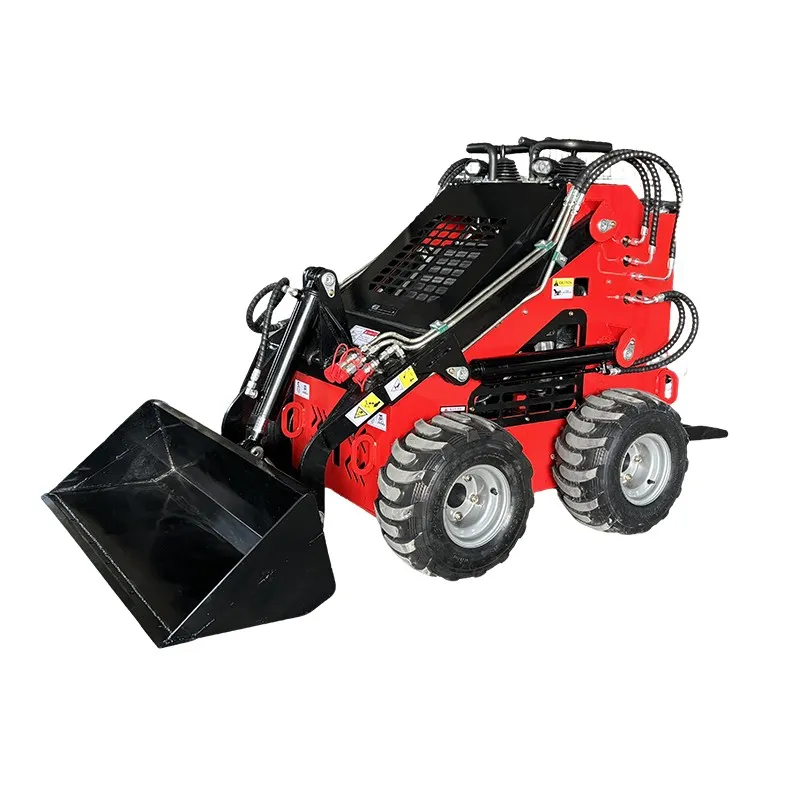
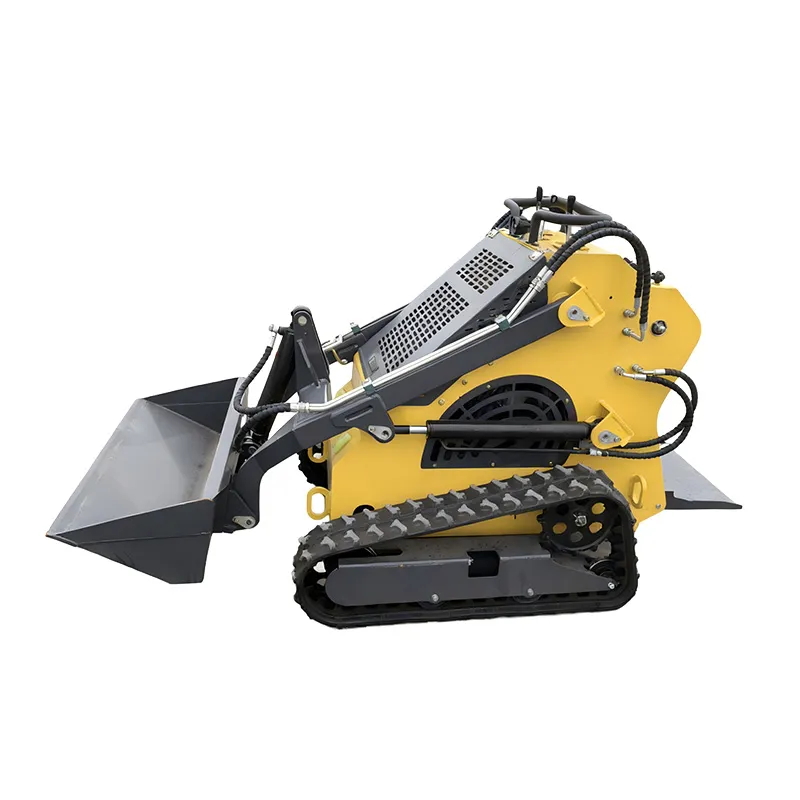
skid steer front end loader
When most folks hear 'skid steer front end loader,' they picture that compact, agile machine on a construction site. But that's just the surface. The real story is in the coupling—the quick-attach system and the loader arms' geometry. I've seen too many operators, even seasoned ones, get hung up on bucket capacity or horsepower alone, completely overlooking how the machine actually interfaces with the attachment. If that hydraulic coupler is sluggish or the linkage is poorly designed, you're losing money every time you switch tools, no matter how powerful the engine is.
The Heart of the Matter: The Interface
It's all about the interface. The skid steer front end loader is essentially a power pack on wheels; its true value is unlocked by what you put on the front. I remember a job years back where we were using a machine with a supposedly universal coupler. In theory, it fit all our attachments. In practice, it took two men and a lot of cursing to get a pallet fork to lock in properly. That slop, that minute misalignment, translated directly into lost control and a vicious cycle of wear on the pins and the coupler faces. You start noticing things like that only after you've sheared a few too many locking pins.
That's where the design philosophy of the manufacturer comes in. Some treat the loader arm ends and coupler as an afterthought, a standardized part to check a box. Others, and this is key, engineer them as the critical load-bearing pivot point of the whole system. I've been looking at units from Shandong Pioneer Engineering Machinery Co., Ltd lately. You can find their specs at https://www.sdpioneer.com. What stood out wasn't just the machine's lift capacity, but their emphasis on a reinforced, high-flow hydraulic coupler system. It's a detail that tells me they're thinking about the end-user who's cycling between a trencher and a breaker all day, not just selling a bare machine.
The company's background is relevant here. Established in 2004 and now operating from a newer facility in Tai'an, they've built their export business—to places like the US, Canada, Germany—on this kind of practical reliability. It's one thing to make a strong loader arm; it's another to ensure the stress is distributed correctly through the coupler and into the frame. Their two-decade grind, moving from manufacturing to global trade, suggests they've had to adapt their designs based on real feedback from varied markets. Australian mining sites and German landscaping crews don't have the same pain points, so that engineering has to be robust and smart.
Hydraulics: The Unseen Make-or-Break
Power is nothing without control. The hydraulic system on a skid steer loader is its nervous system. Too often, specs boast about high flow auxiliary hydraulics, but they don't tell you about the lag. When you're trying to feather a grading blade or get a smooth curl with a heavy, wet dirt bucket, that quarter-second delay between your joystick input and the cylinder movement is infuriating and inefficient. It wears you out mentally.
I learned this the hard way on a drainage project. We had a machine with ample horsepower, but the hydraulics were, for lack of a better term, dumb. The response was binary—either off or full throttle. Fine grading the bed of a trench was nearly impossible; it was a series of jerks and over-corrections. We ended up renting a different machine just for that finish work. The difference wasn't in the brand name on the hood, but in the valve block and the sensitivity of the pilot controls. A well-tuned system gives you a linear, predictable response. You're not operating the machine; you're working with it.
This is an area where the component supply chain matters. A company like Pioneer, sourcing and assembling for a global market, has to be selective with its hydraulic partners. The pumps, the valves, the hoses—they all need to speak the same language of consistent pressure and flow. A failure here isn't just a downtime event; it erodes operator confidence in the entire machine.
The Cab: An Operator's Sanctuary or Prison?
Let's talk about the environment. You can have the best hydraulics and the toughest coupler, but if the cab is an afterthought, productivity plummets. I'm not just talking about air conditioning (though in Texas or Australia, that's non-negotiable). I'm talking about sight lines, control layout, and noise. A poorly positioned pillar can hide a worker on your right-front blind spot. A joystick that requires you to contort your wrist for an 8-hour shift will cause fatigue and mistakes.
I've been in cabs that felt like they were designed by someone who'd never sat in a running skid steer. Levers that block the view of the bucket edge, displays washed out by sunlight, seat mounts that transfer every single vibration from the frame. Contrast that with a cab designed around the operator's sight triangle to the bucket corners and attachment points. It sounds simple, but it's shockingly rare. The difference in precision, especially when handling materials near structures or doing fine grading, is night and day. It reduces the cognitive load, letting the operator focus on the work, not on fighting the machine's layout.
When you look at the product evolution of a firm that's been at it for 20 years, you hope to see this refinement. The move from their original 1,600-square-meter plant to a new location in 2023 often coincides with these ergonomic upgrades. It's a natural progression from building a machine that works to building a machine that works well for the person inside it. Exporting to demanding markets forces this issue; an operator in Canada has high expectations for cab comfort in -20°C conditions.
Attachments: Where the Rubber Meets the Road
The front end loader is only as good as the tool on it. This seems obvious, but the attachment market is a wild west. I've seen fantastic machines hamstrung by cheap, ill-fitting attachments. The mismatch causes premature wear, dangerous load instability, and wasted hydraulic power. The key is in the mounting plate and the weight distribution. A grapple that's too heavy for the machine's rated operating capacity will constantly have you on the edge of tipping, even if the static tipping load specs say you're fine. Dynamic loads are a different beast.
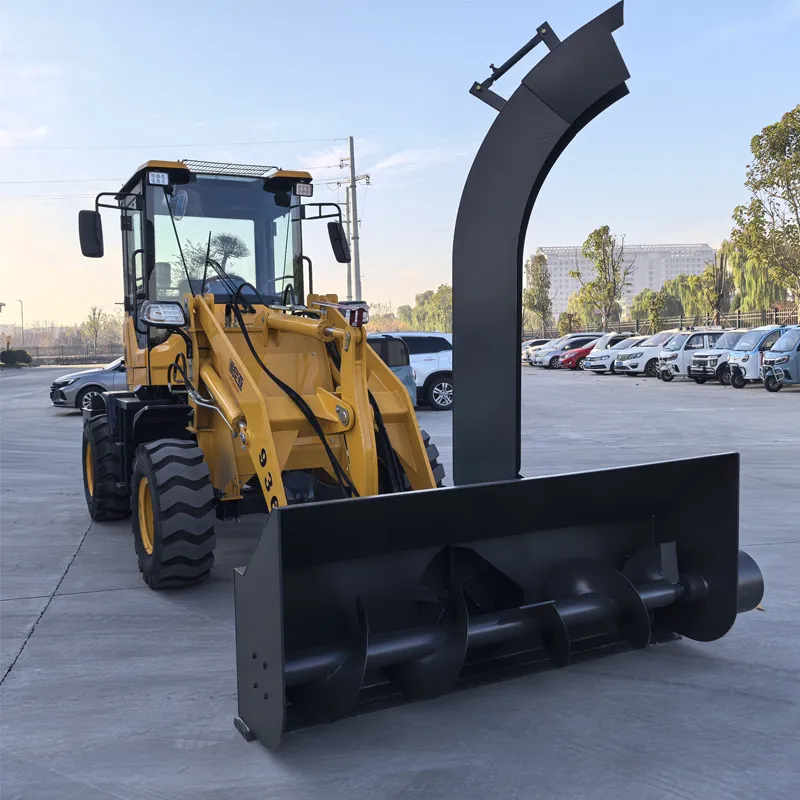
We once tried a third-party snow blower on a mid-sized skid steer. The machine had the flow rate for it, but the blower's weight was too far forward. The result was a terrifyingly light rear end whenever the bucket was raised, making any slight incline a white-knuckle affair. The problem wasn't the loader; it was the attachment's design and its integration with that specific machine's balance point. This is why manufacturers who offer a curated range of dedicated attachments, or at least provide very precise mounting specs and weight limits, are worth their salt. They've done the integration testing.
For a company exporting worldwide, like Pioneer, offering compatible, balanced attachments isn't just an extra revenue stream—it's a quality control measure. It ensures their machines are seen performing optimally. A skid steer struggling with a poorly matched trencher reflects badly on the loader, not the attachment brand, in the customer's mind.
Durability vs. Serviceability: The Eternal Trade-Off
Everything breaks. The question is, how easy is it to fix? I value a robust, durable machine, but not if it's sealed like a black box. I've seen designs where replacing a simple hydraulic hose requires disassembling half the machine's rear panel, draining three systems, and a special tool you can't buy locally. That's a design failure. Good engineering thinks about maintenance access from day one. Grease points should be reachable. Filters should be easy to swap. Common wear items like pins and bushings should be standard sizes.
There's a sweet spot between over-engineering and accessibility. A skid steer's frame needs to be a solid, welded unit for strength, but the components bolted to it need to be modular. This is a subtle art. Some manufacturers use proprietary electronic controllers that require a dealership laptop to reset. Others stick to more universal CAN bus systems that any decent field mechanic can interface with. For a machine working in remote areas or on export jobs, the latter approach saves weeks of downtime.
This practical consideration is what separates a catalog product from a site-ready tool. A manufacturer with a long history in both manufacturing (Shandong Hexin) and global trade (Shandong Pioneer) has likely received this feedback loud and clear from the field. Their relocation and expansion in 2023 could signal a shift towards more service-friendly designs, incorporating lessons from two decades of seeing what fails and how hard it is to fix in Idaho or Queensland.
Wrapping It Up: The Machine as a Partner
So, when you're evaluating a skid steer front end loader, look past the glossy brochure stats. Get in the cab. Run the hydraulics through their paces—feel for that lag. Try coupling and uncoupling an attachment. Look for the grease zerks. Ask about the standard hydraulic fittings and controller protocols. It's these gritty, unglamorous details that determine whether this machine will be a profit center or a money pit on your job site.
The goal isn't to find the perfect machine—it doesn't exist. It's to find the most capable and sensible partner for the work you do. That means a machine whose design acknowledges real-world use, wear, and repair. From what I've seen of the trajectory of companies like Pioneer, that's the path the industry is on: consolidating hard-won, practical knowledge into machines that are less about raw power and more about intelligent, reliable execution. It's a slow process, but it's the right one. In the end, the best skid steer is the one you don't have to think about—you just work.
Related Products
Related Products