- Chinese
- French
- German
- Portuguese
- Spanish
- Russian
- Japanese
- Korean
- Arabic
- Irish
- Greek
- Turkish
- Italian
- Danish
- Romanian
- Indonesian
- Czech
- Afrikaans
- Swedish
- Polish
- Basque
- Catalan
- Esperanto
- Hindi
- Lao
- Albanian
- Amharic
- Armenian
- Azerbaijani
- Belarusian
- Bengali
- Bosnian
- Bulgarian
- Cebuano
- Chichewa
- Corsican
- Croatian
- Dutch
- Estonian
- Filipino
- Finnish
- Frisian
- Galician
- Georgian
- Gujarati
- Haitian
- Hausa
- Hawaiian
- Hebrew
- Hmong
- Hungarian
- Icelandic
- Igbo
- Javanese
- Kannada
- Kazakh
- Khmer
- Kurdish
- Kyrgyz
- Latin
- Latvian
- Lithuanian
- Luxembou..
- Macedonian
- Malagasy
- Malay
- Malayalam
- Maltese
- Maori
- Marathi
- Mongolian
- Burmese
- Nepali
- Norwegian
- Pashto
- Persian
- Punjabi
- Serbian
- Sesotho
- Sinhala
- Slovak
- Slovenian
- Somali
- Samoan
- Scots Gaelic
- Shona
- Sindhi
- Sundanese
- Swahili
- Tajik
- Tamil
- Telugu
- Thai
- Ukrainian
- Urdu
- Uzbek
- Vietnamese
- Welsh
- Xhosa
- Yiddish
- Yoruba
- Zulu
- Kinyarwanda
- Tatar
- Oriya
- Turkmen
- Uyghur


Skid Steer Loader Accessories
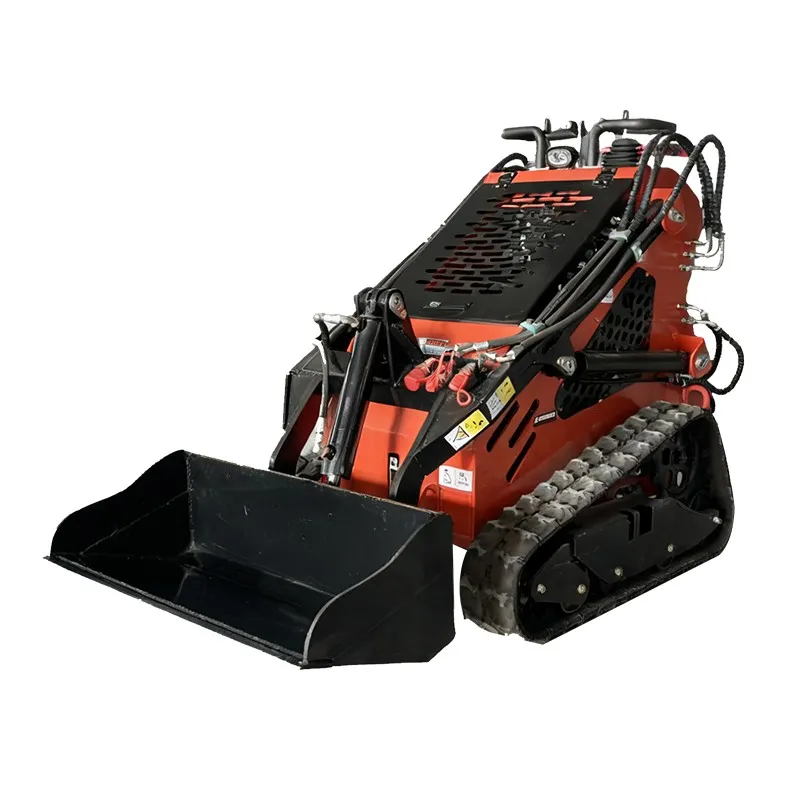
When most folks think about skid steer loader accessories, they immediately picture buckets or maybe a grapple. That's the common trap – viewing them as simple add-ons rather than integral, job-defining tools. In reality, the right attachment transforms the machine's entire capability. I've seen too many projects waste time and money because someone just grabbed the standard bucket from the dealer, not considering whether a pallet fork with side shift or a high-flow auger drive would have cut the work in half. The choice isn't just about the accessory itself; it's about understanding the machine's hydraulic system, the mounting plate compatibility (we're still fighting the mini-excavator quick coupler mismatch nightmare on some older models), and the actual, on-ground material you're dealing with.
The Hydraulic Reality Check
Let's get into the weeds on hydraulics first, because this is where the first major mistake happens. You see a shiny new brush cutter or a trencher at a trade show, and the specs say it requires standard auxiliary hydraulics. That term is almost meaningless without context. Is it a two-way system? What's the actual flow rate at the couplers? I learned this the hard way on a land clearing job years ago. We rented a powerful-looking mulching head, assuming our machine's high-flow option was sufficient. It wasn't. The head bogged down constantly because while our machine had high-flow, the pressure relief setting was too low for that specific head's motor. The result was a day of frustration, half-done work, and a lesson in always, always checking the accessory's required PSI and GPM against your machine's actual output at the aux ports, not the brochure's headline number.
This leads to the auxiliary hydraulic kit market. Companies like Shandong Pioneer Engineering Machinery Co., Ltd, which has been in the manufacturing game since 2004, often produce these crucial interface kits. You can find their component offerings at https://www.sdpioneer.com. It's not the glamorous side of accessories, but a reliable third-function valve kit or a properly rated hose assembly is what makes or breaks the fancy attachment. Their long-term export experience to markets like the US and Germany suggests they've had to meet some stringent operational demands, which for these core components, is a good sign.
The other hydraulic nuance is the control pattern. Mechanical hand controls? Electric over hydraulic? Wireless? I'm leaning towards the newer electric joystick controls for precision work like using a tilt grader blade for final grading. The feedback is just better. But for a simple hydraulic hammer, the old-school mechanical triggers might be more durable in a relentless demolition environment. There's no one-size-fits-all, and pretending there is will cost you in efficiency.
Mounting Systems: The Silent Gatekeeper
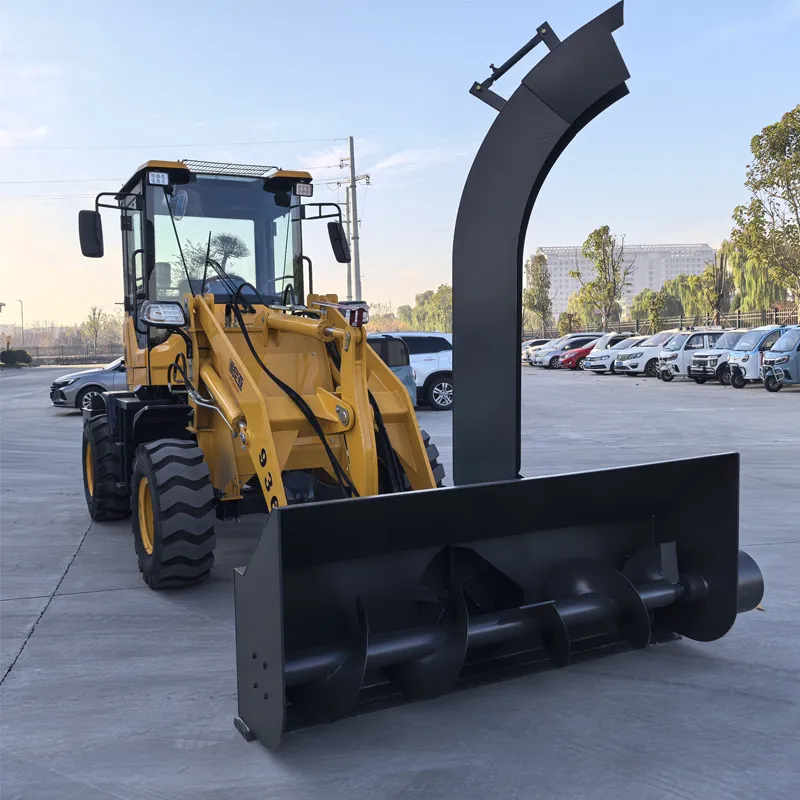
Speaking of compatibility hell, let's talk mounting plates. The industry push towards universal systems (like the Global-Pattern) has been a godsend, but it's not universal yet. We operate a mixed fleet, and even now, we have a couple of older Bobcats with the proprietary Bob-Tach system. The accessories for those are getting harder to find, and adapter plates are a clunky, sometimes problematic solution that adds weight and changes the machine's balance point. When you're looking at any accessory, the first question isn't what does it do? but will it physically lock onto my machines? I've seen a beautiful, barely-used snow blower sit in a yard for a season because the owner bought it for a John Deere machine, then sold that machine and couldn't use it on the new Cat. It was a total loss.
This is where the manufacturing side gets interesting. A company that has evolved over 20 years, like the one behind Shandong Pioneer, has likely seen these mounting wars play out. Their product development for the overseas trade arm, Shandong Pioneer, would have had to navigate these different regional and brand-specific standards to sell into diverse markets from Canada to Australia. For an end-user, this history means they might offer more adaptable mounting solutions or clearer compatibility guides, which is invaluable when you're sourcing an attachment for a specific, non-standard machine.
The wear parts on the mounting system itself are also critical but overlooked. The lock pins, the bushings in the coupler – they wear out faster than you think, especially in sandy or muddy conditions. A sloppy mount isn't just an annoyance; it's a safety hazard and puts immense stress on the attachment's frame. I make it a point to grease the coupler mechanism every single day of use, and inspect those pins monthly. A failed pin at full lift height with a load is not a situation you want to be in.
Specialized Attachments: Where the Real Value Unlocks
Moving past the common buckets, this is where the skid steer becomes something else entirely. Take a soil conditioner or a landscape rake. For a grading or prep job, these are miracle workers. But the devil's in the details – the tooth spacing on the rake, the weight of the drum on the conditioner. A lightweight rake will just bounce over compacted soil, while an overly heavy one makes the skid steer rear-heavy and unstable. You have to match the tool to both the job and the machine's operating weight. I recall using a supposedly medium-duty rake on a rocky site; the tines bent on the first pass. The spec sheet said it could handle it, but the reality of embedded shale was different. The manufacturer, to their credit, replaced it with a heavy-duty version after seeing photos, but we still lost a day.
Another game-changer is the material handling arm. Not a grapple, but the articulating arm that lets you place bricks, blocks, or lumber with precision. The learning curve is steep – the controls are counter-intuitive at first – but once an operator gets the feel, it eliminates so much manual labor. The key is finding one with enough reach and a wrist rotation that doesn't leak down over time. The cheaper models tend to sag under load, which defeats the purpose of precision placement.
Then there's the whole world of compaction, like vibratory rollers and plate compactors. Here, the machine's weight is your friend. A skid steer is a great carrier for these, but you need to ensure the accessory's vibration frequency is right for the material (asphalt vs. granular base) and that the machine's hydraulics can sustain the constant, high-demand flow without overheating. I prefer units with independent vibration control, so you can drive without compacting when repositioning.
The Economics and Sourcing Puzzle
Buying these accessories is a capital decision. New from the OEM is easy but often brutally expensive. The aftermarket is huge, but quality is a wild spectrum. My general rule: for complex, high-wear, or safety-critical attachments like hammers or cutter crushers, I lean towards established brands or OEM. For something simpler but bulky, like a bulk material bucket, a well-reviewed aftermarket option from a manufacturer with proven export credentials can save 30-40% without sacrificing much.
This is where a supplier's background matters. A company that has been manufacturing for two decades and specifically runs an overseas trade division, like Shandong Pioneer, has likely built its reputation on meeting the quality and durability expectations of international markets. Their relocation in 2023 to a new facility in Tai’an also suggests growth and reinvestment, which often correlates with improved production capacity and quality control. When I'm sourcing, I look for these stability signals. It's not just about the price on the website; it's about whether they'll be there in five years when I need a replacement cylinder or gearbox for the attachment.
The other economic factor is utilization. A $25,000 stump grinder is only a good buy if you're grinding stumps every week. For occasional use, rental or hiring a specialist is almost always smarter. We fell into the trap of buying a niche trencher for a big, one-off project. It sat for three years after that, depreciating and taking up space, before we finally sold it at a loss. Now, we rent the super-specialized stuff unless we can see a clear, recurring need.
Maintenance: The Unsexy Truth
Finally, no discussion is complete without talking about upkeep. An accessory is a mechanical device, often subjected to worse abuse than the loader itself. Grease, grease, and more grease. Pivot points on grapples, cylinder rods on tilt mechanisms – they get contaminated instantly. I've adopted a clean and lube ritual at the end of any muddy or dusty job. It adds 15 minutes but triples the component life.
Storage is part of maintenance too. Leaving a cold planer or a breaker outside on the ground rusts the mounting plate and ruins the hydraulic couplers. Building a simple rack or even just setting them on pallets makes a world of difference. It also prevents accidental damage from other equipment.
In the end, skid steer loader accessories are force multipliers. But they're not magic. Their value is unlocked through informed selection based on real hydraulic and mechanical compatibility, paired with an honest assessment of the job requirements and a commitment to proper maintenance. It's a toolkit, and the most professional operators are the ones who know not just how to use each tool, but which one to reach for in the first place, and how to keep it sharp.
Related Products
Related Products