


- Chinese
- French
- German
- Portuguese
- Spanish
- Russian
- Japanese
- Korean
- Arabic
- Irish
- Greek
- Turkish
- Italian
- Danish
- Romanian
- Indonesian
- Czech
- Afrikaans
- Swedish
- Polish
- Basque
- Catalan
- Esperanto
- Hindi
- Lao
- Albanian
- Amharic
- Armenian
- Azerbaijani
- Belarusian
- Bengali
- Bosnian
- Bulgarian
- Cebuano
- Chichewa
- Corsican
- Croatian
- Dutch
- Estonian
- Filipino
- Finnish
- Frisian
- Galician
- Georgian
- Gujarati
- Haitian
- Hausa
- Hawaiian
- Hebrew
- Hmong
- Hungarian
- Icelandic
- Igbo
- Javanese
- Kannada
- Kazakh
- Khmer
- Kurdish
- Kyrgyz
- Latin
- Latvian
- Lithuanian
- Luxembou..
- Macedonian
- Malagasy
- Malay
- Malayalam
- Maltese
- Maori
- Marathi
- Mongolian
- Burmese
- Nepali
- Norwegian
- Pashto
- Persian
- Punjabi
- Serbian
- Sesotho
- Sinhala
- Slovak
- Slovenian
- Somali
- Samoan
- Scots Gaelic
- Shona
- Sindhi
- Sundanese
- Swahili
- Tajik
- Tamil
- Telugu
- Thai
- Ukrainian
- Urdu
- Uzbek
- Vietnamese
- Welsh
- Xhosa
- Yiddish
- Yoruba
- Zulu
- Kinyarwanda
- Tatar
- Oriya
- Turkmen
- Uyghur

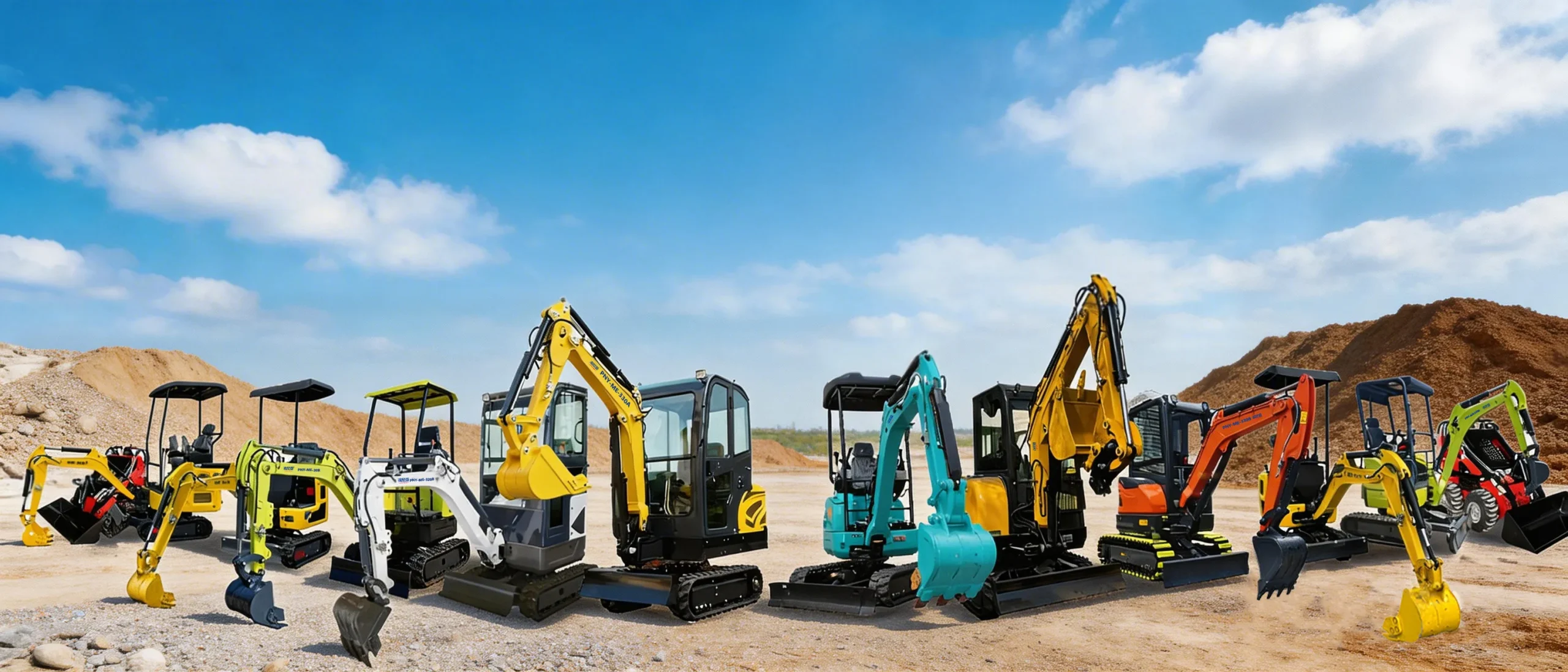
skid steer loader company
When most people think about a skid steer loader company, they picture a catalog of machines, maybe a factory floor. That's the surface. The real substance, what separates a parts assembler from a true equipment partner, is buried in the nuance of application, the grind of post-sale support, and frankly, a deep understanding of how these machines fail in the field. Too many buyers get hypnotized by horsepower and lift capacity, missing the critical details like hydraulic hose routing, service access points, or the quality of a weld on the loader arm pivot. That's where you find the real DNA of a company.
The Foundation: More Than Just a Factory Address
Take a company like Shandong Pioneer Engineering Machinery. Established in 2004, they've been in the trenches for two decades. That timeline itself is a data point. It means they've likely weathered multiple industry cycles, seen component suppliers come and go, and had to adapt their designs based on real-world feedback. Their recent relocation in 2023 to a new facility in Ningyang County isn't just a real estate move; it often signals a scaling up of production capability or a shift towards more streamlined, modern manufacturing processes. A 1,600 square meter production area, which they started with, is a compact, focused operation. It suggests a model built on agility rather than sheer volume, which can be a strength for specialized or customized units.
What's often overlooked is the dual-structure they mention: Shandong Hexin handling manufacturing and Shandong Pioneer managing overseas trade. This isn't just corporate paperwork. In practice, this separation can create a vital tension. The manufacturing arm is pressured on cost and quality control, while the trade arm faces the direct brunt of customer complaints and market demands from places like the U.S., Canada, and Germany. If that communication channel works, it leads to rapid product iteration. If it doesn't, you get machines that look good on paper but have frustrating quirks for an operator in Australia. Their stated export footprint is a promise that needs validating through parts availability and technical documentation in those regions.
You can visit their online presence at https://www.sdpioneer.com to see how they present themselves. The website is a starting point, but the real questions begin after you close the browser. How do they handle a warranty claim for a faulty hydraulic pump in the middle of a Canadian winter? The longevity of their business, since 2004, hints at a baseline of reliability, but it's the unresolved pain points from the last five years that truly define their current capability.
The Product Reality: Between the Brochure and the Job Site
Every skid steer loader company will show you a clean machine at a trade show. The test is in the details after 500 hours of runtime. For instance, the placement of the radiator. Is it exposed to constant clogging from debris in mulch or demolition work? Companies that have field experience will often have a clever ducting solution or an easily removable guard. I've seen machines from newer entrants where changing a simple fuel filter requires disassembling half the rear panel—a design flaw that screams a lack of consultation with actual mechanics.
Materials matter in ways specs don't convey. The grade of steel used in the boom arms, the sourcing of hydraulic cylinders, the brand of the auxiliary hydraulic couplers. A company with two decades of supply chain navigation, like Pioneer, has presumably built relationships. But it also means they might be locked into older component designs if they haven't actively refreshed their partnerships. I recall a batch of machines a few years back from a different manufacturer that had excellent engines but suffered from chronic leaks in the proprietary quick-attach hydraulic lines. The problem wasn't the loader itself; it was a sub-supplier part that brought the machine's reputation down.
Attachments are the other half of the story. A skid steer is a power unit. The true value is in the interface and the range of tools. Does the company design its own attachments, or are they simply reselling generic ones? A unified design philosophy between machine and attachment leads to better balance, cleaner hydraulic integration, and safer operation. A trade-focused company like Shandong Pioneer, serving diverse global markets, must offer a compatible range of attachments, which is a significant logistical and engineering challenge in itself.
The Global Test: Exporting Isn't Just Shipping
Listing export countries is standard. Understanding what it takes to succeed in those markets is what separates companies. The regulatory environment in Germany (CE) is vastly different from the commercial expectations in the United States. A machine that sells well in one region might need significant modification for another. Does the company have the engineering bandwidth to handle these variations, or do they sell a one-size-fits-all model and hope for the best? Winning the trust of customers worldwide, as their intro states, is an outcome, not a process. The process involves having technical manuals in local languages, a parts depot within a reasonable shipping time, and dealer networks trained to do more than just sell.
I've witnessed the failure of this model firsthand. A company exported aggressively to North America but had zero parts inventory on the continent. A simple seal failure would ground a machine for weeks, destroying a contractor's trust and schedule. The initial price advantage evaporated instantly. For a buyer, investigating the after-sales infrastructure in their specific region is more critical than comparing bucket curl force. A company's longevity in export, as suggested by Pioneer's 20-year history, generally means they've learned some of these hard lessons, but it's never a guarantee.
Climate is another brutal teacher. A machine engineered for a temperate climate might overheat in the Australian outback or have its electrical components fail in a Scandinavian freeze. Companies that have successfully exported to such diverse zones have usually incorporated specific cooling packages, different battery specifications, or alternative hydraulic fluid recommendations into their offering. It's this granular level of adaptation that you won't find in a brochure.
The Unseen Metrics: Durability and Total Cost of Operation
Lift height and tipping load are the headline numbers. Frame flex, spindle life, and controller reliability are the real determinants of total cost. A robust skid steer loader company builds its reputation on the second set of metrics. How does the mainframe handle torsional stress from constant high-flow attachment use? Are the wheel motors or drive chains serviceable, or are they sealed units requiring complete replacement? These decisions, made in the design phase, define the machine's economic life.
We ran a small fleet comparison once, pitting a well-known brand against a more value-oriented import. The initial purchase price difference was significant. But at the 2,000-hour mark, the cost picture flipped. The cheaper machines required far more frequent hydraulic hose replacements, suffered from electrical gremlins in the control system, and had significantly higher downtime. The savings were illusory. This is where a manufacturer's depth of experience pays off. They've seen how their machines age and, ideally, have iterated on the weak points. A company that has been manufacturing since 2004 has had the opportunity to run its designs through multiple lifecycles.
Operator comfort is another durability factor. A noisy, vibrating, poorly laid-out cab leads to operator fatigue, which leads to rushed operations and inadvertent abuse of the machine. It's a soft cost that hardens into repair bills. The best manufacturers spend time in the cab with operators, moving controls by millimeters, adjusting seat angles, damping high-frequency vibrations. This stuff is rarely quantified in a spec sheet but is felt every minute of the workday.
Looking Forward: The Evolving Role of the Manufacturer
The conversation is slowly shifting from pure mechanical specs to connectivity and data. This is a new frontier for established manufacturers. Can a company that mastered steel fabrication now also develop a robust telematics system? Some are partnering, some are building in-house. It's a critical juncture. A machine that can report its own health, track fuel consumption, and geofence is becoming a baseline requirement for larger fleets.
For a company like Shandong Pioneer, with its established trade channels, integrating smart technology isn't just a product feature—it's a support multiplier. Remote diagnostics can solve many issues without dispatching a technician, which is a game-changer for international customers. However, it requires a different kind of investment: in software, data security, and IT support. It's a classic example of how the ground is moving beneath the feet of even the most traditional equipment makers.
Ultimately, choosing a skid steer loader company is an exercise in risk assessment. You're betting on their past experience to predict future reliability, on their supply chain to support your downtime, and on their corporate philosophy to keep improving. The facts—like a 2004 founding, a 2023 facility upgrade, and a list of export countries—are just the opening arguments. The verdict comes after thousands of hours in the dirt, and it's written in repair logs, operator feedback, and the final cost per hour of operation. That's the report card no website can fully display, but which every serious buyer must try to read.
Related Products
Related Products