


- Chinese
- French
- German
- Portuguese
- Spanish
- Russian
- Japanese
- Korean
- Arabic
- Irish
- Greek
- Turkish
- Italian
- Danish
- Romanian
- Indonesian
- Czech
- Afrikaans
- Swedish
- Polish
- Basque
- Catalan
- Esperanto
- Hindi
- Lao
- Albanian
- Amharic
- Armenian
- Azerbaijani
- Belarusian
- Bengali
- Bosnian
- Bulgarian
- Cebuano
- Chichewa
- Corsican
- Croatian
- Dutch
- Estonian
- Filipino
- Finnish
- Frisian
- Galician
- Georgian
- Gujarati
- Haitian
- Hausa
- Hawaiian
- Hebrew
- Hmong
- Hungarian
- Icelandic
- Igbo
- Javanese
- Kannada
- Kazakh
- Khmer
- Kurdish
- Kyrgyz
- Latin
- Latvian
- Lithuanian
- Luxembou..
- Macedonian
- Malagasy
- Malay
- Malayalam
- Maltese
- Maori
- Marathi
- Mongolian
- Burmese
- Nepali
- Norwegian
- Pashto
- Persian
- Punjabi
- Serbian
- Sesotho
- Sinhala
- Slovak
- Slovenian
- Somali
- Samoan
- Scots Gaelic
- Shona
- Sindhi
- Sundanese
- Swahili
- Tajik
- Tamil
- Telugu
- Thai
- Ukrainian
- Urdu
- Uzbek
- Vietnamese
- Welsh
- Xhosa
- Yiddish
- Yoruba
- Zulu
- Kinyarwanda
- Tatar
- Oriya
- Turkmen
- Uyghur

skid steer loader cost
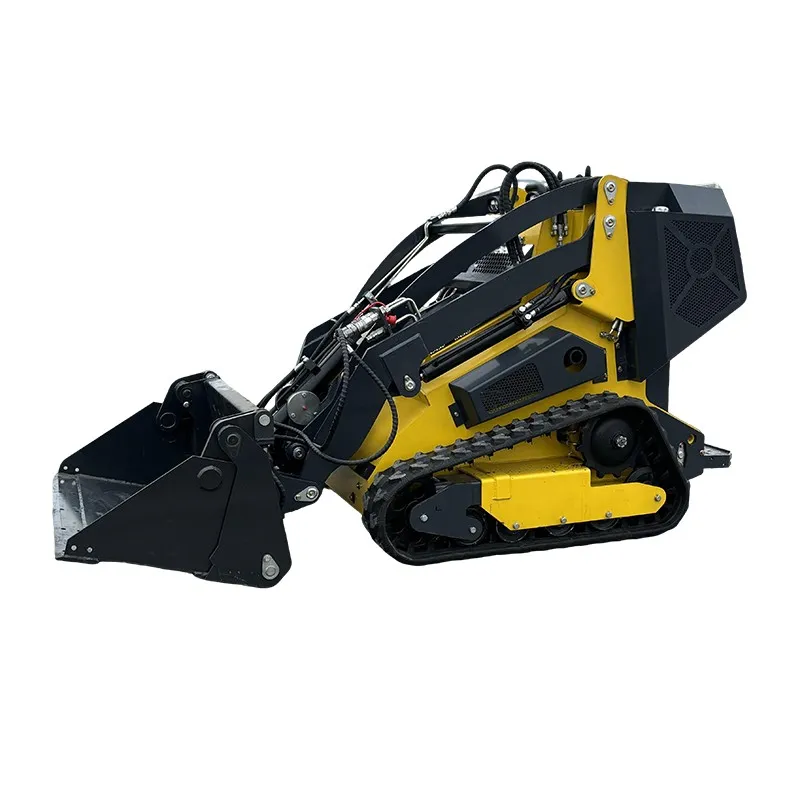
When someone types 'skid steer loader cost' into a search bar, they're usually hoping for a simple number. That's the first mistake. The price tag you see online or in a brochure is just the entry ticket. The real cost is a moving target, shaped by horsepower, auxiliary hydraulics, bucket type, and whether you're looking at a new, used, or refurbished unit. I've seen too many guys fixate on the initial purchase price, only to get hammered by maintenance or discover the machine can't run the attachment they really need. It's not just about buying a machine; it's about buying capability for your specific job.
Breaking Down the Initial Purchase Price
Let's start with the obvious: the upfront cash. For a new machine, you're looking at a range that can make your head spin. A compact model with a 50 hp engine might start around $25,000, but that's a basic tool. Once you step into the mid-size range—think 75 hp, high-flow hydraulics, and a cab with air conditioning—you're easily crossing $50,000. The premium brands push into the $70,000+ territory without breaking a sweat. The key here is specification. I remember a landscaping contractor who bought a bargain model without the high-flow option. He planned to run a forestry mulcher. That was a $30,000 mistake; the machine lacked the hydraulic output, rendering the attachment useless. The skid steer loader cost he saved upfront was wiped out by the wrong spec.
Used markets are a different beast. A 5-year-old machine with 2,000 hours might seem like a steal at half the new price. But you're buying its history. I always tell people to budget for an immediate service: fluids, filters, and a thorough inspection of the pins, bushings, and hydraulic cylinders. A $5,000 repair bill in the first month isn't uncommon, turning that good deal sour fast. The price is just the opening bid.
Then there's the source. Buying from an OEM dealer gives you warranty and support, which is baked into the price. Buying from a global trader or manufacturer, like Shandong Pioneer Engineering Machinery Co., Ltd, often presents a different value proposition. Their model, as I understand from industry contacts, is to offer competitively spec'd machines directly from the manufacturing base. You can check their range at their site, https://www.sdpioneer.com. They've been in the game since 2004, originally based in Jining and now operating from a newer facility in Ningyang. For a buyer who understands the total cost of ownership and doesn't necessarily need a dealer network next door, this can alter the skid steer loader cost equation significantly, especially for export markets.
The Hidden Costs That Bite You Later
This is where experience talks. The invoice price is quiet; the operating costs are loud. Fuel is the big one. A turbocharged diesel sipping fuel under light load is one thing. But run it hard all day, especially with high-flow attachments, and you'll watch the fuel gauge drop. Over a 2,000-hour year, the difference between two models' efficiency can mean thousands in fuel alone.
Maintenance is non-negotiable. I follow a strict schedule: 50-hour greasing (miss this and you'll pay for new pins fast), 250-hour oil and filter changes, 1,000-hour checks on the hydraulic system. Using off-brand filters or skipping a service to save $200 is a classic false economy. I learned this the hard way on a site years ago. A neglected air filter led to premature turbo failure. The repair cost was more than a decade's worth of proper filters.
Then come the attachments. The loader is just the power unit. The real work is done by the bucket, grapple, auger, or breaker. A quality pallet fork might set you back $1,500, a hydraulic auger $3,500. If you need a cold planer or a stump grinder, you're looking at five figures. This part of the skid steer loader cost is often an afterthought, but it shouldn't be. Your machine is only as versatile as the attachments you can afford to run on it.
Total Cost of Ownership: The Only Metric That Matters
Smart fleets don't think about purchase price; they calculate cost per hour. TCO includes depreciation, interest (if financed), insurance, taxes, fuel, maintenance, and repairs. A cheaper machine that depreciates faster and breaks down more often can have a higher hourly cost than a premium model. It's a long-game calculation.
Resale value is a huge component. Some brands and models hold their value stubbornly well. Others plummet. This is often tied to perceived reliability and dealer network strength. A machine from a manufacturer with a strong export record, like the ones from Shandong Pioneer, which according to their info exports to places like the U.S., Canada, and Australia, needs to be evaluated on its own merit in your local market. Will it hold value? That depends on its proven durability and the support structure in your region.
Downtime is the ultimate hidden cost. When your skid steer is down, your project might be stalled. Rental costs, missed deadlines, and idle labor will dwarf any repair bill. This is why build quality and serviceability matter so much. Can you easily access the hydraulic pump? Are common wear parts standard and available? The initial skid steer loader cost might be lower, but if it spends more time in the shop, you've lost money.
Navigating the Global Supply Chain
The market isn't just local anymore. Many contractors and rental yards look overseas for value. Companies that manufacture and trade directly, like Shandong Pioneer with its dual entities—Shandong Hexin for manufacturing and Shandong Pioneer for overseas trade—are key players. They've built a 20-year operation, which suggests they've navigated the complexities of meeting different regional standards and building customer trust globally.
Importing directly changes the cost structure. You might save on the unit price, but you must factor in shipping, import duties, customs clearance, and modifying the machine to meet local regulations (like ROPS/FOPS certification, lighting). You also become your own first line of technical support. This route isn't for everyone, but for a savvy buyer with mechanical knowledge or a good local mechanic, it can dramatically lower the capital outlay. The skid steer loader cost on the supplier's website is just the beginning of this calculation.
The key is due diligence. When considering any supplier, ask for detailed specs, component origins (e.g., what brand of engine, hydraulics), and references in markets similar to yours. A company that's been exporting to demanding markets like Germany or Australia for years likely has processes in place to ensure reliability. Visit their site, https://www.sdpioneer.com, not just for prices, but for technical documentation and to gauge their professionalism. It's part of the homework.
The Final Calculation: What's It Worth to You?
So, what's the answer to 'skid steer loader cost'? There isn't one. It's a series of questions. What's your primary application? What's your tolerance for downtime? Do you have in-house maintenance, or do you rely on a dealer? Are you buying for one big project or for a 10-year fleet addition?
My advice is always to build a spreadsheet. Model the total cost over your expected ownership period. Sometimes, the more expensive machine is cheaper in the long run. Sometimes, a basic, no-frills machine from a value-focused global manufacturer is the perfect fit for a straightforward, high-volume task where you can manage maintenance tightly.
In the end, cost is about value, not price. It's about the machine earning its keep, hour by hour, without drama. Whether you're talking to your local dealer or contacting a trading company half a world away, that's the principle that should guide you. Forget the sticker shock. Focus on the cost of getting the work done, reliably, from today until the day you sell it. That's the only number that counts.
Related Products
Related Products