- Chinese
- French
- German
- Portuguese
- Spanish
- Russian
- Japanese
- Korean
- Arabic
- Irish
- Greek
- Turkish
- Italian
- Danish
- Romanian
- Indonesian
- Czech
- Afrikaans
- Swedish
- Polish
- Basque
- Catalan
- Esperanto
- Hindi
- Lao
- Albanian
- Amharic
- Armenian
- Azerbaijani
- Belarusian
- Bengali
- Bosnian
- Bulgarian
- Cebuano
- Chichewa
- Corsican
- Croatian
- Dutch
- Estonian
- Filipino
- Finnish
- Frisian
- Galician
- Georgian
- Gujarati
- Haitian
- Hausa
- Hawaiian
- Hebrew
- Hmong
- Hungarian
- Icelandic
- Igbo
- Javanese
- Kannada
- Kazakh
- Khmer
- Kurdish
- Kyrgyz
- Latin
- Latvian
- Lithuanian
- Luxembou..
- Macedonian
- Malagasy
- Malay
- Malayalam
- Maltese
- Maori
- Marathi
- Mongolian
- Burmese
- Nepali
- Norwegian
- Pashto
- Persian
- Punjabi
- Serbian
- Sesotho
- Sinhala
- Slovak
- Slovenian
- Somali
- Samoan
- Scots Gaelic
- Shona
- Sindhi
- Sundanese
- Swahili
- Tajik
- Tamil
- Telugu
- Thai
- Ukrainian
- Urdu
- Uzbek
- Vietnamese
- Welsh
- Xhosa
- Yiddish
- Yoruba
- Zulu
- Kinyarwanda
- Tatar
- Oriya
- Turkmen
- Uyghur


Skid Steer Loader Manufacturer
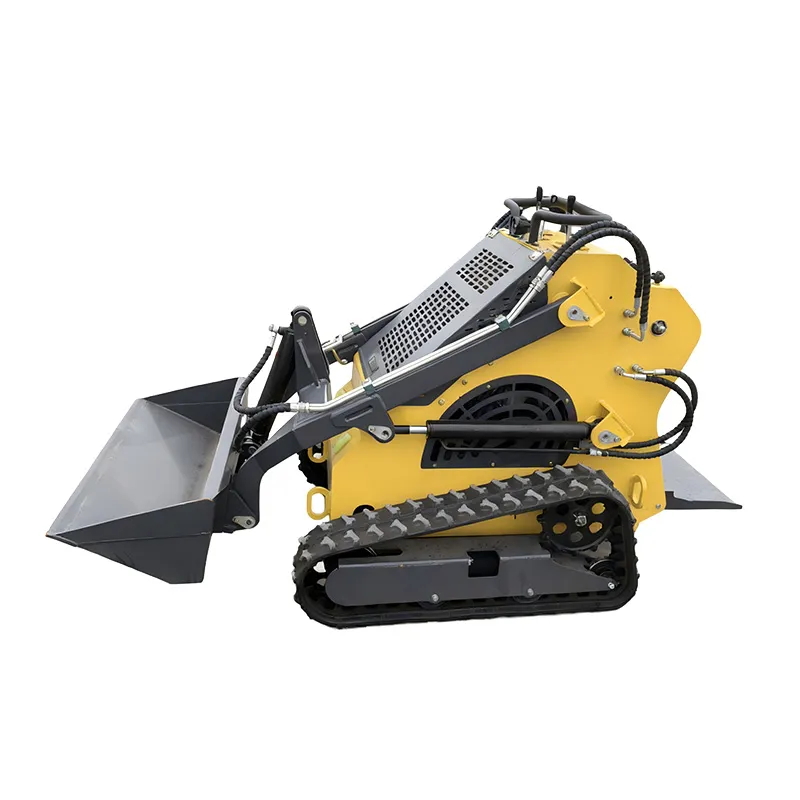
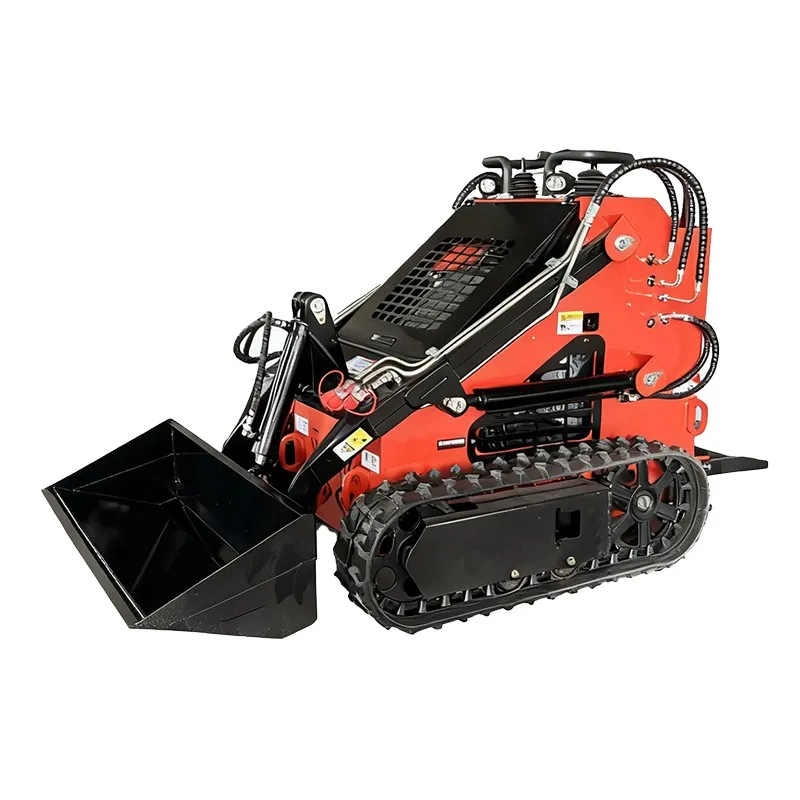
When you hear 'Skid Steer Loader Manufacturer,' most folks immediately picture the big names—Bobcat, Caterpillar, John Deere. That's the first common trap. It creates this illusion that manufacturing is just about stamping out machines in massive, automated factories. The reality, especially when you're dealing with the global supply chain and the rise of specialized OEMs and private-label builders, is far more nuanced and, frankly, more interesting. It's not just about building a loader; it's about understanding the specific, often unglamorous, pain points of end-users in different markets—from a rental yard in Texas needing durability to a small farm in Germany prioritizing precise auxiliary hydraulics for attachments. That distinction between a brand and the actual manufacturing entity is where the real story is.
The Foundation: More Than Just a Factory Floor
Let's talk about foundation. A manufacturer's location and history aren't just lines on a website 'About Us' page. They're tangible indicators of capability and evolution. I recall visiting several facilities in China's Shandong province, a real hub for heavy machinery components. You see a lot of workshops, but the ones that last have a certain trajectory. Take Shandong Pioneer Engineering Machinery Co., Ltd, for instance. Established back in 2004 in Jining, they started with that classic model: a 1,600 square meter production area, focusing on core structural fabrication. That's a typical starting point for many. The recent move in 2023 to a new facility in Ningyang County, Tai'an, isn't just a change of address. It signals growth, a need for more streamlined workflow, and likely an investment in better process control. You don't undertake a relocation like that after nearly two decades unless you're planning for a next phase, often tied to scaling up production capacity or integrating more vertical manufacturing steps. It's a practical response to market demand, not a marketing gimmick.
This physical evolution matters because building skid steers is incredibly space-intensive. You need areas for welding booths, paint lines, assembly tracks, hydraulic testing stations, and component storage. The layout of a plant directly impacts efficiency and quality consistency. A cramped 1,600 sqm operation forces compromises; a newer, likely larger facility allows for a more logical flow from raw steel to finished machine. It's in these details—like whether the final assembly is in a clean, organized bay or a cluttered workshop—where you start to separate the contract manufacturers who just weld parts together from those who are thinking like a skid steer loader manufacturer responsible for the whole machine's integrity.
Their structure, with Shandong Hexin handling manufacturing and Shandong Pioneer managing overseas trade, is also a telling detail. It's a smart, common separation for export-focused businesses. It allows the factory team to concentrate on engineering and production metrics, while the trade company interfaces with the global market's messy realities: certifications (CE, EPA Tier 4), logistics, customs, and after-sales support. When you're dealing with markets as different as the US, Canada, Germany, and Australia—all mentioned in their outreach—you need that dedicated commercial focus. A German contractor's expectations for documentation and noise compliance are worlds apart from a Canadian logging operation's demand for sheer power and cold-weather starting. One entity trying to do it all often stumbles.
The Core Challenge: Balancing Specs, Cost, and Feel
Here's where the rubber meets the road, or rather, the steel tracks meet the dirt. The central challenge for any manufacturer, especially one operating in the competitive OEM/private-label space, is nailing the specification matrix. It's a constant juggling act. A client might come asking for a 75-horsepower model for the US market. That's just the starting pistol. Do they want a standard vertical lift path or radial lift? What's the required operating capacity—are they chasing the SAE rating for marketing, or do they need a true, stable lift capacity for palletized material? The choice of hydraulic system—gear pump vs. variable displacement piston pump—is a massive cost and performance differentiator that directly affects attachment performance.
I've been involved in projects where we got this balance wrong. Early on, we sourced a perfectly adequate, cost-effective hydraulic valve block from a reputable supplier. On paper, it met all flow and pressure specs. But in the field, operators complained about jerky or spongy control when using fine-tool attachments like brush cutters or trenchers. The issue wasn't the spec; it was the valve's internal damping characteristics and the control handle's sensitivity curve. It didn't have the right feel. We learned the hard way that for many buyers, particularly in developed markets, the machine's intuitive control is as important as its lift height. Fixing it post-production was a nightmare of recalibration and component swaps. Now, we spend disproportionate time on the pilot hydraulic system and joystick selection, things a spec sheet barely touches.
This ties directly into the role of a manufacturer like the one behind sdpioneer.com. Their job is to have a modular yet deeply engineered platform. They need to offer a range of proven engine options (Kubota, Yanmar, Deutz), hydraulic configurations, and cab options that can be mixed and matched reliably. Their value isn't in inventing a new type of loader; it's in executing a known design with consistent quality, good process control, and the flexibility to integrate a client's specific components—be it a particular seat, a branded quick-attach system, or a unique lighting package. The trust they mention earning globally is built on repeatably getting these combinations right, shipment after shipment.
Attachment Compatibility: The Silent Deal-Breaker
No skid steer lives in isolation. Its value is multiplied by its attachments. Therefore, a critical, often underestimated function of a skid steer loader manufacturer is ensuring flawless attachment interface compatibility. This goes far beyond just welding on a standard universal skid steer coupler. The devil is in the hydraulic and electrical details.
The auxiliary hydraulic circuit is a prime example. You need to provide the right flow (GPM/LPM) and pressure (PSI/Bar) at the quick-connect couplers, but you also must manage heat generation during continuous high-flow operation, like running a cold planer or a forestry mulcher. I've seen machines where the factory saved money by undersizing the oil cooler, leading to rapid overheating and hydraulic degradation on a hot day—a surefire way to destroy a rental business's profitability. A competent manufacturer will have cooling capacity calculations for various attachment scenarios as part of their standard design review.
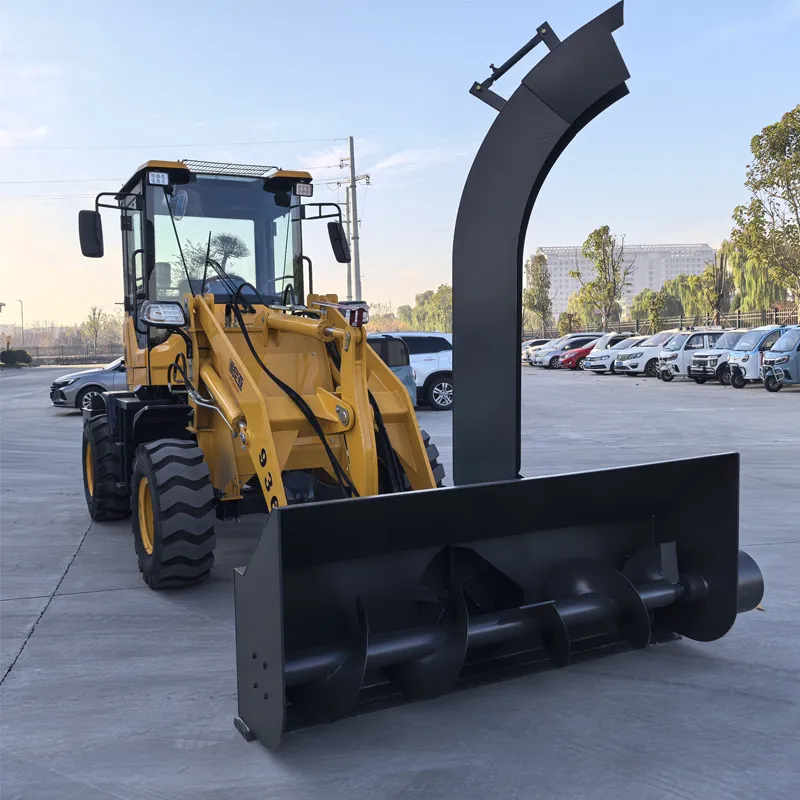
Then there's the electrical system for attachments with controls—snow blowers, angle brooms, grapples with third-function valves. Providing a robust, sealed, and well-loomed wiring harness to the front of the machine, with a connector that can withstand constant vibration, dust, and moisture, is a mark of quality. It's a small thing that causes massive downtime if it fails. Companies that export to diverse climates, like those targeting Canada and Australia from Shandong, have to account for both extreme cold and dust. The choice of wire sheathing, connector seals, and even the location of the connection point (protected vs. exposed) becomes a critical design decision. This is the kind of practical, field-informed knowledge that separates a catalog builder from a true engineering partner.
The Export Maze: Certifications and Real-World Adaptation
Exporting machinery isn't just about putting it in a container. It's a regulatory and adaptive maze. A manufacturer's website saying they export to the US, Canada, Germany, and Australia is a claim that carries heavy technical baggage. Each of these markets has its own non-negotiable hurdles.
For the US and Canada, EPA and CARB emissions standards for diesel engines are the gatekeepers. You must have engine families certified, and the machine's installation must not alter the engine's emissions profile. This dictates your choice of engine supplier and how you package the engine bay—airflow, exhaust routing, etc. For the EU (Germany), the CE mark is comprehensive: machinery safety (EN ISO 12100), noise levels (EN ISO 6396), and electromagnetic compatibility. The machine's warning labels, operator's manual, and even the sound of the backup alarm must comply. Australia has its own set of standards, often blending elements from the US and EU but with unique requirements for roll-over and falling-object protective structures (ROPS/FOPS).
The real test for a Skid Steer Loader Manufacturer is how these certifications are integrated into the design phase, not added as an afterthought. It affects the thickness of steel used in the cab, the design of the door latching mechanism, the routing of hoses away from hot surfaces, and the placement of fire extinguishers. When Shandong Pioneer Engineering Machinery talks about winning trust worldwide, this compliance groundwork is a huge, invisible part of it. A failure here—like a machine being held at customs in Hamburg for a missing Declaration of Conformity or incorrect noise certification—can destroy a business relationship and a reputation instantly. The operational history since 2004 suggests they've navigated several iterations of these evolving rules.
Looking Ahead: The Quiet Shifts in Manufacturing
So, what's next for a manufacturer in this space? The buzzwords are electrification and automation, but for most established OEM-focused factories, the near-term shift is more subtle. It's about supply chain resilience and data-driven assembly. The pandemic and recent geopolitical tensions exposed the fragility of global just-in-time parts delivery. Manufacturers are now scrutinizing dual-sourcing for critical components like axles, pumps, and even cylinders. It's no longer just about cost; it's about guaranteed availability.
Furthermore, there's a push for traceability. It's moving from a batch-based we built 50 units in June model to a unit-specific here is the serial number, and here are the lot numbers for its main weldments, its hydraulic valve, and its engine. This level of detail is becoming expected by large rental companies and distributors for warranty management and liability. Implementing this requires digitizing the factory floor—scanning components at each station—which is a significant cultural and infrastructural shift for a traditional manufacturing plant.
For a company with the longevity of Shandong Pioneer, these are the quiet investments that secure the next 20 years. It's less about launching a flashy electric model tomorrow and more about hardening their processes, deepening engineering validation (maybe through more advanced simulation software), and strengthening those supplier relationships across their export markets. The goal remains the same: to be the reliable, knowledgeable, and adaptable partner behind the badge, whether that badge is a well-known global brand or a strong regional one. That's the enduring role of a capable skid steer loader manufacturer in a crowded and demanding world.
Related Products
Related Products