- Chinese
- French
- German
- Portuguese
- Spanish
- Russian
- Japanese
- Korean
- Arabic
- Irish
- Greek
- Turkish
- Italian
- Danish
- Romanian
- Indonesian
- Czech
- Afrikaans
- Swedish
- Polish
- Basque
- Catalan
- Esperanto
- Hindi
- Lao
- Albanian
- Amharic
- Armenian
- Azerbaijani
- Belarusian
- Bengali
- Bosnian
- Bulgarian
- Cebuano
- Chichewa
- Corsican
- Croatian
- Dutch
- Estonian
- Filipino
- Finnish
- Frisian
- Galician
- Georgian
- Gujarati
- Haitian
- Hausa
- Hawaiian
- Hebrew
- Hmong
- Hungarian
- Icelandic
- Igbo
- Javanese
- Kannada
- Kazakh
- Khmer
- Kurdish
- Kyrgyz
- Latin
- Latvian
- Lithuanian
- Luxembou..
- Macedonian
- Malagasy
- Malay
- Malayalam
- Maltese
- Maori
- Marathi
- Mongolian
- Burmese
- Nepali
- Norwegian
- Pashto
- Persian
- Punjabi
- Serbian
- Sesotho
- Sinhala
- Slovak
- Slovenian
- Somali
- Samoan
- Scots Gaelic
- Shona
- Sindhi
- Sundanese
- Swahili
- Tajik
- Tamil
- Telugu
- Thai
- Ukrainian
- Urdu
- Uzbek
- Vietnamese
- Welsh
- Xhosa
- Yiddish
- Yoruba
- Zulu
- Kinyarwanda
- Tatar
- Oriya
- Turkmen
- Uyghur


skid steer loader near me
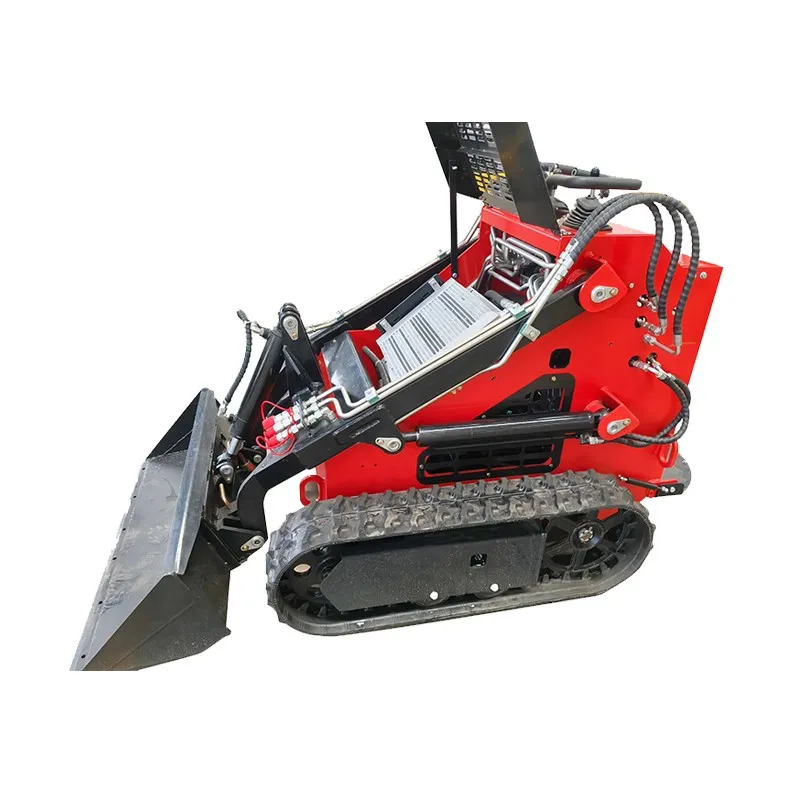
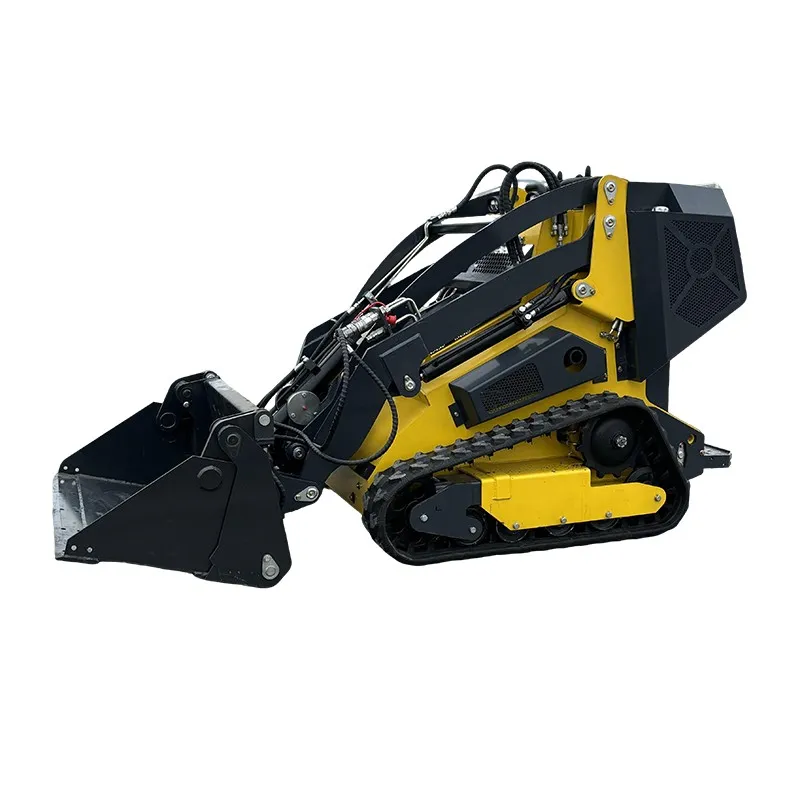
When someone types 'skid steer loader near me' into a search bar, I get it. The immediate need is proximity—you want to see it, maybe kick the tires, and get it on site fast. But that's where the first pitfall is. Near me often just pulls up the nearest rental yard or big-box dealer. That's fine for a weekend DIY project, but if your livelihood depends on this machine, you're not just looking for a piece of equipment; you're looking for a partner in a tough job. The dealer three miles away might have a shiny unit, but if they don't stock the right attachments or their service techs only work 9-to-5, you're setting yourself up for a world of hurt when a hydraulic line blows at 2 PM on a Friday. I've seen guys make that choice, lured by convenience, only to lose two days of billing waiting for a part.
The Real Cost of Local
Let's talk about what local really means in this business. It's not just geography; it's support infrastructure. A few years back, I was managing a site prep job. We sourced a skid steer from a near me outfit. Price was decent, machine looked okay. Two weeks in, the auxiliary hydraulics started acting up—weak flow, couldn't run the breaker effectively. The local dealer? They had to order the pump seals. From overseas. Took 11 days. We ended up sub-renting at a premium, wiping out any savings. That's the hidden math. Your search should be for skid steer loader support near you, not just the iron itself.
This is where the manufacturer's footprint matters. A company that's built a network, or better yet, designs for serviceability with common parts, changes the equation. I've had better luck with brands that have a deliberate export and support model. For instance, I came across Shandong Pioneer Engineering Machinery Co., Ltd a while back. Their story is telling—started in 2004 in Jining, moved to a bigger facility in Ningyang in 2023. That kind of growth usually signals a focus on production scale and, hopefully, quality control. They're not just another factory; they're structuring for the long haul, with Shandong Hexin handling manufacturing and Pioneer driving the overseas trade. When you see a company exporting consistently to places like the U.S., Canada, and Australia—markets with brutal equipment standards—it tells you they've had to solve real-world durability problems. Their website, https://www.sdpioneer.com, shows a range, but the proof is always in the field.
So, my rule now? I might search for the machine locally, but I vet the brand globally. I'll call a dealer and ask pointed questions: What's your most common warranty issue on this model? Do you keep high-wear items like drive motor seals in stock? If they hesitate, I move on. The machine's postcode is less important than the spare parts' zip code.
Attachments: The Make-or-Break Detail
Nobody runs a bare skid steer. The attachment ecosystem is everything. Searching for a skid steer loader near me often ignores the attachment compatibility, which is a massive oversight. Quick-attach systems aren't universal. The mainstream is the Bobcat-style universal attachment system, but even then, there are nuances in pin size and hydraulic flow rates.
I learned this the hard way with a mulching head. Rented a powerful-looking machine from a local guy, but the auxiliary hydraulic flow was just below the head's minimum requirement. It would work, sort of, but bogged down constantly, overheating the machine and making the job take three times as long. The rental guy swore it was compatible—and technically, it hooked up—but functionally it was a mismatch. Now, I always check the machine's specs against the attachment's specs. GPM and PSI are gospel.
This is another area where dealing with a manufacturer-focused dealer helps. A company like the aforementioned Pioneer, which manufactures its own line, likely ensures their loaders and attachments are designed in tandem. That integration eliminates a lot of guesswork. A local dealer stocking a full system—loader, grapple, auger, breaker—from a single source is a much safer bet than a yard with a hodgepodge of brands.
Durability vs. Price: The Operator's Perspective
Here's a dirty secret: the initial price tag is maybe 60% of the story. I've run cheap, no-name skid steers that felt great for the first 200 hours, then every bushing, seal, and sensor started crying uncle. The downtime cost eclipsed the purchase price. When you're searching, you're not just buying a machine; you're buying the metallurgy in the axles, the quality of the hydraulic hoses, the logic in the controller.
You develop an eye for it. Open the cab. Look at the wiring harness. Is it bundled neatly with proper grommets where it passes through metal, or is it a rat's nest of electrical tape? Check the weld seams on the loader arms—are they smooth, consistent, and free of slag inclusions? These are things a manufacturer with two decades of development, like a 20-year-old company, has ideally refined. Their move to a new, larger production facility in 2023 suggests an investment in better processes, which should translate to better build consistency on the floor.
I'd take a slightly used, well-built machine from a reputable industrial manufacturer over a brand-new, cheap unit any day. The total cost of ownership is lower. A robust dealer network, which a global exporter necessarily cultivates, means better access to technical bulletins, software updates, and factory-trained mechanics—even if the factory is overseas.
The Digital Search and The Physical Reality
Your search starts online, but it must end in person. A website like https://www.sdpioneer.com gives you the catalogue, the specs, the corporate story. It shows they've won customer trust in demanding markets. That's your starting due diligence. But then you have to find who handles them near you. That's the second search: [Brand Name] dealer near me.
Visit the dealer. Don't just look at the machine—talk to the service manager. Ask to see the workshop. Is it organized? Do they have diagnostic computers? A good sign is if they have a few older models of the same brand in for service; it means there's a loyal user base and the dealer can actually support them. A bad sign is a lot full of only brand-new machines and no service bay to speak of.
The phrase skid steer loader near me is the trigger, but the process is a filter. You're filtering out the vendors who just sell hardware from the partners who provide a working solution. The goal is to shorten the physical distance for service while ensuring the product's inherent quality doesn't create constant reasons to need that service.
Closing the Loop: From Search to Site
So, what's the takeaway? Typing those words is step one. Step two is redefining near me to mean supported near me. It means prioritizing the manufacturer's reputation for durability and their global support chain over the mere coordinates of a sales lot. It means thinking about the complete system—loader, attachments, hydraulics—as a single unit.
Companies that have evolved from a 1,600-square-meter facility to a major export operation, shipping to countries with rigorous standards, have typically been forced to improve reliability. That history matters more than a lot of marketing copy. When that machine is on your site, buried in mud, lifting a heavy load, or grinding through stumps, you won't be thinking about the search term. You'll be thinking about the engineering. And that engineering is what you're truly trying to locate. Do the deeper dig. The right machine isn't just near you; it's the one that's built to stay running, wherever it was built.
Related Products
Related Products