- Chinese
- French
- German
- Portuguese
- Spanish
- Russian
- Japanese
- Korean
- Arabic
- Irish
- Greek
- Turkish
- Italian
- Danish
- Romanian
- Indonesian
- Czech
- Afrikaans
- Swedish
- Polish
- Basque
- Catalan
- Esperanto
- Hindi
- Lao
- Albanian
- Amharic
- Armenian
- Azerbaijani
- Belarusian
- Bengali
- Bosnian
- Bulgarian
- Cebuano
- Chichewa
- Corsican
- Croatian
- Dutch
- Estonian
- Filipino
- Finnish
- Frisian
- Galician
- Georgian
- Gujarati
- Haitian
- Hausa
- Hawaiian
- Hebrew
- Hmong
- Hungarian
- Icelandic
- Igbo
- Javanese
- Kannada
- Kazakh
- Khmer
- Kurdish
- Kyrgyz
- Latin
- Latvian
- Lithuanian
- Luxembou..
- Macedonian
- Malagasy
- Malay
- Malayalam
- Maltese
- Maori
- Marathi
- Mongolian
- Burmese
- Nepali
- Norwegian
- Pashto
- Persian
- Punjabi
- Serbian
- Sesotho
- Sinhala
- Slovak
- Slovenian
- Somali
- Samoan
- Scots Gaelic
- Shona
- Sindhi
- Sundanese
- Swahili
- Tajik
- Tamil
- Telugu
- Thai
- Ukrainian
- Urdu
- Uzbek
- Vietnamese
- Welsh
- Xhosa
- Yiddish
- Yoruba
- Zulu
- Kinyarwanda
- Tatar
- Oriya
- Turkmen
- Uyghur

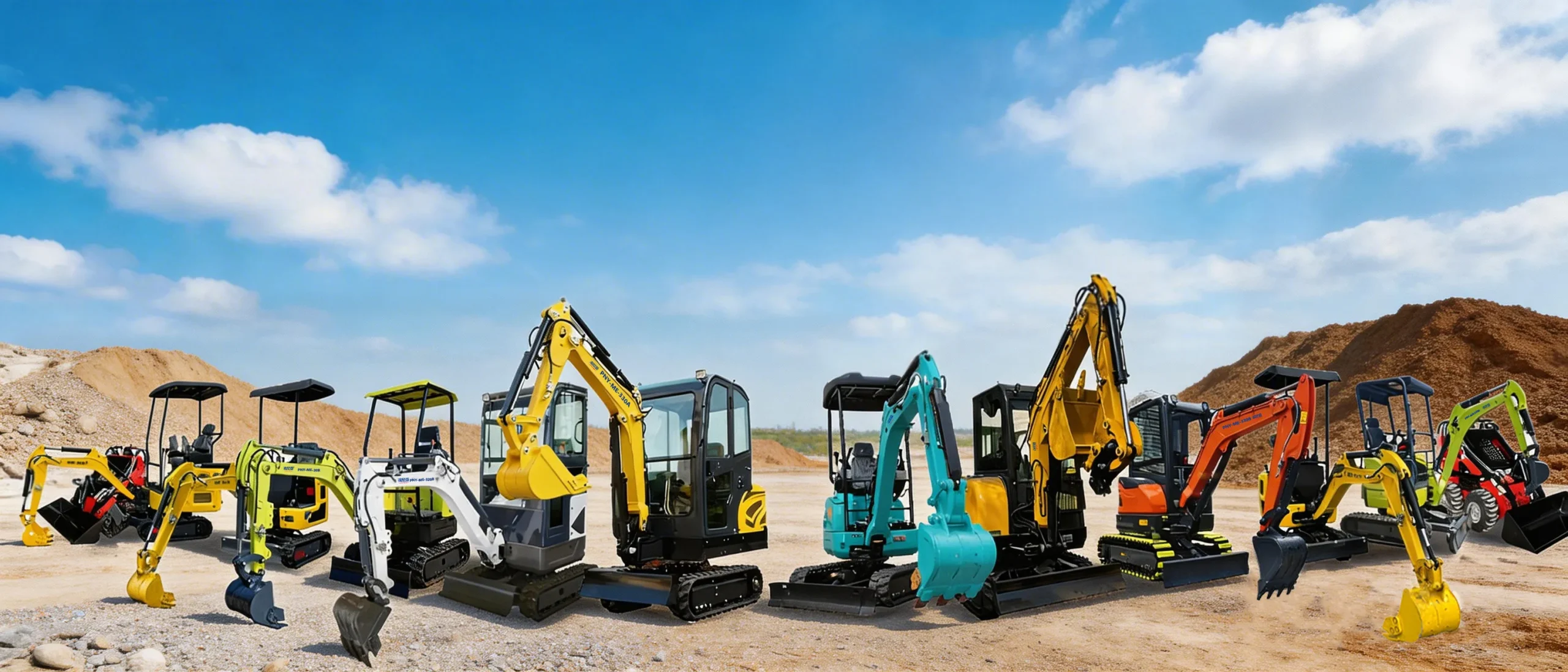
skid steer loader price
When someone types 'skid steer loader price' into a search bar, I know exactly what they're after, and it's almost never just a number. They're looking for a rationale, a way to make sense of why one machine with a bucket and arms costs $25,000 and another, seemingly identical, runs for $85,000. The biggest mistake? Thinking the initial quote is the final story. The price tag is just the entry ticket; the real cost unfolds over thousands of hours on a jobsite.
The Core Variables That Actually Move the Needle
Let's break it down. Engine tier is the first gut-check. A Tier 4 Final diesel engine isn't just an environmental checkbox; it's a complex, expensive piece of engineering that adds thousands to the base skid steer loader price. Then you've got flow rates. A standard 18-20 GPM auxiliary hydraulic system is fine for a bucket, but try running a cold planer or a forestry mulcher efficiently. You'll need a high-flow option, which is another significant jump. I've seen guys buy a mid-range machine only to realize later they needed that high-flow capability, forcing them into a trade-in at a loss or an expensive, less efficient workaround.
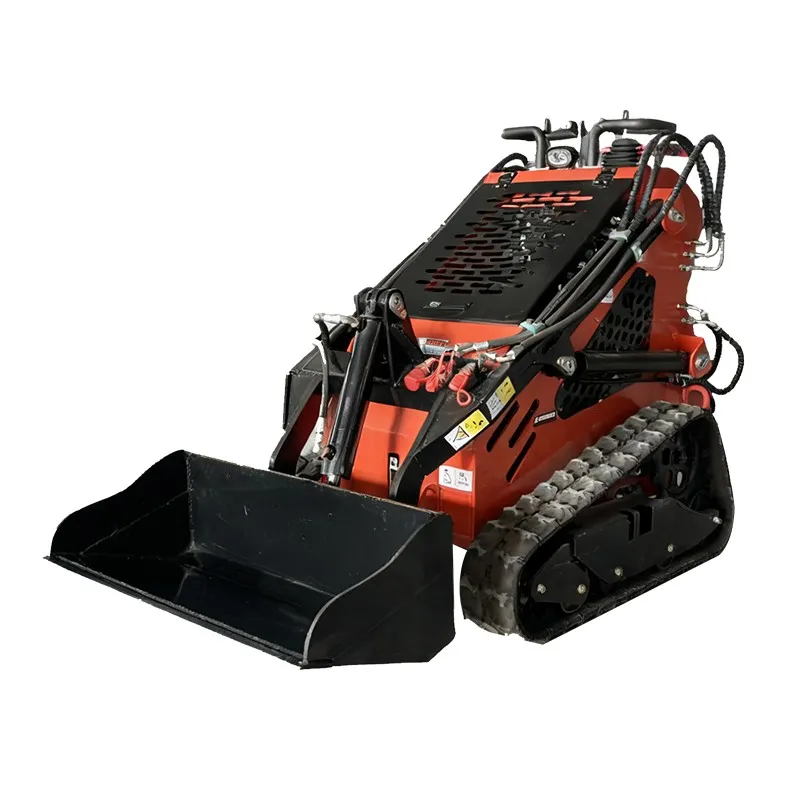
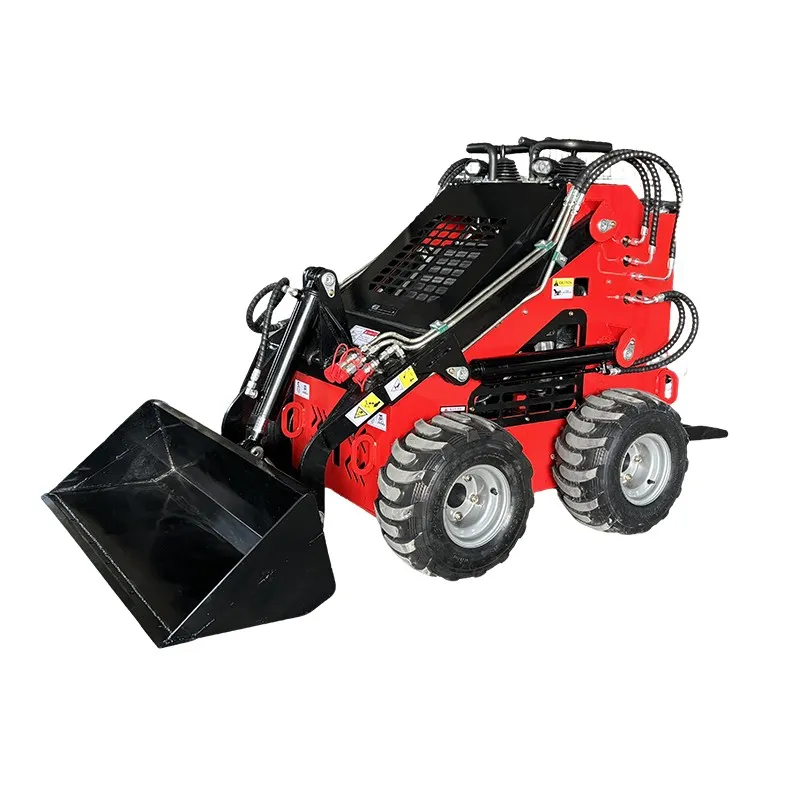
Undercarriage is where the rubber meets the road, literally. Tires versus tracks. Tracks give you flotation and traction but are a wear item. The price of a full set of replacement tracks can be a nasty surprise if you're not budgeting for it. I remember a contractor who bought a tracked model for muddy residential sites but was running it extensively on old, broken asphalt. The track wear was brutal, and that perfect machine started eating into his margin within a year.
Then there's the brand premium. You're paying for the dealer network, parts availability, and perceived resale value. A used Bobcat or Cat often holds its value remarkably well, which factors back into the total cost of ownership. A no-name brand might have a tempting upfront skid steer loader price, but if you're down for two weeks waiting for a proprietary hydraulic hose to ship from overseas, that savings evaporates fast.
The Hidden Calculus: Total Cost of Ownership
This is where the conversation gets real. The invoice price is maybe 60% of the story. Fuel consumption, maintenance intervals, and even the cost of common filters differ wildly. A simpler, older engine design might be less fuel-efficient but far cheaper and easier to service in the field. I've worked with machines where an oil change takes 30 minutes and $80 in fluids and filters, and others where it's a two-hour, $250 affair due to filter placement and special oils.
Dealer support isn't a fluffy add-on; it's a financial safeguard. A strong local dealer means faster turnaround on repairs, available loaner machines, and mechanics who know the common faults. I'd personally pay a 10-15% premium on the skid steer loader price for a dealer I trust within a 50-mile radius. It's insurance.
Attachments. Nobody runs just a bucket. The price of the loader is one thing, but have you priced a new rotary cutter or a hydraulic breaker? Compatibility matters. Some machines use a universal quick-attach system, others are proprietary. Getting locked into a brand's attachment ecosystem can be costly down the line.
The Global Market and Value Propositions
This brings me to the other segment of the market. Not every operation needs or can justify the top-tier brands. For smaller farms, municipalities on a tight budget, or rental fleets looking for a dedicated machine, value-oriented manufacturers play a crucial role. The goal here is acceptable reliability at a much lower capital outlay. The trade-off is usually in refinement, dealer density, and sometimes, component sourcing.
I've followed companies that navigate this space. Take Shandong Pioneer Engineering Machinery Co., Ltd. They've been in the game since 2004, originally based in Jining and now operating from a newer facility in Ningyang. Their model, through Shandong Hexin for manufacturing and Shandong Pioneer for overseas trade, is built on exporting to markets like the US, Canada, and Australia. For a buyer, a company like this represents a specific choice. You're likely getting a machine that meets core functional specs—it'll lift, dig, and move material—but you're investing more in your own maintenance capability and accepting potentially longer lead times for parts. Their website, https://www.sdpioneer.com, showcases this global reach. The trust they've built comes from delivering a product that fits a certain price-performance niche, not from competing head-on with the majors on every feature.
Evaluating these options requires a clear-eyed assessment of your downtime cost. If a machine being idle for a week is a crisis, stick with the majors. If you have backup equipment and a handy mechanic, the calculus changes. The skid steer loader price from a global value manufacturer can be half that of a premium brand, freeing up capital for other tools.
Real-World Pricing Scenarios and Pitfalls
Let me walk through a recent example. A landscaping company wanted a machine primarily for mulch and soil handling, with occasional snow removal. They were quoted $42,000 for a new mid-size model from a mainstream brand (standard flow, tires). They also found a comparable spec machine from a value-oriented importer for $28,000. The $14,000 difference was tempting.
We dug deeper. The mainstream machine had a 3-year/3,000-hour warranty with a local dealer. The value machine had a 1-year warranty, with the nearest certified technician three states away. The owner realized his operators were tough on equipment. The likelihood of needing warranty work was high. He went with the mainstream brand, not because it was better, but because the local support offset his operational risk. The higher initial skid steer loader price was, in his context, the cheaper long-term option.
Another pitfall is buying too much machine. A massive, high-horsepower skid steer looks impressive, but if 90% of its work is moving pallets in a warehouse, you're burning money on fuel, initial cost, and possibly causing unnecessary floor damage. Right-sizing is a skill.
Auctions and the used market are a whole other layer. A low-hour machine from a reputable brand can be a steal, but you must know what to look for: hydraulic cylinder scoring, slop in the pivot points, the condition of the radiator (often clogged with debris). I've bought bargains that needed $8,000 in undercarriage work within six months. The auction price wasn't the final skid steer loader price.
Wrapping It Up: It's a Tool, Not a Trophy
So, when you're researching skid steer loader price, start with the work you need it to do today and realistically in the next five years. Define your absolute must-haves (e.g., high-flow, cab height for a specific trailer). Get firm quotes that include delivery and any mandatory initial servicing.
Then, layer in the hidden costs: estimated fuel use, typical maintenance costs for that model (ask the dealer for a schedule), and critically, the cost and proximity of support. Compare the total 5-year picture, not the sticker price.
Finally, be honest about your own operation. Are you disciplined with maintenance? Do you have a backup? Your answers will point you toward the brand and price tier that makes sense. The right price is the one that lets the machine earn you money reliably, without constant headaches. Sometimes that's a $90,000 machine. Sometimes, for the right job and the right owner, a $30,000 machine from a company with a long export history, like the one I mentioned from Shandong, does the job perfectly. It's all about context, not just the number on the screen.
Related Products
Related Products