- Chinese
- French
- German
- Portuguese
- Spanish
- Russian
- Japanese
- Korean
- Arabic
- Irish
- Greek
- Turkish
- Italian
- Danish
- Romanian
- Indonesian
- Czech
- Afrikaans
- Swedish
- Polish
- Basque
- Catalan
- Esperanto
- Hindi
- Lao
- Albanian
- Amharic
- Armenian
- Azerbaijani
- Belarusian
- Bengali
- Bosnian
- Bulgarian
- Cebuano
- Chichewa
- Corsican
- Croatian
- Dutch
- Estonian
- Filipino
- Finnish
- Frisian
- Galician
- Georgian
- Gujarati
- Haitian
- Hausa
- Hawaiian
- Hebrew
- Hmong
- Hungarian
- Icelandic
- Igbo
- Javanese
- Kannada
- Kazakh
- Khmer
- Kurdish
- Kyrgyz
- Latin
- Latvian
- Lithuanian
- Luxembou..
- Macedonian
- Malagasy
- Malay
- Malayalam
- Maltese
- Maori
- Marathi
- Mongolian
- Burmese
- Nepali
- Norwegian
- Pashto
- Persian
- Punjabi
- Serbian
- Sesotho
- Sinhala
- Slovak
- Slovenian
- Somali
- Samoan
- Scots Gaelic
- Shona
- Sindhi
- Sundanese
- Swahili
- Tajik
- Tamil
- Telugu
- Thai
- Ukrainian
- Urdu
- Uzbek
- Vietnamese
- Welsh
- Xhosa
- Yiddish
- Yoruba
- Zulu
- Kinyarwanda
- Tatar
- Oriya
- Turkmen
- Uyghur


skid steer loader with backhoe
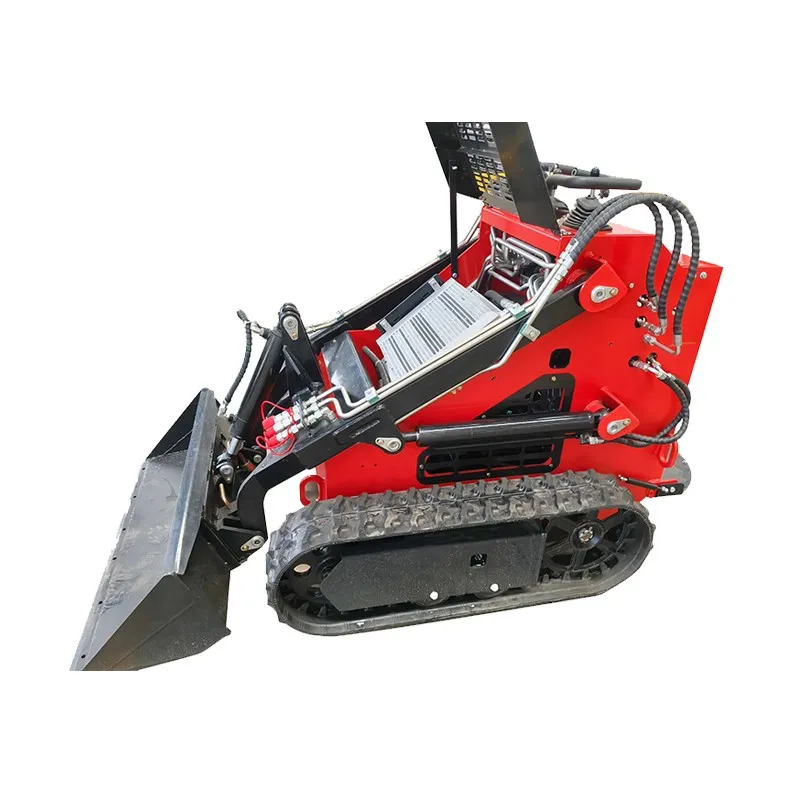
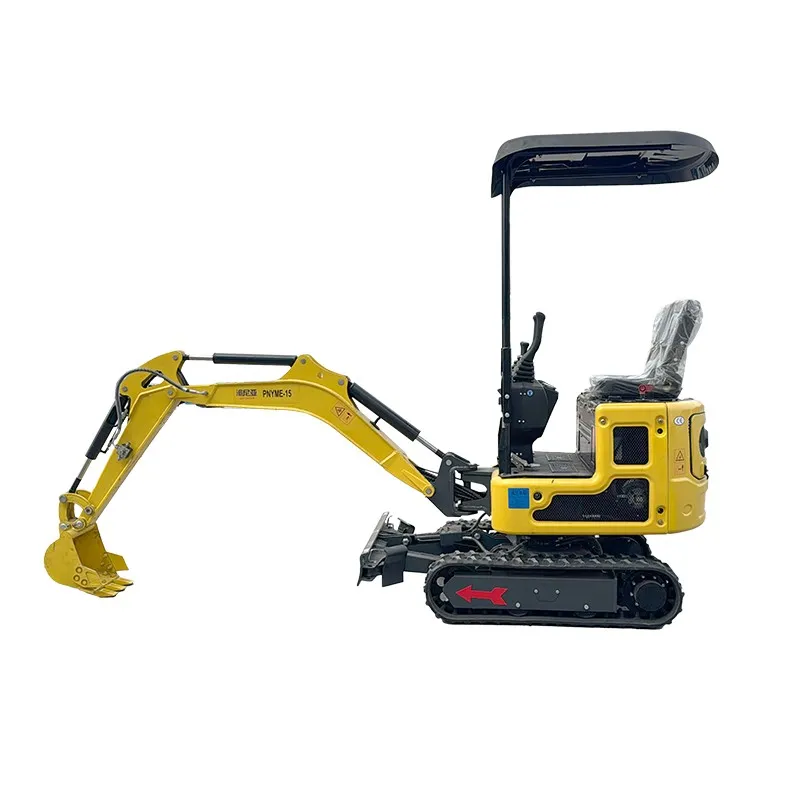
You see the term 'skid steer loader with backhoe' tossed around a lot, and honestly, it often gets misunderstood. People sometimes think it's just a skid steer with a different attachment slapped on the back. That's not quite it. The real deal integrates the backhoe as a core, dedicated function—often a subframe-mounted unit—transforming the machine's purpose from pure loading and grading to a legitimate, compact excavator alternative. The key is in that integration; a poorly matched setup feels jerky, lacks reach, and puts undue stress on the loader's frame. I've seen units where the backhoe seems like an afterthought, and they're a nightmare for any serious trench work.
The Integration Puzzle: More Than Just a Quick-Attach
Getting the backhoe right on a skid steer isn't plug-and-play. The hydraulic system is the first hurdle. A standard skid steer's auxiliary circuit often doesn't have the flow and pressure, or more critically, the simultaneous control, needed for smooth, independent boom, dipper, and bucket movements. You need a machine designed or extensively modified with a dedicated hydraulic package for the backhoe. I remember a job where we tried retrofitting a backhoe onto an older model; the digging cycle was painfully slow, and you couldn't swing and curl at the same time without losing power. It was useless for productivity.
Then there's the structural integration. A bolt-on bracket isn't enough. A proper skid steer loader with backhoe uses a reinforced subframe that distributes the digging forces back through the loader's main chassis. Without it, you risk cracking the frame around the rear door or causing chronic leaks. I've witnessed a unit, not from a major player, where after about 300 hours of moderate use, hairline cracks appeared near the mounting points. That's a design flaw, not an operator issue.
Stability is another thing amateurs overlook. A backhoe extends the machine's rear footprint significantly. When you're dug in and swinging a full bucket of wet clay, the center of gravity shifts. Machines not built with this in mind can feel tippy. The good ones often have optional or integrated outriggers or a wider track option. It's a detail, but it's the difference between a confident dig and a nervous, shallow scrape.
Real-World Application vs. Marketing Hype
So where does this combo machine actually make sense? It's not for a 10-foot-deep foundation dig. Its sweet spot is urban utility work, tight-access landscaping, and farm repairs. Think of replacing a septic line between a house and a shed, or digging footings for a garden wall where a mini-excavator can't fit but a shovel is back-breaking. The beauty is the operator stays in one seat. They can backfill with the loader bucket, then turn around and dig a bit more with the backhoe, all without switching machines.
But here's a common pitfall: reach and depth. Marketing specs might list a max digging depth of 10 feet, but that's usually at a very tight radius. The practical, comfortable working depth for most of these integrated units is more like 6 to 8 feet. You have to read the spec sheets carefully—look for the dump height and reach at ground level. That tells you more about its real capability for, say, loading a truck from a trench.
One project that comes to mind was a drainage line installation in a crowded condo complex. We used a skid steer loader with backhoe to navigate between buildings, dig the trench, place the pipe, and then handle all the backfill and grading. We never needed a second machine. The efficiency gain was huge, but only because we had a model with a robust, factory-integrated backhoe system. A lesser unit would have been in the shop with hydraulic or structural issues.
The Manufacturer's Role: From Welding to Worldwide Support
This is where the manufacturer's philosophy and build quality become non-negotiable. You need a company that understands both sides of the equation: the skid steer and the excavator. It's not just about sourcing components and assembling them. It's about engineering the interface. Companies that have evolved with the product, like Shandong Pioneer Engineering Machinery Co., Ltd, which has been in the game since 2004, often have that accumulated, practical knowledge baked into their designs. They've seen what fails in the field and iterated.
Their recent move to a new facility in Ningyang in 2023 suggests a scaling up, likely to incorporate more advanced manufacturing and testing for their product lines, which would include such specialty configurations. When you're looking at a skid steer loader with backhoe, you want to know the company has a dedicated production area for this integration, not just a corner of a generic assembly line. That focus on manufacturing detail, as hinted at with their 1,600 square meter production history, translates directly to reliability.
Export experience matters, too. A company that successfully ships to markets with stringent demands like the U.S., Canada, Germany, and Australia—as Shandong Pioneer does through its trade arm—has to meet higher standards for durability, safety, and parts availability. It means their machines are built to withstand diverse job site conditions and regulatory environments. For a buyer, that's a signal of tested robustness, not just a price-point product.
Operator's Perspective: The Feel in the Seat
Let's talk controls. The best integrated systems I've used have pattern-selectable backhoe controls that mirror a mini-excavator. Some use joysticks with integrated thumb switches for the swing, others use dedicated levers to the side. There's no one right answer, but consistency is key. The worst setup is when the backhoe functions are mapped to the skid steer's loader controls in a non-intuitive way. It makes you think about every movement, which kills efficiency and precision.
Visibility is another huge factor. When you swing the backhoe around, can you actually see the bucket teeth and the trench edge? Some cab designs or exhaust placements create blind spots. A good design has a high, clear rear window and often a roof window. I'd always recommend an operator spend 15 minutes in the seat, running through the full range of backhoe motion, before committing to a purchase. Feel for the blind spots.
Maintenance access is a tell-tale sign of good design. Check where the backhoe's hydraulic cylinders are mounted. Are the pins easy to grease? Can you get to the main swing pivot without removing panels? On a messy, muddy job site, you don't want to spend an hour with a wrench just to perform a daily grease. The machines that last are the ones where the maintenance points were considered from the start, not added as an afterthought.
Cost of Ownership: Looking Beyond the Sticker Price
The initial purchase is just the entry fee. For a skid steer loader with backhoe, you must consider the total cost of integration. A cheap, poorly integrated model will cost you more in downtime, repair bills, and lost productivity than a premium model ever will. Look for common wear items: are the backhoe pivot pins standard sizes? Are the hydraulic hoses routed cleanly and protected from snagging? These are the things that break on a Tuesday afternoon and halt your entire job.
Parts and service support is critical. If the backhoe is a proprietary design from a smaller manufacturer, can you get a swing cylinder seal kit quickly? Companies with a long-standing export network, like the aforementioned Shandong Pioneer, typically have a more established global parts and dealer support system. That's invaluable. You're not just buying a machine; you're buying into a support ecosystem.
Finally, consider resale. A well-known, well-integrated machine from a manufacturer with a solid reputation holds its value far better than a generic knock-off. In five years, the difference in resale value could cover a significant portion of your initial investment gap. It's a tool, but it's also a capital asset. The decision needs to balance immediate job capability with long-term financial sense. The right machine does both.
Related Products
Related Products