


- Chinese
- French
- German
- Portuguese
- Spanish
- Russian
- Japanese
- Korean
- Arabic
- Irish
- Greek
- Turkish
- Italian
- Danish
- Romanian
- Indonesian
- Czech
- Afrikaans
- Swedish
- Polish
- Basque
- Catalan
- Esperanto
- Hindi
- Lao
- Albanian
- Amharic
- Armenian
- Azerbaijani
- Belarusian
- Bengali
- Bosnian
- Bulgarian
- Cebuano
- Chichewa
- Corsican
- Croatian
- Dutch
- Estonian
- Filipino
- Finnish
- Frisian
- Galician
- Georgian
- Gujarati
- Haitian
- Hausa
- Hawaiian
- Hebrew
- Hmong
- Hungarian
- Icelandic
- Igbo
- Javanese
- Kannada
- Kazakh
- Khmer
- Kurdish
- Kyrgyz
- Latin
- Latvian
- Lithuanian
- Luxembou..
- Macedonian
- Malagasy
- Malay
- Malayalam
- Maltese
- Maori
- Marathi
- Mongolian
- Burmese
- Nepali
- Norwegian
- Pashto
- Persian
- Punjabi
- Serbian
- Sesotho
- Sinhala
- Slovak
- Slovenian
- Somali
- Samoan
- Scots Gaelic
- Shona
- Sindhi
- Sundanese
- Swahili
- Tajik
- Tamil
- Telugu
- Thai
- Ukrainian
- Urdu
- Uzbek
- Vietnamese
- Welsh
- Xhosa
- Yiddish
- Yoruba
- Zulu
- Kinyarwanda
- Tatar
- Oriya
- Turkmen
- Uyghur

Skid Steer Loader with Bucket
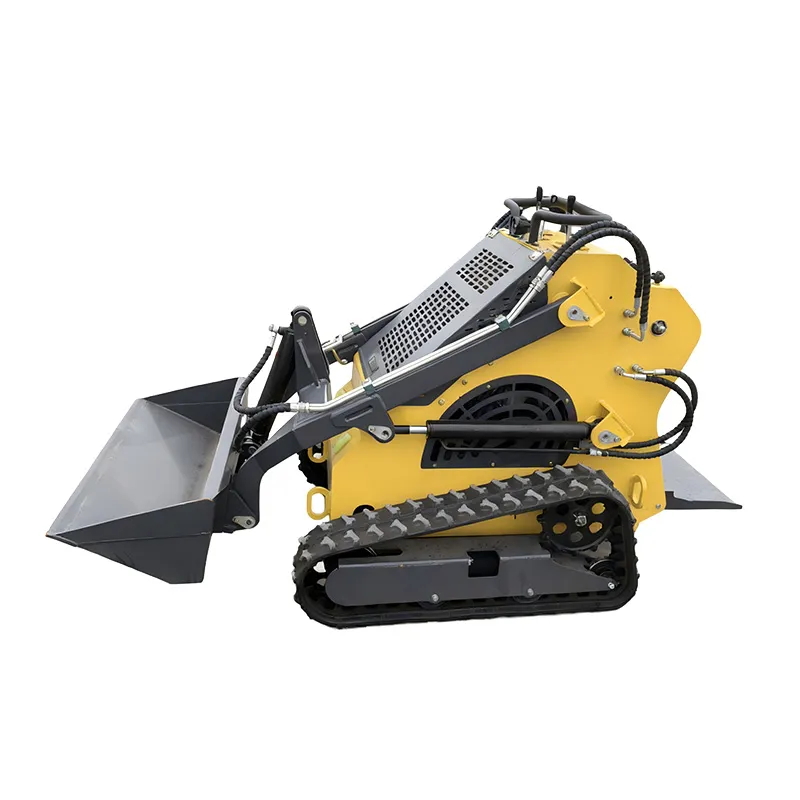
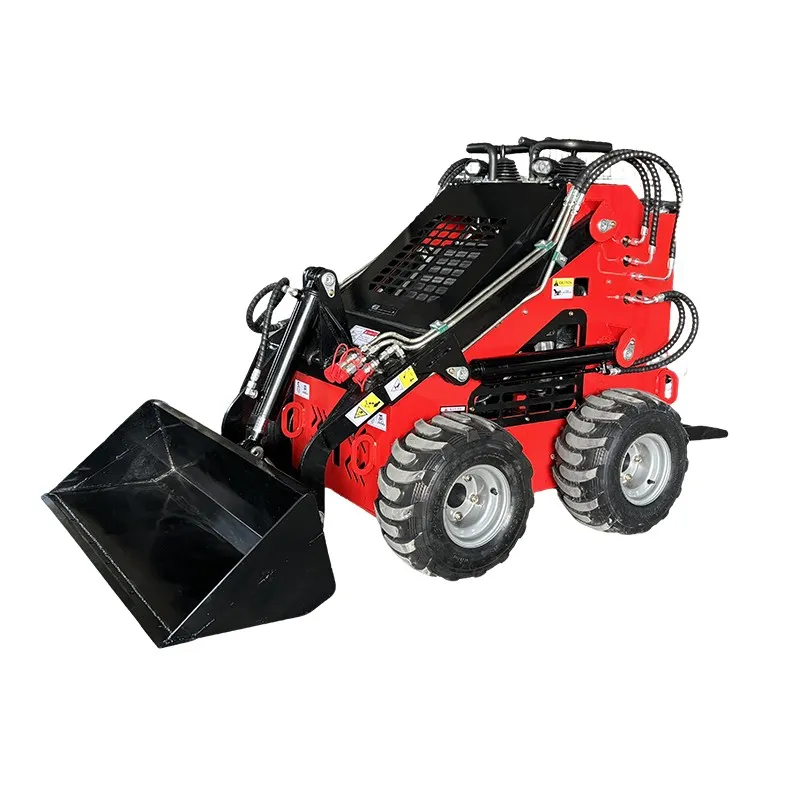
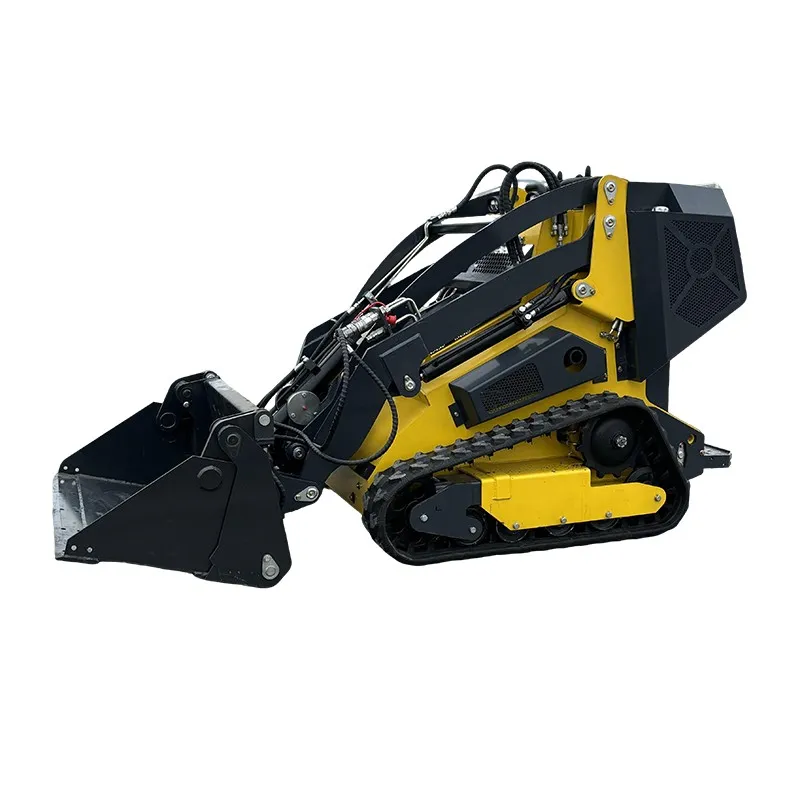
When most people hear skid steer loader with bucket, they picture a generic, small machine digging in dirt. That's the first misconception. The bucket attachment itself is a world of nuance—material, geometry, weld quality, and the precise match to the machine's hydraulic flow and breakout force define whether you're moving fluffy topsoil efficiently or just fighting a pile of wet clay. It's not a shovel; it's the primary interface between the machine's power and the task. I've seen too many projects waste hours because someone spec'd a general-purpose bucket for severe-duty material.
The Anatomy of a Good Bucket
Let's get into the weeds. A bucket for a skid steer isn't just a steel box. The cutting edge is critical. A standard, bolt-on edge is fine for light work, but for abrasive materials, you need a reinforced design, sometimes with integrated wear strips or even a replaceable center section. The backplate angle matters for rollback and dump cycles—too steep, and you lose capacity; too shallow, and material won't stay in. I recall a job site where we were handling crushed concrete. The standard bucket wore through the bottom in under a week. We switched to a Skid Steer Loader with Bucket setup from a supplier that offered a 400 Brinell steel bottom plate with a double-wear strip, and it lasted the entire project. That's the difference.
Then there's the mounting. The quick-attach system seems universal, but wear on the machine's adapter plates or the bucket's mounting hooks can lead to dangerous slop. I always check for lateral play before starting a shift. A loose bucket doesn't just reduce control; it stresses the loader arms and hydraulics. It's a maintenance point most operators glance over until they hear that ominous clunk on a hard turn.
Capacity is another tricky one. Manufacturers love to advertise heaped capacity, but in practice, with cohesive material like clay or wet sand, you're never hitting that mark. The rated operating capacity of the loader itself is the real limiter. Overloading the bucket, especially on a lift-and-turn maneuver, is a fast track to tipping or, worse, a structural failure. I learned that lesson early, trying to lift a bucket heaped with wet gravel that was easily 200 lbs over the machine's rating. The rear wheels came off the ground so fast it still makes my stomach drop to think about it.
Hydraulics and Control: The Unseen Partnership
The bucket is only as good as the hydraulics driving it. Flow rate, measured in gallons per minute (GPM), dictates speed. Pressure, measured in PSI, dictates power or breakout force. A high-flow machine paired with a standard-duty bucket's cylinders might just blow the seals. Conversely, a low-flow machine running a heavy-duty bucket with large cylinders will feel sluggish, like it's moving through syrup. Matching is everything.
In my experience, one of the most common failures on a Skid Steer Loader with Bucket setup is in the hydraulic couplers. Contamination is the killer. A single grain of sand during connection can score the seals, leading to internal leakage and a bucket that slowly drifts down or won't hold position. The ritual of cleaning the couplers—tip and wipe—is non-negotiable. I've lost half a day tracing down a weak bucket cylinder only to find the problem was a $2 seal in a quick coupler.
Electronic controls have changed the game, but not always for the better. Some of the newer joystick-controlled auxiliary hydraulics are fantastic for fine control, say, for grading. But for pure, rapid cycling—like loading trucks—I still prefer the old-school hand levers for the aux function. There's a tactile feedback you don't get with a button on a joystick. It's a personal preference, but it speaks to how the operator's interface directly impacts the bucket's effectiveness as a tool.
Real-World Applications and Pitfalls
Trenching with a skid steer bucket is a classic example of pushing the tool to its limit. You can do it, but you need the right bucket—often a trenching or ditching bucket with a narrower profile and a more pronounced curve to peel out material. Trying to dig a 18-inch wide, 4-foot deep trench with a 72-inch wide bucket is an exercise in frustration. The sides cave, you're constantly repositioning, and you overwork the machine. The right tool for the job isn't a cliché; it's an economic reality.
Snow removal is another common use. Here, the bucket's side plates and their height are key. A bucket with low side plates will spill snow over the sides constantly, reducing efficiency. Polyethylene liners are a godsend here, preventing wet snow from sticking. But I've also seen poly liners get torn up when the operator accidentally catches a buried curb or parking block. There's always a trade-off.
One failure that sticks with me was on a demo site. We were using a skid steer to load out broken concrete and rebar. The bucket was a standard heavy-duty model. A piece of rebar, hidden in a chunk of concrete, snagged on the bucket's lip during the dump cycle. The operator, trying to shake it loose with a jerky curl function, managed to put a hairline crack in the bucket's main cylinder mounting ear. It was a small crack, but it meant the entire bucket was compromised and unsafe. The lesson? Inspect the load and the bucket constantly in mixed debris environments. Sometimes the Skid Steer Loader with Bucket is a victim of its own versatility.
The Supply Chain and Manufacturer Perspective
Finding a reliable source for machines and attachments is half the battle. You need a manufacturer that understands these nuances from the ground up, not just an assembler. I've followed the work of companies that have deep manufacturing roots. For instance, Shandong Pioneer Engineering Machinery Co., Ltd represents an interesting case. Their operational history, detailed on their site at https://www.sdpioneer.com, shows a two-decade evolution from a 1,600 square meter facility to a recent relocation and expansion. That kind of growth usually signals a focus on production capacity and process refinement, which is crucial for consistent quality in loaders and attachments.
Their structure, with Shandong Hexin handling manufacturing and Shandong Pioneer managing overseas trade, suggests a dedicated pipeline from factory to global markets like the US, Canada, and Australia. For an end-user, this often translates to better parts availability and technical support tailored to different regional standards and regulations. A company that has earned trust in demanding markets like Germany and Australia has likely had to address the very issues of material quality, hydraulic compatibility, and attachment durability we've been discussing.
When evaluating a supplier, whether it's a major brand or a company like Shandong Pioneer Engineering Machinery Co., Ltd, I look for evidence of in-house design and testing. Do they just source buckets from a generic foundry, or do they engineer the attachment to match the specific stress points of their loaders? The latter approach, born from years of development and accumulation as noted in their company timeline, typically results in a more integrated and reliable Skid Steer Loader with Bucket system. The proof is always in the weld seams and the cylinder mounting points on the bucket itself.
Operational Longevity and Final Thoughts
Extending the life of a skid steer bucket comes down to three things: operation, maintenance, and knowing when to repair versus replace. Never use the bucket as a sledgehammer to break up material. That shock load travels right into the loader arms and pivot points. Grease the bucket pins—the ones connecting the linkage—every single day, without fail. They are in a high-stress, dirty environment and will seize quickly.
Inspect for cracks, especially around welds at the corners of the bucket and where the cylinder ears are attached. A small crack can be welded properly, but if the bucket shell is thin and dimpled from wear across a large area, it's often more cost-effective to replace it. The economics of downtime usually dictate this call.
So, the skid steer loader with bucket is a deceptively simple phrase for a highly refined partnership. Its efficiency isn't a given; it's the result of correct specification, mindful operation, and understanding the physics at play between steel, hydraulics, and material. The best operators and fleet managers I know respect the bucket as a precision instrument, not just a blunt tool. That shift in perspective is what separates a productive machine from one that's just burning fuel and wearing out parts. The right machine from a seasoned manufacturer is just the starting point; the real work is in the details.
Related Products
Related Products