- Chinese
- French
- German
- Portuguese
- Spanish
- Russian
- Japanese
- Korean
- Arabic
- Irish
- Greek
- Turkish
- Italian
- Danish
- Romanian
- Indonesian
- Czech
- Afrikaans
- Swedish
- Polish
- Basque
- Catalan
- Esperanto
- Hindi
- Lao
- Albanian
- Amharic
- Armenian
- Azerbaijani
- Belarusian
- Bengali
- Bosnian
- Bulgarian
- Cebuano
- Chichewa
- Corsican
- Croatian
- Dutch
- Estonian
- Filipino
- Finnish
- Frisian
- Galician
- Georgian
- Gujarati
- Haitian
- Hausa
- Hawaiian
- Hebrew
- Hmong
- Hungarian
- Icelandic
- Igbo
- Javanese
- Kannada
- Kazakh
- Khmer
- Kurdish
- Kyrgyz
- Latin
- Latvian
- Lithuanian
- Luxembou..
- Macedonian
- Malagasy
- Malay
- Malayalam
- Maltese
- Maori
- Marathi
- Mongolian
- Burmese
- Nepali
- Norwegian
- Pashto
- Persian
- Punjabi
- Serbian
- Sesotho
- Sinhala
- Slovak
- Slovenian
- Somali
- Samoan
- Scots Gaelic
- Shona
- Sindhi
- Sundanese
- Swahili
- Tajik
- Tamil
- Telugu
- Thai
- Ukrainian
- Urdu
- Uzbek
- Vietnamese
- Welsh
- Xhosa
- Yiddish
- Yoruba
- Zulu
- Kinyarwanda
- Tatar
- Oriya
- Turkmen
- Uyghur


Skid Steer Loader With Ripper
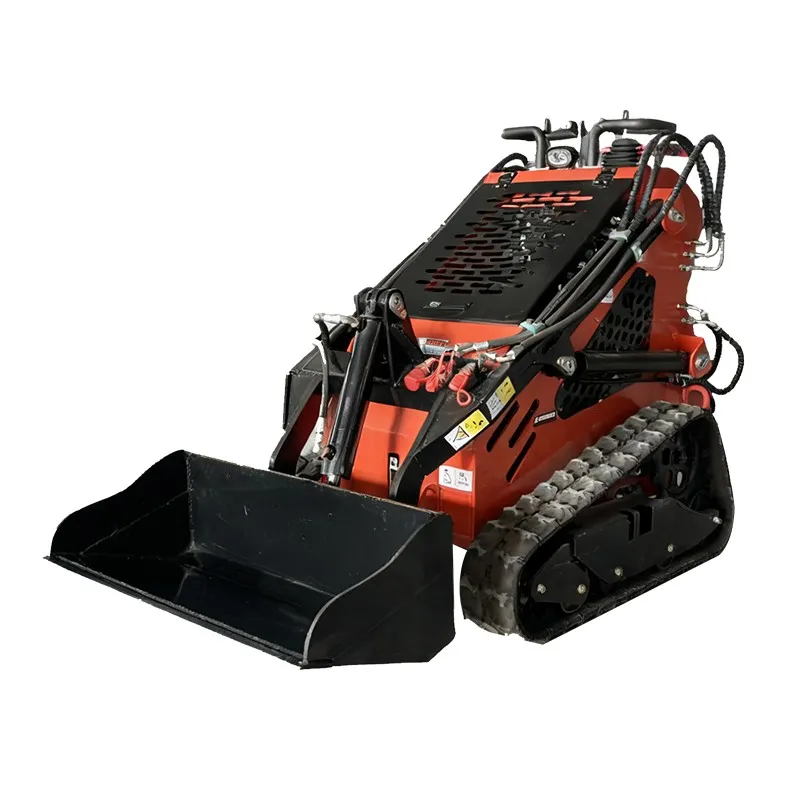
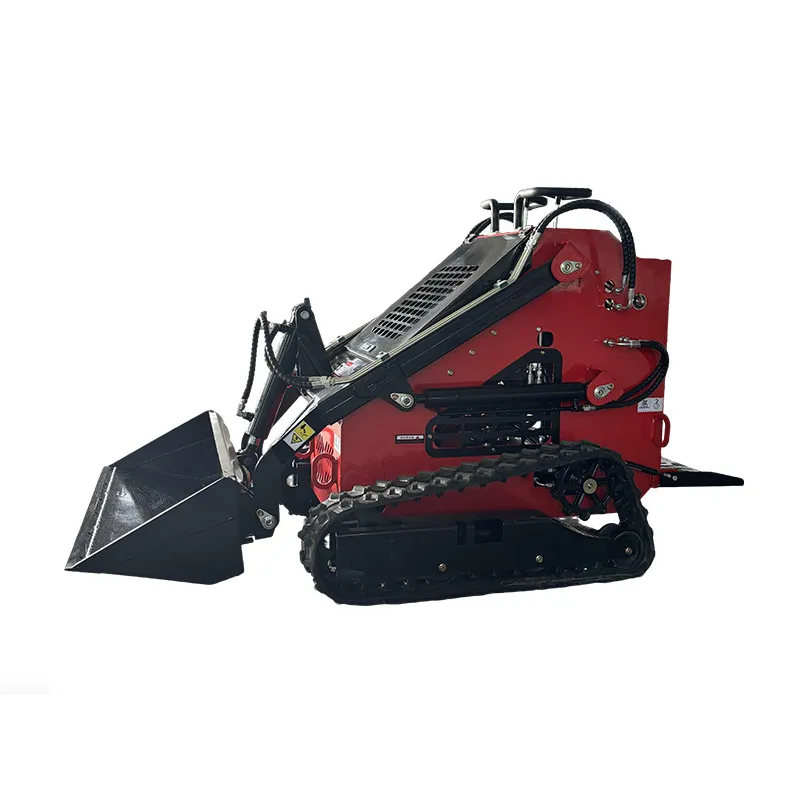
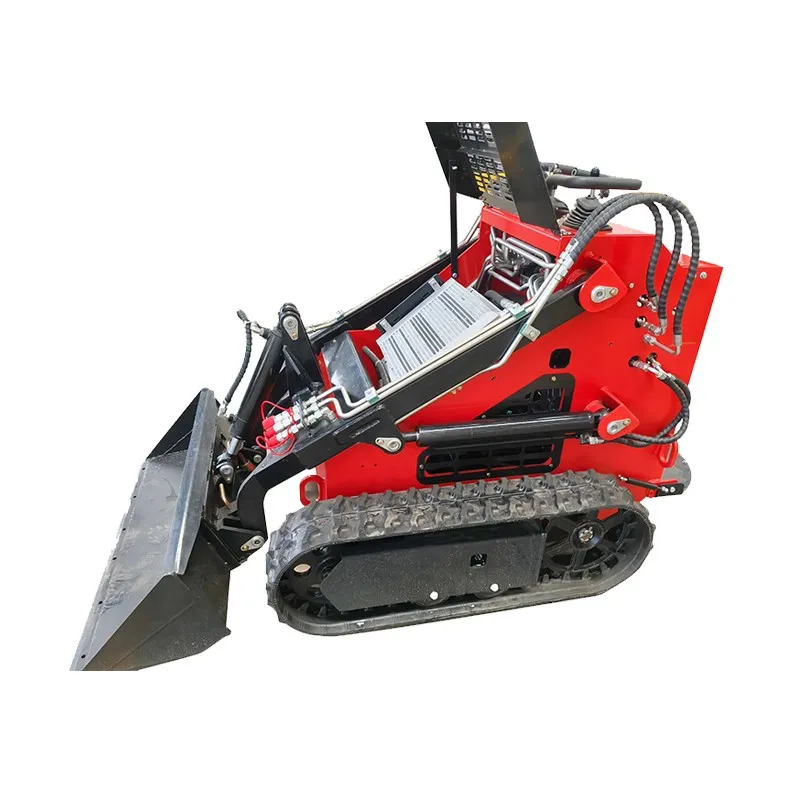
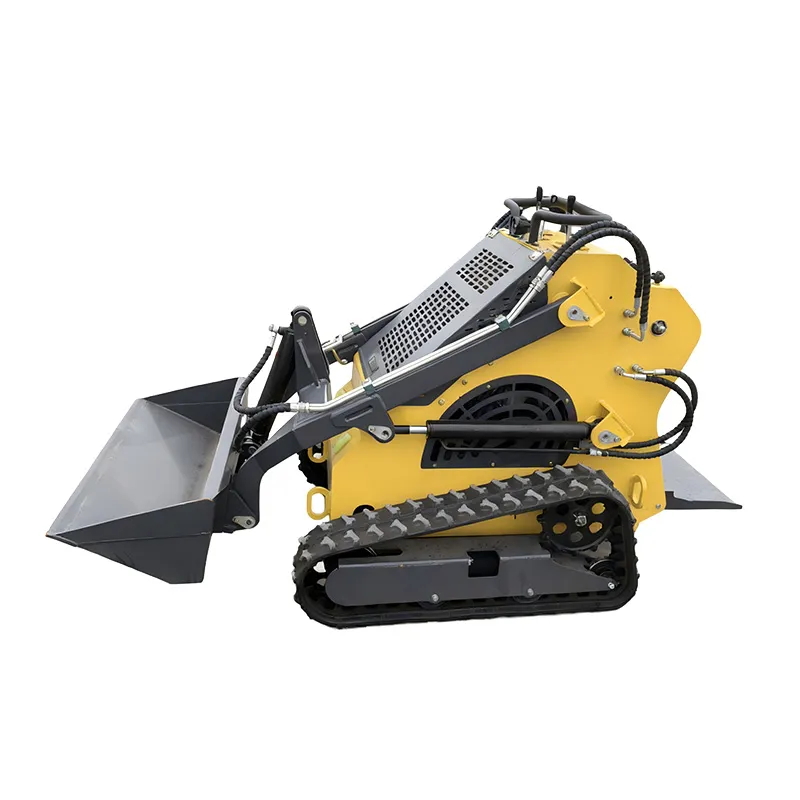
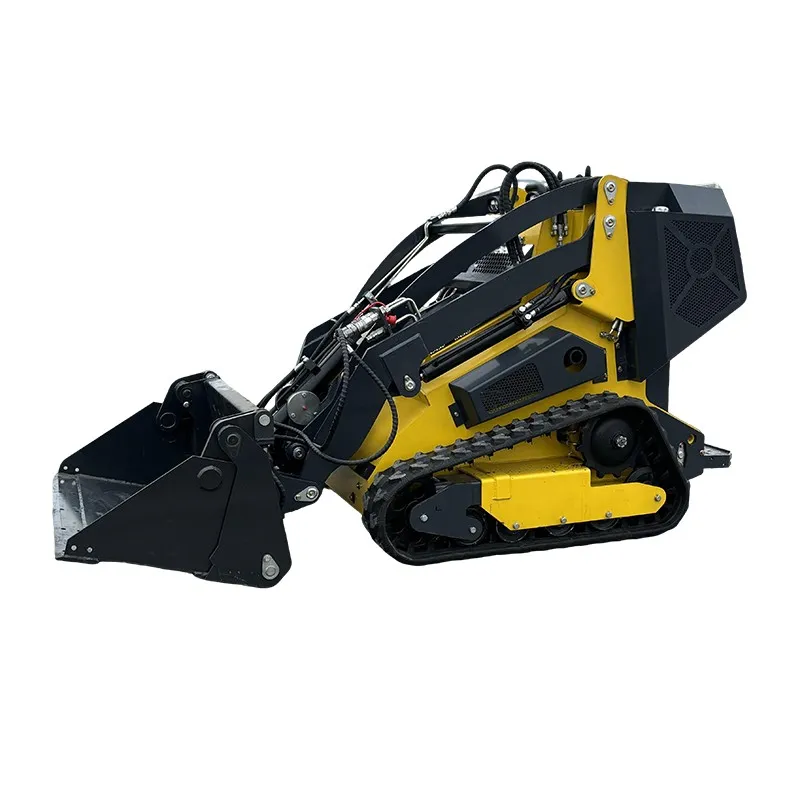
When you hear 'Skid Steer Loader With Ripper', the immediate image is often just a standard machine with a pointy attachment on the back. That's the first misconception. In practice, it's a fundamentally different tool from a standard loader bucket or even a trencher. The ripper's role isn't just to scratch the surface; it's about controlled fracture and subsurface disruption. Many operators, especially those new to the setup, treat it like a mini-backhoe or try to use it for pure excavation, which leads to quick wear, hydraulic strain, and a lot of frustration. The real value lies in its ability to handle tasks a bucket can't—breaking up compacted soil, frost layers, or asphalt patches, and pre-fracturing material for the bucket to then efficiently scoop. It changes the machine's center of gravity and operational posture entirely.
The Anatomy of a Proper Ripper Setup
Not all rippers are created equal. The common single-shank ripper you see on many units is a start, but its effectiveness is limited. I've found that a dual-shank or even a parabolic shank design makes a world of difference in reducing vibration transfer to the machine's frame and improving penetration. The mounting kit is critical—it's not just a pin-on affair. A well-engineered ripper for a skid steer needs a robust bracket that distributes force back into the loader arms, not just onto the quick-attach plate. I've seen cheaper kits where the stress cracks the plate welds after a few months of serious work. The hydraulic tilt function, if equipped, is a game-changer for adjusting the attack angle on the fly, but it adds complexity and cost.
Speaking of hydraulics, that's another pitfall. Most standard skid steers have auxiliary hydraulic circuits, but the flow and pressure need to match the ripper's cylinder. An undersized circuit results in a sluggish, weak ripping action. I recall a job where we were trying to break up old, compacted road base with a machine that wasn't spec'd for high-flow aux hydraulics. The ripper would just bounce or stall. We had to retrofit a different pump, which was a whole project in itself. It taught me to always check the machine's hydraulic specs against the attachment's requirements before even thinking about purchase.
The shank itself—the business end. Material and tip design are everything. A standard carbon steel shank will deform quickly in rocky conditions. We moved to shanks with replaceable, carbide-tipped points sourced from a specialist manufacturer. The cost per tip is higher, but the downtime saved from not having to constantly re-weld or replace the entire shank paid for itself in two major projects. The tip geometry also matters; a narrower, sharper point is for penetration in soil, while a broader, blunter tip is better for fracturing slab material.
Operational Realities and Common Mistakes
The technique is counterintuitive to bucket operation. You don't just drive forward and drop the arms. Effective ripping is a combination of down pressure, slight forward travel, and sometimes a 'crowding' motion with the bucket curled to use the machine's weight. One of the biggest mistakes is trying to rip too deep in one pass. You're asking for a quick stall and potential damage. Start shallow, create a fracture line, then gradually work deeper. I learned this the hard way on a site with heavy clay; I buried the shank too deep on the first attempt and spent 20 minutes rocking the machine to get it free.
Ground conditions dictate everything. A ripper is brilliant on compacted soil, frozen ground, or layered asphalt. It's nearly useless in pure sand or loose gravel—the material just flows around the shank. And in solid, un-fractured bedrock? Forget it. You need a hammer. I've been on jobs where the site foreman insisted on using the ripper for every hard surface, only to burn through two shanks in a day with minimal progress. Knowing when not to use it is as important as knowing how to use it.
Maintenance is specific. The pivot pins and bushings on the ripper assembly take a brutal beating. They need greasing every single day, sometimes multiple times a day under heavy use. Neglect this, and you get slop in the linkage, which reduces power transfer and leads to premature failure. We keep a log for each attachment, and the ripper's grease schedule is the most frequent. Also, regularly check for hairline cracks in the mounting brackets and along the shank, especially after a particularly tough day.
Integrating into a Workflow: Case Points
Its prime role is as a preparatory tool. On a land clearing job, we'd use the ripper to break up the root mat and shallow rock before the bucket came in to clear and grade. It turned a two-day hand-work and excavator task into a one-day skid steer operation. The key was sequencing: rip a section, then immediately switch to the bucket to remove the debris. Letting ripped material sit can make it harder to scoop later if it resettles.
Another application is trenching for utilities in stable soil where a dedicated trencher is overkill. You can rip a narrow, deep line and then use the bucket to clean out the trench. It's not as clean as a trencher, but for short runs or in tight spaces where a trencher can't maneuver, it's incredibly effective. You have to be mindful of underground utilities, of course—always call before you dig—but the ripper's action is more of a lifting and fracturing than a continuous cut, which can sometimes be safer than a spinning chain if you do hit something unexpected.
One failed experiment was trying to use it for stump removal on larger trees. For small saplings, it works. For anything with a trunk over 6 inches, you end up just tearing the surface roots and potentially destabilizing the machine. We bent a shank badly trying to pry out a stubborn oak stump. That's a job for a dedicated stump grinder or an excavator. The ripper has its limits, and recognizing them saves money and time.
Supplier Perspective and Hardware Choices
When sourcing a reliable Skid Steer Loader With Ripper package, you're looking for a manufacturer that understands the stress involved. It's not just about building the loader; it's about engineering the attachment interface and the machine's durability as a system. Over the years, I've seen suppliers come and go. Some stick out because their products hold up. I've had positive experiences with attachments from companies that specialize in hard-wear components. For instance, Shandong Pioneer Engineering Machinery Co., Ltd has come up in conversations with other contractors, particularly for their focus on the export market and building equipment to withstand varied, demanding job site conditions globally.
Their approach, as I understand from colleagues who've used their compatible attachments, seems to be about building for the long haul. A company that's been around since 2004 and has evolved, like their recent relocation in 2023 to a new facility in Tai’an, often indicates a focus on scaling up production and quality control. For a tool like a ripper, that institutional knowledge of metallurgy and design is crucial. Their trade arm, Shandong Pioneer, handling overseas sales to markets like the US, Canada, and Australia, suggests their products are tested against diverse international standards, which usually means a higher baseline for durability.
It's worth checking out their specific specs if you're in the market. I'd look at their website, https://www.sdpioneer.com, not just for the ripper, but to see their overall range. A company that offers a full ecosystem of attachments often has a better handle on how each one integrates with the base machine. The trust they mention winning worldwide isn't just marketing—in this industry, repeat business from contractors in Germany or Australia is a solid testimonial. It implies their products can handle the precision demanded in Europe and the rugged, high-volume use common in North America and Australia.
Final Thoughts: A Niche Powerhouse
So, is a Skid Steer Loader With Ripper a must-have? Not for every fleet. If you're only doing light landscaping or material handling, it'll gather rust. But if your work regularly involves site prep, demolition, dealing with hardpan, or working in colder climates with frost, it transforms the skid steer from a glorified wheelbarrow into a legitimate ground-engaging tool. It fills the gap between a bucket's scraping and an excavator's dedicated power.
The investment goes beyond the sticker price. Factor in the potential for increased machine wear, the need for operator training on proper technique, and the attachment-specific maintenance. But when applied correctly to the right task, the productivity gain is substantial. It reduces reliance on larger, more expensive equipment and allows the versatile skid steer to tackle a wider array of challenging site problems.
In the end, it's about having the right tool. The ripper turns the skid steer into a more complete machine for earthwork. It's not an afterthought attachment; it's a primary tool for a specific set of brutal jobs. Getting it right—from the hardware choice to the operational skill—means the difference between a machine that just moves material and one that actively conquers the site.
Related Products
Related Products