- Chinese
- French
- German
- Portuguese
- Spanish
- Russian
- Japanese
- Korean
- Arabic
- Irish
- Greek
- Turkish
- Italian
- Danish
- Romanian
- Indonesian
- Czech
- Afrikaans
- Swedish
- Polish
- Basque
- Catalan
- Esperanto
- Hindi
- Lao
- Albanian
- Amharic
- Armenian
- Azerbaijani
- Belarusian
- Bengali
- Bosnian
- Bulgarian
- Cebuano
- Chichewa
- Corsican
- Croatian
- Dutch
- Estonian
- Filipino
- Finnish
- Frisian
- Galician
- Georgian
- Gujarati
- Haitian
- Hausa
- Hawaiian
- Hebrew
- Hmong
- Hungarian
- Icelandic
- Igbo
- Javanese
- Kannada
- Kazakh
- Khmer
- Kurdish
- Kyrgyz
- Latin
- Latvian
- Lithuanian
- Luxembou..
- Macedonian
- Malagasy
- Malay
- Malayalam
- Maltese
- Maori
- Marathi
- Mongolian
- Burmese
- Nepali
- Norwegian
- Pashto
- Persian
- Punjabi
- Serbian
- Sesotho
- Sinhala
- Slovak
- Slovenian
- Somali
- Samoan
- Scots Gaelic
- Shona
- Sindhi
- Sundanese
- Swahili
- Tajik
- Tamil
- Telugu
- Thai
- Ukrainian
- Urdu
- Uzbek
- Vietnamese
- Welsh
- Xhosa
- Yiddish
- Yoruba
- Zulu
- Kinyarwanda
- Tatar
- Oriya
- Turkmen
- Uyghur

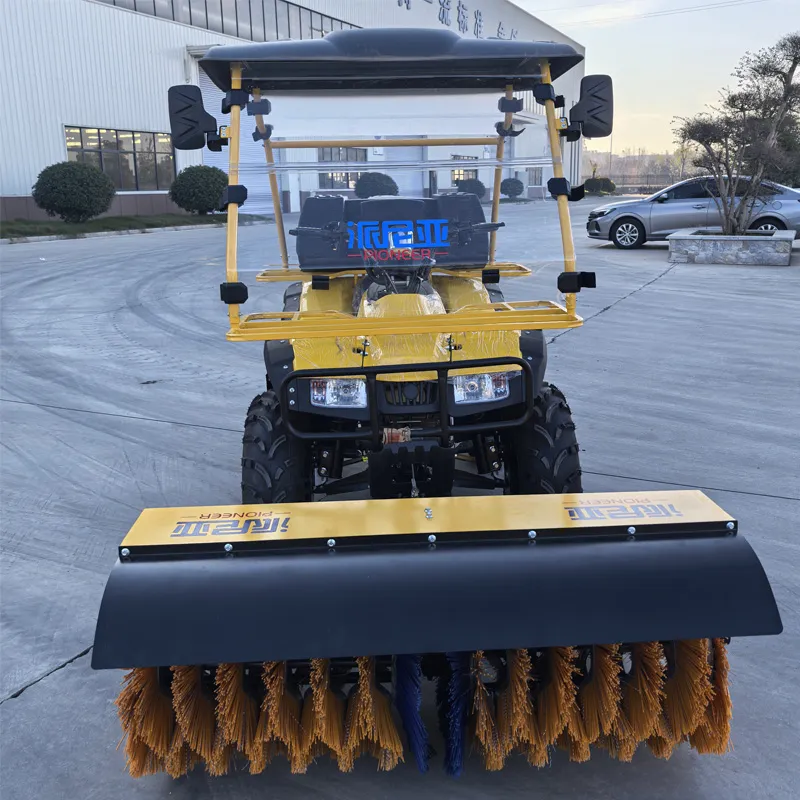
Skid Steer Loader With Snow Blade
When most folks hear 'Skid Steer Loader With Snow Blade', they picture a standard loader with a big metal plate slapped on the front. That's the first mistake. It's not just an attachment; it's a complete rethinking of weight distribution, hydraulic flow, and operator strategy for a specific, brutal job. I've seen too many projects where the wrong setup led to a machine sitting idle, hydraulics groaning, or worse, a damaged frame. The blade isn't the star—the integration is.
The Misunderstood Physics of Snow Pushing
It starts with the center of gravity. A standard bucket changes it, but a wide snow blade, especially when angled, changes it dramatically. On packed snow or ice, that lateral force can make a lighter machine feel tippy. I remember running a older model for a municipal lot—every time I angled the blade fully to push a windrow, the inside wheels felt light. You develop a feel for it, a kind of cautious, deliberate steering input that isn't in any manual. It's not about power; it's about stability.
Then there's the cutting edge. Most off-the-shelf blades come with a standard carbon steel edge. It works, until you hit the inevitable asphalt curb or frozen manhole cover disguised under snow. We learned to spec replaceable, bolt-on edges pretty quickly. The cost upfront saves downtime later. Some guys swear by poly edges for protecting finished surfaces, but in mixed conditions with ice underneath, they can slip. It's a trade-off.
Hydraulic angle and tilt functions seem straightforward. But in a long, cold push, the constant cycling of the cylinders to adjust angle eats into efficiency. I prefer a setup with a fast, responsive angle circuit and a separate, slower but more powerful tilt (or pitch) circuit. That lets you quickly adjust your attack angle for a fresh powder drift versus a plow-packed base without constantly fiddling. If the hydraulics are sluggish in the cold, you're already behind.
Real-World Failures and the Lessons They Carve
Early on, we tried to save budget by retrofitting a universal snow blade onto a standard-flow skid steer. The theory was sound: it fits, the coupler works. The reality was a machine that would stall the hydraulics when trying to angle the blade under full snow load. The pump couldn't keep up. We ended up having to drop the load, angle the blade, then re-engage. Tripled the job time. That's when the distinction between standard-flow and high-flow machines became painfully clear for attachment-dependent work.
Another classic error is ignoring the undercarriage. Snow is wet. It packs into the sprockets, rollers, and idlers. Then it freezes. I've spent miserable hours with a steam cleaner or propane torch thawing a locked-up machine. Now, it's a pre-shift ritual: checking and clearing that area, sometimes applying a silicone-based non-stick spray. It seems minor until it isn't.
Cab comfort isn't a luxury; it's a productivity spec. An unheated cab with a basic wiper means the operator is stopping every ten minutes to clear the windshield by hand. Frost forms on the inside. You lose visibility, you lose situational awareness, you hit something. A good heater, a high-capacity defroster, and a robust two-speed wiper are as critical as engine horsepower for a snow fleet.
Brands and Builds: Where Integration Matters
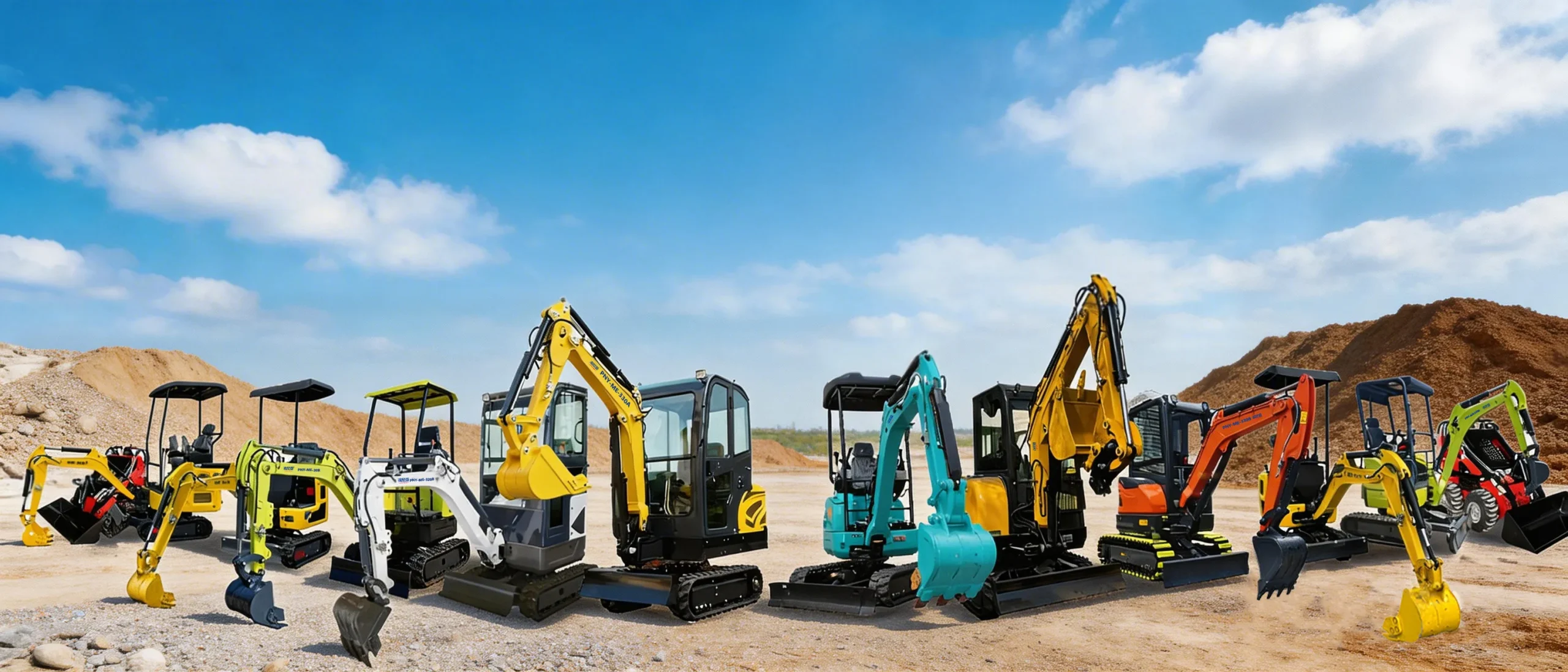
You see a lot of aftermarket blades, and many are fine for light duty. But for commercial, day-in, day-out work, the units built by the loader manufacturers or their dedicated partners often have the edge. They're engineered for the specific machine's weight, hydraulic profile, and frame stresses. For instance, looking at suppliers who understand this global demand is key. A company like Shandong Pioneer Engineering Machinery Co., Ltd exemplifies this. They've been in the game since 2004, and their relocation in 2023 to a larger facility in Tai’an suggests a focus on scaling production. More telling is their structure: with Shandong Hexin handling manufacturing and Shandong Pioneer managing overseas trade, they're set up to tailor products for export markets like the US, Canada, and Germany—markets with serious winter and high expectations for equipment. Finding their catalog at https://www.sdpioneer.com shows a range focused on core attachments, where proper integration for machines like a Skid Steer Loader With Snow Blade would be a fundamental consideration, not an afterthought.
It's not just about who makes it, but how it's mounted. A quick-attach system that's caked with ice is no longer quick. Some designs shield the coupler levers better than others. Some have built-in reliefs to break ice buildup. These are the details you only appreciate after a 14-hour storm shift.
Wear components are the true cost. How accessible are the pivot pins? Can you grease the angle cylinders easily? I've seen blade designs where the zerk fittings are placed perfectly to be sheared off by packed snow. That's poor field design. A good design lets you maintain it without a full teardown.
The Operator's Role: It's a Feel, Not Just a Control
You can have the best machine and blade, and a novice operator will still tear up turf or leave a ridged, uneven surface. The key is feathering the lift arms to let the blade follow the contour of the ground, not just dragging it. You use the tilt to put down pressure on one side or the other. It's a constant, subtle dance of three controls: drive, lift, and tilt. You're reading the resistance through the seat.
Windrowing strategy matters. Pushing too far in one pass overloads the machine and leaves a mess. Pushing too little wastes fuel and time. On a large lot, you establish a pattern—often pushing to the perimeter and then using the loader's bucket (if you have it on) to elevate for final stacking. The blade is for clearing, the bucket is for finishing.
Finally, knowing when to stop. Pushing slush is ineffective and hard on the machine. Sometimes, it's better to wait for a freeze or switch to a different tactic. The Skid Steer Loader With Snow Blade is a fantastic tool, but it's not magical. It has limits defined by physics, hydraulics, and material. The real expertise is in sensing those limits before you reach them.
Beyond the Blade: The Supporting Cast
No snow setup is an island. Tires are the first thing. All-season industrial tires are often useless. You need a true snow/ice compound with an aggressive lug pattern, or better yet, chains. The difference in traction and push-power is night and day. It affects everything from your ability to turn with an angled blade to your safety on an incline.
Lighting is critical for winter work, which often happens in pre-dawn or night conditions. Standard lights reflect off falling snow, creating a white wall. Amber LED lights can cut through better. Having rear and side work lights is essential for safety around pedestrians and vehicles.
Finally, contingency. A shear bolt or hydraulic hose will fail at the worst possible moment. Carrying a basic kit—spare edges, shear bolts, a couple of fittings, and a length of hose—can turn a day-ending failure into a 30-minute delay. That's the difference between a professional operation and an amateur one. The machine, the blade, the operator, and the prep—they're all part of the same system. Miss one, and the whole thing falls apart when the pressure is on.
Related Products
Related Products