- Chinese
- French
- German
- Portuguese
- Spanish
- Russian
- Japanese
- Korean
- Arabic
- Irish
- Greek
- Turkish
- Italian
- Danish
- Romanian
- Indonesian
- Czech
- Afrikaans
- Swedish
- Polish
- Basque
- Catalan
- Esperanto
- Hindi
- Lao
- Albanian
- Amharic
- Armenian
- Azerbaijani
- Belarusian
- Bengali
- Bosnian
- Bulgarian
- Cebuano
- Chichewa
- Corsican
- Croatian
- Dutch
- Estonian
- Filipino
- Finnish
- Frisian
- Galician
- Georgian
- Gujarati
- Haitian
- Hausa
- Hawaiian
- Hebrew
- Hmong
- Hungarian
- Icelandic
- Igbo
- Javanese
- Kannada
- Kazakh
- Khmer
- Kurdish
- Kyrgyz
- Latin
- Latvian
- Lithuanian
- Luxembou..
- Macedonian
- Malagasy
- Malay
- Malayalam
- Maltese
- Maori
- Marathi
- Mongolian
- Burmese
- Nepali
- Norwegian
- Pashto
- Persian
- Punjabi
- Serbian
- Sesotho
- Sinhala
- Slovak
- Slovenian
- Somali
- Samoan
- Scots Gaelic
- Shona
- Sindhi
- Sundanese
- Swahili
- Tajik
- Tamil
- Telugu
- Thai
- Ukrainian
- Urdu
- Uzbek
- Vietnamese
- Welsh
- Xhosa
- Yiddish
- Yoruba
- Zulu
- Kinyarwanda
- Tatar
- Oriya
- Turkmen
- Uyghur


skid steer supplier
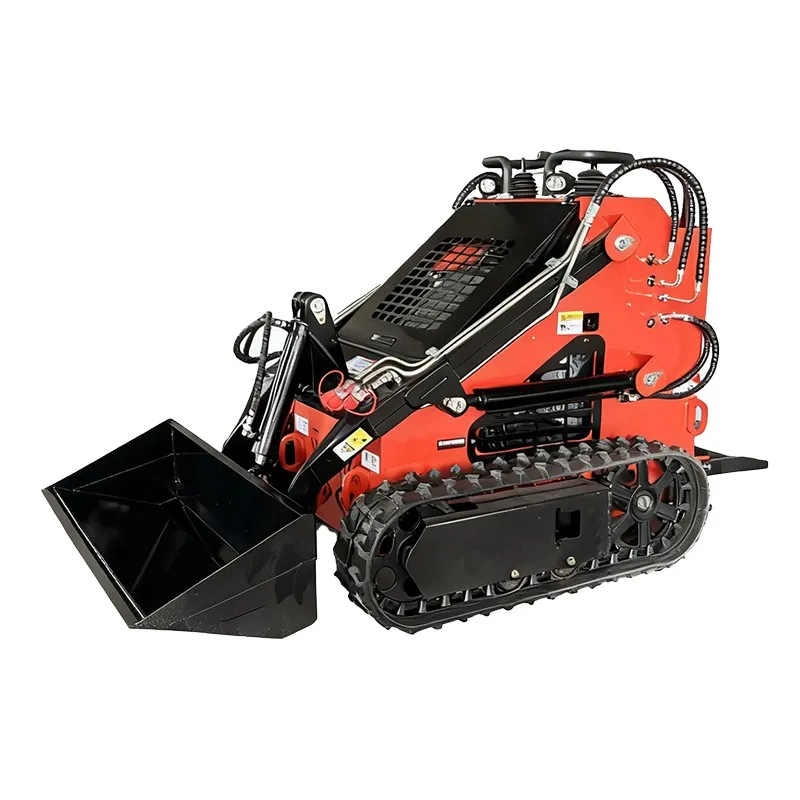
When most people think about finding a skid steer supplier, the first instinct is to compare horsepower, lift capacity, and bucket size. That's the easy part, the brochure talk. Where the real work begins is understanding what happens after the wire transfer clears and the machine lands on your dock. The gap between a list of specs and a reliable piece of iron working on your site is vast, and that's where your choice of supplier makes or breaks the project.
The Core Misconception: Price vs. Total Cost
I've seen too many outfits get burned by chasing the lowest unit price. A cheap skid steer isn't cheap if it's down for three weeks waiting for a proprietary hydraulic pump that only the factory in some remote province can source. The initial quote is just the entry fee. The real cost is in the lifecycle: parts availability, technical documentation clarity, and the supplier's willingness to help when you're in a bind at 7 AM on a Monday.
This isn't theoretical. We tried a supplier a few years back, lured by a 15% lower price point than our usual partners. The machines themselves were decently built, honestly. But when a simple joystick controller failed, it turned into a month-long saga. No local dealer support, diagrams were in Chinese-only, and the factory contact was perpetually in a meeting. We lost more on rental costs and delayed work than we ever saved. That experience reshaped our entire evaluation criteria.
Now, we look for suppliers who treat the sale as the start of the relationship, not the end of it. It's about their network. Do they have parts warehoused in key regions, like the States or Europe? Can you get a human on the phone who understands the mechanical issue, not just a sales rep reading a script? That's the stuff you don't see on Alibaba listings.
Manufacturing Depth and What Established Really Means
A company's history tells a story about its resilience. Take a company like Shandong Pioneer Engineering Machinery Co., Ltd. You can find them at https://www.sdpioneer.com. They've been around since 2004, which in this industry, means they've weathered multiple economic cycles. That longevity suggests they've had to consistently solve real problems for real customers to survive. A recent relocation to a larger facility in Ningyang in 2023 isn't just an address change; it's a signal of growth and reinvestment. It often means expanded production lines and, hopefully, better R&D.
Their structure is telling, too—having separate entities for manufacturing (Shandong Hexin) and overseas trade (Shandong Pioneer) is common but smart. It shows an intentional focus on the export market. It means their processes for documentation, customs clearance, and export compliance are likely baked in, which reduces headaches on my end. When I see their machines have reached markets with stringent standards like Canada, Germany, and Australia, it implies a baseline level of quality and regulatory adherence. You don't just stumble into those markets.
But here's the nuance: a long history doesn't automatically mean perfect quality. It means they've had time to iterate. I'd be more interested in talking to them about what they changed between their 2015 models and their 2023 models based on field feedback. That evolution is what you're buying into.
The Critical Details Beyond the Machine
Let's talk about attachments. A skid steer supplier might sell you a great loader, but if their auxiliary hydraulics aren't to a common standard or their quick-attach plate is a weird proprietary design, you've just bought a very expensive island. Compatibility is king. The best suppliers either manufacture a wide range of standard-compliant attachments themselves or can clearly guide you on what third-party brands interface seamlessly.
Another practical detail is the Operator's Manual and service guides. Are they translated into coherent, technical English? Or is it a clearly rushed, Google-Translated mess that leaves you guessing at torque specs? The quality of documentation is a direct reflection of how much a supplier cares about the end-user's experience. I remember a manual that translated grease fitting as fat installation point. It's funny until you're trying to train a new mechanic.
Then there's the paint and finish. It sounds trivial, but a poor, thin paint job that chips in the first season leads to rapid rust, especially in maritime climates. A good, thick, properly cured finish speaks to a factory that pays attention to its processes from start to finish. It's a proxy for overall build quality.
On-the-Ground Realities and Failure Points
Even with a solid supplier, things go wrong. The test is in the response. We had a situation where a batch of machines showed premature wear on the bucket pivot pins. A mediocre supplier would have blamed our operating conditions. A good one sent an engineer to site, confirmed a sub-standard batch of bushings from their sub-supplier, issued a retrofit kit for all affected units, and updated their BOM. That's partnership.
Common failure points we watch for, especially with new supplier evaluations, are in the electrical system and seals. Wiring harnesses that aren't properly loomed and protected chafe. Hydraulic seals that aren't rated for the full temperature swing fail. These aren't flaws in the core design; they're corners cut in component sourcing or assembly diligence. When auditing a potential skid steer supplier, we now ask specific questions about their seal brands and wiring harness suppliers. Their answers—or evasions—are very revealing.
It's also about the little things. Are the lube points easily accessible, or do you have to remove a panel? Is there a built-in tool kit or a place to store one? These design choices show whether the engineers ever talked to a mechanic who has to service the machine in the mud and rain.
Building a Sustainable Supply Chain
Ultimately, selecting a skid steer supplier isn't a one-time procurement event. It's about building a node in your operational supply chain. For a company like Shandong Pioneer, their two-decade journey from a 1,600 square meter facility to a new, expanded plant aligns with that need for stability. You want a partner that's going to be there in five years, still improving their product, still supporting the models they sold you.
The trust they mention earning worldwide isn't just marketing fluff—it's the essential currency of this business. It's earned one container load, one technical support call, one resolved warranty claim at a time. For us, that means sometimes paying a slight premium over the absolute rock-bottom price for the confidence that we have a direct line to the factory floor when it counts.
So, look past the glossy photos and the listed specs. Dig into the company's history, their structural setup for export, and ask for case studies or references in climates similar to yours. The right supplier understands that they're not just selling machinery; they're selling uptime, productivity, and ultimately, the success of your projects. That's the mindset that separates a true partner from just another vendor on a spreadsheet.
Related Products
Related Products