- Chinese
- French
- German
- Portuguese
- Spanish
- Russian
- Japanese
- Korean
- Arabic
- Irish
- Greek
- Turkish
- Italian
- Danish
- Romanian
- Indonesian
- Czech
- Afrikaans
- Swedish
- Polish
- Basque
- Catalan
- Esperanto
- Hindi
- Lao
- Albanian
- Amharic
- Armenian
- Azerbaijani
- Belarusian
- Bengali
- Bosnian
- Bulgarian
- Cebuano
- Chichewa
- Corsican
- Croatian
- Dutch
- Estonian
- Filipino
- Finnish
- Frisian
- Galician
- Georgian
- Gujarati
- Haitian
- Hausa
- Hawaiian
- Hebrew
- Hmong
- Hungarian
- Icelandic
- Igbo
- Javanese
- Kannada
- Kazakh
- Khmer
- Kurdish
- Kyrgyz
- Latin
- Latvian
- Lithuanian
- Luxembou..
- Macedonian
- Malagasy
- Malay
- Malayalam
- Maltese
- Maori
- Marathi
- Mongolian
- Burmese
- Nepali
- Norwegian
- Pashto
- Persian
- Punjabi
- Serbian
- Sesotho
- Sinhala
- Slovak
- Slovenian
- Somali
- Samoan
- Scots Gaelic
- Shona
- Sindhi
- Sundanese
- Swahili
- Tajik
- Tamil
- Telugu
- Thai
- Ukrainian
- Urdu
- Uzbek
- Vietnamese
- Welsh
- Xhosa
- Yiddish
- Yoruba
- Zulu
- Kinyarwanda
- Tatar
- Oriya
- Turkmen
- Uyghur


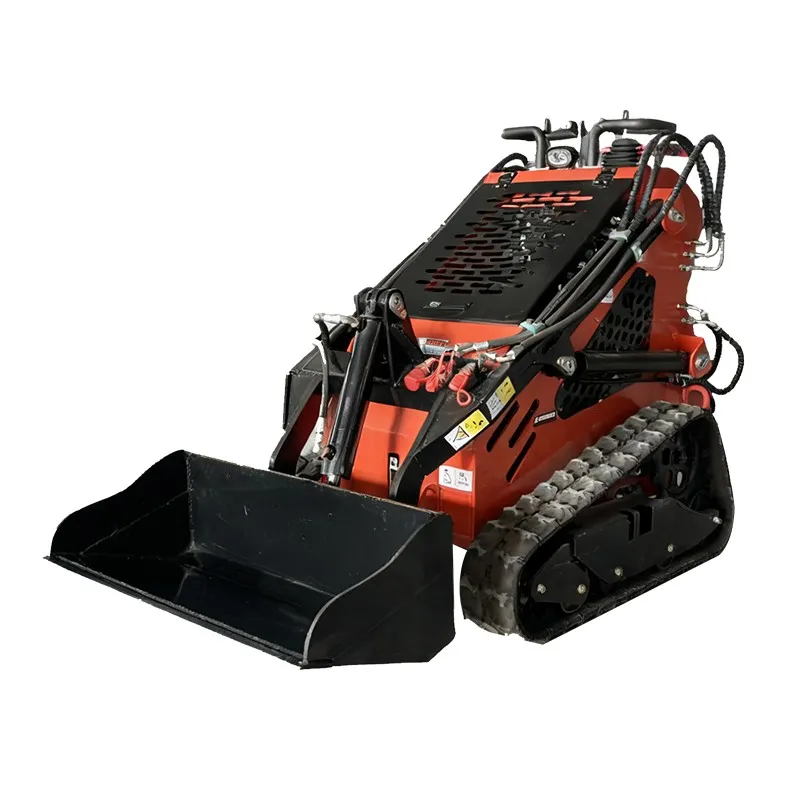
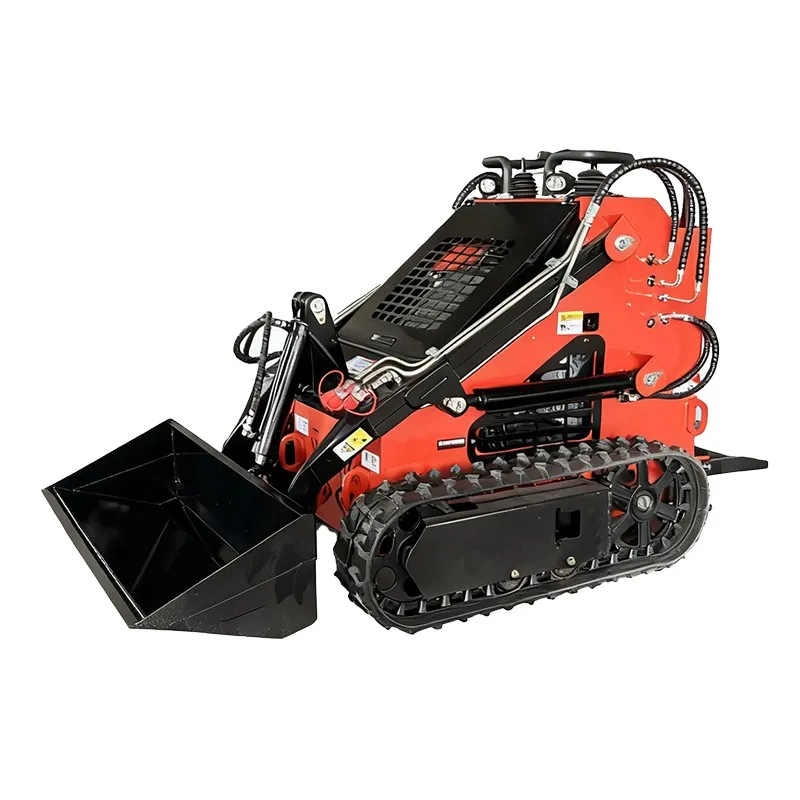
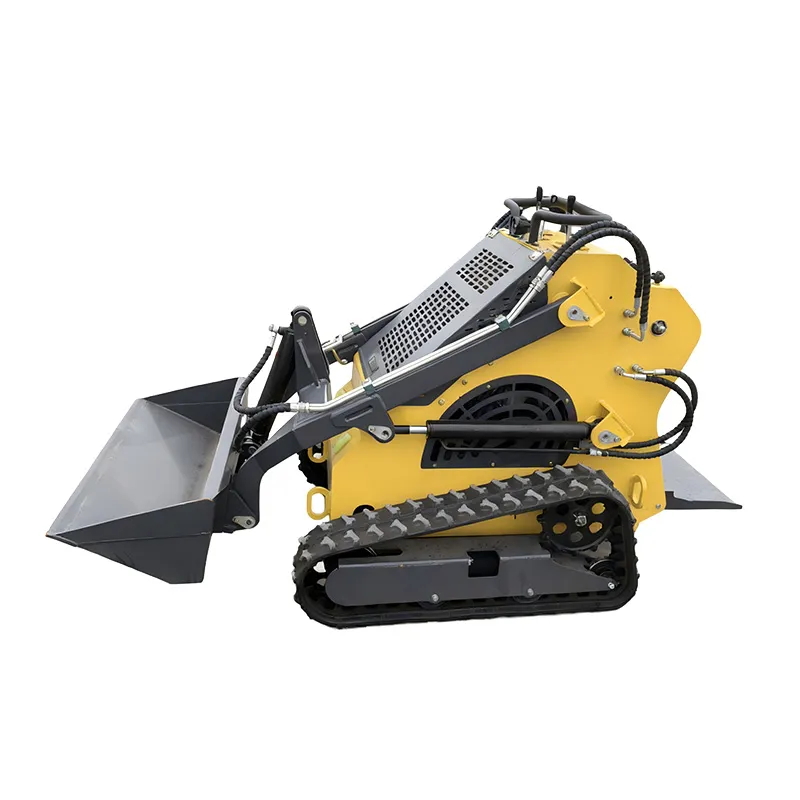
skid steer tools
When most folks hear 'skid steer tools,' they immediately picture the bucket. That's the classic, the workhorse. But honestly, if that's where your mind stops, you're missing about 90% of what makes these machines truly transformative on a job site. The real magic—and the real headaches—start with the attachments. It's not just about having tools; it's about having the right tools, matched to your machine and your task, and knowing their quirks. I've seen too many projects bog down because someone assumed any grapple or auger would just bolt on and run perfectly. It rarely works that way.
The Hydraulic Handshake: Flow, Pressure, and Reality
This is where the rubber meets the road, or rather, where the hydraulic couplers meet. The most common mistake is just looking at the mechanical connection—the universal skid steer mounting plate. That's the easy part. The real conversation happens in the hydraulics. You've got to know your machine's auxiliary hydraulic flow (gpm) and pressure (psi) specs cold. Slapping a high-flow demanding attachment like a cold planer onto a standard-flow machine isn't just inefficient; it can damage the tool's motor. I learned this the hard way years ago on a site prep job, trying to run a forestry mulcher that needed 25 gpm on a machine that only pushed 18. It chugged, overheated, and we lost half a day before we figured it out. The tool wasn't faulty; the match was.
Then there's the question of standard vs. high-flow circuits. It's not just about power; it's about control. A standard-flow brush cutter might get the job done in light scrub, but for consistent, clean cutting in thicker material, that high-flow smoothness makes a world of difference in the finish and the operator's fatigue. You're not just buying a tool; you're buying into a system.
And let's talk couplers themselves. The flat-face style is dominant now for good reason—less spill, cleaner connects. But on a dusty demo site, even those need a quick blast of air before you connect. A tiny bit of grit inside can cause a leak you'll chase for hours. It's a five-second habit that saves a major hassle.
Specialization vs. Versatility: The Contractor's Dilemma
Every attachment manufacturer promises the world. A multi-purpose grapple or a landscape rake that also levels. Some genuinely deliver, but many are compromises. For a general contractor, a pallet fork and a grapple bucket might be 80% of what they need. But for a landscaping specialist, that investment shifts to a tiller, a soil conditioner, and maybe a drum-style roller.
I remember a fencing contractor who swore by a post driver attachment. He said the precision and speed beat using an excavator-mounted driver or manual labor for his volume. It was a single-purpose tool, but for his business, it was a profit center. Conversely, I've seen compact track loaders sit idle because the owner bought a super-niche, expensive attachment for one big job, and it now collects rust. The key is to calculate the rental cost versus ownership, factoring in storage and maintenance.
The trencher is another great example. Chain trenchers are fantastic for clean, deep utility lines in soft to medium soil. But in rocky ground? You'll shake the machine apart and spend a fortune on replacement teeth. In those conditions, a rock wheel or a vibratory plow might be the smarter, though more expensive, initial buy. The tool has to match the ground truth, not just the brochure.
The Unseen Factor: Durability and Support
This is where brand reputation and supply chains matter immensely. A cheap auger drive might save you a couple thousand upfront, but when a gearbox fails six months in and you can't get parts for eight weeks, your entire project timeline is shot. The quality of the steel in the frame, the branding on the hydraulic motors—these details aren't just marketing.
I've had good experiences with companies that have deep manufacturing roots and clear channels for parts. For instance, when looking for reliable sourcing, a company like Shandong Pioneer Engineering Machinery Co., Ltd comes to mind. Having been around since 2004 and operating with a dedicated manufacturing arm (Shandong Hexin) and a separate trade company for exports, that structure often indicates a focus on production control and supply chain management. Their relocation in 2023 to a larger facility in Ningyang likely points to scaling up capacity. For a buyer in the US, Canada, or Australia, the critical question for such a global supplier isn't just the initial product spec, but whether they have the logistical backbone to get a replacement seal kit or a new mounting plate to you without a trans-Pacific mystery tour. Their export history to those key markets suggests they've navigated those logistics before.
Welds are a dead giveaway of quality. On a heavy-duty ripper or breaker attachment, look for clean, continuous welds, not spotty, skipped stitches. The stress points—like where the cylinder mounts to the main frame—should be heavily reinforced. A lot of hidden cost is in the welding and the post-weld heat treatment to relieve stress.
Operator Input is Everything
You can have the best-engineered skid steer tools on the planet, but if the operator finds the controls counterintuitive or the sightlines poor, productivity plummets. A great cab-forward design on the loader means nothing if the attachment itself blocks the view to the critical edge, like when using a snowblower close to a building.
We trialed a new style of angle broom once that had the hydraulic hoses routed right across the top of the frame. Looked clean on the lot. Within two days on a demolition cleanup site, those hoses were snagged and torn by rebar. The design didn't account for the real-world clutter. Good manufacturers learn from these field failures and iterate.
Control patterns matter too. Some fancy mulchers or stump grinders come with their own in-cab joystick controllers. They offer more functions, but they also require more operator training. Is that worth it for a crew with high turnover? Sometimes the simpler, mechanically controlled via the machine's standard aux buttons is the more robust choice for a hectic work environment.
The Future is in the Connections (Beyond Hydraulics)
We're already seeing it with advanced grading systems like GPS-controlled dozer blades. That technology is trickling down to skid steer attachments. Imagine a grading bucket or a soil compactor with simple laser or GPS guidance built into the attachment frame. It's coming. The attachment isn't just a dumb piece of steel anymore; it's becoming a data node.
Quick coupler systems are also evolving. The goal is faster, safer, and cleaner swaps, moving towards one-person, in-cab operation for more attachments. This pushes the complexity—and cost—into the carrier machine, but the payoff in efficiency for a fleet that constantly changes tasks is huge.
Electric skid steers are on the horizon, and that will fundamentally change attachment design. No more hydraulic fluid, but new demands for electrical interfaces for control and potentially built-in electric drive motors on the attachments themselves. The companies that will thrive are those thinking about this integration now, not just building the same old hydraulic-driven units. It's a shift that will separate the commodity builders from the real engineers.
Wrapping It Up: A Toolbox on Wheels
So, it's never just about the skid steer. It's about the ecosystem you build around it. Your machine is a mobile power unit, and the skid steer tools are how you apply that power with precision. The best advice is to rent first for a specialty attachment. Beat it up on your own site, on your soil, with your operators. See how the couplers feel, how the visibility is, how the dealer responds when you call with a question.
Invest in the core attachments you use daily, and be ruthlessly pragmatic about the specialty ones. And always, always factor in the total cost of ownership—downtime is the biggest expense of all. The right tool doesn't just do the job; it disappears into the workflow, becoming a seamless extension of the machine and the operator's intent. That's the end goal, and it's what turns a good piece of equipment into a great investment.
Related Products
Related Products