- Chinese
- French
- German
- Portuguese
- Spanish
- Russian
- Japanese
- Korean
- Arabic
- Irish
- Greek
- Turkish
- Italian
- Danish
- Romanian
- Indonesian
- Czech
- Afrikaans
- Swedish
- Polish
- Basque
- Catalan
- Esperanto
- Hindi
- Lao
- Albanian
- Amharic
- Armenian
- Azerbaijani
- Belarusian
- Bengali
- Bosnian
- Bulgarian
- Cebuano
- Chichewa
- Corsican
- Croatian
- Dutch
- Estonian
- Filipino
- Finnish
- Frisian
- Galician
- Georgian
- Gujarati
- Haitian
- Hausa
- Hawaiian
- Hebrew
- Hmong
- Hungarian
- Icelandic
- Igbo
- Javanese
- Kannada
- Kazakh
- Khmer
- Kurdish
- Kyrgyz
- Latin
- Latvian
- Lithuanian
- Luxembou..
- Macedonian
- Malagasy
- Malay
- Malayalam
- Maltese
- Maori
- Marathi
- Mongolian
- Burmese
- Nepali
- Norwegian
- Pashto
- Persian
- Punjabi
- Serbian
- Sesotho
- Sinhala
- Slovak
- Slovenian
- Somali
- Samoan
- Scots Gaelic
- Shona
- Sindhi
- Sundanese
- Swahili
- Tajik
- Tamil
- Telugu
- Thai
- Ukrainian
- Urdu
- Uzbek
- Vietnamese
- Welsh
- Xhosa
- Yiddish
- Yoruba
- Zulu
- Kinyarwanda
- Tatar
- Oriya
- Turkmen
- Uyghur


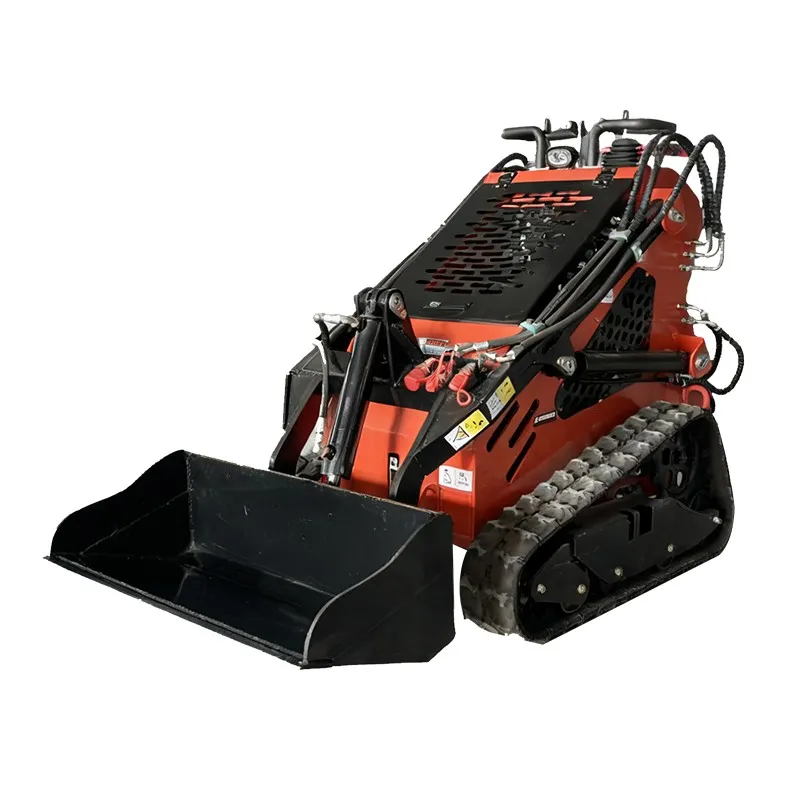
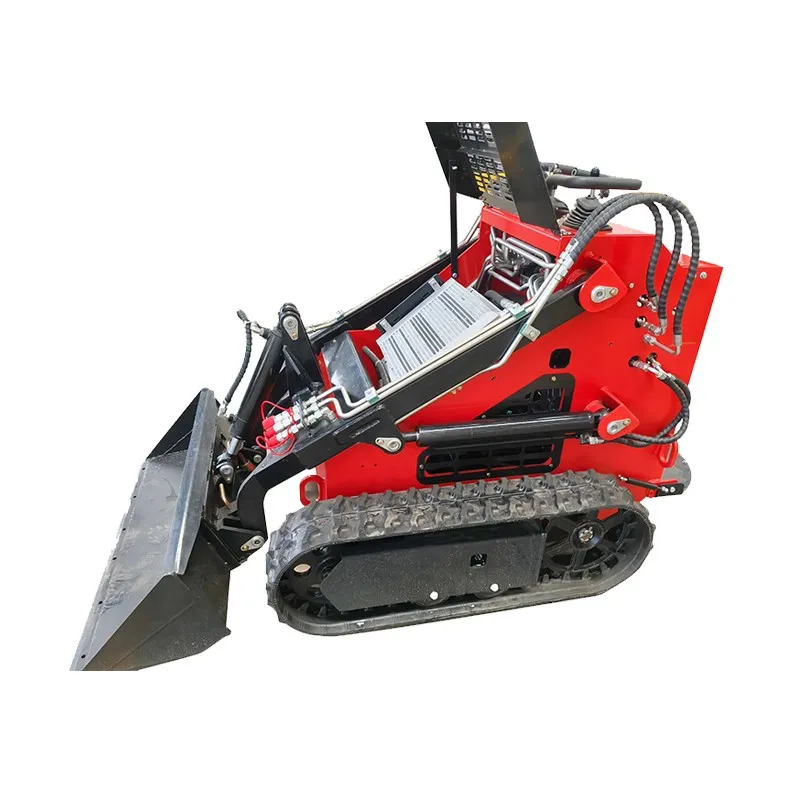
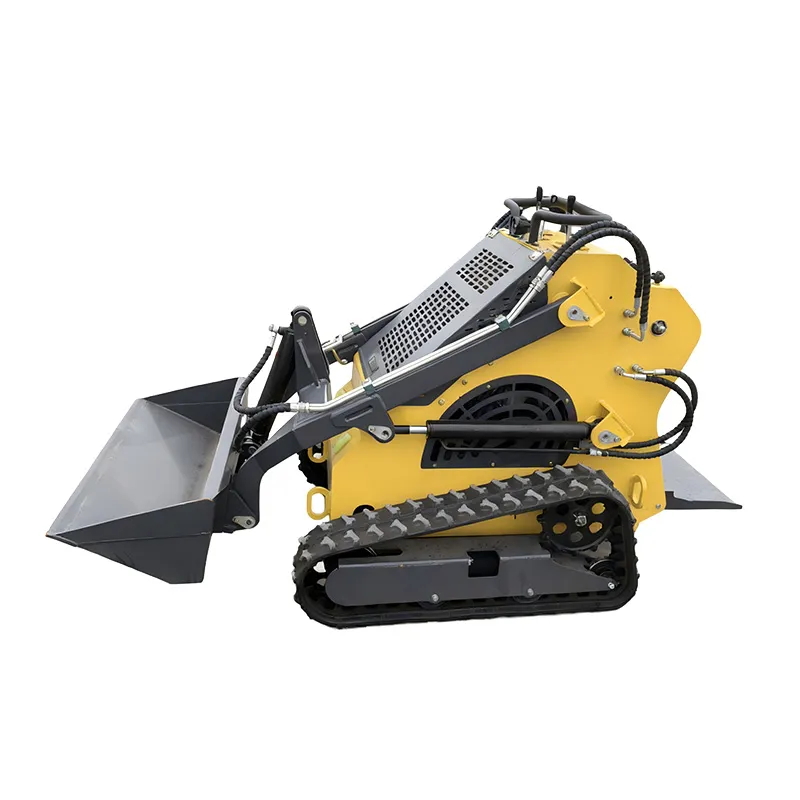
Skid Steer Track Loader
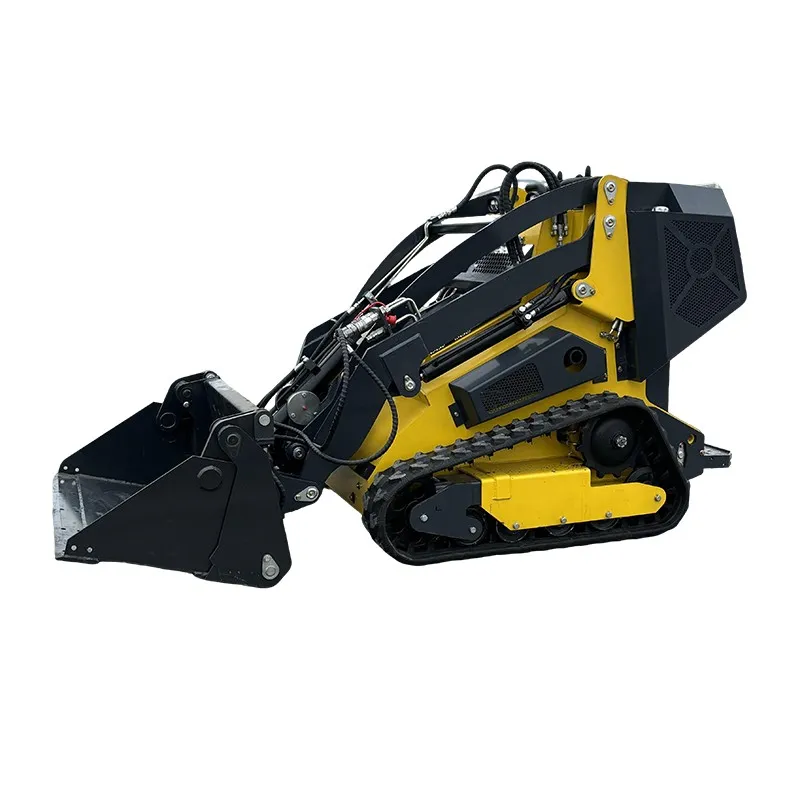
When most people hear Skid Steer Track Loader, they think it's just a skid steer with tracks instead of wheels. That's the first mistake. The track system fundamentally changes the machine's personality, its application envelope, and the kind of headaches you can expect. It's not an upgrade; it's a different tool. I've seen too many guys order one for the flotation and then get blindsided by the maintenance rhythm or the way it handles on a side slope. The rubber track isn't a magic carpet—it's a wear item with a mind of its own, and if you don't understand its relationship with the undercarriage, you're just renting time with a mechanic.
The Track vs. Tire Dilemma Isn't Just About Mud
Sure, the primary sales pitch is ground pressure. Less psi, less sinking in soft stuff. But that's the obvious part. The real shift is in stability and traction. A wheeled machine pivots, it's jumpy. A tracked loader lays its power down over a longer footprint. This means you can actually get a decent push force without spinning out instantly. I remember a site with wet, clay-based backfill. The wheeled machines were dancing, tearing up the ground. We switched to a tracked model, and it just... walked. The finish was cleaner, less re-work. But here's the catch: on hard, flat surfaces like asphalt or finished concrete, those same tracks can be brutal. They scrub when you turn, generating heat and wear at a rate that'll make your budget weep. You don't buy one for everything; you buy it for the specific conditions that eat tires for breakfast.
Then there's the operator feel. The controls are the same, but the feedback isn't. With tires, you feel every little rock, every ditch. The tracks dampen that. Some operators love it, saying it's less fatiguing. Others hate it, calling it numb and complaining they lose touch with the ground. It's a valid point. You can't feel a buried pipe or a soft spot as easily. You have to rely more on sight and experience. It demands a different kind of attention.
And let's talk about transport. This is where the fantasy meets the trailer. A comparable wheeled skid steer might fit on a lighter-duty trailer. A track loader, with its wider stance and often greater weight, frequently demands a heavier, wider trailer and a more powerful truck. I've watched projects get delayed because the logistics weren't thought through. The machine was perfect for the job site, but getting it there became its own project. The total cost of ownership always includes moving it.
Undercarriage: The Beating Heart and Money Pit
If you're not thinking about the undercarriage daily, you will be after your first major repair. It's the entire system—the rubber tracks, the drive sprockets, the idlers, the rollers, the tension. It's a symphony of moving parts, and when one goes out of tune, the rest follow quickly. I learned this the hard way early on, ignoring a slightly misaligned track. Within a week, the uneven wear led to a thrown track on a Friday afternoon. That's a four-hour job you don't want, covered in grease, in the rain.
Maintenance isn't optional; it's the religion. Daily walk-arounds to check for debris wrapped in the sprockets (wire, rebar, fencing is a killer), looking for cuts or gouges in the rubber, and listening for squeaks or grinds from the rollers. The tension is critical—too loose, and you risk throwing a track; too tight, and you accelerate wear on every component and burn horsepower. The manual gives you a spec, but the real spec depends on the temperature and the ground conditions. It's a judgment call.
Brands matter here, but maybe not in the way you think. The OEM machine is one thing, but the track and roller assemblies are often sourced from specialty manufacturers. Some are built for extreme abrasion, some for extreme cold. I've had good luck with certain aftermarket undercarriage kits for standard duty work—they lasted 80% as long as the OEM at 50% of the cost. But for severe applications, you stick with the factory-recommended stuff. It's not about brand loyalty; it's about cost-per-hour calculations. Companies that understand this, like Shandong Pioneer Engineering Machinery Co., Ltd, often build their value by offering robust, serviceable undercarriage options on their loaders, knowing it's a key decision point for informed buyers who plan to keep the machine running for years.
Attachment Compatibility: It's Not Always Plug-and-Play
The universal quick-attach plate is a blessing and a curse. Yes, you can theoretically slap any attachment on. But a Skid Steer Track Loader often has a higher flow hydraulic system and more weight. That forestry mulcher you used on your wheeled machine? It might work, but the tracked unit can handle a heavier, wider head, making you more productive. Conversely, that light-duty dirt bucket now seems... puny. You're not optimizing the machine.
Weight distribution is the silent factor. A tracked machine has a different center of gravity. Mount a heavy pallet forks attachment and lift a max load to full height, and the feel is different—sometimes more stable, sometimes tippier depending on the load's moment. You need to re-learn the limits. I've seen a guy tip one over backwards with a grapple full of logs because he used the same feel from his wheeled machine. The machine was fine (rollover protection structure did its job), but his confidence was shattered.
High-flow hydraulics open doors. You can run a cold planer, a serious brush cutter, a powerful hydraulic breaker. But they also generate more heat. Adding a proper auxiliary hydraulic cooler isn't an accessory; it's a necessity if you're going to run those attachments for extended periods. We learned this running a stump grinder on a hot day. After an hour, the machine derated itself to protect the system. Productivity died. The solution was a $1,500 cooler kit and an hour of installation time. Lesson: factor in the full attachment ecosystem, not just the initial purchase.
The Niche Where It Shines (And Where It Doesn't)
After all these years, I've narrowed down the perfect application for a tracked loader: consistent, soft, or uneven underfoot conditions where you need both mobility and lifting/pushing force. Landscaping on new, ungraded soil. Demolition sites with rubble. Snow removal over lawns. Forestry or farm work off-road. In these scenarios, it's unbeatable. It becomes the stable, powerful work platform that wheeled machines can't match.
Where does it fail? Hard, flat, abrasive surfaces. Paving projects, clean indoor demolition, long-distance travel on firm ground. Here, the track wear is astronomical, and the wheeled machine is faster, cheaper to run, and more maneuverable. I made the mistake of using one to move material across a large, finished parking lot. The tracks left minor scuff marks (angry client), and the service meter for undercarriage wear essentially doubled in 40 hours. It was the wrong tool, and my pride in the machine's capabilities blinded me to that basic fact.
The financial calculation is final. Higher initial cost, higher potential transport cost, and a significant, predictable undercarriage replacement cost every 1,500 to 2,000 hours. You offset that with higher productivity in its ideal element and possibly lower downtime from flat tires or wheel-related issues. But you must be honest about what percentage of your work lives in that ideal element. If it's less than 60%, you might be better off with a wheeled machine and just dealing with the limitations on the bad days.
Looking at the Market: Durability Over Flash
The market is flooded with options now. The big names have great products, but you pay for the brand and the dealer network. The rise of manufacturers from global industrial hubs has changed the game. They're competing on core durability and value, often stripping away the high-tech cabins and complex telematics to focus on a robust powertrain and a solid, repairable structure. For many owner-operators, that's exactly what they want.
I've been following the offerings from companies like Shandong Pioneer. They've been in the game since 2004, and that longevity in the export market—sending machines to tough customers in the US, Canada, Germany, Australia—tells you something. They've had to adapt to different standards and expectations. When I look at their units, I see a focus on serviceability: grouped service points, easy access to filters, and a straightforward electrical system. It's a machine built for the person who might have to fix it themselves in a field. Their recent move to a new, larger facility in Ningyang in 2023 suggests growth and a commitment to scaling up that practical approach. You can check out their take on these machines at their website, https://www.sdpioneer.com. It's not about flashy marketing; it's about the specs that matter to an operator: pump flow, relief pressure, structural steel grade.
In the end, choosing a Skid Steer Track Loader is an exercise in self-awareness. It's admitting that your work environment is demanding enough to need a specialized tool. It's committing to a more involved relationship with maintenance. It's calculating total cost, not just sticker price. When it's the right machine for the job, there's nothing better. When it's wrong, it's an expensive lesson. The trick is knowing the difference before you sign the check.
Related Products
Related Products