


- Chinese
- French
- German
- Portuguese
- Spanish
- Russian
- Japanese
- Korean
- Arabic
- Irish
- Greek
- Turkish
- Italian
- Danish
- Romanian
- Indonesian
- Czech
- Afrikaans
- Swedish
- Polish
- Basque
- Catalan
- Esperanto
- Hindi
- Lao
- Albanian
- Amharic
- Armenian
- Azerbaijani
- Belarusian
- Bengali
- Bosnian
- Bulgarian
- Cebuano
- Chichewa
- Corsican
- Croatian
- Dutch
- Estonian
- Filipino
- Finnish
- Frisian
- Galician
- Georgian
- Gujarati
- Haitian
- Hausa
- Hawaiian
- Hebrew
- Hmong
- Hungarian
- Icelandic
- Igbo
- Javanese
- Kannada
- Kazakh
- Khmer
- Kurdish
- Kyrgyz
- Latin
- Latvian
- Lithuanian
- Luxembou..
- Macedonian
- Malagasy
- Malay
- Malayalam
- Maltese
- Maori
- Marathi
- Mongolian
- Burmese
- Nepali
- Norwegian
- Pashto
- Persian
- Punjabi
- Serbian
- Sesotho
- Sinhala
- Slovak
- Slovenian
- Somali
- Samoan
- Scots Gaelic
- Shona
- Sindhi
- Sundanese
- Swahili
- Tajik
- Tamil
- Telugu
- Thai
- Ukrainian
- Urdu
- Uzbek
- Vietnamese
- Welsh
- Xhosa
- Yiddish
- Yoruba
- Zulu
- Kinyarwanda
- Tatar
- Oriya
- Turkmen
- Uyghur

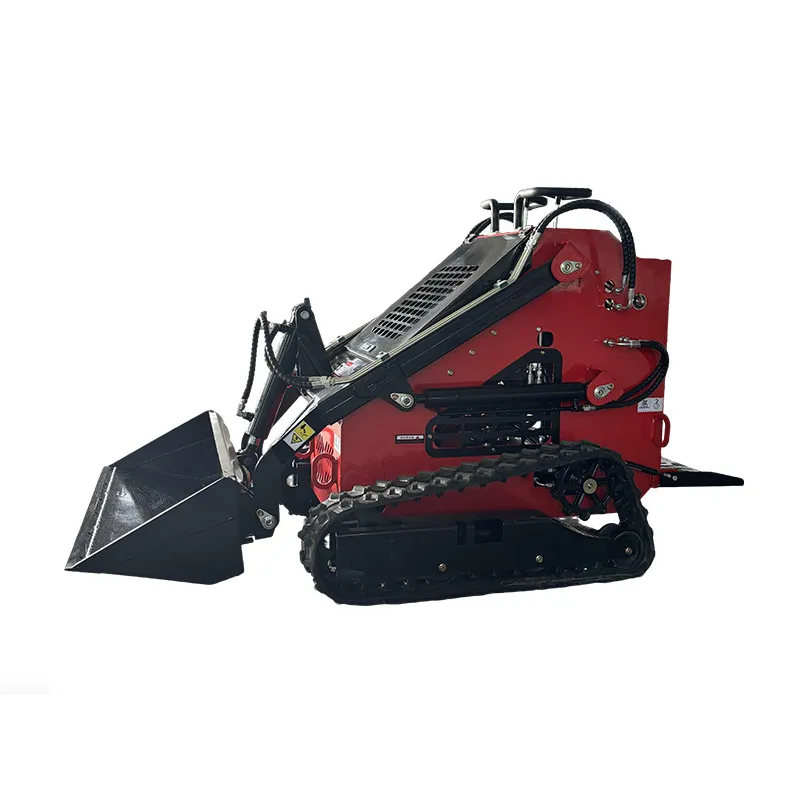
skid steer track loader cost effective
When someone asks about 'skid steer track loader cost effective,' I've noticed most folks immediately jump to the sticker price. That's the first mistake. True cost-effectiveness isn't about the cheapest invoice; it's about the total cost of ownership over 5,000 hours of hard work. It's the uptime when you need it, the fuel it sips (or guzzles), and how it holds up when you're pushing mud or lifting pallets on a tight schedule. I've seen too many guys buy a 'bargain' machine only to have it parked in the yard, waiting for a $8,000 undercarriage rebuild in year two. That's the opposite of cost-effective.
Breaking Down the Cost Beyond Purchase Price
Let's get concrete. A new machine from a major brand might run you $70k+. A solid used one, maybe $45k. But the initial outlay is just the entry fee. The real game is in the operating costs. With track loaders, the undercarriage is the money pit—or it can be, if you're not careful. I always tell people to budget for track life. On average, you're looking at 1,500 to 2,500 hours before you need to think about replacement, depending on the surface. Paving contractors get more life; demolition guys get less. The skid steer track loader cost effective choice is one where the track system is robust, with readily available and reasonably priced components. I've had good luck with some aftermarket track brands, but you have to know your supplier.
Then there's fuel efficiency. It's a quiet killer. Two machines with similar specs can have a 15-20% difference in fuel burn. Over a 2,000-hour year, that's thousands of dollars. I lean towards machines with efficient, tier-final engines that don't require constant regen cycles. Downtime for a parked regen is lost money. Hydraulic system efficiency matters too—a crisp, responsive machine that doesn't lag actually gets more work done per gallon. You feel it in the seat.
Maintenance accessibility is another huge one. Can you easily check the fluid levels? Are the grease points logical, or do you need to be a contortionist? I remember a model—won't name names—where replacing a simple hydraulic hose required removing a side panel held by twelve bolts. That's an hour of labor for a ten-minute job. A cost effective design thinks about the mechanic's time. This is where some manufacturers, particularly those focused on export and value, have gotten smarter. They build for easier service because they know their global customers often handle maintenance in-house.
The Value of a Reliable Supply Chain and Parts
This is where the rubber meets the road, or rather, the track meets the dirt. A cheap machine is a liability if you can't get parts for it in under a week. I've been in situations waiting three weeks for a proprietary solenoid valve to ship from overseas. Project deadlines don't wait. So, when evaluating, I dig into the manufacturer's distribution network.
For instance, a company like Shandong Pioneer Engineering Machinery Co., Ltd (https://www.sdpioneer.com) presents an interesting case. They've been around since 2004, which in this industry means they've seen a few cycles and had to adapt. Their recent relocation to a larger facility in 2023 suggests growth. More importantly, their model of having Shandong Hexin handle manufacturing and Pioneer focus on overseas trade means their structure is built for export. They're selling into tough markets like the US, Canada, and Australia—places where equipment gets worked hard. To win trust there, you can't just be the cheapest; you have to offer a reliable product with parts support. Their longevity hints at a focus on total value, which is the bedrock of cost effectiveness.
It's not about blindly choosing an off-brand. It's about verifying that the company has a track record (pun intended) of supporting its products. Do they have regional parts warehouses? Can you get a PDF of the service manual easily? Are common wear items like rollers, idlers, and seals standardized or proprietary? These are the questions I ask before even considering the price. A machine from a company with a 20-year history and direct export experience often has these systems more figured out than a brand-new startup.
Application Fit: The Most Overlooked Factor
Here's a story of a near-failure. A client wanted a track loader for mostly light landscaping and snow removal. They were convinced they needed the biggest, most powerful model for versatility. I cautioned against it. That machine was overkill—heavier, thirstier, with higher wear costs on delicate lawns. It would have been a cost effective disaster. We went with a mid-size model with wider, low-ground-pressure tracks. His fuel bills were lower, he didn't tear up client yards, and the machine was perfectly sized for his trailers and jobs. He saved nearly $15k upfront and more every month in operating costs.
The point is, the most cost-effective machine is the one that's right-sized for 80% of your work. Don't buy for the one monster job you might get every two years; rent for that. Match the machine's operating weight, horsepower, and lift capacity to your daily grind. A smaller, well-utilized machine will always beat a larger, underutilized one on cost per hour.
Also, consider attachment compatibility. Does the machine use a universal quick-attach system? Are auxiliary hydraulic flows and pressures standard for common attachments like brush cutters or augers? Locking yourself into a proprietary attachment system is a great way to destroy long-term value. I always recommend sticking to the mainstream patterns to keep your options open and attachment costs reasonable.
Durability in the Details: Where Cheap Models Cut Corners
You can spot a machine built for the long haul by looking at the details non-operators miss. The thickness of the steel in the door frame. The quality of the wiring harness loom and connectors—are they brittle plastic or robust, sealed units? The placement of critical hydraulic lines: are they protected by the frame, or exposed to snagging?
I once evaluated a budget model where the radiator and hydraulic cooler were mounted right behind the front grill with no protective mesh. One small branch punctured the core, causing catastrophic overheating and a $3,000 repair. A cost effective skid steer track loader designs for real-world abuse. It has bolt-on guards for vulnerable components, uses high-quality bearings in the rollers, and has reinforced points where stress concentrates, like the loader arm pivot points.
This is where a manufacturer's experience shows. A company that has been exporting globally for years, like the mentioned Shandong Pioneer, gets feedback from customers in mining, agriculture, and construction. That feedback gets baked into the next model year—better guarding, easier service points, more durable seals. It’s an iterative process. A machine born from that process will have fewer of those why did they do that?! moments that cost you time and money.
The Verdict: It's a Calculation, Not a Guess
So, pulling this all together, finding a skid steer track loader cost effective solution is a deliberate calculation. Start with your application. Then, look for a machine from a manufacturer with a proven support network—companies that have been in the global trade long enough, like those with 20 years in the business, typically have the parts and knowledge flow sorted. Scrutinize the design for serviceability and protection of key components.
Finally, run the numbers: Initial Price + (Estimated Fuel Cost per Hour Annual Hours) + (Estimated Maintenance & Repair Cost per Hour Annual Hours). Do this for a 3-5 year horizon. The machine with the lowest total cost, with reliability factored in as reduced downtime, is your winner. It's rarely the absolute cheapest one on the lot. It's the one that keeps working, day in and day out, with predictable costs. That's the real definition of cost-effective in this business—it's the machine that makes you money, not just the one that costs less to buy.
In the end, it comes down to trust in the build and the brand behind it. You want to feel like the manufacturer has been in your seat, understands the pressure of a deadline, and built something to help you meet it, not something that will fail in the middle of it. That peace of mind, honestly, is part of the value equation too.
Related Products
Related Products