



- Chinese
- French
- German
- Portuguese
- Spanish
- Russian
- Japanese
- Korean
- Arabic
- Irish
- Greek
- Turkish
- Italian
- Danish
- Romanian
- Indonesian
- Czech
- Afrikaans
- Swedish
- Polish
- Basque
- Catalan
- Esperanto
- Hindi
- Lao
- Albanian
- Amharic
- Armenian
- Azerbaijani
- Belarusian
- Bengali
- Bosnian
- Bulgarian
- Cebuano
- Chichewa
- Corsican
- Croatian
- Dutch
- Estonian
- Filipino
- Finnish
- Frisian
- Galician
- Georgian
- Gujarati
- Haitian
- Hausa
- Hawaiian
- Hebrew
- Hmong
- Hungarian
- Icelandic
- Igbo
- Javanese
- Kannada
- Kazakh
- Khmer
- Kurdish
- Kyrgyz
- Latin
- Latvian
- Lithuanian
- Luxembou..
- Macedonian
- Malagasy
- Malay
- Malayalam
- Maltese
- Maori
- Marathi
- Mongolian
- Burmese
- Nepali
- Norwegian
- Pashto
- Persian
- Punjabi
- Serbian
- Sesotho
- Sinhala
- Slovak
- Slovenian
- Somali
- Samoan
- Scots Gaelic
- Shona
- Sindhi
- Sundanese
- Swahili
- Tajik
- Tamil
- Telugu
- Thai
- Ukrainian
- Urdu
- Uzbek
- Vietnamese
- Welsh
- Xhosa
- Yiddish
- Yoruba
- Zulu
- Kinyarwanda
- Tatar
- Oriya
- Turkmen
- Uyghur


skid steer track loader for sale
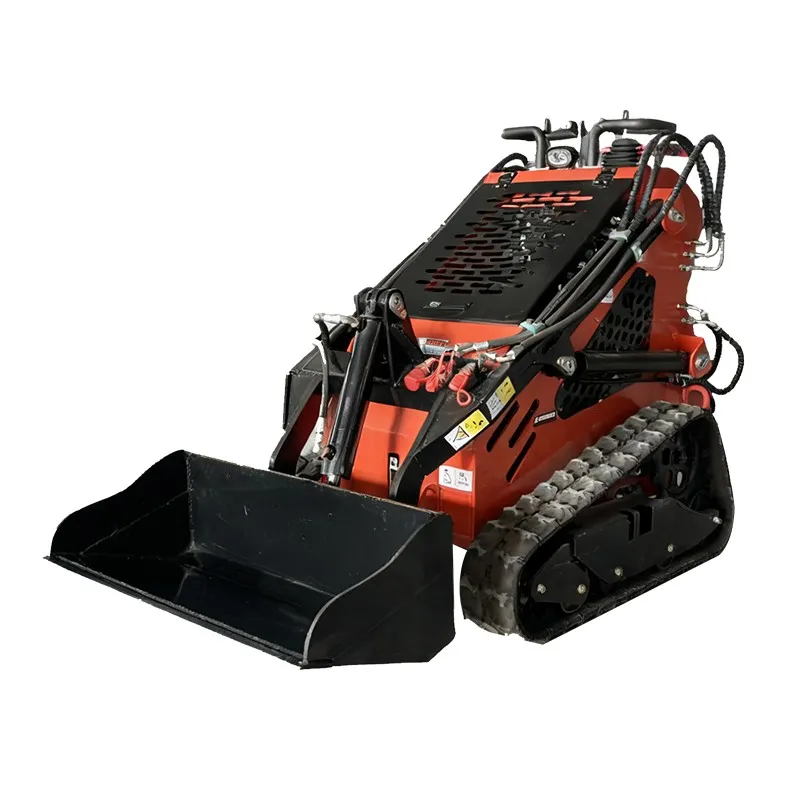
When you start looking for a skid steer track loader for sale, the first thing that hits you is the sheer volume of options. New, used, remanufactured, different brands, varying horsepower. It's easy to get lost in the numbers game—lift capacity, tipping load, hydraulic flow. But here's the thing I've learned the hard way: specs on paper only tell half the story. The real value, or the hidden headache, is in the build quality, the parts availability, and frankly, the design philosophy behind the machine. A lot of buyers, especially first-timers, get fixated on getting the biggest machine for the lowest price, not realizing that the undercarriage on a cheaper model might be a maintenance nightmare in 1,500 hours. That's a costly lesson.
The Undercarriage: Where the Real Cost Hides
Let's talk tracks. This is arguably the most critical component on a track loader, and it's where many lower-tier models cut corners. I remember a job a few years back where we had two machines side-by-side: a well-known major brand and a more budget-friendly import. On paper, their performance was similar. But after six months of mixed site work—clay, some demolition debris—the difference was stark. The import unit started showing excessive track sag, and the idlers wore down much faster. The cost of a full undercarriage rebuild? It nearly offset the initial purchase savings. The lesson wasn't to avoid all imports, but to scrutinize the component sourcing. Are they using proprietary track systems or generic ones? Are rollers and idlers sealed and lubricated, or are they the old-style friction-fit that demands constant greasing?
This is where digging into a manufacturer's background matters. A company that's been in the game for a long time, one that has evolved its designs based on field feedback, tends to have a more mature approach. I was looking at options recently and came across Shandong Pioneer Engineering Machinery Co., Ltd. They've been around since 2004, which in this industry, means they've seen a few product cycles. Their recent relocation in 2023 to a new facility in Tai’an suggests growth and reinvestment. That's a positive signal. A stagnant manufacturer is a red flag.
For a buyer, the question becomes: does this manufacturer understand the total cost of ownership? A robust undercarriage design might add to the sticker price of a skid steer track loader for sale, but it pays dividends in reduced downtime and repair bills. When evaluating, don't just ask about the engine brand. Ask about the track system's expected service life under normal conditions, the availability of individual components (can you replace just one roller, or do you need a whole kit?), and the ease of adjustment. Your mechanic will thank you.
The Global Model Conundrum and Parts Support
Another practical pitfall is assuming a machine sold in your region is fully supported there. I've seen units, often gray-market imports or from newer exporters, that physically work fine but have a parts pipeline that's a logistical spiderweb. You break a hydraulic hose fitting on a Friday afternoon, and you find out the thread standard is different, and the part has a 3-week lead time from overseas. Project dead in the water.
This is why a manufacturer's established export footprint is a tangible asset. It's not just about selling machines; it's about building a support network. Looking at a company like the aforementioned Shandong Pioneer, their structure is telling. They have Shandong Hexin handling manufacturing and Shandong Pioneer focusing on overseas trade. They mention exporting to the States, Canada, Germany, Australia. That list isn't random; those are mature, demanding markets with strict regulations and high customer expectations. Winning trust there, as their site claims, implies they've had to step up their game in terms of parts inventory, documentation, and dealer support. It's a point worth verifying, of course—always ask a seller for the contact of a local parts distributor or a recent customer for a reference.
When you're searching for a skid steer track loader for sale, the sales rep will always promise the world. Your job is to ask the gritty questions: Where is the nearest parts depot for this specific model? What's the most common part you ship for this machine, and what's its typical in-stock status? The answers are more revealing than any brochure.
Hydraulics and Auxiliary Systems: The Make-or-Break for Attachments
Most people buy a skid steer for its versatility—the ability to run a grapple, a cold planer, a trencher. But not all hydraulic systems are created equal. The standard auxiliary hydraulic flow might be enough to run a brush cutter, but try running a high-flow mulching head or a precision soil conditioner, and a weak system will choke. I learned this on a land clearing project. We had a machine with adequate engine horsepower but a marginal hydraulic pump. The mulcher constantly bogged down, overheated the hydraulic oil, and we spent more time waiting for it to cool than actually working.
Now, when I look at specs, I cross-reference the standard and high-flow hydraulic options carefully. What's the pump's displacement? Is it a variable displacement pump? These details matter for fuel efficiency and attachment performance. Manufacturers that cater to diverse global applications tend to offer more flexible hydraulic packages. If a company exports widely, like to forestry-heavy regions in Canada or agricultural sectors in Australia, their machines likely need to be configured for demanding attachments. It's worth checking their product specifications on their official site, like https://www.sdpioneer.com, to see what standard and optional hydraulic flows they offer. It shows if they're thinking beyond just a bucket.
The electrical system for attachment controls is another subtle point. Are we talking basic manual diverter valves, or a sophisticated electronic over hydraulic system with multiple presets? The latter is a huge productivity booster when you're switching between tasks frequently. A manufacturer with 20 years of development, as Pioneer notes, has likely iterated through several control system generations.
The New vs. Used Calculation in Today's Market
This is a perennial debate, but the economics have shifted. A few years ago, a low-hour used machine from a major brand was almost always the smart buy. Now, with used prices still elevated and financing offers on new equipment sometimes being attractive, the math isn't so clear-cut. A new machine from a competitive manufacturer might come with a warranty that covers the first major service interval, which is a significant cost saving.
The risk with used, especially for track loaders, is the unknown history of the undercarriage and hydraulic system. You can gauge engine hours, but track tension, internal cylinder seal wear, and hydraulic fluid contamination are harder to spot. I've bought bargains that needed $10k in hidden repairs within the first 200 hours. It stings.
This is where considering a new machine from a growing manufacturer can be a strategic move. You're paying for predictability. A company that's expanding its global reach, like one that has moved to a larger production facility as part of a long-term strategy, is incentivized to ensure its newer products are reliable out of the gate. Their reputation in those export markets depends on it. The warranty period is your testing ground. It's a calculated risk, but sometimes a newer company's product, backed by a solid warranty, can be a better bet than a five-year-old machine from a top-tier brand that's been worked hard.
Final Walk-Around: It's About the Long Haul
So, when you finally narrow down your search for that skid steer track loader for sale, move beyond the lot or the website listing. Your final checklist should be operational and logistical. How easy is it to access the daily checkpoints—radiator, hydraulic tank, dipsticks? Is the cab laid out intuitively, or will your operator fight the controls all day? These human factors affect productivity as much as horsepower does.
And always, always circle back to support. A machine is a collection of moving parts; things will wear and break. The relationship with the dealer or manufacturer is your insurance policy. A company that presents itself as having two decades of development and a focused trade arm for exports is structuring itself to be a partner, not just a vendor. It suggests they're in it for the long haul, which is exactly what you need from a capital investment like a track loader.
In the end, the right machine isn't just the one with the best numbers today. It's the one that still has a reliable parts stream, a sensible service manual, and a builder that's likely to still be answering the phone in five years. That's the real find in a crowded market.
Related Products
Related Products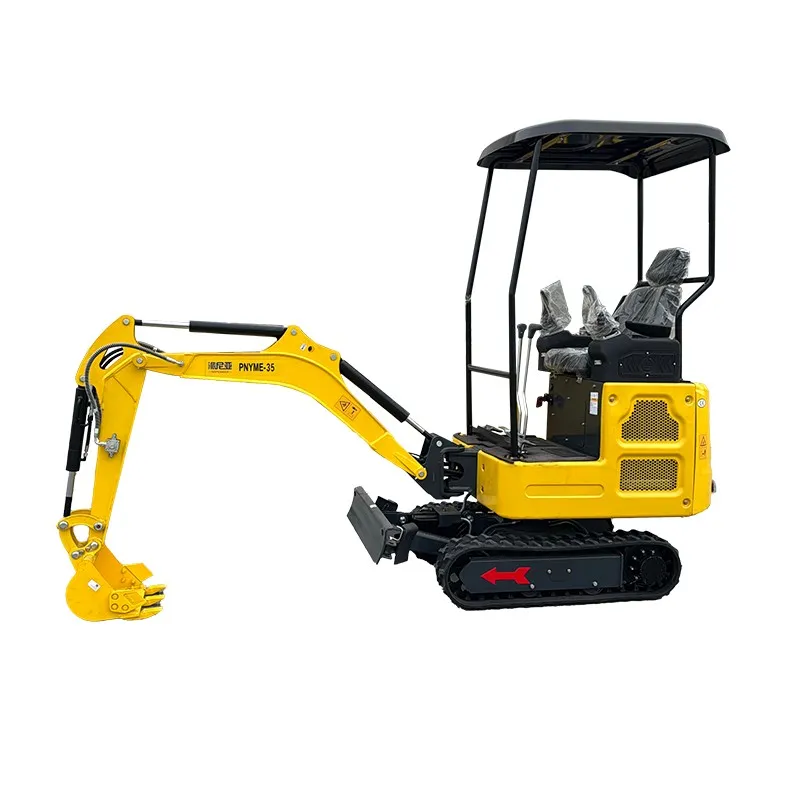
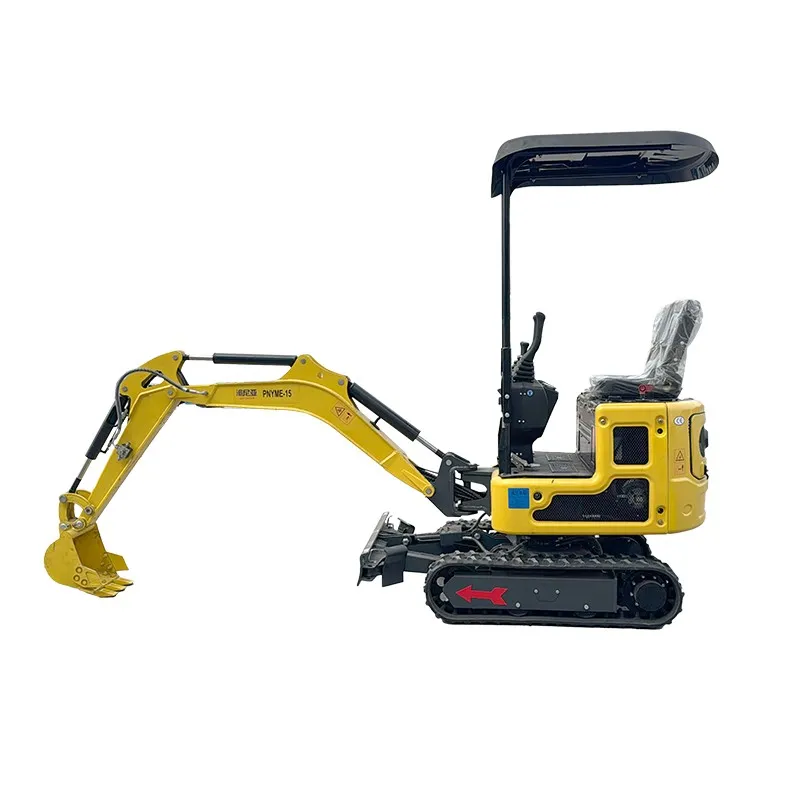
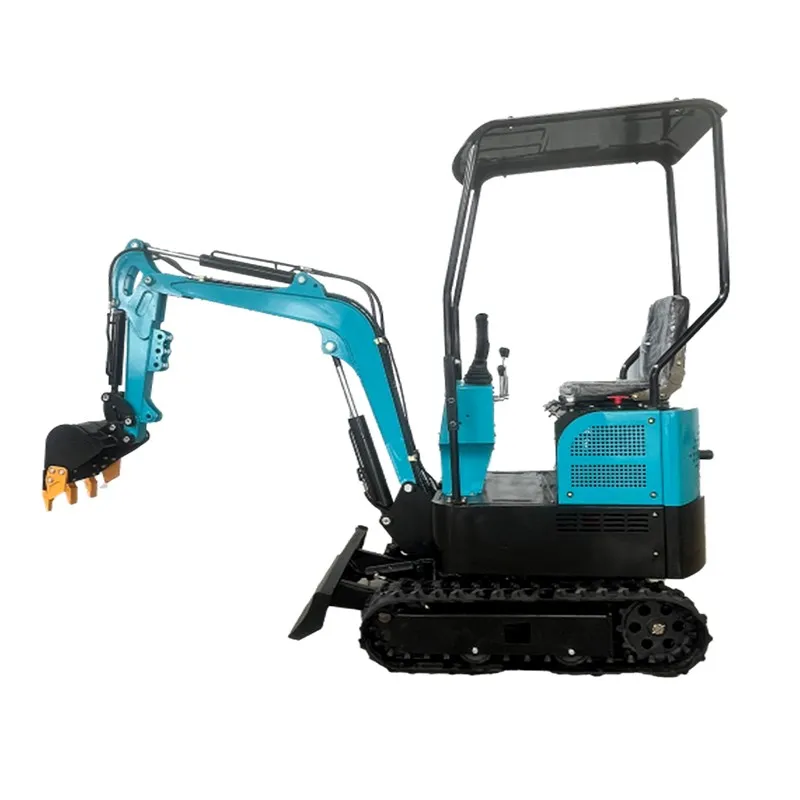

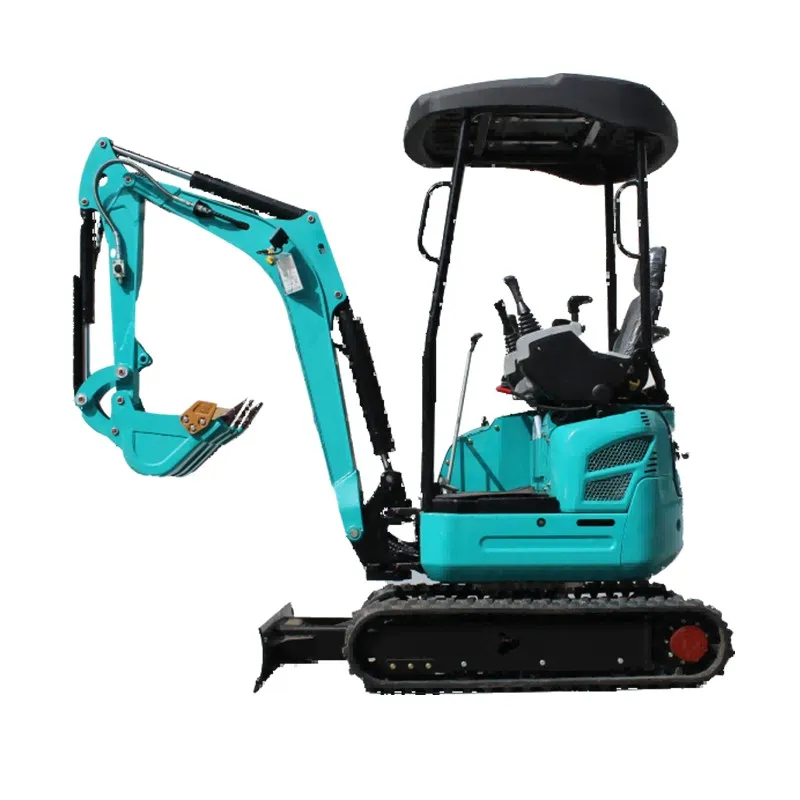

Best Selling Products
Best Selling Products
Related Search
Related Search- Compact Track Loader for Municipality
- 262d3 skid steer loader
- harga skid steer loader
- s450 t4 v2 bobcat skid steer loader
- 2 ton mini excavator for sale
- compact construction machinery
- bobcat s185 skid steer loader
- top compact track loader for landscapers
- Compact Skid Steer Loader
- mini excavator for bulk purchase


