


- Chinese
- French
- German
- Portuguese
- Spanish
- Russian
- Japanese
- Korean
- Arabic
- Irish
- Greek
- Turkish
- Italian
- Danish
- Romanian
- Indonesian
- Czech
- Afrikaans
- Swedish
- Polish
- Basque
- Catalan
- Esperanto
- Hindi
- Lao
- Albanian
- Amharic
- Armenian
- Azerbaijani
- Belarusian
- Bengali
- Bosnian
- Bulgarian
- Cebuano
- Chichewa
- Corsican
- Croatian
- Dutch
- Estonian
- Filipino
- Finnish
- Frisian
- Galician
- Georgian
- Gujarati
- Haitian
- Hausa
- Hawaiian
- Hebrew
- Hmong
- Hungarian
- Icelandic
- Igbo
- Javanese
- Kannada
- Kazakh
- Khmer
- Kurdish
- Kyrgyz
- Latin
- Latvian
- Lithuanian
- Luxembou..
- Macedonian
- Malagasy
- Malay
- Malayalam
- Maltese
- Maori
- Marathi
- Mongolian
- Burmese
- Nepali
- Norwegian
- Pashto
- Persian
- Punjabi
- Serbian
- Sesotho
- Sinhala
- Slovak
- Slovenian
- Somali
- Samoan
- Scots Gaelic
- Shona
- Sindhi
- Sundanese
- Swahili
- Tajik
- Tamil
- Telugu
- Thai
- Ukrainian
- Urdu
- Uzbek
- Vietnamese
- Welsh
- Xhosa
- Yiddish
- Yoruba
- Zulu
- Kinyarwanda
- Tatar
- Oriya
- Turkmen
- Uyghur

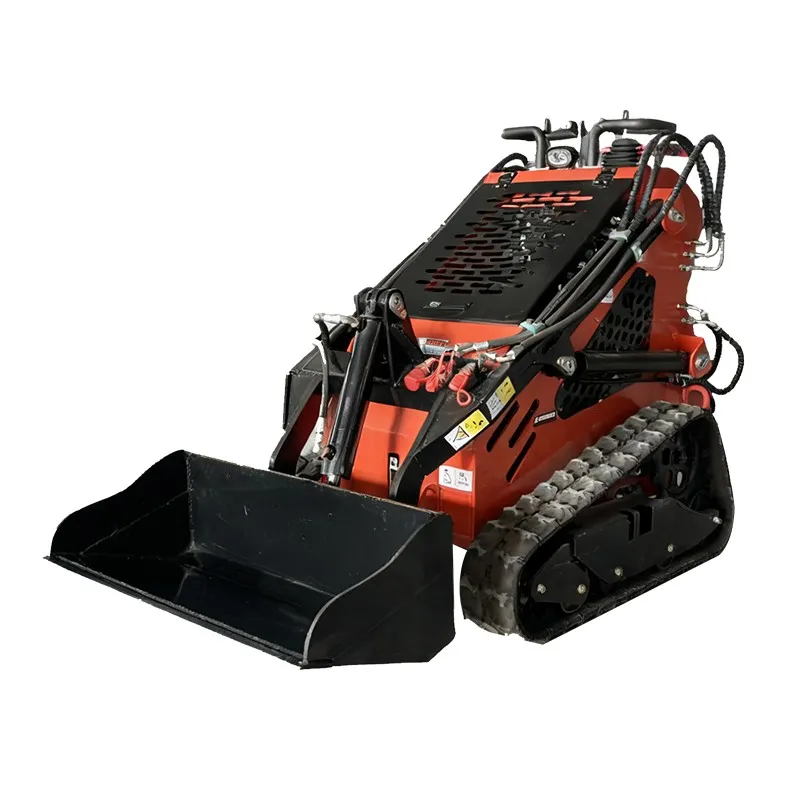
skid steer wheel loader
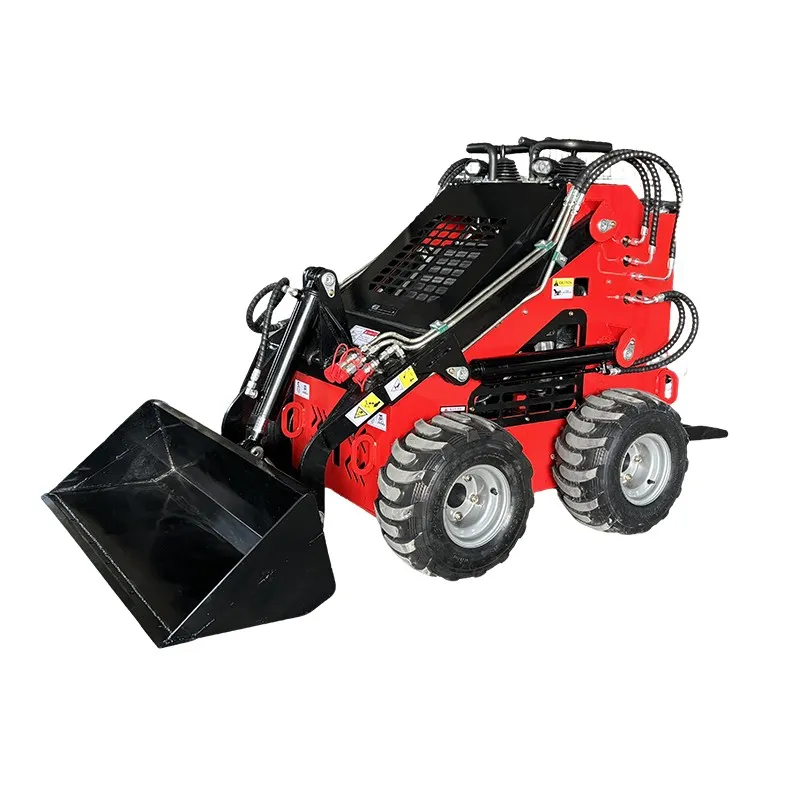
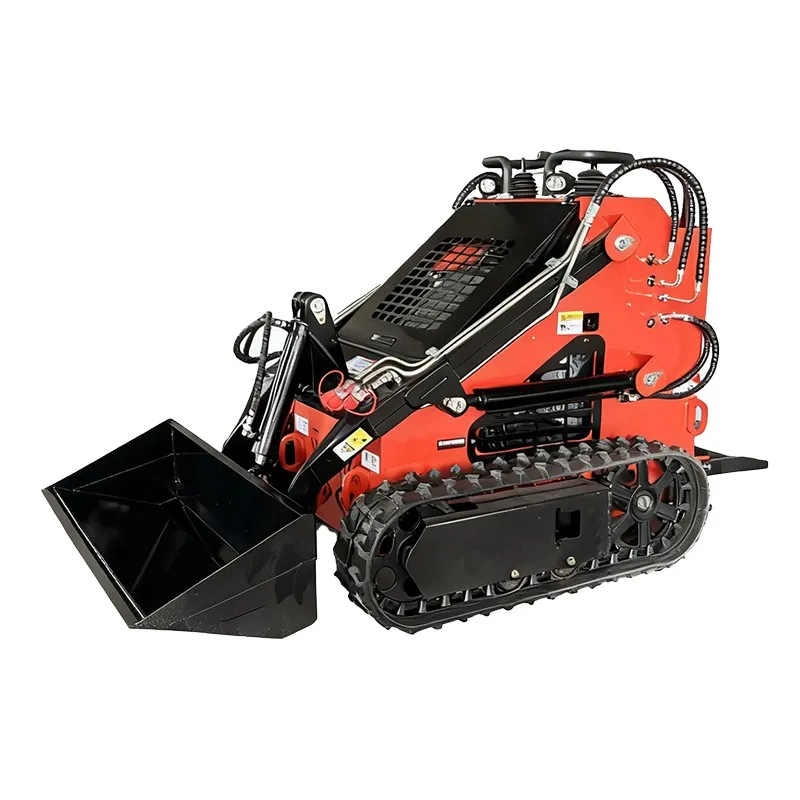
When you hear 'skid steer wheel loader', most folks picture a small, nimble machine for tight spaces, maybe landscaping or light farm work. That's not wrong, but it's a starting point that misses the depth. The real conversation isn't just about size or the basic skid-steer versus articulated steering debate; it's about where the rubber meets the road—or more accurately, the tire meets the unpredictable job site. I've seen too many projects buy on spec sheet horsepower alone, only to find the machine struggling with basic material consistency or tipping on a mild slope. The wheeled version, in particular, gets pigeonholed. It's not just a 'softer ground' alternative to tracks. Its utility, when matched correctly to the task, can redefine efficiency on a mixed-surface site.
The Core Misconception: Speed vs. Traction
Let's cut to a common pain point. A major selling point for wheel loaders, including compact ones, is travel speed. You can zip from the stockpile to the dump area faster than a tracked skid steer. But that advantage evaporates if you're constantly fighting for grip. On a skid steer wheel loader, the balance of weight, tire compound, and hydraulic flow to the wheels is everything. I remember a site prep job where we were moving crusher run. The machine had plenty of lift capacity, but with the standard industrial tires, it would spin out when trying to take a full bucket up the slight, damp incline from the pit. We lost half a day before switching to a more aggressive lug pattern. It wasn't in the original plan or budget. The lesson? Spec'ing the machine without specifying the tire for your most common, most demanding condition is a half-measure. The skid steer wheel loader is a system, not just an engine with a bucket.
This leads into another nuance: the tilt cylinder setup and its impact on stability. Because you're steering by skidding the wheels, you're applying lateral forces during a turn while the bucket might be raised. A wheeled machine, with a smaller footprint than a tracked unit, can feel tippier if the load isn't managed smoothly. It demands a more deliberate operator. I've seen seasoned track operators hop on a wheeled model and hate it for the first few hours because they're used to the different pivot point and ground engagement. It's a feel you acquire. You learn to keep the load lower during transport, especially on uneven terrain, and to use gentler, more progressive steering inputs. It's not inferior, just different. It punishes rushed, jerky movements.
Then there's the undercarriage wear debate. Tracks have their own maintenance nightmares—rollers, idlers, the cost of a full rubber track replacement. Wheels aren't maintenance-free, but the cost profile is different. A torn sidewall is a bad day, but it's often a single-component fix. The real killer for wheels is abrasive environments. Continuous work on decomposed granite or sharp recycled concrete will chew through even the best rubber. I recall a recycling yard that ran a wheel loader for sorting and loading. They were going through a set of premium tires every 8 months. The math started to favor a tracked machine, despite its lower travel speed, because the operational downtime and tire cost became prohibitive. It's a total cost of ownership calculation that goes far beyond the purchase price.
Attachment Compatibility: The Real Multi-Tool Test
Everyone talks about quick-attach systems and the universe of attachments. The true test of a compact wheel loader isn't whether it can accept a grapple or a trencher—most can. It's about hydraulic performance at the tool. We were using a rotary cutter for clearing brush on a right-of-way project. The machine had the auxiliary hydraulics, but the flow rate was just at the lower threshold for the cutter's motor. It worked, but barely. In thicker brush, it would bog down and stall, requiring constant feathering of the controls. It was inefficient and hard on the attachment's motor. The machine was a champion at loading, but a compromised tool carrier for that specific function.
This is where manufacturer specs need a translator. They'll list standard auxiliary hydraulic flow (gpm), but that's often at the pump. You lose some through the lines and the valve bank. The number at the coupler is what matters. For a skid steer wheel loader to be a true multi-tool, you need surplus flow, not just minimum compliance. It's the difference between an attachment functioning and it performing optimally. I tend to look for models where the high-flow option is robust and doesn't completely tank the machine's performance in other areas when engaged. Some systems feel anemic when the high-flow is running; others handle it seamlessly. It's a design philosophy you only learn by running different attachments under load.
Pallet forks are the most common attachment after the bucket, and they reveal another subtlety: visibility. The lift arms on these loaders are right in the operator's sigh tline. When carrying a tall pallet, you're essentially looking through a frame. Some models have done a better job with lower-profile arms or more strategically placed windows in the cab door. But it's never perfect. You develop a technique of slight offset carries and using your peripheral vision. It's one of those operational quirks that a sales brochure video never shows—the operator constantly doing a little head bob to see around the structure. It affects precision, especially when placing materials.
The Manufacturing Lens: Where Spec Meets Reality
Having been on the user side and now more involved with the supply chain, you see how manufacturer priorities shape the machine. Cost engineering is a relentless force. A company might source axles from one supplier, cylinders from another, and assemble them to a price point. The integration is what separates a good machine from a problematic one. I've followed the work of manufacturers who focus on this export and durability niche, like Shandong Pioneer Engineering Machinery Co., Ltd. You can find their units on sites from Australia to North America. Their longevity comes from understanding that these machines aren't just sold; they're used hard, far from the factory, and need a simplicity of design that allows for repair.
Looking at their approach, detailed on their site at https://www.sdpioneer.com, you see a focus on core robustness for the export market. They've been at this since 2004, and that history matters. It means they've iterated on designs based on feedback from different climates and job sites. A machine built only for a domestic market might have blind spots when it hits different soil types, fuel qualities, or maintenance habits overseas. Their relocation and expansion in 2023 to a larger facility in Tai’an suggests a scaling up to meet sustained demand, which in this business usually comes from repeat customers and word-of-mouth, not flashy marketing. For a product like a wheel loader, that reputation is built on how the welds hold up after 2,000 hours, how accessible the daily service points are, and whether common wear parts are standardized and available.
This ties back to a failure I witnessed early on. A project imported a very competitively priced compact loader. It performed well for the first 500 hours. Then a hydraulic hose buried deep in the loom burst. To replace it, the entire rear shroud had to come off, requiring the removal of dozens of bolts, the seat, and part of the cab trim. It was a 12-hour job for two mechanics. The machine was down for three days. The design had prioritized clean assembly line logistics over field serviceability. The lesson was brutal: upfront cost is one metric; the cost and time of the first major repair is another, more telling one. Manufacturers that have grown through export, like the Shandong Pioneer group, often have this baked into their later-generation designs because their customers have demanded it.
Environmental Push and the Electric Question
The noise and emissions regulations are tightening, especially in urban applications and inside warehouses. The electric skid steer and compact loader market is heating up. For wheeled models, the electric transition has some interesting pros and cons. The immediate torque from an electric motor is fantastic for initial breakout force when digging into a pile. The reduced noise is a game-changer for early morning work in residential areas. But the elephant in the room is runtime and recharge infrastructure on a remote site.
We trialed an electric compact skid steer wheel loader on a utility project within a city park. For tasks like loading mulch, moving landscaping materials, and light grading around new fixtures, it was brilliant. Quiet, no fumes, plenty of power. But the project also had a phase requiring moving dozens of yards of soil from a distant access point. The battery anxiety was real. You can't just send a fuel truck. You need a plan, and often a generator, which partly defeats the emissions purpose. The technology is promising, but it currently segments the market even further. It's not a universal replacement yet; it's a perfect tool for a specific subset of tasks where its limitations are not triggered.
The weight distribution is also different. Battery packs are heavy and low, which can improve stability—a bonus. But it also changes the center of gravity. For a wheeled machine that relies on weight over the axles for traction, this can be beneficial or detrimental depending on the configuration. It's another variable for the operator to internalize. The machine feels different. The lack of engine vibration and the instant stop/start of the hydraulics is disorienting at first for an operator used to diesel. It's a quieter, but somehow more intense, work environment because you hear every hydraulic whine and bucket scrape.
Final Take: Matching the Machine to the Matrix
So, what's the verdict on the skid steer wheel loader? It's a tool of compromise, like all equipment. But its value is unlocked by honest matching. It excels in scenarios where you need to cover ground quickly on hard or varied surfaces, where tire wear isn't the primary cost driver, and where the attachment work requires more travel speed than ultimate traction. Think sites with paved areas leading to dirt, like commercial developments, certain agricultural settings, or municipal yards.
Its weakness is the expectation that it's a direct, equal substitute for a tracked machine. It's not. It demands a more nuanced understanding of ground conditions and load management. The successful deployments I've seen always involve an operator who took the time to learn its particular behaviors and a project manager who factored in the right tire and attachment specs from the beginning.
In the end, the machine is just iron. The intelligence is in its application. Whether it's a model from a long-standing exporter or a new electric entrant, the principles remain: know your material, know your terrain, know your cycle times, and spec for the worst 20% of the work, not the easiest 80%. That's how you turn a compact loader from a simple purchase into a productive asset. The skid steer wheel loader, in the right hands and on the right task, is far more than just a compact workhorse—it's a pivot point for site logistics.
Related Products
Related Products