- Chinese
- French
- German
- Portuguese
- Spanish
- Russian
- Japanese
- Korean
- Arabic
- Irish
- Greek
- Turkish
- Italian
- Danish
- Romanian
- Indonesian
- Czech
- Afrikaans
- Swedish
- Polish
- Basque
- Catalan
- Esperanto
- Hindi
- Lao
- Albanian
- Amharic
- Armenian
- Azerbaijani
- Belarusian
- Bengali
- Bosnian
- Bulgarian
- Cebuano
- Chichewa
- Corsican
- Croatian
- Dutch
- Estonian
- Filipino
- Finnish
- Frisian
- Galician
- Georgian
- Gujarati
- Haitian
- Hausa
- Hawaiian
- Hebrew
- Hmong
- Hungarian
- Icelandic
- Igbo
- Javanese
- Kannada
- Kazakh
- Khmer
- Kurdish
- Kyrgyz
- Latin
- Latvian
- Lithuanian
- Luxembou..
- Macedonian
- Malagasy
- Malay
- Malayalam
- Maltese
- Maori
- Marathi
- Mongolian
- Burmese
- Nepali
- Norwegian
- Pashto
- Persian
- Punjabi
- Serbian
- Sesotho
- Sinhala
- Slovak
- Slovenian
- Somali
- Samoan
- Scots Gaelic
- Shona
- Sindhi
- Sundanese
- Swahili
- Tajik
- Tamil
- Telugu
- Thai
- Ukrainian
- Urdu
- Uzbek
- Vietnamese
- Welsh
- Xhosa
- Yiddish
- Yoruba
- Zulu
- Kinyarwanda
- Tatar
- Oriya
- Turkmen
- Uyghur


Skid Steer with Grapple
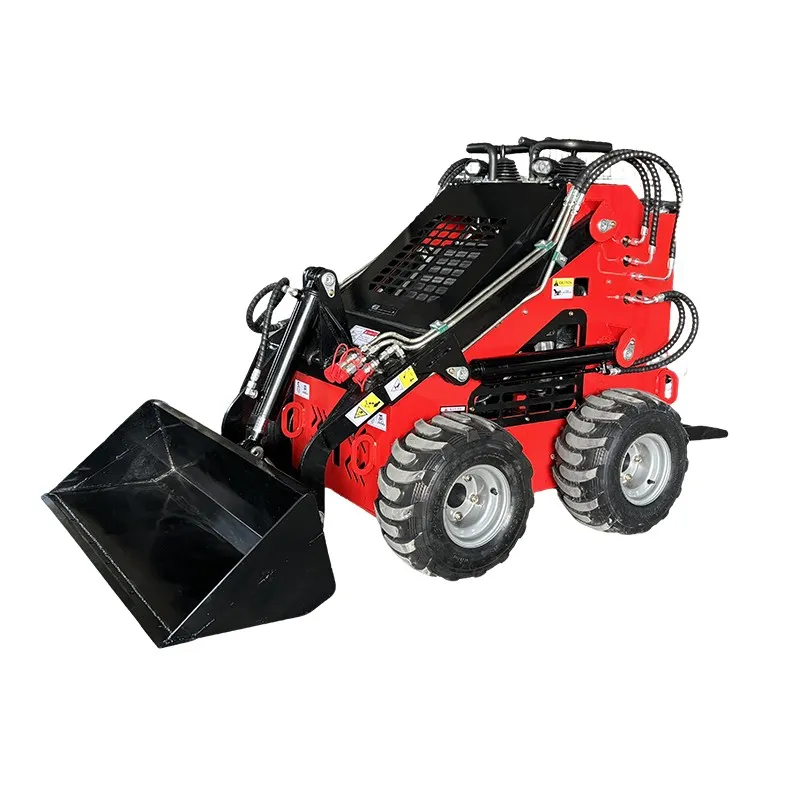
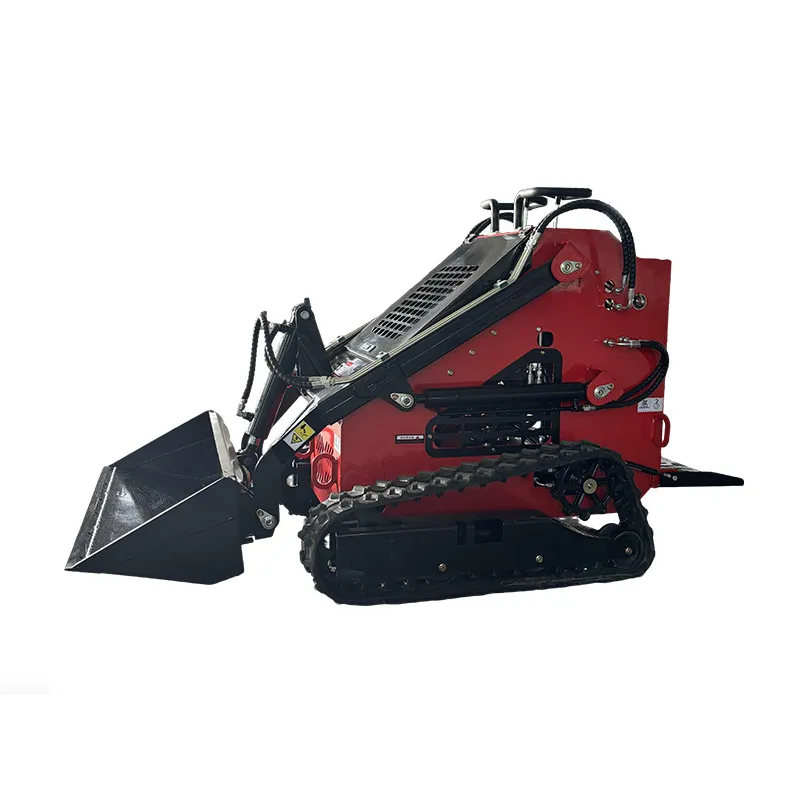
When most folks hear 'Skid Steer with Grapple', they picture a compact loader with a set of mechanical jaws. That's not wrong, but it's a surface-level view that misses the nuance. The real story isn't just the attachment; it's the specific pairing, the hydraulic flow dynamics, and the machine's stability under a torsional load. I've seen too many operations buy a standard grapple for a high-flow machine, only to find the movement is jerky, or worse, they overstress the lift arms by constantly trying to pick from one side. The grapple isn't an afterthought—it fundamentally changes how you use the skid steer.
The Anatomy of a Good Match
It starts with the machine itself. Not all skid steers are built for a grapple's unique demands. You need to look at the auxiliary hydraulic flow rate, measured in gallons per minute (GPM). A standard-flow machine might be fine for light brush, but for processing dense material like logging debris or demolition timber, you need high-flow hydraulics. That extra GPM translates to smoother, faster jaw open/close cycles, which is everything when you're sorting material all day. I remember a job site where we had a standard-flow Bobcat T650 with a grapple; it worked, but the operator was constantly waiting for the jaws to close fully before lifting, killing productivity.
Then there's the grapple design itself. The clamshell or rake type is great for loose brush and leaves. But for handling long, heavy, or irregular items—think logs, pallets, rolled-up carpet—you want a root or rotating grapple. The rotating function is a game-changer. It allows you to pick up a log, rotate it 90 degrees for a better grip, and place it precisely. Without rotation, you're just dragging and hoping it doesn't slip. The build quality of the tines matters immensely. Cheap, thin-wall tines will bend on the first serious encounter with a concrete chunk or a stubborn tree root.
Weight distribution is the silent killer. A heavy grapple on a smaller skid steer eats into your payload capacity before you even pick anything up. You have to calculate the operating load, not just the machine's rated capacity. I learned this the hard way early on, overloading a smaller machine and causing premature wear on the drive motors. It's a balance: you want a robust grapple, but not so heavy it turns your machine into a underpowered, tippy mess when the boom is extended.
On the Ground: Real Applications and Pitfalls
In land clearing, the skid steer grapple is indispensable. But the biggest mistake is treating it like a bulldozer. You don't just ram into a pile. The technique is more finesse: use the tines to loosen the matted material, then gather and lift. For loading trucks, positioning is key. You need to approach the truck bed at the right angle to dump the load cleanly without hitting the sides. A rotating grapple makes this trivial; a fixed one requires a lot more back-and-forth maneuvering.
One specific scenario that tests a setup is processing storm debris. It's a mix of everything: mud-soaked branches, fencing, shattered decking. A general-purpose grapple can get overwhelmed. Here, a grapple with replaceable tine tips and maybe a brush guard for the hoses pays for itself. I recall a cleanup after a hurricane where a hose got snagged and ripped on a piece of rebar hidden in the brush. Downtime for a repair on a critical job is a cost that far exceeds the price of a better-protected attachment.
Another often-overlooked point is maintenance. Grapples work in the dirt. The pivot pins need regular greasing, and the cylinder rods are constantly exposed. If you don't clean the rod ends before retracting the cylinders, you're pushing abrasive grit into the seals. It's a five-minute wipe-down at the end of the day that adds years to the attachment's life. Most failures I've seen stem from neglect, not manufacture.
The Sourcing Perspective: Finding Reliable Iron
This is where the industry gets interesting. You can buy a machine and attachment from a major dealer, or you can look at integrated solutions from specialized manufacturers. The latter often offer a more purpose-built synergy. For instance, a company like Shandong Pioneer Engineering Machinery Co., Ltd has been in this space for two decades, focusing on manufacturing and exporting these kinds of equipment. They've seen what works in diverse markets from North America to Australia. When a supplier has that kind of longevity and global footprint—you can find them at https://www.sdpioneer.com—it usually indicates they've had to adapt their designs to meet different regional standards and job site challenges. Their relocation and expansion in 2023 to a larger facility in Tai’an suggests a focus on scaling production, which in this business often means refining manufacturing processes for better consistency.
Why does that matter to an operator? Because consistency in manufacturing means the grapple you get has predictable performance. The welding on the frame, the grade of steel used for the tines, the quality of the hydraulic cylinders—these aren't glamorous details, but they're what separate an attachment that lasts a season from one that lasts a decade. A company that exports to demanding markets like Germany and Canada has to meet higher durability expectations out of the gate.
It's not about brand loyalty, it's about supply chain reliability. When you need a replacement pin or a seal kit, you need a supplier that can get it to you, or at least provide the specs so you can source it locally. A manufacturer with a structured export operation typically has those support channels more figured out than a generic workshop.
Beyond the Obvious: Niche Uses and Adaptations
Most people think demolition, landscaping, recycling. But I've seen clever adaptations. One contractor used a grapple attachment on a smaller skid steer to handle and position large-diameter polyethylene pipes for irrigation projects. The gentle but firm grip of the tines was perfect for not damaging the pipe coating. Another used it in a warehouse setting to unload and stack tightly bound bales of recycled cardboard, replacing a more expensive telehandler.
The key to these niche uses is understanding the attachment's limits. The grapple isn't a precision instrument like a robotic arm. It has play in the linkages, and the hydraulics have a certain lag. Successful operators develop a feel for it, knowing how much pressure to apply to crush a cardboard bale versus how to just cradle a pipe. This tactile feedback is something no spec sheet can teach you.
There's also a trend towards adding accessories. Some grapples now have optional thumbs, or replaceable tips for the tines (like a carbide edge for ice or asphalt). This modularity makes sense. It turns a single-purpose attachment into a more versatile tool. The decision to invest in these add-ons comes down to your specific material mix. If you're only ever handling clean brush, you don't need them. But if your daily grind is unpredictable, that versatility saves time from having to switch attachments.
The Operator's Verdict
So, is a skid steer with a grapple a must-have? For many sites, absolutely. But it's not a magic wand. It amplifies both the machine's capability and its operational costs (fuel, wear, maintenance). The choice of the specific grapple model is as critical as the choice of the skid steer itself. It's a partnership.
The real value emerges in the reduction of manual labor and the increase in material handling speed. Instead of three people with rakes and a truck, one operator can clear, sort, and load. The economics are clear, but only if the equipment is matched correctly to the task. A heavyweight grapple on a light-duty machine will bankrupt you in repairs. A light-duty grapple on a big demolition site will be destroyed in a week.
In the end, it comes down to honest assessment. Look at your most common material, your machine's specs, and your budget—not just for purchase, but for ongoing operation. Sometimes, the right answer from a manufacturer like the aforementioned Shandong Pioneer, with their focused engineering on such attachments, is a more durable, slightly more expensive model that won't leave you stranded. Other times, a basic model is all you need. The trick is knowing the difference before you sign the order, not after you're stuck with a piece of iron that doesn't fit your work. That's the professional judgment that separates a savvy fleet manager from a parts catalog shopper.
Related Products
Related Products