



- English
- Chinese
- French
- German
- Portuguese
- Spanish
- Russian
- Japanese
- Korean
- Arabic
- Irish
- Greek
- Turkish
- Italian
- Danish
- Romanian
- Indonesian
- Czech
- Afrikaans
- Swedish
- Polish
- Basque
- Catalan
- Esperanto
- Hindi
- Lao
- Albanian
- Amharic
- Armenian
- Azerbaijani
- Belarusian
- Bengali
- Bosnian
- Bulgarian
- Cebuano
- Chichewa
- Corsican
- Croatian
- Dutch
- Estonian
- Filipino
- Finnish
- Frisian
- Galician
- Georgian
- Gujarati
- Haitian
- Hausa
- Hawaiian
- Hebrew
- Hmong
- Hungarian
- Icelandic
- Igbo
- Javanese
- Kannada
- Kazakh
- Khmer
- Kurdish
- Kyrgyz
- Latin
- Latvian
- Lithuanian
- Luxembou..
- Macedonian
- Malagasy
- Malay
- Malayalam
- Maltese
- Maori
- Marathi
- Mongolian
- Burmese
- Nepali
- Norwegian
- Pashto
- Persian
- Punjabi
- Serbian
- Sesotho
- Sinhala
- Slovak
- Slovenian
- Somali
- Scots Gaelic
- Shona
- Sindhi
- Sundanese
- Swahili
- Tajik
- Tamil
- Telugu
- Thai
- Ukrainian
- Urdu
- Uzbek
- Vietnamese
- Welsh
- Xhosa
- Yiddish
- Yoruba
- Zulu
- Kinyarwanda
- Tatar
- Oriya
- Turkmen
- Uyghur

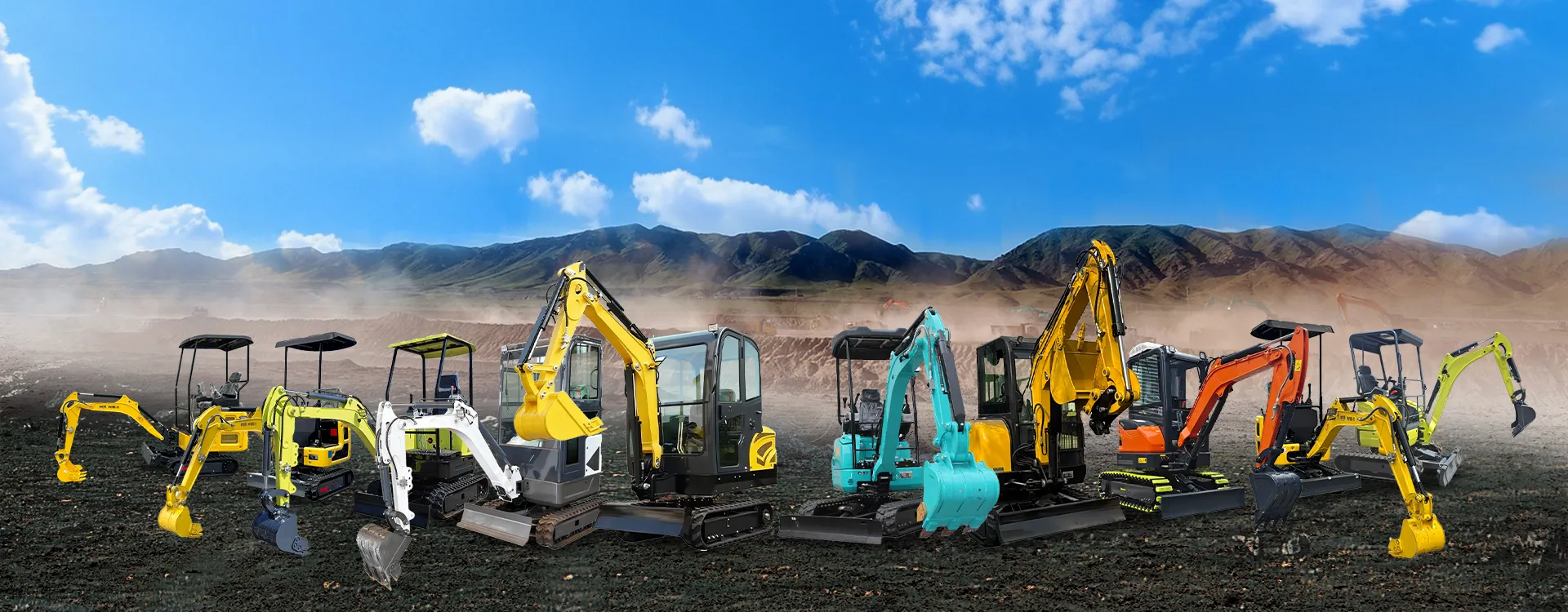
What are the trends of hydraulic mini excavators?
2025-12-20
Hydraulic mini excavators are rapidly gaining popularity on construction sites and private farms today. Their compact size, excellent maneuverability, and high efficiency make them ideal for performing tasks in confined spaces. These machines not only simplify construction processes but also significantly improve operational efficiency. So, what are the main trends driving the development of these machines? This article will explore key directions and innovative technologies that are changing our perception of hydraulic mini excavators and their applications.
In recent years, hydraulic mini excavators have undergone significant changes thanks to technological advancements. Engineers and developers are actively incorporating intelligent control systems that allow operators to perform complex operations with minimal effort. Sensitive sensors and software ensure precision in movements, which is especially important in narrow environments. The growing popularity of hybrid and electric excavators not only enables operations in eco-sensitive areas but also helps save fuel costs. The use of new materials has also effectively reduced the weight of the equipment, making it more flexible and cost-effective to operate.
Energy Efficiency and Environmental Friendliness
Each year, there is growing attention to the energy efficiency of construction machinery. Companies are working to produce hydraulic mini excavators with lower fuel consumption without sacrificing performance. More efficient engines, improved hydraulic systems, and innovative aerodynamic solutions in the body design have all contributed to significant fuel savings. Reducing emissions is also a key focus, making excavators more environmentally friendly. The development of all-electric and hybrid models is no longer a fantasy—it is quickly becoming a reality, reshaping our understanding of the future of construction machinery.
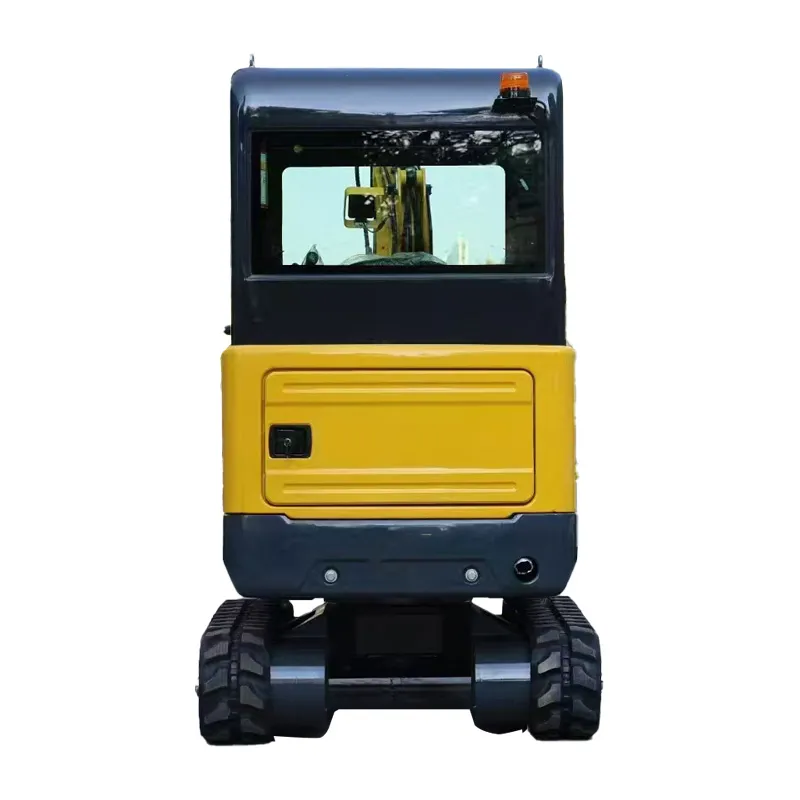
Modern hydraulic mini excavators are equipped with multifunctional cabins that provide maximum comfort for operators throughout the workday. Ergonomically designed seats, intuitive controls, and excellent visibility are just some of the features offered by manufacturers. New models allow operators to fully engage in their tasks, minimizing fatigue and reducing the risk of errors. Climate control systems, improved noise insulation, and connectivity with mobile devices add convenience, increase productivity, and help create a more pleasant working environment.
A significant trend in the development of hydraulic mini excavators is their versatility. These machines can be fitted with various attachments and tools, allowing them to perform a wide range of tasks, from digging trenches to lifting operations. The technology for quick attachment changes makes excavators more attractive, saving time during tool swaps. Adaptive hydraulic systems automatically adjust performance according to the specific tool in use, greatly simplifying operations and enhancing overall efficiency.
A significant trend in the development of hydraulic mini excavators is their versatility. These machines can be fitted with various attachments and tools, allowing them to perform a wide range of tasks, from digging trenches to lifting operations. The technology for quick attachment changes makes excavators more attractive, saving time during tool swaps. Adaptive hydraulic systems automatically adjust performance according to the specific tool in use, greatly simplifying operations and enhancing overall efficiency.
Manufacturers are focusing heavily on enhancing the stability and durability of hydraulic mini excavators. The use of high-quality materials, modern processing technologies, and stringent quality control measures lay the foundation for long-term reliability. Special attention is given to protecting components from corrosion and mechanical damage. Regular technical maintenance, ease of repair, and the replaceability of worn parts all contribute to improved reliability and lower operational costs. As a result, the equipment provided to buyers continues to perform excellently even under the most challenging conditions, offering years of dependable service.
Digitization and Data Analytics
Digital technology plays a crucial role in the management of hydraulic mini excavators. Built-in data collection and analysis systems allow for real-time monitoring of equipment performance, optimizing workflows and reducing maintenance costs. Operators and managers can easily access important information via mobile apps, monitor the current status of machines, predict potential failures, and plan maintenance in advance. Artificial intelligence (AI) and machine learning technologies can predict complex scenarios, further improving the operational efficiency of excavators. The introduction of these systems enhances safety at construction sites and streamlines management.
As a result, hydraulic mini excavators continue to evolve, offering more advanced solutions each year. These trends underscore the significant role of small equipment in the construction industry, providing users with new possibilities and enhanced work performance.
Please leave us a message