


- Chinese
- French
- German
- Portuguese
- Spanish
- Russian
- Japanese
- Korean
- Arabic
- Irish
- Greek
- Turkish
- Italian
- Danish
- Romanian
- Indonesian
- Czech
- Afrikaans
- Swedish
- Polish
- Basque
- Catalan
- Esperanto
- Hindi
- Lao
- Albanian
- Amharic
- Armenian
- Azerbaijani
- Belarusian
- Bengali
- Bosnian
- Bulgarian
- Cebuano
- Chichewa
- Corsican
- Croatian
- Dutch
- Estonian
- Filipino
- Finnish
- Frisian
- Galician
- Georgian
- Gujarati
- Haitian
- Hausa
- Hawaiian
- Hebrew
- Hmong
- Hungarian
- Icelandic
- Igbo
- Javanese
- Kannada
- Kazakh
- Khmer
- Kurdish
- Kyrgyz
- Latin
- Latvian
- Lithuanian
- Luxembou..
- Macedonian
- Malagasy
- Malay
- Malayalam
- Maltese
- Maori
- Marathi
- Mongolian
- Burmese
- Nepali
- Norwegian
- Pashto
- Persian
- Punjabi
- Serbian
- Sesotho
- Sinhala
- Slovak
- Slovenian
- Somali
- Samoan
- Scots Gaelic
- Shona
- Sindhi
- Sundanese
- Swahili
- Tajik
- Tamil
- Telugu
- Thai
- Ukrainian
- Urdu
- Uzbek
- Vietnamese
- Welsh
- Xhosa
- Yiddish
- Yoruba
- Zulu
- Kinyarwanda
- Tatar
- Oriya
- Turkmen
- Uyghur

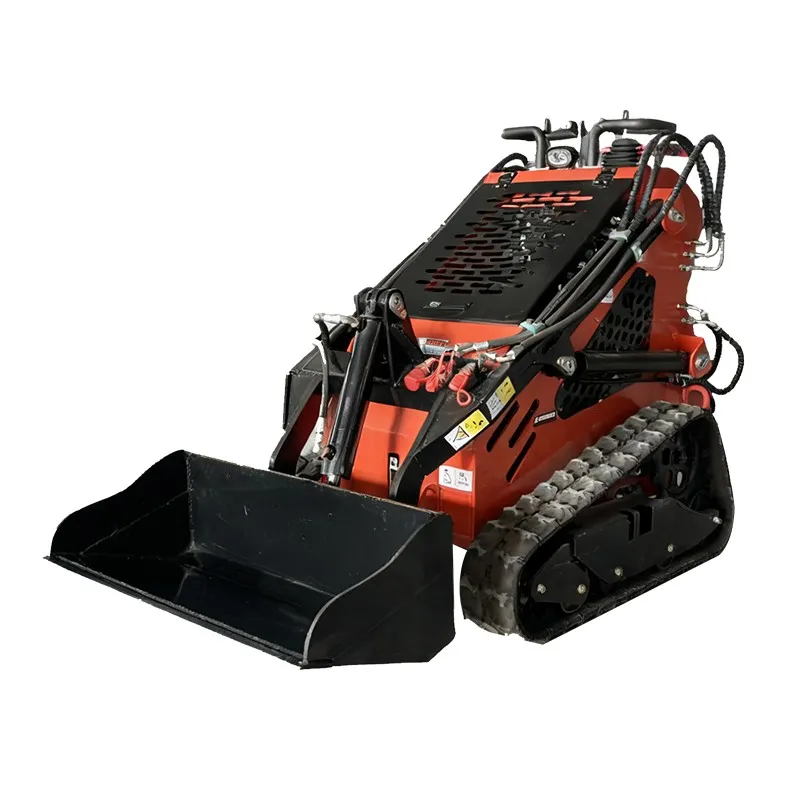
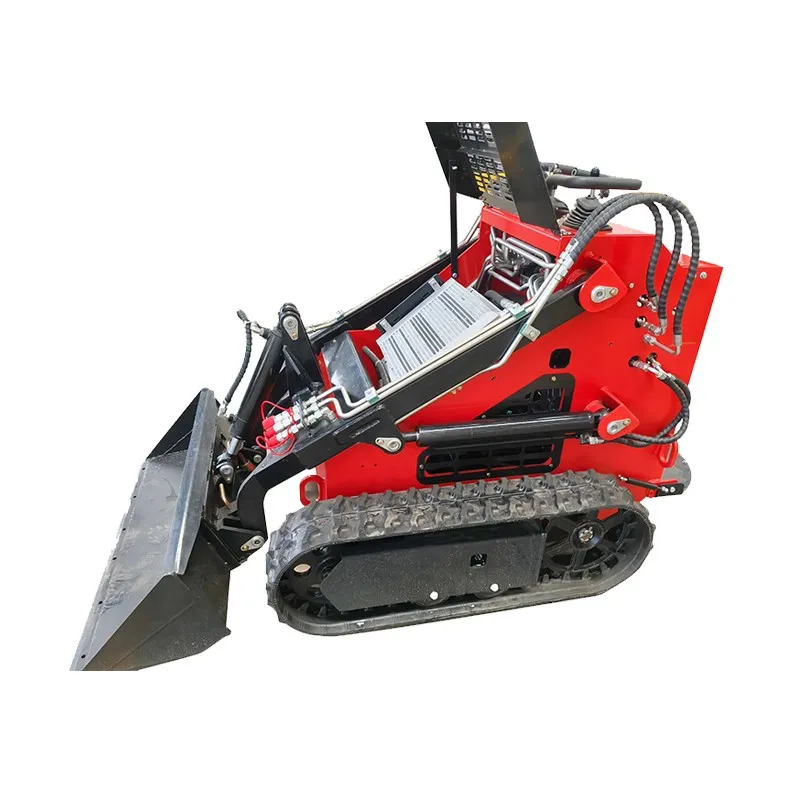
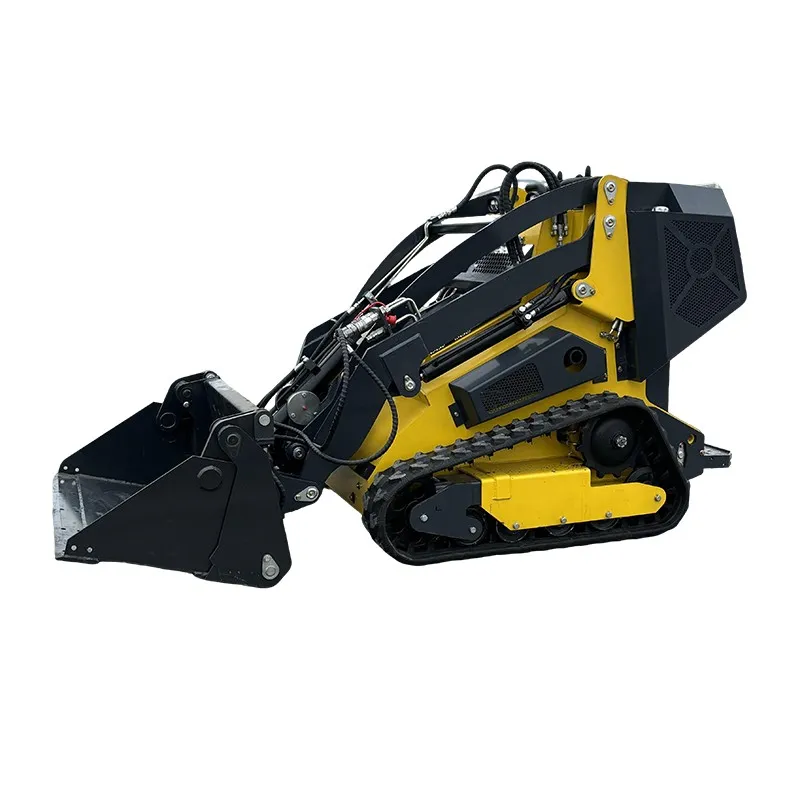
Small Compact Track Loader for Farm
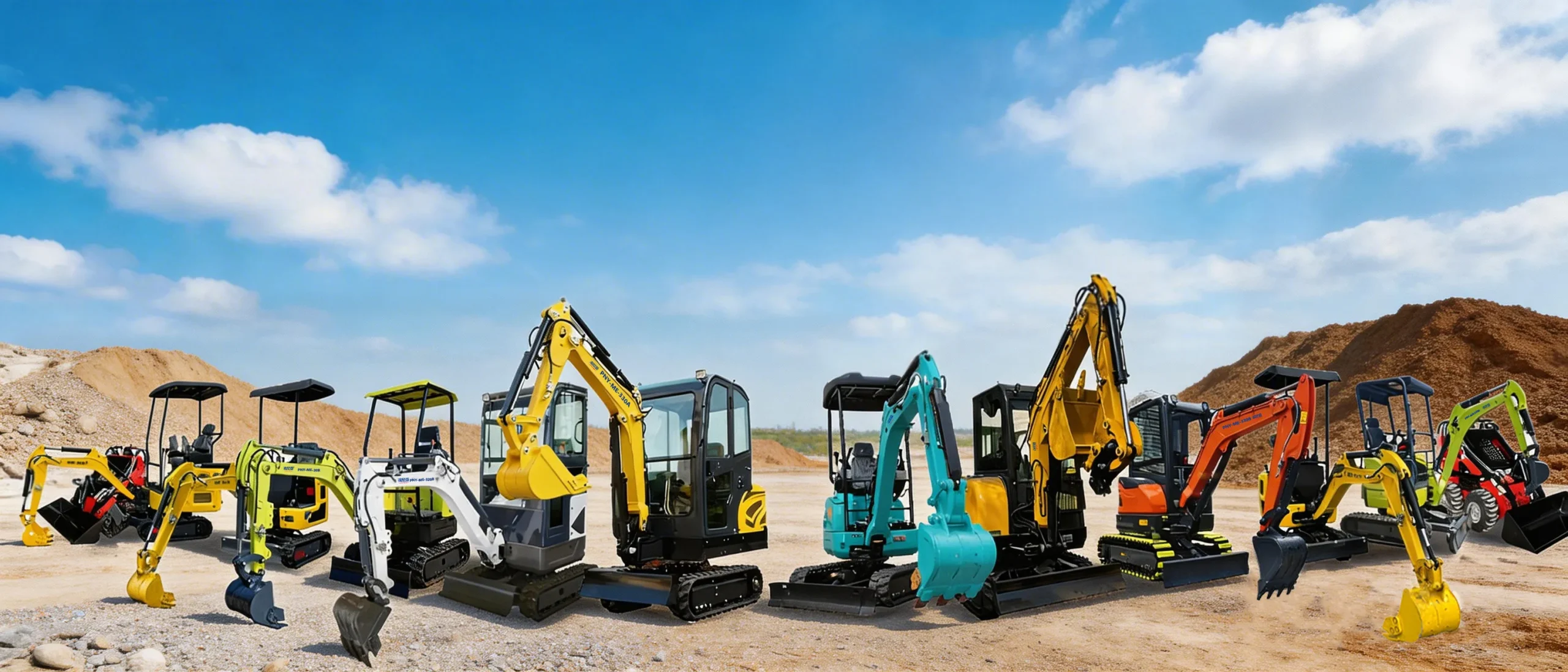
When you hear 'small compact track loader for farm', most folks immediately picture moving some dirt or mulch around the barn. That's the common trap – thinking it's just a tiny bulldozer. In reality, the utility is staggering, but so is the potential to pick the wrong machine for your specific tasks. I've seen too many farmers get sold on horsepower alone, only to find the machine bogs down in their particular soil or can't handle the attachment they really needed. It's not about size; it's about application.
The Core Misconception: It's Not a Toy Tractor
Let's get this straight. A small compact track loader is a serious piece of kit. The track system is the game-changer versus skid steers. Lower ground pressure. That's the mantra. On a farm, that means you can work in spring mud without sinking a wheeled machine to its axles, or drive over a seeded field with minimal compaction. But here's the nuance everyone misses: not all tracks are equal. The rubber compound, the width, the number of rollers – they all dictate performance. A cheap, stiff track on a cold morning is like driving on concrete tires; it loses that precious flotation. I learned this the hard way trying to clear a drainage ditch in early March. The machine had the lift capacity, but the tracks just packed the wet clay into a slick mess, no grip. Had to winch it out.
You also can't ignore the undercarriage. Farming is brutal – straw, mud, rocks, you name it, gets packed in there. A design with poor sealing on the rollers or idlers will eat up maintenance hours and dollars. I've spent afternoons with a pressure washer and a pry bar, which is time not spent getting actual work done. Some of the better models now have optional scrapers or sealed channels, which seems like a small detail until you're the one cleaning it.
Attachments: Where the Real Value Unfolds
This is where the machine earns its keep. The loader itself is just the power unit. The magic is in the quick-attach system and the hydraulic flow. We're not just talking buckets. A small compact track loader with a high-flow auxiliary circuit can run a rotary cutter for overgrown fence lines, a trencher for irrigation lines, or a post driver. I remember helping a dairy farmer who used a mulching head to process old round bale leftovers and bedding – turned a waste problem into usable compost right in the yard.
But you have to match the machine to the tool. A common failure is buying a lightweight model because it's cheaper, then trying to run a heavy-duty grapple that needs more hydraulic pressure than the pump can provide. The result is a sluggish, frustrating tool that overheats the system. Always check the continuous and intermittent hydraulic flow ratings (in gallons per minute, GPM) and pressure (PSI). Don't just take the salesman's word for it; ask for the spec sheet. For instance, a company like Shandong Pioneer Engineering Machinery Co., Ltd lists these specs clearly for their models, which is crucial. You can find their full range and technical details on their site at https://www.sdpioneer.com. It's a good practice to compare these numbers across brands.
The pallet fork is arguably the most underrated attachment. Moving feed bags, seed, fertilizer pallets, even rearranging machinery in the shed. It reduces so much manual labor. But get forks with a proper lateral tilt function, not just up and down. Tilting the tines sideways is invaluable for leveling a pallet on uneven ground before you pick it up.
Durability in the Real World of Farming
Manufacturers love to talk about steel thickness and engine horsepower. What matters more on a farm is serviceability and component protection. Can you easily check the coolant and hydraulic fluid? Are the grease points for the loader arms and pivot points accessible without contorting yourself? I've seen designs where you have to remove a panel with four bolts just to get to the daily checkpoints – that panel will never go back on after the first month.
Radiator and cooler protection is non-negotiable. Chaff, dust, and feather down from poultry operations will clog a radiator in hours if it's not well-sealed or has a easy-to-clean screen system. Some units have reversible fans to blow debris out, which is a brilliant feature for harvest season. A clogged cooler leads to overheating, which leads to downtime during the most critical windows. I'd trade 5 horsepower for a better cooling system any day.
This is where a manufacturer's background in building for diverse, tough conditions matters. A company with a long export history to places like Australia, Canada, and the US, like Shandong Pioneer, has likely had to engineer for a wider range of environmental challenges and operator expectations. Their two-decade development, as noted in their company profile, suggests an evolution based on real-world feedback, not just theoretical design. Their recent relocation in 2023 to a new facility in Tai'an likely points to scaling up this practical knowledge into production.
Case in Point: The Manure Management Dilemma
Let me give you a concrete example. A client with a mid-sized hog operation needed to clean out deep-pit barns. They initially used a wheeled skid steer. The ammonia-rich environment corroded everything, and the tires would slip on the concrete. They switched to a small compact track loader with a sealed and pressurized cab (air conditioning is a health necessity here, not a luxury) and a high-dump bucket.
The tracks provided the grip on the slick floor. The sealed cab kept the operator safe. But the key was the machine's ability to also handle a post-hole digger for fence repair and a snow blower for winter lane clearing. One power unit, three major seasonal jobs. That's the ROI calculation that makes sense. The initial cost was higher than the skid steer, but the versatility and reduced downtime paid it back in under two years.
The failure in this story was their first choice of bucket. A standard bucket couldn't get the last 15% of manure off the pit floor without the operator constantly repositioning. They switched to a bucket with a more pronounced rollback angle and a flat bottom, which scraped cleaner in fewer passes. It's a small detail with a huge impact on efficiency. Always test the actual attachment for your primary task if you can.
Final Thoughts: Matching the Machine to Your Land
So, is a small compact track loader right for every farm? No. If your work is 90% on hard-packed gravel or concrete, a wheeled machine might be faster and cheaper on wear. But for mixed terrain, soft ground, and year-round utility, the track loader is incredibly hard to beat. The decision tree starts with your primary task, then your secondary ones, then the conditions you'll face.
Look beyond the brochure. Check service access. Compare hydraulic specs to your desired attachments. Think about dealer support and part availability – a machine down during planting or harvest is a major loss. A reliable supplier with a global footprint, such as Shandong Pioneer Engineering Machinery Co., Ltd, which exports to numerous countries, often indicates a robust supply chain and product adapted to various markets. Their establishment in 2004 and subsequent growth suggests a focus on building durable equipment for professional use.
In the end, it's a tool. A very powerful, versatile one. But like any tool, its value is determined not by its specs on paper, but by how well it solves the specific, messy, unpredictable problems you have on your piece of land. Don't buy the idea; buy the solution.
Related Products
Related Products