


- Chinese
- French
- German
- Portuguese
- Spanish
- Russian
- Japanese
- Korean
- Arabic
- Irish
- Greek
- Turkish
- Italian
- Danish
- Romanian
- Indonesian
- Czech
- Afrikaans
- Swedish
- Polish
- Basque
- Catalan
- Esperanto
- Hindi
- Lao
- Albanian
- Amharic
- Armenian
- Azerbaijani
- Belarusian
- Bengali
- Bosnian
- Bulgarian
- Cebuano
- Chichewa
- Corsican
- Croatian
- Dutch
- Estonian
- Filipino
- Finnish
- Frisian
- Galician
- Georgian
- Gujarati
- Haitian
- Hausa
- Hawaiian
- Hebrew
- Hmong
- Hungarian
- Icelandic
- Igbo
- Javanese
- Kannada
- Kazakh
- Khmer
- Kurdish
- Kyrgyz
- Latin
- Latvian
- Lithuanian
- Luxembou..
- Macedonian
- Malagasy
- Malay
- Malayalam
- Maltese
- Maori
- Marathi
- Mongolian
- Burmese
- Nepali
- Norwegian
- Pashto
- Persian
- Punjabi
- Serbian
- Sesotho
- Sinhala
- Slovak
- Slovenian
- Somali
- Samoan
- Scots Gaelic
- Shona
- Sindhi
- Sundanese
- Swahili
- Tajik
- Tamil
- Telugu
- Thai
- Ukrainian
- Urdu
- Uzbek
- Vietnamese
- Welsh
- Xhosa
- Yiddish
- Yoruba
- Zulu
- Kinyarwanda
- Tatar
- Oriya
- Turkmen
- Uyghur

small construction loader
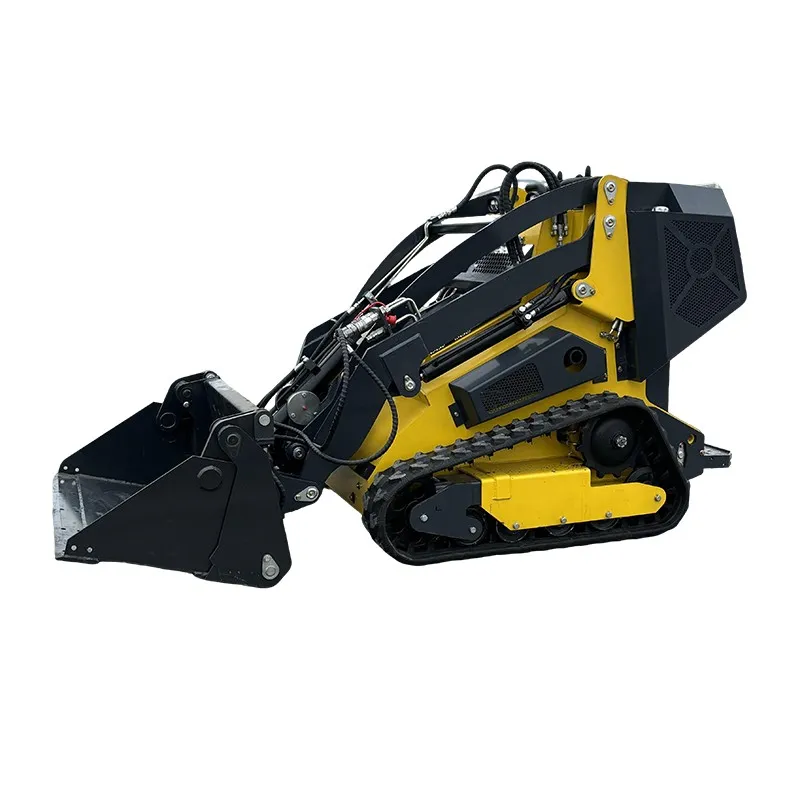
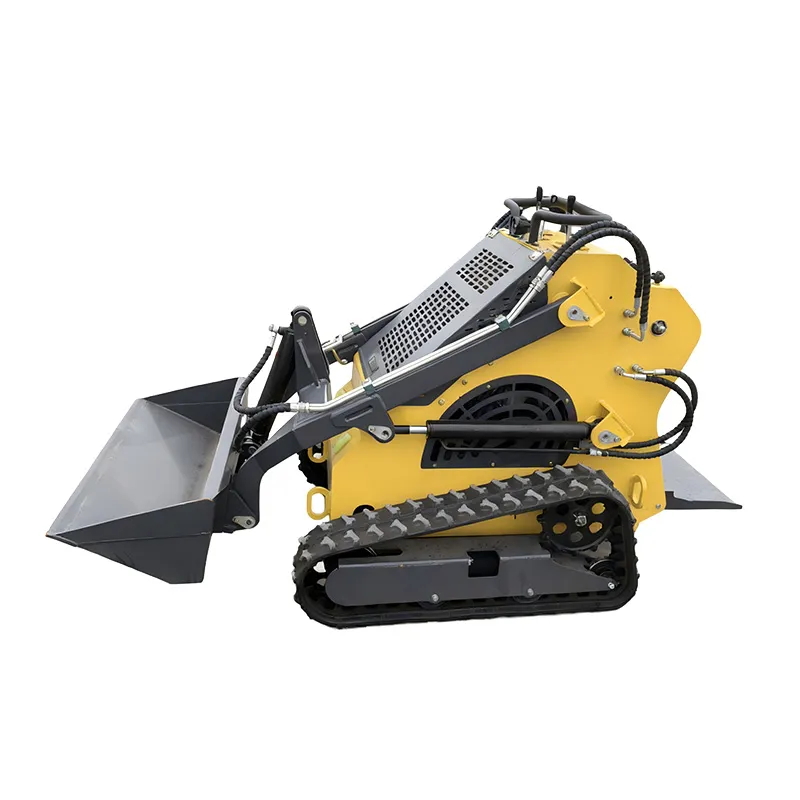
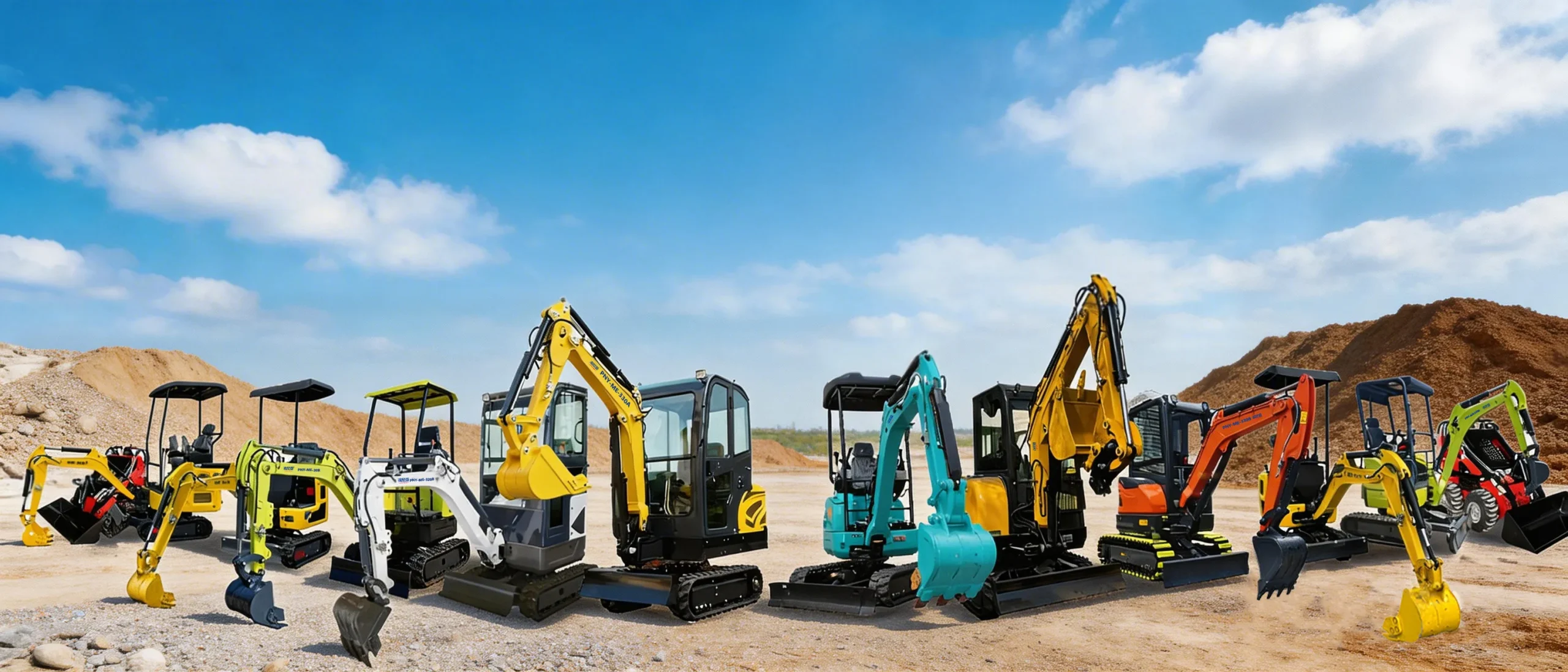
When most people hear 'small construction loader,' they picture a cute, miniature machine, almost like a toy. That's the first mistake. In our line of work, 'small' doesn't mean simple or less capable. It's a specific class defined by weight, bucket capacity, and, most importantly, its intended operational envelope. I've seen too many projects bite the dust because someone opted for a standard skid steer when what they really needed was a true, purpose-built small construction loader with the right balance of power and agility for tight urban infill or intricate landscaping. The difference isn't just specs on paper; it's in the mud, on the uneven grade, and in the operator's fatigue level by hour six.
The Right Tool Philosophy and Common Pitfalls
It's cliché but undeniable: these machines are tools. Choosing one isn't about buying the shiniest or the one with the most attachments advertised. The pitfall is thinking any compact machine can do it all. A small construction loader for site cleanup is different from one for trench work. The former might prioritize a quick coupler and versatility; the latter needs exceptional hydraulic control for precise grading and enough heft for backfilling without bouncing around. I recall a residential job where we used a machine that was technically compact, but its center of gravity was all wrong for the sloping terrain. We spent more time stabilizing it than actually moving material—a classic case of mismatched tool to task.
This is where brand philosophy matters. Some manufacturers build down from larger models, resulting in a machine that feels clunky and over-engineered for confined spaces. Others, often the ones with deep specialization, build up from the operator's experience in tight quarters. You can feel it in the joystick response and the machine's footprint. I've had good runs with models from companies that focus on this niche, like those from Shandong Pioneer Engineering Machinery. They get that export markets, from North America to Australia, demand machines that can handle diverse, often unforgiving job sites, not just open fields.
Their approach, as I understand from industry chatter and seeing their units on sites abroad, isn't about reinventing the wheel. It's about refining the fundamentals—durability of the undercarriage, simplicity of the hydraulic system for easier field maintenance, and operator sightlines. For a company that started in 2004 and has been shipping globally, that practical focus makes sense. They had to prove reliability in real-world conditions from the ground up, which aligns with what a hands-on operator values over flashy tech that breaks down.
Hydraulics and The Feel of Control
This is the heart of it. Anyone can bolt on a powerful pump. The art is in the hydraulic tuning. A well-tuned small construction loader should have predictable, proportional control. You want to feel the bucket cutting into a pile or feathering gravel for a final grade. Machines with jerky or delayed hydraulics are exhausting to operate and lead to sloppy work. I learned this the hard way on a patio project. The loader we rented had aggressive, binary hydraulics—it was either off or full power. Fine grading the base layer was a nightmare; we ended up doing a lot by hand, blowing the schedule.
It's details like the geometry of the lift arm and the placement of hydraulic lines that separate a good machine from a great one. Lines routed internally or with proper guards last longer. I remember servicing a unit where the lines were exposed underneath, just waiting to be snagged. A design flaw that speaks to a lack of field testing. Companies that have evolved, like the mentioned Shandong Pioneer which expanded its production area significantly over 20 years before relocating in 2023, often iterate on these pain points. Their newer models seem to show more of that learned, practical design—things an operator would notice after thousands of hours, not just an engineer on a CAD screen.
Flow-on-demand systems are becoming more common, and for good reason. They save fuel and reduce heat. But the implementation is key. It shouldn't feel like the machine is hesitating when you need simultaneous lift and tilt. That responsiveness is non-negotiable for precision work.
The Attachment Ecosystem: More Than Just a Bucket
The true value of a small construction loader is unlocked with its attachments. But here's the catch: not all quick-attach systems are truly quick or universal. We standardized on a certain type across our fleet, but even then, wear and tear can make swapping a pallet fork for an auger a 15-minute wrestling match. The quality of the attachment itself is another layer. A cheap grapple will bend or its cylinders will leak long before the machine itself tires.
It's worth looking at manufacturers that consider the whole ecosystem. Some, particularly those with a strong export focus like the entities behind Shandong Pioneer, design their loaders with a more universal interface in mind, knowing they'll be deployed with local attachments in Germany or Canada. This interoperability is a huge practical advantage. I've found that machines built with this global mindset often have more robust auxiliary hydraulic circuits to power a wider range of tools effectively.
The most underrated attachment? A good, high-flow hydraulic system for a brush cutter or a cold planer. Turning a loader into a land-clearing or surface-prep tool doubles its utility on a diverse site. But you need the machine's hydraulic capacity to support it without constant stalling.
Durability in the Grind: Where Specs Meet Dirt
Brochures talk about steel grade and horsepower. Reality is about grease fittings, accessible filters, and paneling that doesn't trap debris. A small construction loader lives a hard life. It's constantly in and out of trailers, spinning on rough ground, and taking minor impacts. The durability test is in the daily grind. How easy is it to check the coolant? Can you pressure-wash the engine bay without frying electronics? I've seen machines where a simple alternator replacement requires disassembling half the rear frame—a design failure that costs thousands in downtime.
This is where a manufacturer's longevity and production evolution hint at reliability. A company that's been at it for two decades, navigating supply chains and customer feedback across continents, tends to harden these designs. Their move to a new, presumably more modern facility in Ningyang in 2023 suggests a focus on scaling production quality. For an end-user, that history of adaptation and growth often translates to machines that have had real-world flaws engineered out over successive models.
The undercarriage on rubber-tracked models is a prime example. It's a consumable item, but some designs allow for easier track tension adjustment and roller replacement than others. That directly affects maintenance cost and uptime. It's a detail you only appreciate after being on your back in the mud trying to service one.
The Operator's Cage: Comfort as Productivity
Finally, never underestimate the cab. It's not a luxury; it's a productivity center. A cramped, noisy, poorly-ventilated cab will wear out an operator by lunchtime, leading to mistakes and slower work. Suspension seats are worth every penny. Climate control that actually works in both dust and humidity is critical. And controls—they should be intuitive. I've operated machines where the pattern controls felt reversed, or the hand controls for attachments were awkwardly placed. It breaks your focus.
The best designs put the human first. Good visibility to the bucket corners and the tracks. Minimal blind spots. Seats and controls that adjust for different body types. When you find a machine that gets this right, you notice. The operator stays sharper, longer. It's a feature that companies serious about the global market, serving clients from the US to Australia, have to prioritize. Operator experience standards vary, but fatigue is universal. A comfortable operator is a safe, precise, and productive operator. That, in the end, is what makes a small construction loader truly valuable on the job—it becomes a seamless extension of the person running it, not a machine they have to fight against all day.
Related Products
Related Products