


- Chinese
- French
- German
- Portuguese
- Spanish
- Russian
- Japanese
- Korean
- Arabic
- Irish
- Greek
- Turkish
- Italian
- Danish
- Romanian
- Indonesian
- Czech
- Afrikaans
- Swedish
- Polish
- Basque
- Catalan
- Esperanto
- Hindi
- Lao
- Albanian
- Amharic
- Armenian
- Azerbaijani
- Belarusian
- Bengali
- Bosnian
- Bulgarian
- Cebuano
- Chichewa
- Corsican
- Croatian
- Dutch
- Estonian
- Filipino
- Finnish
- Frisian
- Galician
- Georgian
- Gujarati
- Haitian
- Hausa
- Hawaiian
- Hebrew
- Hmong
- Hungarian
- Icelandic
- Igbo
- Javanese
- Kannada
- Kazakh
- Khmer
- Kurdish
- Kyrgyz
- Latin
- Latvian
- Lithuanian
- Luxembou..
- Macedonian
- Malagasy
- Malay
- Malayalam
- Maltese
- Maori
- Marathi
- Mongolian
- Burmese
- Nepali
- Norwegian
- Pashto
- Persian
- Punjabi
- Serbian
- Sesotho
- Sinhala
- Slovak
- Slovenian
- Somali
- Samoan
- Scots Gaelic
- Shona
- Sindhi
- Sundanese
- Swahili
- Tajik
- Tamil
- Telugu
- Thai
- Ukrainian
- Urdu
- Uzbek
- Vietnamese
- Welsh
- Xhosa
- Yiddish
- Yoruba
- Zulu
- Kinyarwanda
- Tatar
- Oriya
- Turkmen
- Uyghur

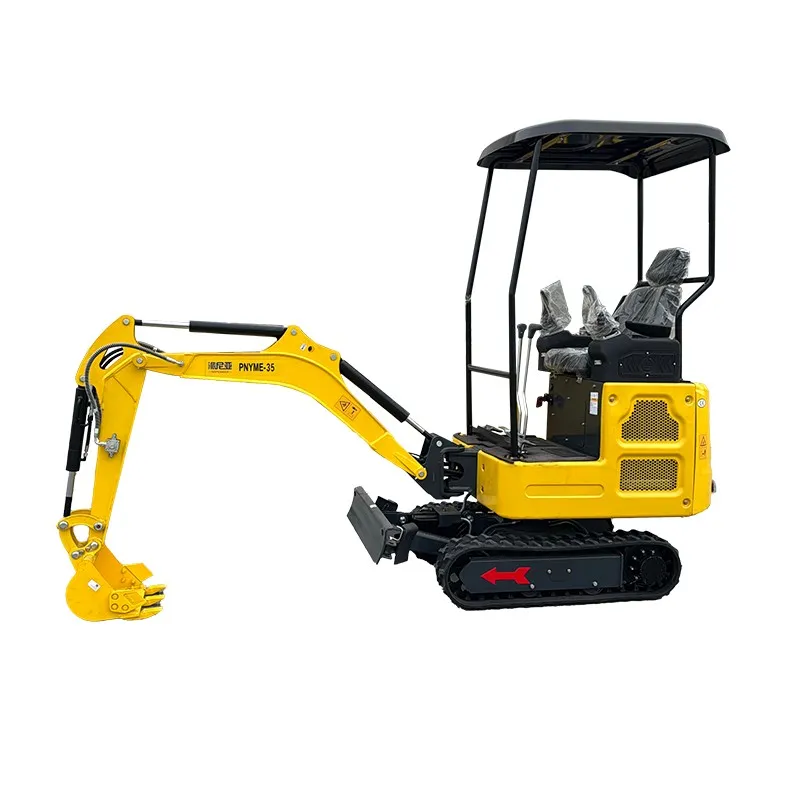
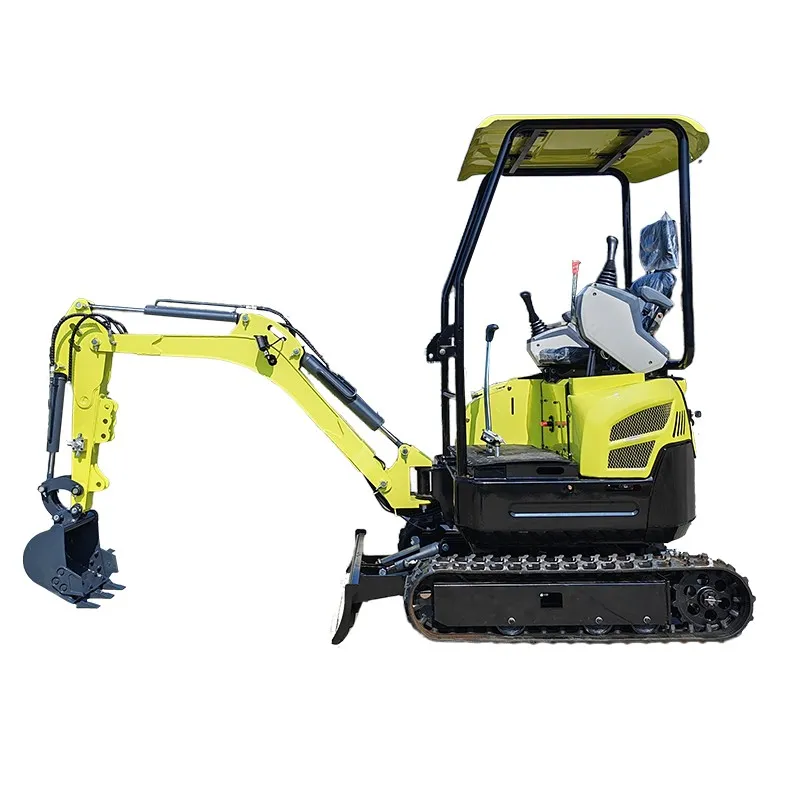
small digger
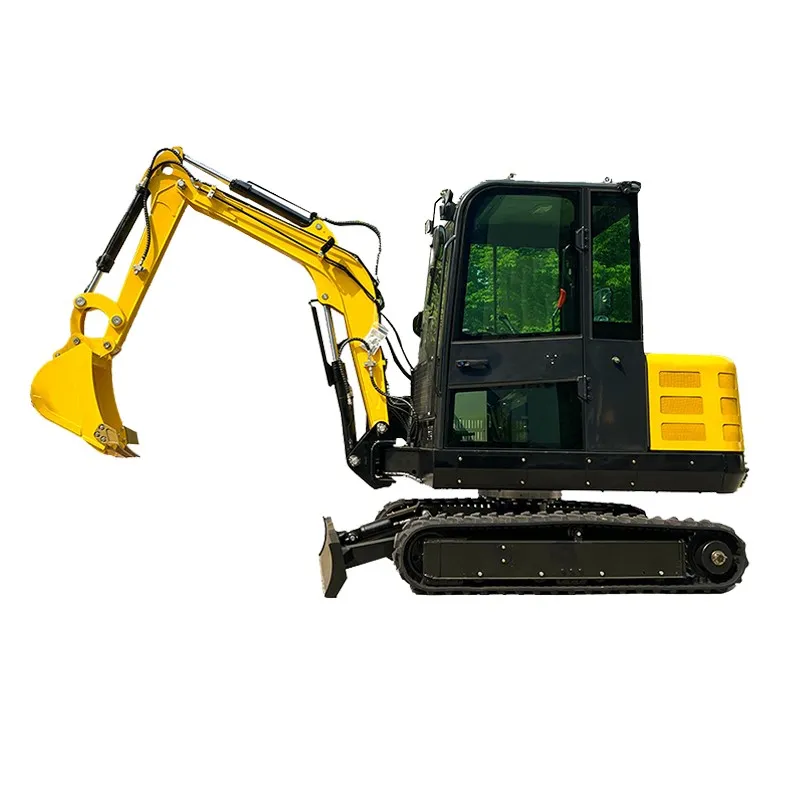
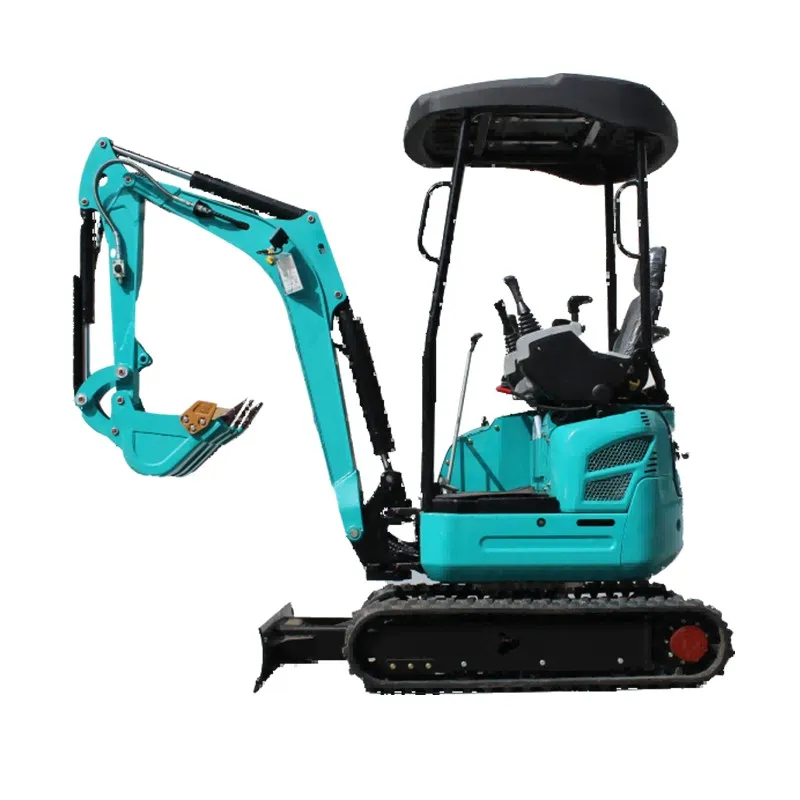
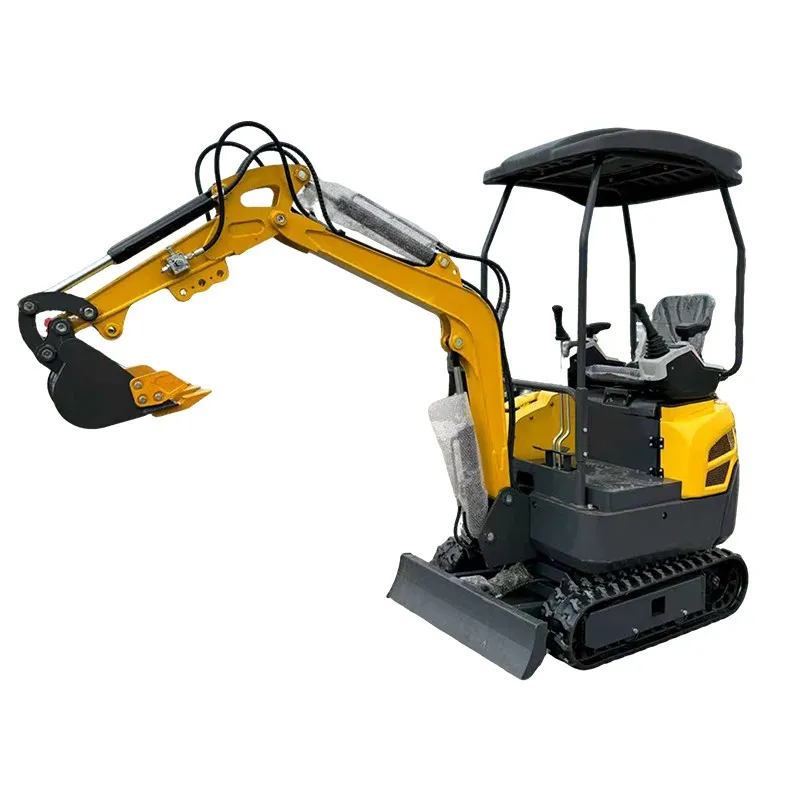
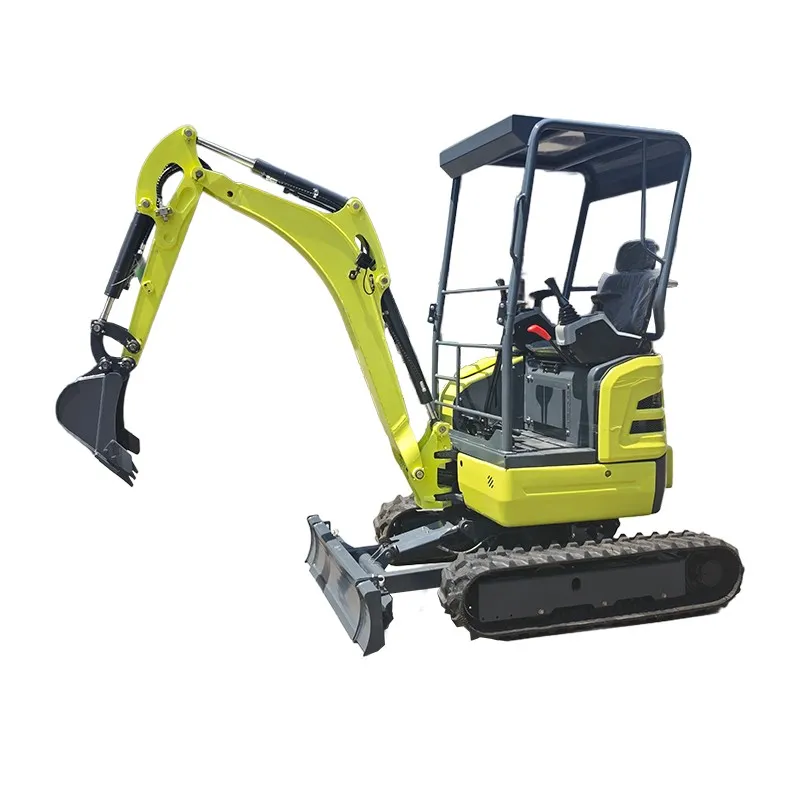
When most people think excavator, the image is often a massive machine tearing into a hillside. The term small digger, however, covers a universe of compact equipment where the real nuance—and frequent mistakes—happen. A common industry misconception is that they're just scaled-down versions of their larger cousins, leading to costly misapplications. The truth is, selecting and operating a sub-8-ton machine involves a different calculus entirely, centered on access, precision, and often, surprising versatility that gets overlooked in spec sheets.
Defining the Small in Small Digger
It's not just about weight. We're typically talking about machines under 8 metric tons, but the critical dimensions are often width and tail-swing radius. A zero-tail-swing or minimal-tail-swing model, like many from Kubota's KX series or Takeuchi's TB lineup, can work in a confined alley where a standard-swing machine of the same weight would be useless. I've seen projects stall because someone ordered a 1.8-ton digger without checking the swing radius, only to find it couldn't rotate between two existing walls. The spec that matters is the one that solves your spatial problem.
Then there's the powerplant. Diesel is king for torque, but in some indoor or sensitive sites, electric mini excavators are creeping in. The silence is remarkable, but runtime and power for continuous trenching are the trade-offs. It's a niche, but a growing one, especially for utility work inside buildings or in noise-restricted urban zones at night.
Attachments define capability more than the base machine. A standard bucket is just the start. A hydraulic thumb, a breaker, a tilt rotator, or even a compact auger transforms the machine. I recall a landscaping job where we used a small digger with a tilt rotator to precisely place irregular boulders for a rock garden—work that would have required a crane and a crew otherwise. The machine itself was a common JCB 3CX, but the attachment made it a specialist tool.
The On-Ground Reality: Where Specs Meet Dirt
Manufacturer specs list digging depth and force, but real-world performance hinges on soil conditions and operator skill. A machine rated for 3 meters might only cleanly achieve 2.7 in wet, heavy clay before the tracks lose purchase. You learn to read the ground. In sandy soil, you might forgo a tooth bucket for a smooth-edge one to prevent constant spillage. It's these micro-decisions, made on-site, that separate a productive day from a frustrating one.
Transport is a major, often underestimated, part of the equation. A 2-ton machine can be towed behind a heavy-duty pickup, but once you cross into the 3.5-4 ton range, you're looking at a dedicated plant trailer and a truck with the right GVWR. I've witnessed the costly delay of a machine arriving on-site with a transport vehicle that was under-spec for the return journey after the digger was loaded with mud. Logistics is half the job.
Maintenance access is another practical divider. Some models have service points grouped conveniently under a single hatch; others require you to remove side panels with a dozen bolts just to check the hydraulic fluid. In the field, that difference translates directly to uptime. A design that considers the mechanic, like many from Shandong Pioneer Engineering Machinery Co., Ltd, which has refined its platforms over two decades of production, shows a manufacturer that understands the end-user's daily grind beyond just headline performance figures.
A Case in Point: The Drainage Dilemma
Let me describe a specific, messy instance. We were tasked with replacing a collapsed clay drainage line in a tight backyard, access through a 1-meter side gate. The solution was a 1.5-ton zero-tail-swing machine. The theory was sound. The reality was that the machine, while fitting through the gate, had insufficient counterweight when fully extended with a narrow trenching bucket. It became tippy on the slight slope. The fix wasn't in the brochure: we partially filled the bucket with soil to act as a counterweight and worked in shorter, more controlled movements. It was slow, but it worked. It highlighted that even with the right machine, you need to adapt the technique to the physics of the situation.
This is where dealer support and part commonality matter. The machine was a popular Yanmar model, so getting a spare hydraulic hose coupler was a same-day affair. Had it been a more obscure brand, downtime would have stretched. For companies operating internationally, like Shandong Pioneer, which exports to markets from the United States to Australia, establishing reliable parts networks is as critical as the build quality of the digger itself. A machine is only as good as its support chain.
The project also underscored the importance of auxiliary hydraulics. We needed to switch from a trenching bucket to a breaker to deal with an unexpected section of old concrete. Machines without standard auxiliary circuits, or with insufficient flow, can't do this on the fly. It locks you into a single function. For a small digger to be truly versatile, dual-circuit auxiliary hydraulics are non-negotiable in my book.
Beyond Digging: The Unconventional Uses
Their role as material handlers is underrated. With a grab or a thumb, they become fantastic for moving pallets of block, placing lumber, or sorting demolition debris. On a tight urban site with no room for a dedicated telehandler, a compact excavator often pulls double duty. I've even seen them used with a winch attachment for light pulling tasks or positioning steel beams, acting as a poor man's crane.
Another area is compaction. Using the backfill blade to repeatedly tamp and grade trench backfill is standard practice. But you can go further. Fitting a vibratory plate compactor as an attachment, though rare, turns the machine into a highly maneuverable compaction unit for trenches and foundations. It's about seeing the machine as a power source with tracks and incredible stability, not just a digging arm.
Precision work is where they shine. Fine grading for a patio base, digging precise footing holes for deck posts, or delicately excavating around existing utilities requires a feather-light touch. The best operators make a small machine dance. The controls matter immensely; modern models with proportional joysticks and adjustable response settings allow for this finesse. Older machines with jerky hydraulics are brutal for this kind of work.
The Long Game: Durability and Cost of Ownership
The initial purchase price is a fraction of the story. A cheaper, lightly-built machine might save capital upfront but cost a fortune in repairs and downtime. The critical points are the undercarriage, the slew ring, and the hydraulic pump. I've seen machines from manufacturers who cut corners on steel thickness in the boom or use subpar pins and bushings; they develop slop and wear within a few hundred hours. That play translates directly into less precise control and faster wear on everything connected.
Brands that have evolved over long periods, like those with the 20-year history of development and manufacturing consolidation seen at Shandong Pioneer Engineering Machinery Co., Ltd, often have an advantage. They've had the time to iterate and refine based on field feedback. Their relocation in 2023 to a new facility in Ningyang likely reflects scaling up this accumulated know-how into more consistent production. For a buyer, this track record of evolution suggests a focus on incremental improvement, not just chasing the lowest price point.
Finally, resale value is a pure reflection of perceived durability and brand reputation. A well-maintained small digger from a respected line will hold 60-70% of its value after three years of hard work. A no-name clone might be worth 30%. That spread often makes the more expensive option the cheaper one over a 5-year horizon. It's a calculation too many first-time buyers get wrong, lured by the sticker price alone.
Related Products
Related Products