


- Chinese
- French
- German
- Portuguese
- Spanish
- Russian
- Japanese
- Korean
- Arabic
- Irish
- Greek
- Turkish
- Italian
- Danish
- Romanian
- Indonesian
- Czech
- Afrikaans
- Swedish
- Polish
- Basque
- Catalan
- Esperanto
- Hindi
- Lao
- Albanian
- Amharic
- Armenian
- Azerbaijani
- Belarusian
- Bengali
- Bosnian
- Bulgarian
- Cebuano
- Chichewa
- Corsican
- Croatian
- Dutch
- Estonian
- Filipino
- Finnish
- Frisian
- Galician
- Georgian
- Gujarati
- Haitian
- Hausa
- Hawaiian
- Hebrew
- Hmong
- Hungarian
- Icelandic
- Igbo
- Javanese
- Kannada
- Kazakh
- Khmer
- Kurdish
- Kyrgyz
- Latin
- Latvian
- Lithuanian
- Luxembou..
- Macedonian
- Malagasy
- Malay
- Malayalam
- Maltese
- Maori
- Marathi
- Mongolian
- Burmese
- Nepali
- Norwegian
- Pashto
- Persian
- Punjabi
- Serbian
- Sesotho
- Sinhala
- Slovak
- Slovenian
- Somali
- Samoan
- Scots Gaelic
- Shona
- Sindhi
- Sundanese
- Swahili
- Tajik
- Tamil
- Telugu
- Thai
- Ukrainian
- Urdu
- Uzbek
- Vietnamese
- Welsh
- Xhosa
- Yiddish
- Yoruba
- Zulu
- Kinyarwanda
- Tatar
- Oriya
- Turkmen
- Uyghur

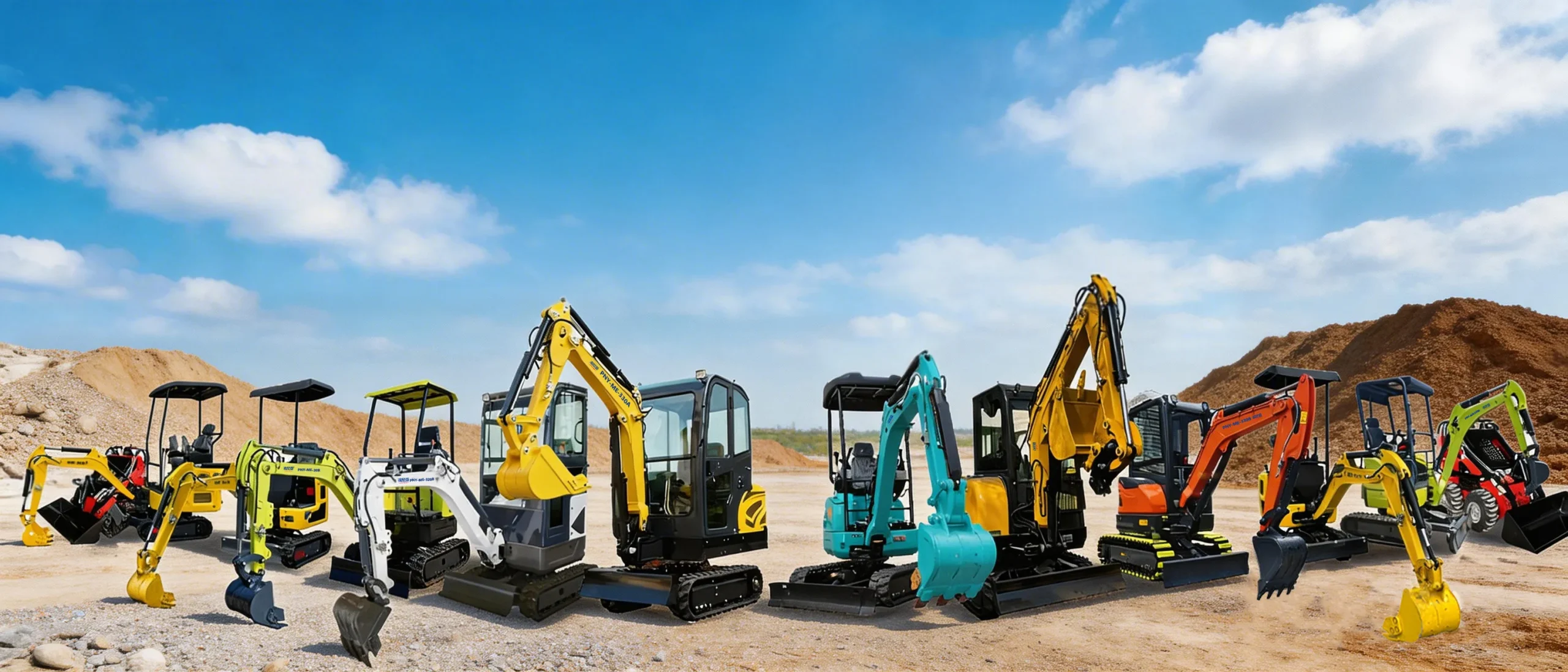
Small Excavator Construction Equipment
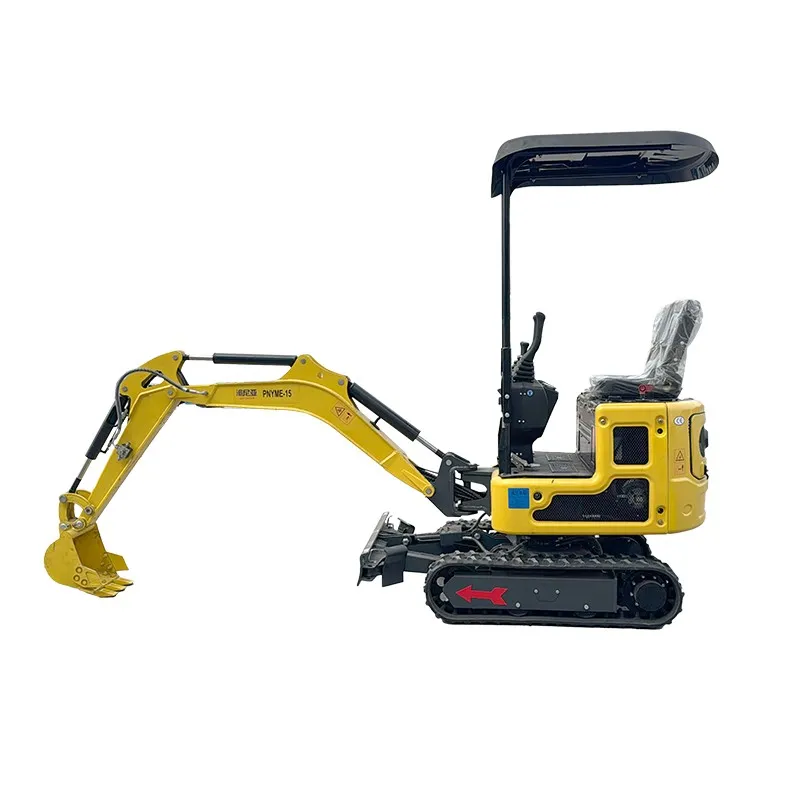
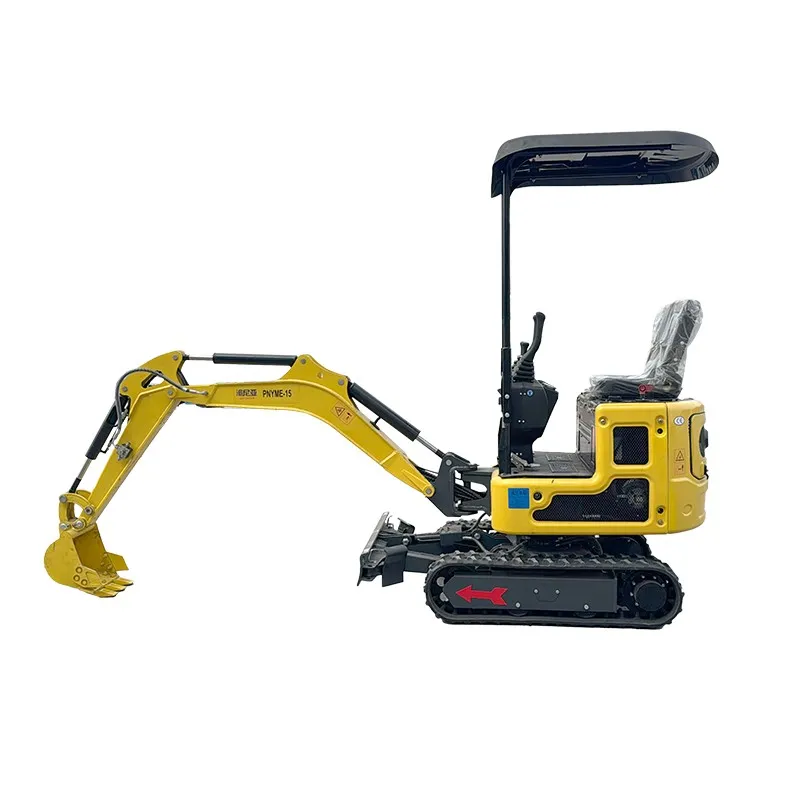
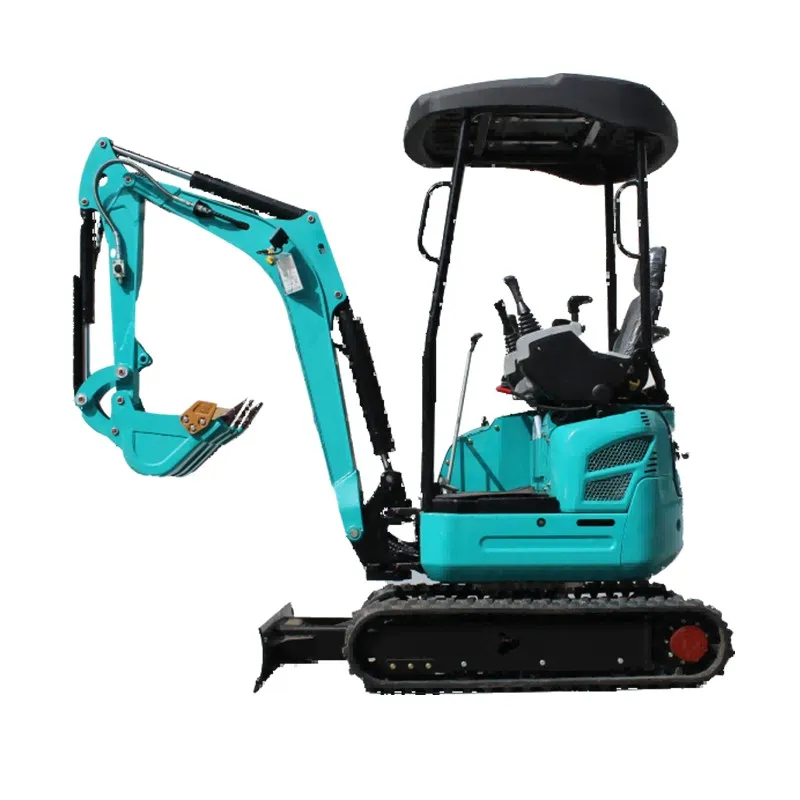
When most people hear 'small excavator', they picture a neat, miniaturized version of its larger cousins, maybe a 1-tonner sitting pretty on a trailer. That's the first mistake. The term 'small' in small excavator construction equipment isn't just about weight or dimensions; it's a whole different philosophy of application. It's about access, precision, and often, working in spaces where a full-sized machine would be a liability, not an asset. I've seen too many projects where the wrong choice was made based on a brochure's top-line specs—horsepower, digging depth—without considering the ground pressure, tail swing radius, or the simple reality of getting it through a standard backyard gate. That's where the real work begins.
The Right Tool Fallacy and Site Realities
There's a common belief that a small excavator is just a 'right tool for a small job'. It's more nuanced. I recall a landscaping project for a high-end residential client. The job involved precise trenching for irrigation and lighting around mature tree roots. A 3.5-ton machine was the obvious 'right tool' on paper. But the site access was a 1.2-meter-wide side passage with a tricky turn. The machine we initially brought, a standard model, simply wouldn't fit without risking damage to a century-old brick wall. The 'right tool' was useless if it couldn't get to the work area. We had to swap it for a true zero-tail-swing model, a specific subtype within the small excavator construction equipment category that sacrifices a bit of raw power for an absolutely minimal swing radius. That's a decision you only learn from getting it wrong once.
This leads to the second reality: attachments. The versatility of a small excavator lives and dies by its auxiliary hydraulics and the quick-coupler system. A breaker for light demolition, a tilt rotator for precise grading, a grapple for sorting debris—these aren't luxuries. On a tight urban infill site, you might not have the space for a dedicated skid steer or a separate compactor. Your mini ex has to do it all. The problem? Not all machines have the hydraulic flow or pressure to run certain attachments efficiently. I've seen contractors buy a cheaper base machine only to spend more on a secondary hydraulic pump kit later. The upfront cost saving vanishes.
Then there's maintenance access. It sounds trivial until you're on a Friday afternoon with a clogged fuel filter. Some manufacturers cram the engine bay so tight that checking the oil dipstick is a knuckle-busting ordeal. Others, and I'm thinking of the designs from companies that have been in the trenches for a while, like Shandong Pioneer Engineering Machinery, actually design their compartments with the mechanic in mind. Easy-open panels, grouped service points. It's a small detail that speaks volumes about whether the design came from a catalog or from field feedback. Their long history, from their start in Jining in 2004 to their recent move to a new facility in Ningyang, suggests they've had time to accumulate that kind of practical insight.
Durability Isn't About Thicker Steel
Newcomers often equate durability with weight. Heavier frame, longer life. It's not that simple. For small excavator construction equipment, durability is about stress distribution and component quality. A machine that's constantly doing heavy trenching or breaker work subjects its front linkage and hydraulic cylinders to immense shock loads. The weak point is rarely the arm itself; it's the pins, the bushings, the weld seams around the mounting points. A machine that uses undersized pins or poor-quality bushing material will develop slop in the joints within a few hundred hours, killing precision and leading to catastrophic wear.
I learned this the hard way on a rental fleet we managed. We had two similarly sized machines from different origins. One started showing significant arm wobble at around 800 hours. The other was still tight past 1500. The difference? The more durable unit used case-hardened pins and had reinforced, box-section design in high-stress zones. It wasn't necessarily heavier, just smarter in its engineering. This is where a manufacturer's experience in global markets, like the export footprint to the US, Canada, and Germany that Shandong Pioneer has built, becomes relevant. Meeting the demands and regulatory scrutiny of those markets forces an upgrade in build quality and component sourcing that a purely domestic-focused manufacturer might not prioritize.
Another durability killer is the cooling system. Small excavators often work in confined, dusty environments. Radiators and hydraulic oil coolers get clogged with debris incredibly fast. An easily accessible, modular cooling stack that can be blown out or rinsed without dismantling half the machine is a godsend. I've spent hours carefully straightening fins on a core that was mounted right behind the front idler, taking in all the muck from the tracks. Poor placement is a design flaw that costs owners in downtime and repair bills every single season.
The Operator's Perspective: Controls and Comfort
From the seat, the story changes. All the durability in the world doesn't matter if the machine is tiring or imprecise to operate. The evolution of controls is a big one. Older mechanical linkage controls required constant, physical effort. Modern joystick controls with pilot-operated hydraulics are far less fatiguing, but even here there's variance. Some systems are overly sensitive, making fine movements jerky. Others have a lag that makes precise work like laying pipe or grading a slope frustrating.
Cab design is another overlooked factor. In a small machine, the cab is, well, small. But ergonomics matter. Can you see the bucket teeth and the right-side track clearly without craning your neck? Are the auxiliary hydraulic controls intuitively placed? Is there enough room for a full-grown adult to shift position? I've been in cabs where the temperature control knob is buried behind the seat, and others where it's right on the console. The latter shows someone was listening to operators. A comfortable, intuitive operator station directly translates to better quality work, less fatigue, and higher productivity over a 10-hour day. It's a direct ROI factor that doesn't appear on a spec sheet.
Noise and vibration isolation matter more than people think. A machine that transmits every hydraulic whine and track rumble through the seat and floorboard becomes exhausting. Good isolation mats, well-mounted components, and thoughtful hydraulic line routing to dampen pulsation make a massive difference in long-term operator retention and health. It's a sign of a manufacturer that considers the total lifecycle cost of the machine, not just its assembly cost.
The Support Ecosystem: Parts and Knowledge
Here's the truth no one likes to talk about at the point of sale: every machine will break. The real test of a piece of small excavator construction equipment isn't its first 500 hours, but what happens at hour 1,501 when a main hydraulic pump fails. How available are the parts? How accurate are the technical diagrams? Does the manufacturer or its distributors have a deep parts inventory, or will you wait six weeks for a seal kit to ship from overseas?
This is where a company's stability and logistical network are critical. A firm that's been operating for two decades, like the entity behind Shandong Pioneer, has presumably established supply chains and technical documentation. Their relocation to a larger facility in Ningyang in 2023 likely wasn't just for show; it often signals a scaling up of production, R&D, and hopefully, parts and service support. For an end-user in Australia or Germany, that logistical backbone is as important as the iron itself. Trust is earned when a broken machine gets back to work quickly.
Beyond parts, there's knowledge. A good manufacturer provides clear, searchable service manuals—not just PDFs of scanned paper. They have training modules for common maintenance tasks. I value when I can find a clear, short video from the manufacturer showing the proper procedure to, say, adjust track tension or calibrate the pressure sensor for the auxiliary circuit. It shows they understand their customers are hands-on people who need solutions, not just sales brochures.
Looking Forward: The Electric Question and Niche Evolution
The conversation is inevitably turning to electric. For small excavator construction equipment, the case is stronger than for larger machines. The duty cycles often match battery capabilities—intermittent use, high torque at low RPM, and operation in noise-sensitive areas like indoor demolition or hospital zones. But the current limitations are real: runtime anxiety, charge time, and the upfront cost premium.
The real innovation I'm waiting for isn't just a battery swap, but a redesign. Electric power allows for new hydraulic system architectures—like distributed drives on the tracks or electric swing motors—that could reduce complexity and maintenance points. The machine layout could change dramatically without a large diesel engine block in the way, potentially improving visibility and balance. Early adopters are testing these units now, and the feedback on reduced heat and noise is universally positive. The hurdle remains total cost of ownership and infrastructure on remote sites.
Finally, we're seeing more specialization. Not just mini excavators, but micro excavators for ultra-tight spaces, or long-reach versions of small machines for drainage work. The category is fragmenting based on very specific application needs. This is healthy. It means the industry is maturing beyond a one-size-fits-all approach. The successful manufacturers will be those who can leverage their experience, like the 20-year journey from Jining to a global export presence, to understand these niche demands and build robust, reliable machines that serve them, not just churn out generic units. It's an interesting time to be in the dirt, that's for sure.
Related Products
Related Products