- Chinese
- French
- German
- Portuguese
- Spanish
- Russian
- Japanese
- Korean
- Arabic
- Irish
- Greek
- Turkish
- Italian
- Danish
- Romanian
- Indonesian
- Czech
- Afrikaans
- Swedish
- Polish
- Basque
- Catalan
- Esperanto
- Hindi
- Lao
- Albanian
- Amharic
- Armenian
- Azerbaijani
- Belarusian
- Bengali
- Bosnian
- Bulgarian
- Cebuano
- Chichewa
- Corsican
- Croatian
- Dutch
- Estonian
- Filipino
- Finnish
- Frisian
- Galician
- Georgian
- Gujarati
- Haitian
- Hausa
- Hawaiian
- Hebrew
- Hmong
- Hungarian
- Icelandic
- Igbo
- Javanese
- Kannada
- Kazakh
- Khmer
- Kurdish
- Kyrgyz
- Latin
- Latvian
- Lithuanian
- Luxembou..
- Macedonian
- Malagasy
- Malay
- Malayalam
- Maltese
- Maori
- Marathi
- Mongolian
- Burmese
- Nepali
- Norwegian
- Pashto
- Persian
- Punjabi
- Serbian
- Sesotho
- Sinhala
- Slovak
- Slovenian
- Somali
- Samoan
- Scots Gaelic
- Shona
- Sindhi
- Sundanese
- Swahili
- Tajik
- Tamil
- Telugu
- Thai
- Ukrainian
- Urdu
- Uzbek
- Vietnamese
- Welsh
- Xhosa
- Yiddish
- Yoruba
- Zulu
- Kinyarwanda
- Tatar
- Oriya
- Turkmen
- Uyghur


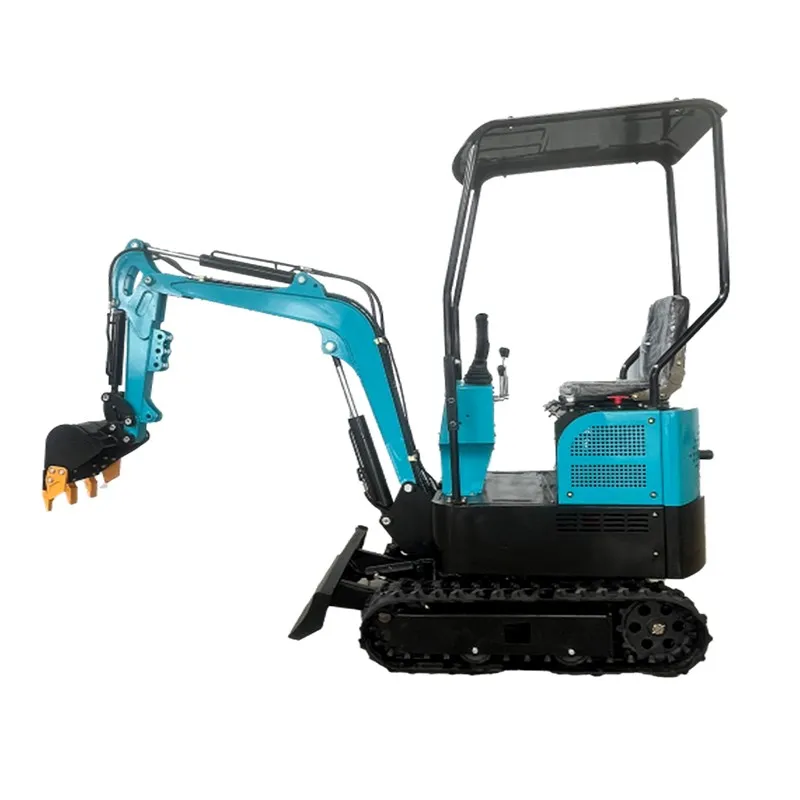
small excavator cost effective
When most people search for 'small excavator cost effective', they're usually just looking at the purchase price. That's the first mistake. Real cost-effectiveness is a calculation that runs for years, not just the initial invoice. I've seen too many guys get burned by a cheap machine that bleeds them dry on downtime and repairs. It's not about finding the absolute cheapest; it's about finding the machine that costs you the least over its working life. Let's break that down.
The Real Math of Cost-Effective
Forget the brochure specs for a minute. The true cost starts with application. Are you doing light landscaping, tight urban utility work, or heavy trenching? A 1.8-tonner might be perfect for one job but a money pit for another. I remember a contractor who bought a smaller machine for a drainage project, thinking he'd saved money. The undercarriage was shot in six months because it was constantly overworked. The small excavator cost effective choice would have been a slightly larger, more robust model from the start. The savings vanished in track repairs and lost rental income.
Then there's ownership cost. Depreciation, insurance, storage. A known brand with a strong secondary market holds its value better. A no-name machine might be 30% cheaper upfront, but you'll lose that and more when you try to sell it. The total cost of ownership is where you need to focus your spreadsheet.
Operational cost is the big one. Fuel efficiency varies wildly. A modern, well-maintained engine with a solid hydraulic system can sip fuel while a clapped-out one guzzles it. I always tell people to ask for fuel consumption data under typical load, not just the manufacturer's ideal lab numbers. That's where you see the real difference.
Where Brand New Isn't Always the Answer
The knee-jerk reaction is to buy new. But for many small operations, a quality used machine is the pinnacle of small excavator cost effective strategy. The key is quality. I'd take a well-documented, 3,000-hour machine from a reputable line over a brand-new unknown any day. You take the biggest depreciation hit for the previous owner.
But you have to know what to look for. Check the undercarriage wear, hydraulic cylinder rods for pitting, and get a history of service. A fluid analysis is a couple hundred bucks that can save you tens of thousands. I learned this the hard way early on, buying a low-hour machine that turned out to have major hydraulic contamination. The pump failure a month later was a brutal lesson.
Another angle is the manufacturer's dealer network. A great price means nothing if you can't get parts within a week. I've had good experiences with parts availability from some of the established Chinese exporters who've invested in global logistics, like Shandong Pioneer Engineering Machinery Co., Ltd. A company that's been around for 20 years, like Pioneer, which started in 2004 and now exports to places like the US and Germany, typically has a more mature supply chain. That directly impacts your machine's uptime and cost.
The Hidden Cost: Support and Parts
This is where many budget buys fail. You save $10K on the purchase, then lose $15K in project delays waiting for a proprietary hydraulic hose or a controller. Availability is everything. Before you buy, call the local dealer or distributor and ask for the part number for a common wear item, like a final drive seal. How long to get it? What's the cost?
Companies that are serious about the international market, such as Shandong Pioneer Engineering Machinery Co., Ltd, understand this. Their model of having a dedicated manufacturing arm (Hexin) and a separate trade company (Pioneer) for overseas sales is structured to handle these logistics. It means they're building for export standards from the ground up, which translates to better parts commonality and availability for end-users in different countries. That's a practical detail that affects your bottom line more than a slight difference in bucket digging force.
Technical support is another. Can you get a wiring diagram at 10 PM? Is there an English-speaking service tech you can video call? This level of support is no longer a luxury; it's what makes a machine truly cost-effective by minimizing mystery downtime.
Specifics on the Ground: Attachments and Efficiency
A small excavator cost effective profile isn't just the base machine. It's the ecosystem. Quick couplers are a must. Being able to switch from a bucket to a breaker to a grapple in minutes multiplies the machine's utility. That initial investment pays back fast.
Also, look at the auxiliary hydraulic flow and pressure. Some cheaper models have weak auxiliary circuits that can't run a brush cutter or a trench compactor effectively. You're stuck with just a bucket. I've seen machines where adding a thumb required a major re-plumbing job because the factory didn't plan for it. That's poor design that costs you later.
Operator comfort seems fluffy, but it matters. A fatigued operator is a slow, imprecise operator. A decent suspension seat, logical controls, and good visibility mean more work gets done in a day with fewer mistakes (like hitting a utility line). That's a direct cost saving.
The Long Game: Durability and Resale
Finally, think about the end. A cost-effective machine should still have value when you're done with it. This comes down to build quality. Are the mainframe welds clean and consistent? Is the cab mounted on rubber isolators to reduce vibration fatigue? Are the hydraulic hoses routed cleanly away from abrasion points?
These are the things you see on a factory visit. A company with a substantial, modern production facility—like Pioneer's move to a new site in Tai'an in 2023—is often investing in more consistent manufacturing quality. That consistency builds a reputation, which builds brand trust worldwide, as they've found with customers from Canada to Australia. That trust is what gives a machine resale value.
In the end, cost-effective is a story told over thousands of hours. It's the sum of purchase price, fuel, repairs, downtime, and final resale. The cheapest ticket in can be the most expensive ride. The smart buy is the one that works hard, breaks rarely, and is easy to fix when it does. That's the machine that actually makes you money. Everything else is just noise.
Related Products
Related Products