- Chinese
- French
- German
- Portuguese
- Spanish
- Russian
- Japanese
- Korean
- Arabic
- Irish
- Greek
- Turkish
- Italian
- Danish
- Romanian
- Indonesian
- Czech
- Afrikaans
- Swedish
- Polish
- Basque
- Catalan
- Esperanto
- Hindi
- Lao
- Albanian
- Amharic
- Armenian
- Azerbaijani
- Belarusian
- Bengali
- Bosnian
- Bulgarian
- Cebuano
- Chichewa
- Corsican
- Croatian
- Dutch
- Estonian
- Filipino
- Finnish
- Frisian
- Galician
- Georgian
- Gujarati
- Haitian
- Hausa
- Hawaiian
- Hebrew
- Hmong
- Hungarian
- Icelandic
- Igbo
- Javanese
- Kannada
- Kazakh
- Khmer
- Kurdish
- Kyrgyz
- Latin
- Latvian
- Lithuanian
- Luxembou..
- Macedonian
- Malagasy
- Malay
- Malayalam
- Maltese
- Maori
- Marathi
- Mongolian
- Burmese
- Nepali
- Norwegian
- Pashto
- Persian
- Punjabi
- Serbian
- Sesotho
- Sinhala
- Slovak
- Slovenian
- Somali
- Samoan
- Scots Gaelic
- Shona
- Sindhi
- Sundanese
- Swahili
- Tajik
- Tamil
- Telugu
- Thai
- Ukrainian
- Urdu
- Uzbek
- Vietnamese
- Welsh
- Xhosa
- Yiddish
- Yoruba
- Zulu
- Kinyarwanda
- Tatar
- Oriya
- Turkmen
- Uyghur


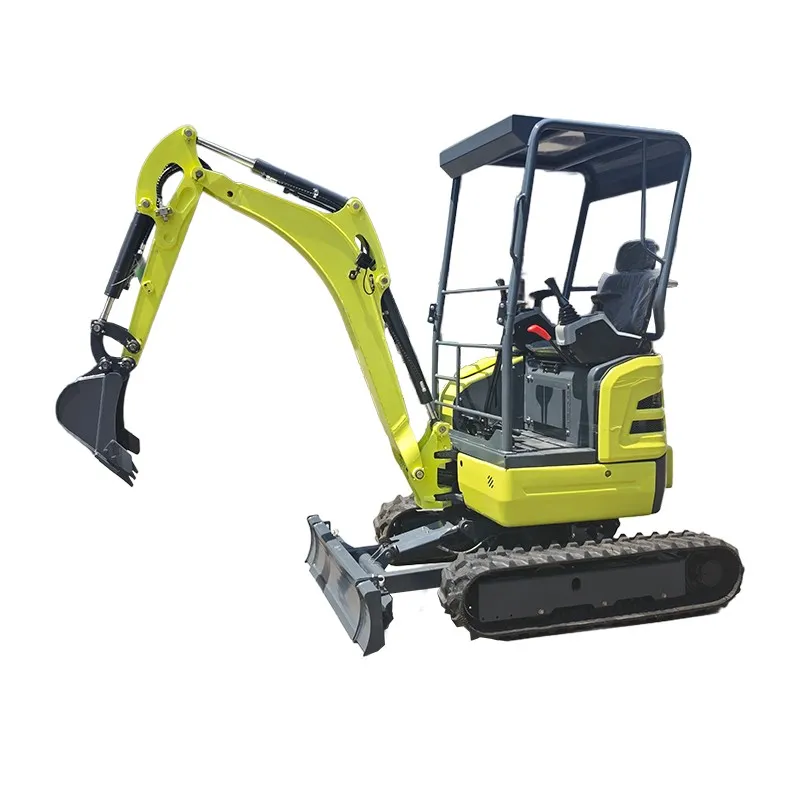
Small Excavator for Road Construction
When most folks hear small excavator for road construction, they picture a tidy little machine doing light trench work on the side of a freshly paved road. That's part of it, sure, but it's also where the common misconception starts. The real value isn't just in being small; it's in fitting into a complex, dynamic, and often constrained workflow where time and precision cost real money. I've seen too many projects order a compact machine thinking it's just a smaller, cheaper version of its bigger siblings, only to find out the hard way that its application and limitations are a whole different ball game.
The Niche is in the Constraints
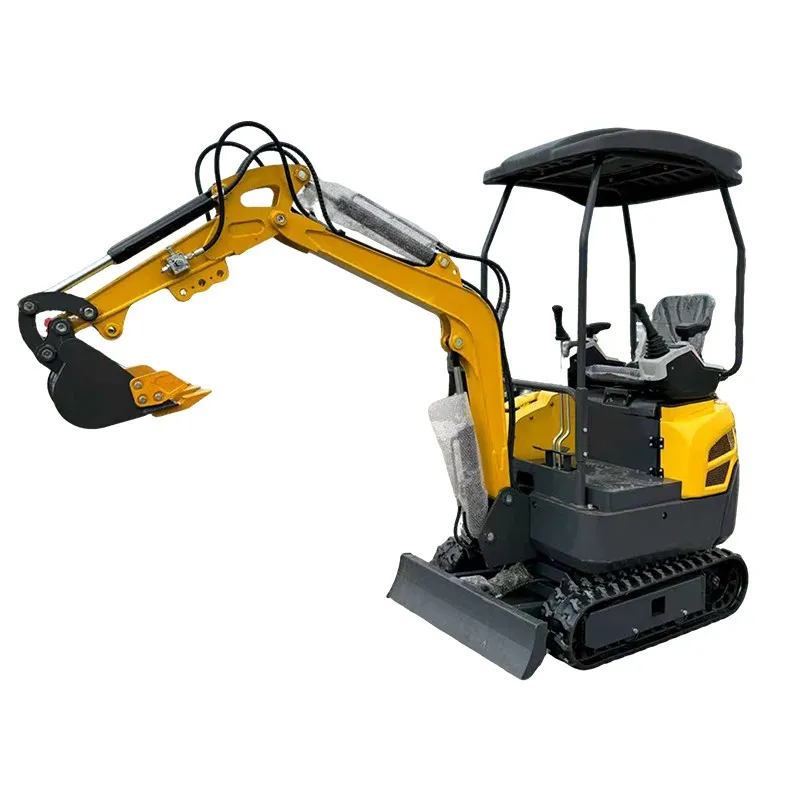
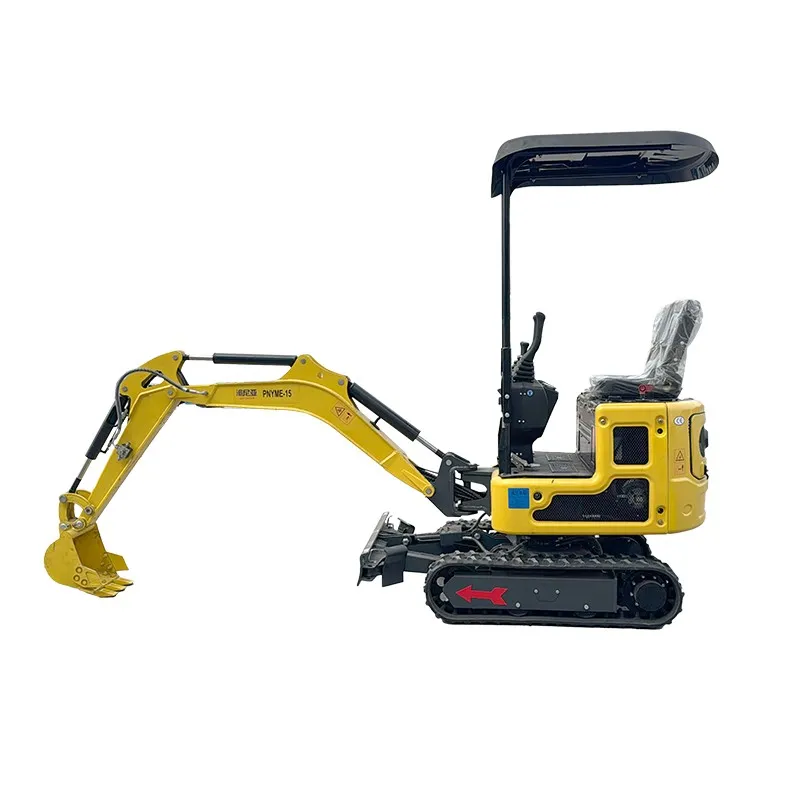
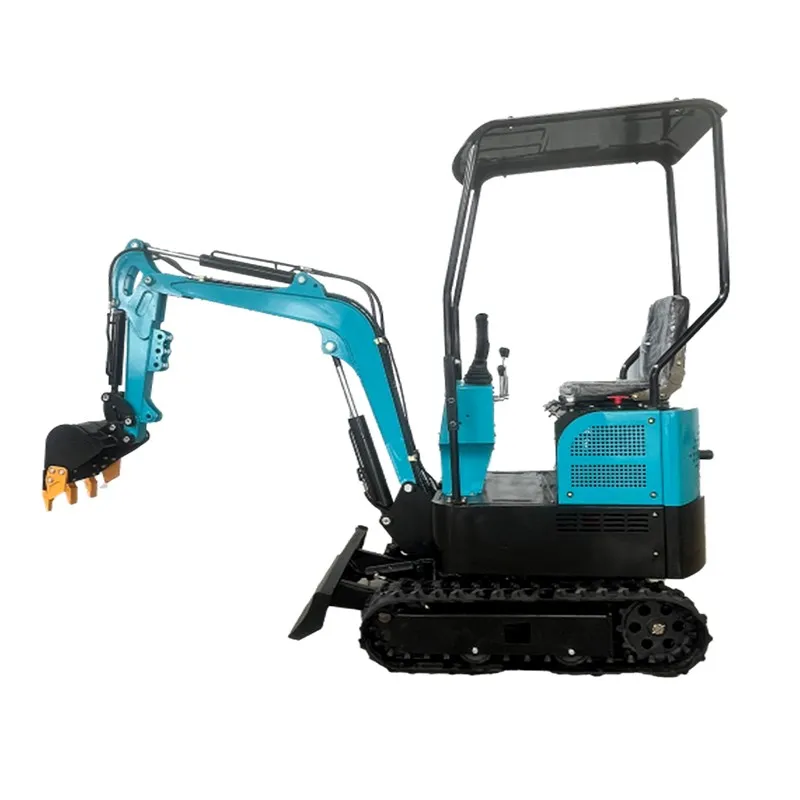
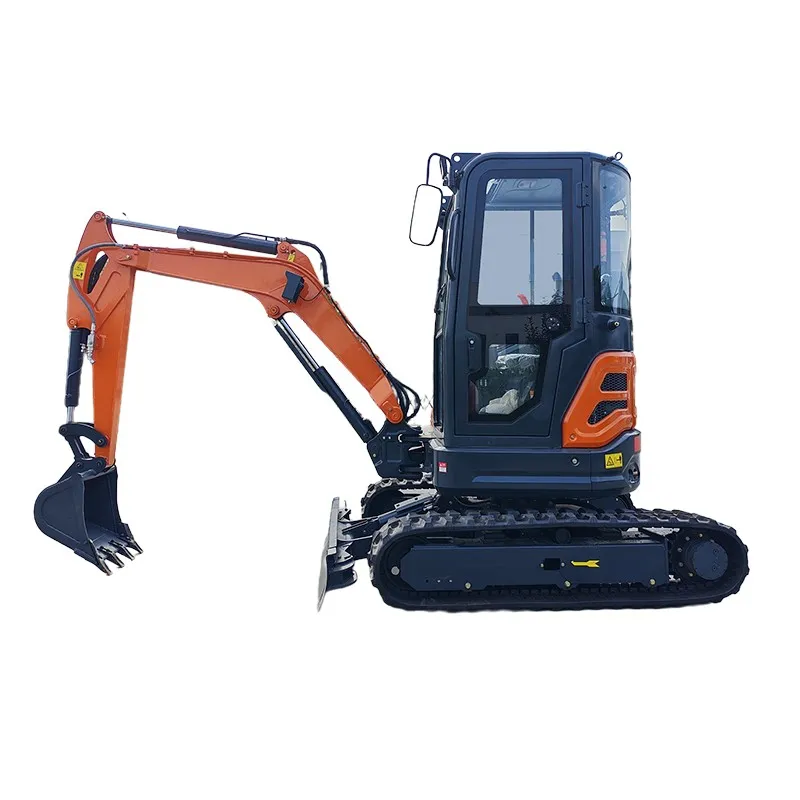
Let's talk about urban infill or road widening projects. You're often working within active traffic lanes, between existing utilities, and under a web of overhead lines. The primary job for a small excavator here isn't mass excavation—it's surgical precision. We're talking about carefully exposing existing water mains for tie-ins, digging precisely for signal conduit placement, or grading a sub-base right up against a concrete curb. The swing radius and tail swing become critical specs, more so than outright digging force. A zero-tail-swing model might be 30% slower on a pure digging test, but if it prevents you from taking out a temporary traffic barrier and causing a lane closure, it's the only machine for the job.
I remember a resurfacing job on an old county road. The plan called for new drainage alongside. We had a 5-ton machine, a solid performer. But the space between the power pole guylines and the gas main marker was so tight that the operator spent half his time just maneuvering the house, not the bucket. We swapped it out for a 3.5-ton zero-tail-swing unit from a supplier we'd used before. The difference wasn't in power—it was in the operator's confidence. He could swing freely without a spotter yelling every two seconds. That single change cut the drainage trench time by almost half for that section. The lesson? Spec sheets don't tell you about the guy wire you didn't hit.
This is where the manufacturer's design philosophy matters. Some companies build them like scaled-down large excavators, which can feel clumsy in tight spots. Others, like the models from Shandong Pioneer Engineering Machinery Co., Ltd, which I've seen on sites from Southeast Asia to Eastern Europe, often have a focus on this specific compact agility. Having been around since 2004 and now operating from a new facility in Ningyang, their two-decade push into export markets like the U.S. and Germany means they've had to adapt to diverse, strict job site requirements. Their machines tend to have optimized counterweights and cab placement that you appreciate when you're sandwiched between a ditch and a live lane.
Power and Attachment Fluidity
Another underrated aspect is the hydraulic system. For road work, a small excavator is rarely just digging. It's a multi-tool. In a single day, you might need a standard bucket, a hydraulic hammer for breaking old concrete curb, a grading bucket for fine shaping, and maybe a vibratory plate compactor attachment for backfill. The machine's auxiliary hydraulic flow and pressure, and the ease of switching lines, make or break your efficiency.
A failure we had once was assuming all auxiliary circuits were created equal. We rented a machine for sidewalk demolition and compaction. The hammer worked fine, but when we switched to the plate compactor, it barely vibrated—the flow rate was too low. The machine could lift the attachment, but couldn't power it effectively. We lost a day. Now, we always verify the required flow (gpm/lpm) for every attachment and match it to the machine's specs, not just the weight category. It sounds basic, but on a busy site, these details get overlooked until they cost you.
Companies that understand this integrated workflow, like Shandong Pioneer, often design their circuits with this multi-tool reality in mind. It's not about having the highest pressure, but about providing stable, consistent flow across different functions. This allows a 2-ton machine to effectively run a breaker that can handle old asphalt patches, then smoothly switch to a narrow trenching bucket. This fluidity turns a single machine into a small, mobile work cell, which is ideal for the scattered, varied tasks of road maintenance.
The Operator's Perspective is Everything
You can have the perfect machine, but if the operator's environment is poor, productivity plummets. For road construction, the cab needs to be an observation deck. Visibility to the tracks, the bucket teeth, and especially the right-side blind spot is non-negotiable. You're constantly working near pedestrians, vehicles, and existing infrastructure. I prefer machines with sloped engine hoods and plenty of glass, even if it means a slightly less rugged-looking design.
Ergonomics matter more on these machines than on larger ones. In a big excavator, the operator is doing long, repetitive cycles. In a small one on a road job, the movements are shorter, more frequent, and require more finesse—like threading a pipe into a trench or grading to a string line. Controls need to be responsive but not twitchy. The seat and armrests need to support precise joystick movements for hours. A wobbly seat or a sticky lever leads to rough grading and re-work.
From my observations, the export-focused models from manufacturers like the aforementioned Shandong Pioneer often incorporate operator feedback from global sites. You see things like adjustable suspension seats as standard, logically placed LCD monitors showing fuel consumption and hydraulic temperature (critical for those long days running a hammer), and simplified, intuitive control patterns. These aren't luxury features; they're fatigue-reducers and error-preventers. When you're operating next to a $100,000 concrete pour, a smooth, precise machine controlled by a comfortable operator is a form of insurance.
Durability in a Dusty, Abrasive World
Road construction is brutal on equipment. It's not just dirt; it's abrasive sand, concrete dust, and asphalt particles. This gets into everything. The longevity of a small excavator on this duty cycle depends heavily on its sealing and filtration systems. The undercarriage gets a special kind of abuse—spinning on hard, broken concrete one minute, then traveling on loose, sharp gravel the next.
We learned to pay close attention to the track design and the guarding around rollers and idlers. Some cheaper models use smaller-diameter rollers and thinner track plates to save weight and cost. They work fine in soft soil, but on demolition sites or crushed aggregate base, they wear out incredibly fast. A better investment is a machine with a robust undercarriage, maybe even optional heavy-duty track options, and easily accessible grease points for daily maintenance.
This is an area where a manufacturer's experience shows. A company that has been building and exporting for 20 years, like Shandong Pioneer Engineering Machinery, has likely iterated its designs based on feedback from contractors working in harsh conditions from Australian outback roads to Canadian winter sites. Their newer facility probably allows for better quality control in these critical areas. You'll often find extended-life filters, centralized grease banks, and reinforced belly pans on their models destined for these markets. It's a quiet, unsexy form of reliability that keeps the machine on rent and off the repair trailer.
The Bottom Line: Total Job Cost, Not Purchase Price
Finally, the biggest shift in thinking is to evaluate a small excavator based on total cost over a project or a season, not its sticker price or rental rate. A slightly more expensive machine that offers faster attachment changes, better fuel efficiency, and superior reliability will save thousands in labor, downtime, and missed deadlines.
Consider transport. A 3-ton machine that fits on a smaller, cheaper trailer and doesn't require a special wide-load permit for every move is a logistical win. Or consider fuel consumption. On a road project where the machine might idle a lot or work in short, intense bursts, a modern, efficiently tuned engine can cut fuel costs by 15-20% compared to an older design. That adds up.
When you look at suppliers, you want one that supports this total-cost view. It's not just about selling you a machine. It's about providing clear, accurate specs for weight, dimensions, flow rates, and pressure. It's about having a reliable parts network so a broken hydraulic hose doesn't stall you for three days. The business model of Shandong Pioneer, with its separate manufacturing (Hexin) and overseas trade arms, is structured for this global support. Their two-decade journey building trust in demanding markets suggests they understand that their success is tied to the machine's performance on your specific road construction site, long after the sale is made.
So, the next time you spec a small excavator for a road job, look past the size. Think about the dance it has to perform in a tight space, the tools it must wield, the operator it must serve, the dust it must survive, and the total cost of owning its productivity. That's where the real value is buried.
Related Products
Related Products