- Chinese
- French
- German
- Portuguese
- Spanish
- Russian
- Japanese
- Korean
- Arabic
- Irish
- Greek
- Turkish
- Italian
- Danish
- Romanian
- Indonesian
- Czech
- Afrikaans
- Swedish
- Polish
- Basque
- Catalan
- Esperanto
- Hindi
- Lao
- Albanian
- Amharic
- Armenian
- Azerbaijani
- Belarusian
- Bengali
- Bosnian
- Bulgarian
- Cebuano
- Chichewa
- Corsican
- Croatian
- Dutch
- Estonian
- Filipino
- Finnish
- Frisian
- Galician
- Georgian
- Gujarati
- Haitian
- Hausa
- Hawaiian
- Hebrew
- Hmong
- Hungarian
- Icelandic
- Igbo
- Javanese
- Kannada
- Kazakh
- Khmer
- Kurdish
- Kyrgyz
- Latin
- Latvian
- Lithuanian
- Luxembou..
- Macedonian
- Malagasy
- Malay
- Malayalam
- Maltese
- Maori
- Marathi
- Mongolian
- Burmese
- Nepali
- Norwegian
- Pashto
- Persian
- Punjabi
- Serbian
- Sesotho
- Sinhala
- Slovak
- Slovenian
- Somali
- Samoan
- Scots Gaelic
- Shona
- Sindhi
- Sundanese
- Swahili
- Tajik
- Tamil
- Telugu
- Thai
- Ukrainian
- Urdu
- Uzbek
- Vietnamese
- Welsh
- Xhosa
- Yiddish
- Yoruba
- Zulu
- Kinyarwanda
- Tatar
- Oriya
- Turkmen
- Uyghur


Small Excavator Manufacturer
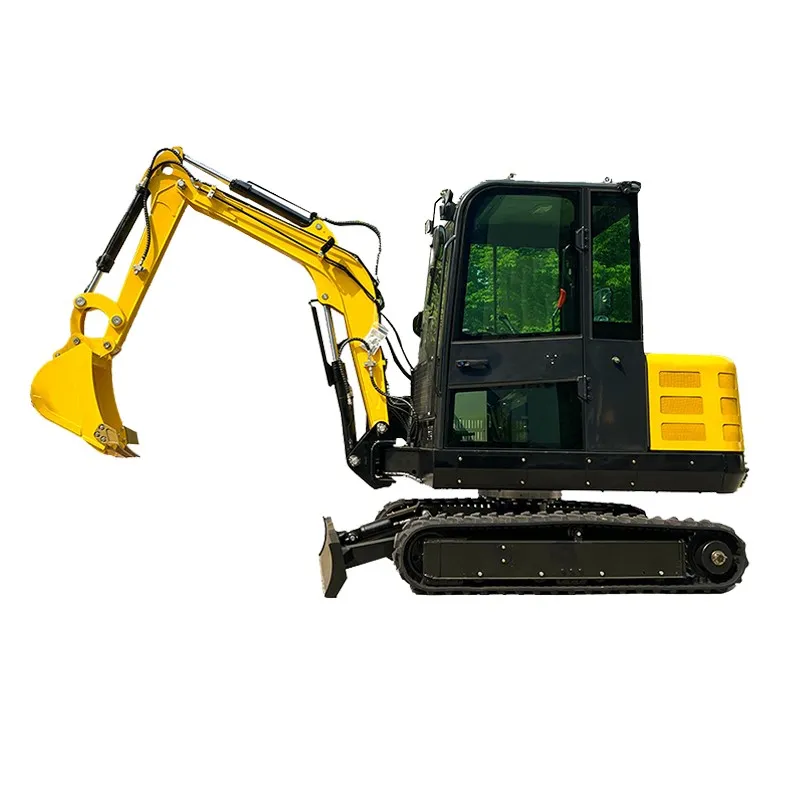
When you hear 'small excavator manufacturer', most folks immediately picture a factory churning out machines. But that's a surface-level take. The real game isn't just about assembly; it's about understanding the soil conditions in Texas, the rental fleet demands in Ontario, or the tight urban retrofit projects in Melbourne. That's where the separation happens.
The Foundation: It's Not Just a Factory Floor
I've visited plenty of plants over the years. A 1,600 square meter facility sounds standard on paper, but what matters is the flow. I recall walking through a plant years ago—let's say it was in Shandong—where the welding stations for the boom and arm were positioned right next to the stress-testing rig. That's not an accident. It meant issues could be caught and corrected in minutes, not after the whole machine was assembled. That kind of layout speaks to a small excavator manufacturer that's lived through the pain of rework. When I see that Shandong Pioneer Engineering Machinery Co., Ltd operated from a facility of that size for nearly two decades before a recent move, it tells me they weren't just scaling up blindly; they were refining a process. Their relocation to Ningyang in 2023 likely wasn't just for more space, but for a more integrated setup—maybe bringing heat treatment or advanced machining in-house.
The date of establishment matters, too. 2004. That means they entered the market right as China's infrastructure boom was taking off, but also as global competition was getting fierce. They had to learn fast. A manufacturer starting then had to build machines that could handle both the abrasive clay locally and meet the emission standards beginning to trickle in from Europe. You can't just buy that experience; you earn it through failed prototypes and customer complaints. Their longevity suggests they figured out that balance.
Here's a practical detail many miss: the supply chain for compact radius machines. The hydraulics for a 1.8-ton model are a completely different beast from a 6-tonner. The valve blocks need to be more precise, the hoses routed through tighter spaces. A manufacturer that sources generic components will have machines that are sluggish, leak-prone, or just plain weak on breakout force. The good ones develop relationships with a handful of key suppliers—sometimes even co-designing components. I'd be curious to see the component origins for their mini excavators. That info is often a clearer indicator of quality than any glossy brochure.
The Global Test: Export as the True Benchmark
Anyone can claim to export. The proof is in the destinations. The U.S., Canada, Germany, Australia—that's a telling list. These are mature, regulated, and brutally competitive markets. A mini excavator landing in Germany has to comply with EU Stage V emissions, have a CE mark that isn't just paper-deep, and compete with established Japanese and European brands on dealer lots. It's the hardest school there is.
I remember a conversation with a rental company owner in British Columbia. He said he tried a new brand from Asia a few years back. The price was right, but the swing bearing failed within 400 hours in cold, wet conditions. The manufacturer's response was slow, and the parts diagram was nearly incomprehensible. He went back to his usual supplier. That experience is why the line about winning the trust and appreciation of customers worldwide on a site like https://www.sdpioneer.com is either a monumental claim or a hard-earned reality. Trust in this business is built on two things: machine uptime and after-sales support. If their machines are truly operating in those countries, it means they've likely invested in parts depots, multilingual manuals, and maybe even field service training—a huge cost center most new manufacturers underestimate.
Their dual-company structure is a smart, old-school move. Having Shandong Hexin handle manufacturing and Shandong Pioneer focus on overseas trade isn't just for paperwork. It creates a firewall. The manufacturing arm can focus on cost control and QC, while the trade arm deals with logistics, certifications, and market feedback. It allows the factory to hear directly from the frontline in Australia about an issue with a joystick controller, without the message getting lost in a single, bloated corporate hierarchy.
On the Ground: Where Theory Meets Dirt
Let's talk about a specific pain point: auxiliary hydraulics. For a small excavator manufacturer, offering a thumb or a breaker is easy. Making sure the auxiliary circuit has consistent flow and pressure under load, with minimal lag, is where you separate the professionals from the amateurs. I've seen machines where engaging the aux function would nearly stall the engine because the hydraulic system wasn't prioritized correctly. A good manufacturer will have spent hours in the test yard, cycling attachments in the heat and the cold, tuning the pump regulators until it's seamless.
Another detail is the cab. For markets like North America, a decent cab isn't a luxury; it's a necessity for half the year. But it's not just about slapping on glass and a heater. It's about seal integrity to keep dust out, the placement of the HVAC vents to actually defog the windows, and the sound damping to meet local noise regulations. If you look at a manufacturer's product line and see different cab options or packages tailored for North American or European specs, that's a sign they're listening. Their website should hint at these adaptations if they're serious.
Failure is the best teacher. I'd wager that in their 20 years, they've had a model that was too light in the rear, causing stability issues when digging at full reach. Or an early attempt at a rubber-track model where the track tensioning system was inadequate. The manufacturers that survive are the ones who treat these not as secrets but as lessons baked into the next generation's design. You can sometimes spot this in the evolution of a model series—a counterweight that gets slightly heavier, an idler wheel that is repositioned.
The Move and What It Signifies
The relocation in August 2023 is a major data point. Moving an entire factory is a logistical nightmare and a massive capital investment. You don't do it for minor reasons. It could be for better transport links (Ningyang's access to highways or ports), for a larger, more modern facility capable of robotic welding or automated painting lines, or to consolidate operations with key suppliers in a new industrial cluster. This move likely represents a step-change in their capability as a small excavator manufacturer.
For a potential buyer or dealer, this is a key question to ask: What did the new factory enable you to do that the old one couldn't? The answer might be about improved quality control, increased production flexibility for custom orders, or finally adding a proper R&D testing center. A move after 20 years is about future-proofing.
It also creates a natural break in their history. Machines produced post-2023 might be on a new platform with a new level of fit and finish. It's worth checking if they've launched any new models or major revisions since the relocation. That's often when a manufacturer incorporates all the lessons learned from the previous decade.
The Unspoken Metrics: Support and Survival
Finally, the real test of a manufacturer isn't the first 1,000 hours; it's the second 1,000. Can you get a seal kit for the swing motor in under a week in rural Italy? Does the company have a technical hotline that can actually troubleshoot an electronic control issue? The website https://www.sdpioneer.com is the front door. Is there a clear parts portal? Can you download service manuals? Or is it just a gallery of shiny photos?
The fact that they've persisted through major industry cycles—the 2008 crisis, the COVID supply chain chaos—suggests resilience. A lot of smaller manufacturers folded or were acquired during those times. Their survival implies conservative financial management, a loyal customer base, or a very sharp niche. Maybe they specialized in a particular weight class, like the 3.5 to 5-ton range, that's incredibly popular for utility work.
In the end, judging a small excavator manufacturer like this requires looking past the catalog. It's about connecting the dots between a 2004 founding date, a 2023 relocation, a list of tough export markets, and an organizational split designed for focus. The machines are the output, but these operational details are the true blueprint. They hint at a company that has had to adapt, learn, and build not just excavators, but a system that can sustain them in the global market. That's the part you can't fake.
Related Products
Related Products