- Chinese
- French
- German
- Portuguese
- Spanish
- Russian
- Japanese
- Korean
- Arabic
- Irish
- Greek
- Turkish
- Italian
- Danish
- Romanian
- Indonesian
- Czech
- Afrikaans
- Swedish
- Polish
- Basque
- Catalan
- Esperanto
- Hindi
- Lao
- Albanian
- Amharic
- Armenian
- Azerbaijani
- Belarusian
- Bengali
- Bosnian
- Bulgarian
- Cebuano
- Chichewa
- Corsican
- Croatian
- Dutch
- Estonian
- Filipino
- Finnish
- Frisian
- Galician
- Georgian
- Gujarati
- Haitian
- Hausa
- Hawaiian
- Hebrew
- Hmong
- Hungarian
- Icelandic
- Igbo
- Javanese
- Kannada
- Kazakh
- Khmer
- Kurdish
- Kyrgyz
- Latin
- Latvian
- Lithuanian
- Luxembou..
- Macedonian
- Malagasy
- Malay
- Malayalam
- Maltese
- Maori
- Marathi
- Mongolian
- Burmese
- Nepali
- Norwegian
- Pashto
- Persian
- Punjabi
- Serbian
- Sesotho
- Sinhala
- Slovak
- Slovenian
- Somali
- Samoan
- Scots Gaelic
- Shona
- Sindhi
- Sundanese
- Swahili
- Tajik
- Tamil
- Telugu
- Thai
- Ukrainian
- Urdu
- Uzbek
- Vietnamese
- Welsh
- Xhosa
- Yiddish
- Yoruba
- Zulu
- Kinyarwanda
- Tatar
- Oriya
- Turkmen
- Uyghur


small excavator price
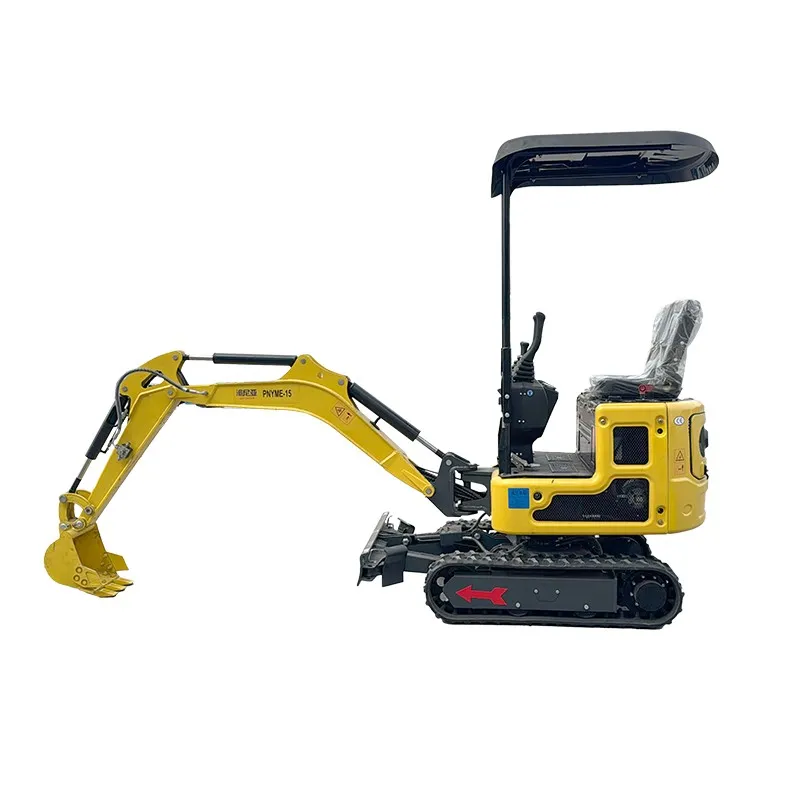
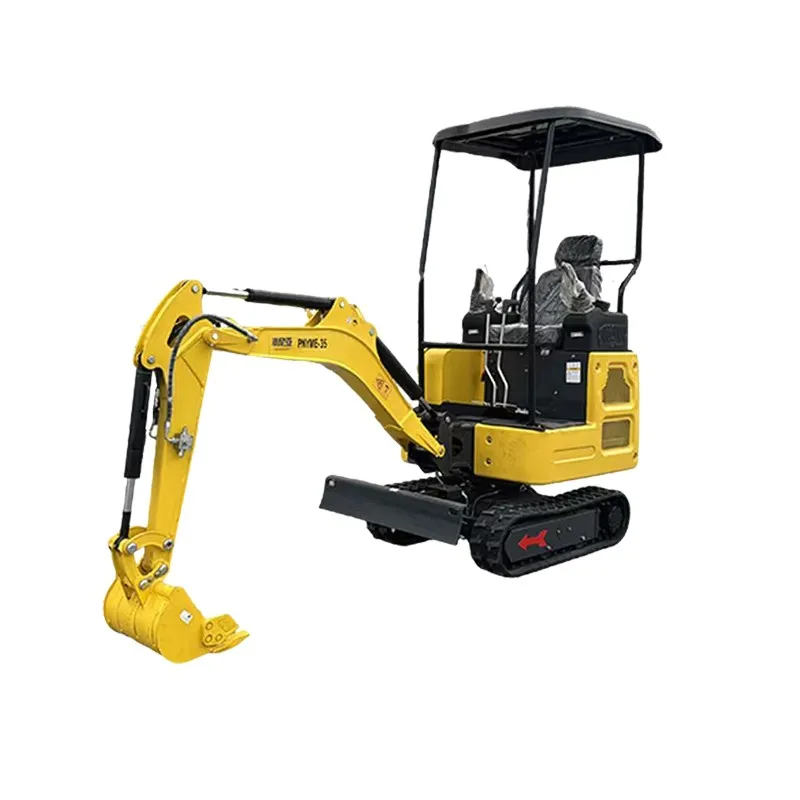
When someone searches for 'small excavator price', they're usually hoping for a simple number. That's the first mistake. The price tag is just the entry ticket; the real cost, and value, is buried in the details most spec sheets don't shout about. I've seen too many guys fixate on the initial quote, only to get burned on delivery, a missing hydraulic kit, or a hydraulic pump that gives up after 800 hours. Let's talk about what moves that number up and down, and why sometimes paying a bit more upfront is the cheapest way to go.
Breaking Down the Sticker Shock
So, you see a 1.8-ton machine listed for $18,500 and a seemingly identical one for $24,000. The gap isn't magic. The cheaper unit likely has a Tier 2 engine—perfectly fine for some regions but a non-starter if you need to meet strict emission codes. The more expensive model probably includes a Tier 4 Final or Stage V engine. That's several thousand dollars right there in the combustion system alone. Then you have the hydraulic system. Are we talking about a branded, reliable pump and valves, or generic components? The difference shows up in smoothness of operation, heat generation, and ultimately, longevity. You're not just buying steel; you're buying the engineering inside it.
Attachments are the next rabbit hole. The small excavator price often assumes a standard bucket. Need a hydraulic thumb, a breaker piping kit, or a tilt rotator? That's where margins get made. I once priced a machine that looked fantastic, only to find the auxiliary hydraulics were an extra $3,200 and the plumbing for a hammer was another grand. Suddenly, the baseline comparison was useless. Always, always get a final, ready-to-work spec quote.
And don't forget shipping and customs. That low price from an overseas supplier can evaporate when you're hit with $2,500 in freight, port fees, and customs clearance. I learned this the hard way early on. A great deal from a manufacturer I hadn't vetted ended up stuck in customs for weeks due to incomplete documentation, costing me a rental and a client's trust. The machine's price was irrelevant at that point.
The Manufacturer's Role: More Than Just a Factory
This brings me to the source. Not all factories are equal. Some are assembly shops, bolting together bought-in components. Others have deeper vertical integration, casting their own components, which gives better quality control. I've visited operations where the welding was inconsistent and the paint job was hiding flaws. Then you find a place like Shandong Pioneer Engineering Machinery Co., Ltd. What stood out wasn't just the facility—though moving to a new, larger production base in Tai'an in 2023 signals serious investment—but their approach. They handle both manufacturing (under Shandong Hexin) and their own overseas trade. This control over the chain, from the factory floor to the export paperwork, matters. It means when there's a snag, there's one point of accountability.
Their two-decade history, starting in Jining back in 2004, means they've weathered cycles. They've seen what fails in the field in places like Australia or Canada and have presumably iterated. A company that's just chasing the lowest possible small excavator price to flip containers won't last 20 years. They build for specific markets, which is crucial. A machine built for German forestry needs different certifications and durability than one for general farm use in another region.
This experience translates directly to the quote. A knowledgeable supplier won't just send you a PDF. They'll ask about your intended use, your local emission standards, and even the typical soil conditions. This consultation prevents you from under-specifying and paying for it later in downtime. It's a sign they're thinking beyond the single sale.
The Hidden Cost of Savings
Let's talk about operational cost, the true measure of price. A cheaper machine might use more fuel due to a less efficient engine and hydraulic system. Over 2,000 hours a year, that's a massive ongoing expense. Then there's serviceability. Can you easily access the engine bay? Are common wear parts like filters and seals standard items you can get locally, or proprietary? I've been on a site where a simple sensor failure shut down a brand-new machine for two weeks because the part had to come from overseas. The savings on purchase were wiped out in a month.
Dealer or supplier support is part of the price. Does the price include any on-site commissioning or basic operator training? What's the warranty process? With a company like the one mentioned, which exports directly to end-users and distributors in the US, Germany, etc., they have a vested interest in the machine working. Their business relies on repeat orders and referrals, not just moving units. That often means better after-sales support, which is an intangible but critical part of the value equation. You're buying into their network.
Resale value is the final hidden factor. A machine from a recognized, stable manufacturer with a track record will hold its value far better than a no-name brand. When it's time to upgrade, that difference can be thousands, effectively reducing your total cost of ownership. The initial small excavator price is just the first chapter of a long story.
Practical Scenarios and Real Numbers
Here's a concrete example from last year. A landscaping contractor needed a 3.5-ton machine for residential jobs. He had two quotes: Machine A at $36,000 and Machine B at $41,500. Machine A had a basic spec, no auxiliary hydraulics pre-plumbed, and a one-year parts-only warranty. Machine B, from a supplier with a direct manufacturing link, included two auxiliary lines, a wider track option for stability, and a 2-year/2,000-hour full warranty with local dealer support. He went with Machine A to save $5,500.
Within eight months, he needed a thumb for a tree-handling job. Retrofitting the hydraulic system cost him nearly $4,000 in parts and labor, plus a week of downtime. Then, a minor hydraulic leak at 1,100 hours wasn't covered under the parts-only warranty, costing another $800. His savings were gone, and he now owned a less capable, less supported machine with a lower resale value. The higher initial small excavator price of Machine B was objectively the cheaper path.
The lesson? Build a total cost spreadsheet. Factor in projected fuel use (ask for pump flow rates and engine specs), typical attachment add-ons, warranty terms, and even estimated resale in 3-5 years based on historical auction data. The number on the price sheet becomes just one of many data points.
Final Thoughts: Navigating the Quote
So, how do you navigate this? First, define your must-haves versus nice-to-haves. Must-haves are emission compliance, minimum horsepower, required hydraulic flows for your attachments, and shipping terms (CIF vs. FOB). Get detailed, line-item quotes. If a supplier hesitates to break down costs for the machine, shipping, and duties, that's a red flag.
Second, vet the supplier. How long have they been exporting to your country? Can they provide contact details for a few customers in a similar climate or industry? A quick call to another owner is worth more than a dozen brochures. For instance, a company with a documented history like Pioneer, supplying to demanding markets, has already been vetted by those customers' standards.
Ultimately, the small excavator price is a negotiation between your wallet today and your productivity for the next five years. The goal isn't to find the cheapest machine. It's to find the machine with the lowest total cost of ownership that reliably does your job. Sometimes that means spending more upfront. Sometimes it means finding a capable, direct manufacturer that cuts out middleman markups without cutting corners on the build. It's a calculation, not just a purchase. And getting it right the first time is the only real savings that counts.
Related Products
Related Products