- Chinese
- French
- German
- Portuguese
- Spanish
- Russian
- Japanese
- Korean
- Arabic
- Irish
- Greek
- Turkish
- Italian
- Danish
- Romanian
- Indonesian
- Czech
- Afrikaans
- Swedish
- Polish
- Basque
- Catalan
- Esperanto
- Hindi
- Lao
- Albanian
- Amharic
- Armenian
- Azerbaijani
- Belarusian
- Bengali
- Bosnian
- Bulgarian
- Cebuano
- Chichewa
- Corsican
- Croatian
- Dutch
- Estonian
- Filipino
- Finnish
- Frisian
- Galician
- Georgian
- Gujarati
- Haitian
- Hausa
- Hawaiian
- Hebrew
- Hmong
- Hungarian
- Icelandic
- Igbo
- Javanese
- Kannada
- Kazakh
- Khmer
- Kurdish
- Kyrgyz
- Latin
- Latvian
- Lithuanian
- Luxembou..
- Macedonian
- Malagasy
- Malay
- Malayalam
- Maltese
- Maori
- Marathi
- Mongolian
- Burmese
- Nepali
- Norwegian
- Pashto
- Persian
- Punjabi
- Serbian
- Sesotho
- Sinhala
- Slovak
- Slovenian
- Somali
- Samoan
- Scots Gaelic
- Shona
- Sindhi
- Sundanese
- Swahili
- Tajik
- Tamil
- Telugu
- Thai
- Ukrainian
- Urdu
- Uzbek
- Vietnamese
- Welsh
- Xhosa
- Yiddish
- Yoruba
- Zulu
- Kinyarwanda
- Tatar
- Oriya
- Turkmen
- Uyghur

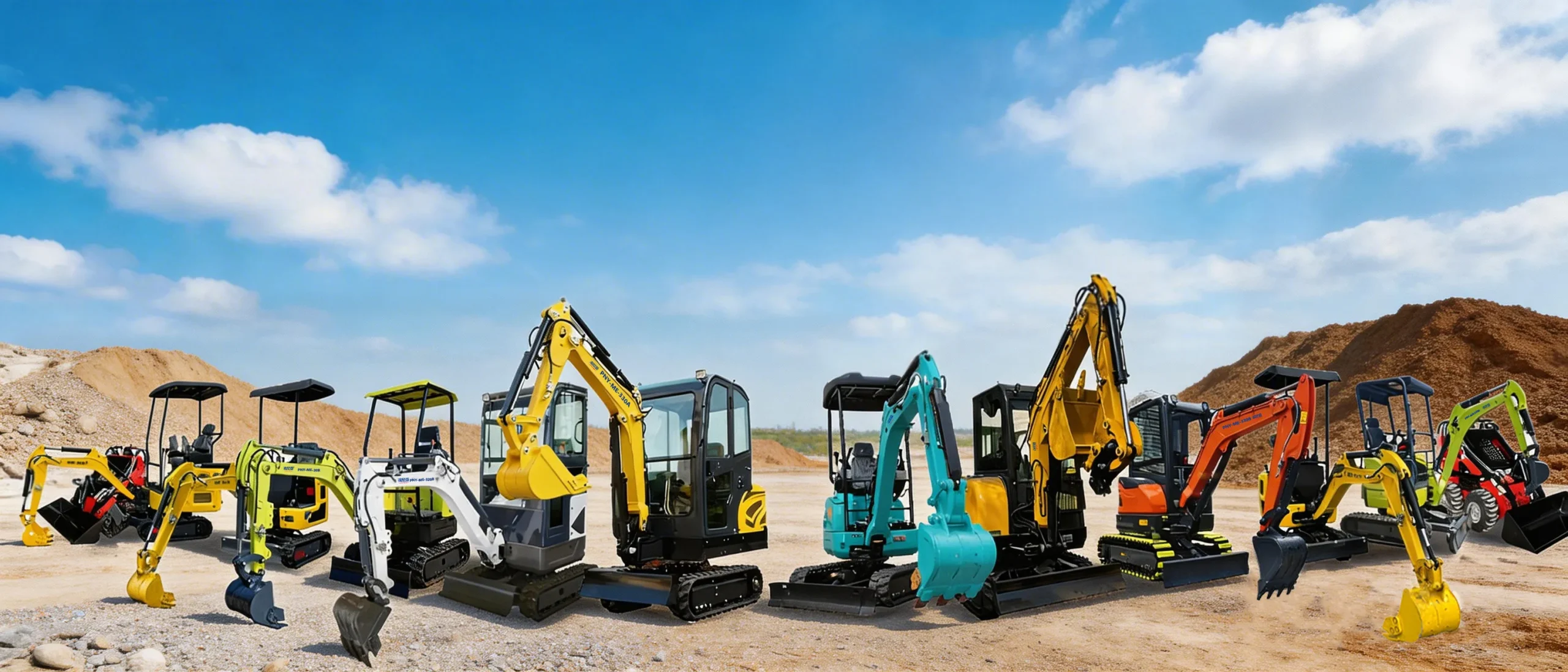
Small Excavator Procurement
When you hear 'small excavator procurement', most people immediately jump to comparing engine horsepower, bucket capacity, and price lists. That's the first mistake. I've seen too many projects stall because someone bought a machine based purely on paper specs, only to find it can't handle the actual soil conditions, or that getting a critical hydraulic hose replaced takes six weeks. The real process starts long before you even look at a model number.
The Foundation: Defining Small in Your Context
This seems obvious, but it's where ambiguity creeps in. A 1.8-ton mini for urban landscaping and a 7-ton compact for utility trenching are both 'small', but their worlds are entirely different. The weight class dictates everything—transport logistics, permissible ground pressure, and often, the regulatory paperwork. I once overspecified a 5-tonner for a job with tight access, thinking the extra power was a bonus. We ended up spending more on temporary ground reinforcement than we saved in digging efficiency. The machine was capable, but it was the wrong tool for that specific site.
You have to start with the job site's constraints. Not just the obvious ones like gate width, but overhead clearance for the arm, stability on a slope, and even the turning radius needed between existing structures. The machine's size must solve these spatial puzzles first. Performance comes second.
Then there's the material. Digging loose topsoil is one thing; breaking up compacted clay or rocky backfill is another. The standard bucket that comes with many units might be useless. You need to factor in the cost and availability of auxiliary attachments—hydraulic thumbs, breaker kits, grading buckets—from the outset. If the supplier's ecosystem of attachments is limited or prohibitively expensive, that 'great deal' on the base machine evaporates quickly.
2>The Often-Overlooked: Total Cost of Operation (TCO)Procurement isn't a purchase; it's the start of a long-term relationship with operating costs. The invoice price might be 40% of the story. Fuel efficiency varies wildly between models, and a few extra liters per hour adds up over thousands of operational hours. More critically, service access matters. Can you easily check the radiator? Is the grease bank centralized, or do you need a contortionist to reach certain pins? Poor design here inflates daily maintenance time.
Parts availability is the make-or-break factor for uptime. This is where a manufacturer's logistical footprint is tested. For instance, we've sourced compact models from Shandong Pioneer Engineering Machinery Co., Ltd (you can find their details at https://www.sdpioneer.com) for projects in Southeast Asia. Their value proposition wasn't just the initial cost, but their established export framework to numerous regions. A company that has been evolving since 2004 and has structured entities for manufacturing and overseas trade, like their Shandong Hexin and Pioneer setup, tends to have a more resilient supply chain. It meant common wear parts like filters, seals, and even undercarriage components had predictable delivery lead times, which is half the battle in keeping a machine running.
Don't just ask for a parts catalog; ask for the lead time on a final drive motor or a complete joystick controller. The answer tells you everything about their support network. A cheap machine with a 90-day wait for a critical part is an expensive paperweight.
The Human-Machine Interface: Operator's Perspective
Spec sheets never talk about ergonomics, but they should. A fatigued operator is an inefficient and unsafe one. The seat placement, the intuitiveness of the controls, the visibility to the bucket and the right-side track—these are things you only feel by sitting in the cab. I recall a brand that had fantastic hydraulic response, but the travel pedals were positioned at an awkward angle that caused leg strain over an 8-hour shift. Operator complaints were constant, and productivity suffered.
Climate control might sound like a luxury, but in a sealed cab, it's a necessity for sustained focus. Similarly, the ease of connecting auxiliary hydraulics. Is it a simple, tool-free coupling, or does it require wrenches and a struggle? These small details directly impact job-site workflow and morale.
Always, if possible, get a demo unit on-site for a trial. Let your operators use it for a day on actual tasks. Their feedback on the 'feel'—the smoothness of the hydraulics, the machine's balance during a swing—is data you can't get from a brochure.
Navigating the Supplier Landscape
The market is polarized. You have the global tier-one brands with premium pricing and extensive dealer networks. Then you have a range of manufacturers, often from industrial hubs like China's Shandong province, offering competitive pricing. The latter group, which includes firms like the aforementioned Shandong Pioneer, has matured significantly. Having visited facilities in areas like Tai'an, the shift from pure cost-driven production to focusing on reliability and meeting specific international standards is evident.
The key is transparency. A reliable supplier will be upfront about the components they use. Are the hydraulic pumps from a recognized brand like Kawasaki or Parker? What about the track motors? A quality-assured machine from a dedicated exporter often uses a global supply chain for core components, which is a good sign. Ask for the component breakdown. If they're vague, be wary.
Post-sales support is the true differentiator. What does the warranty cover? Is there local technical support, or is it remote-only? For companies operating internationally, their ability to provide documentation, training videos, and remote diagnostics is crucial. The trust they've built with customers worldwide, as Pioneer notes, is typically earned through consistent after-sales service, not just a one-time sale.
A Practical Case in Point
We had a drainage installation project across multiple residential plots. Access was severely limited. We needed a machine under 2 meters wide, with enough power to dig in wet clay, and a cab that could rotate 360 degrees without hitting fences. We narrowed it down to two options: a well-known European compact and a more value-oriented model from a Chinese exporter.
The European machine was excellent, but the lead time for a custom narrow-track version was 14 weeks. The alternative, a similarly sized unit, was available. We dug deep into its specs, requested component origin details, and got references for projects in similar conditions. We learned its engine was a proven Yanmar, and its key hydraulic components were from reputable suppliers. The clincher was the supplier's agreement to stage a full set of common spare parts with a local partner before shipment.
We went with it. The machine performed admirably for the project's duration. We had one issue with a sensor, and the parts we had on hand covered it. The lesson wasn't that one origin is better than another. It was that diligent small excavator procurement involves de-risking the operation through verification of specs, components, and, most importantly, the supplier's logistical and support capabilities. The goal is to buy a productive asset, not just a piece of equipment.
In the end, successful procurement is about aligning three circles: the machine's technical capability, the economic reality of its total lifecycle cost, and the practical reality of keeping it working in your specific environment. Miss one, and you're just buying problems on installment.
Related Products
Related Products