- Chinese
- French
- German
- Portuguese
- Spanish
- Russian
- Japanese
- Korean
- Arabic
- Irish
- Greek
- Turkish
- Italian
- Danish
- Romanian
- Indonesian
- Czech
- Afrikaans
- Swedish
- Polish
- Basque
- Catalan
- Esperanto
- Hindi
- Lao
- Albanian
- Amharic
- Armenian
- Azerbaijani
- Belarusian
- Bengali
- Bosnian
- Bulgarian
- Cebuano
- Chichewa
- Corsican
- Croatian
- Dutch
- Estonian
- Filipino
- Finnish
- Frisian
- Galician
- Georgian
- Gujarati
- Haitian
- Hausa
- Hawaiian
- Hebrew
- Hmong
- Hungarian
- Icelandic
- Igbo
- Javanese
- Kannada
- Kazakh
- Khmer
- Kurdish
- Kyrgyz
- Latin
- Latvian
- Lithuanian
- Luxembou..
- Macedonian
- Malagasy
- Malay
- Malayalam
- Maltese
- Maori
- Marathi
- Mongolian
- Burmese
- Nepali
- Norwegian
- Pashto
- Persian
- Punjabi
- Serbian
- Sesotho
- Sinhala
- Slovak
- Slovenian
- Somali
- Samoan
- Scots Gaelic
- Shona
- Sindhi
- Sundanese
- Swahili
- Tajik
- Tamil
- Telugu
- Thai
- Ukrainian
- Urdu
- Uzbek
- Vietnamese
- Welsh
- Xhosa
- Yiddish
- Yoruba
- Zulu
- Kinyarwanda
- Tatar
- Oriya
- Turkmen
- Uyghur


Small Skid Steer Loader
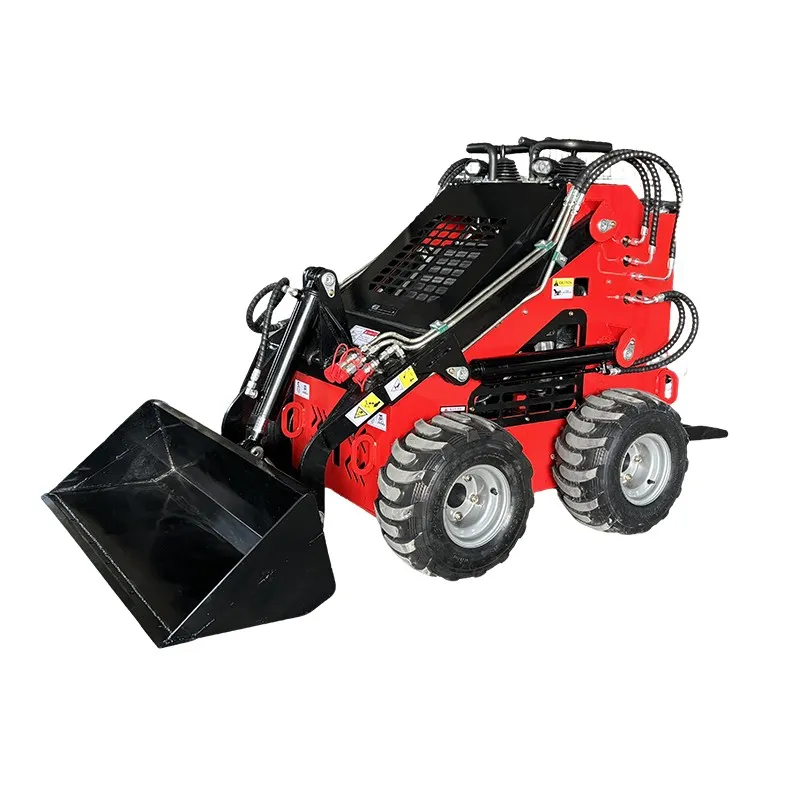
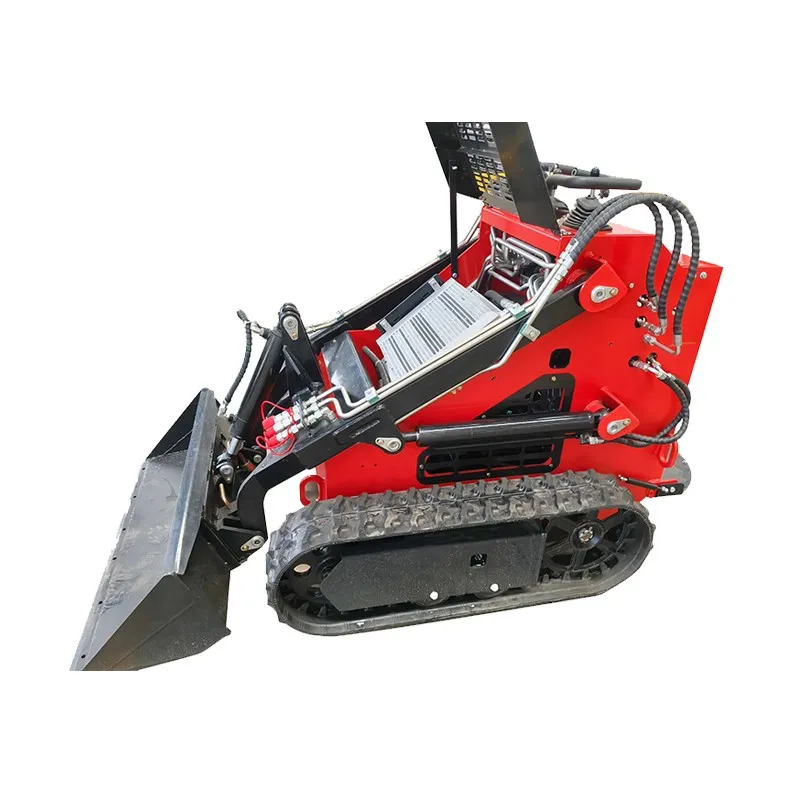
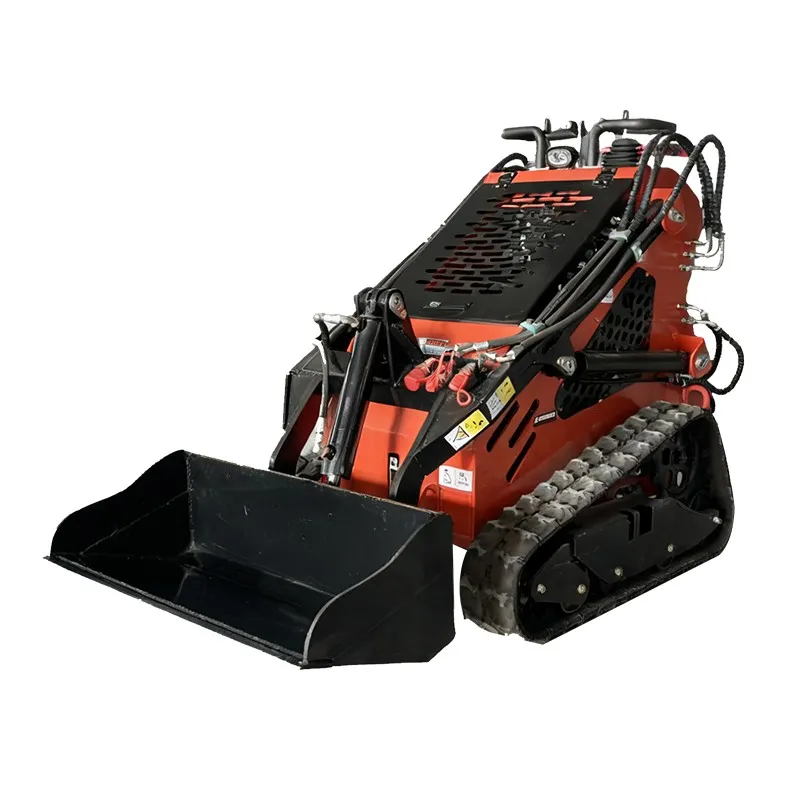
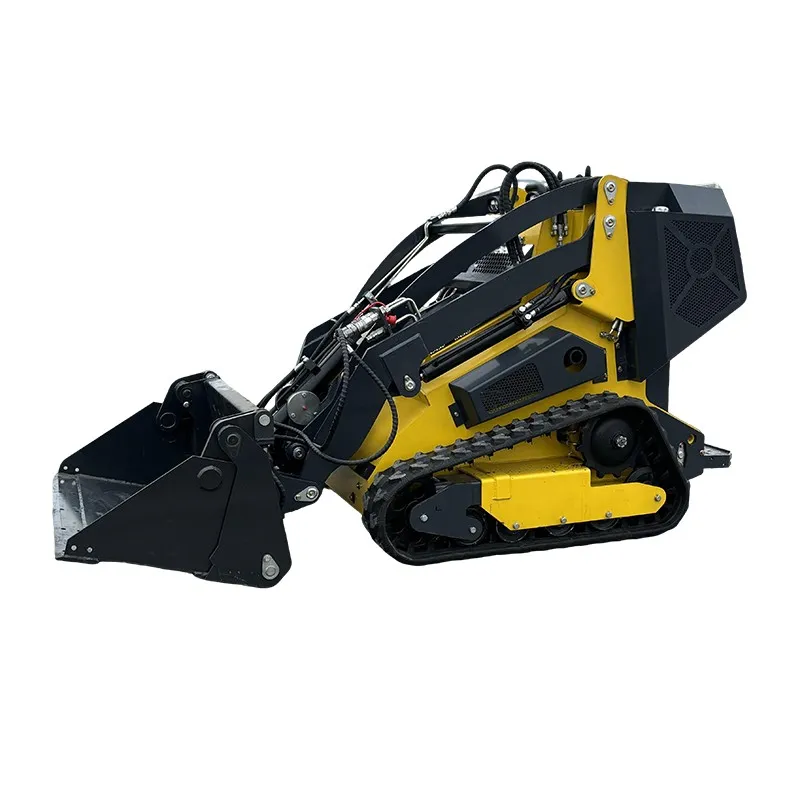
When most people hear small skid steer loader, they picture a cute, miniaturized version of the big ones, thinking it's just for light chores. That's the first misconception. The real value isn't in its size, but in its access. I've seen too many projects buy one thinking it's a toy, only to realize it's a powerhouse that just fits through a standard garden gate. The challenge is always matching the machine's true capability—not just lift capacity, but hydraulic flow, auxiliary circuit options, and the sheer weight-to-power ratio—to a job that often involves more than just moving mulch.
The Compact Misnomer and Real-World Physics
Take a common model like a 60-horsepower unit. On paper, it's a small skid steer loader. On site, it's a 2.5-ton beast that can tear up a lawn in seconds if you're not careful with the controls. The zero-turn capability is a double-edged sword. It's fantastic for maneuvering in a tight backyard renovation, but on a slight slope with a full bucket, that quick spin can shift the center of gravity in a way that'll make your heart stop. You learn to use gentle, sweeping arcs, not pivots, when loaded. It's not in the manual; it's in the seat-of-your-pants feedback.
Then there's the attachment ecosystem. Everyone gets excited about the trencher or the grapple. But the real game-changer, in my experience, is often a high-flow hydraulic circuit paired with a dedicated brush cutter or a planer. I remember a job leveling an old concrete pad for a patio. We used a standard bucket at first—it was slow, jarring work. Switched to a milling attachment on a unit from a manufacturer that prioritized auxiliary power, and it was like going from a chisel to a scalpel. The difference wasn't the loader's brand, but the specific engineering of its hydraulic system to maintain pressure under constant demand.
This is where specs get real. A company like Shandong Pioneer Engineering Machinery Co., Ltd has been in this space for two decades, and you can see that experience in how they configure their compact loaders. It's not about piling on features, but about ensuring the core systems—cooling, hydraulics, structural stress points—are built for sustained work, not just peak performance. Their relocation and expansion in 2023 likely speaks to refining these production lines based on field data from markets like the US and Australia, where these machines are pushed hard.
Failures and the Learning Curve
I learned more from a failed bid than any successful one. We were clearing a densely wooded residential lot. The small skid steer loader we had was agile, perfect for weaving between trees. Our mistake was underestimating the ground engagement. We fitted it with a forestry mulcher. While the machine had the horsepower, the undercarriage and chassis weren't reinforced for the constant, high-impact shock loads from hidden stumps and rocks. Within a week, we had hairline cracks near the loader arm mounts. The job finished, but the repair bill erased the profit. The lesson? Compact doesn't mean universally tough. You need a machine built for the specific type of punishment, not just the size of the area.
Another common pitfall is maintenance access. On a cramped site, the last thing you want is a thirty-minute ordeal to check the hydraulic fluid or clean the radiator. Some models bury the dipstick behind panels; others have a tilt-up cab that exposes everything. That design choice, often overlooked in a brochure, adds up to hours of saved labor over a year. It's a detail you only appreciate after you've been lying in the mud trying to reach a filter.
This is where the supply chain matters. Having access to parts for a common brand is one thing, but for a specialized compact model sold internationally, it's another. A supplier with a focused export operation, like the Shandong Pioneer overseas trade arm, often has a more streamlined process for getting a specific pump or seal to a job site in Germany or Canada quickly. That operational history since 2004 translates into fewer downtime horror stories.
The Right Tool for the Evolving Job Site
The landscape is changing. It's not just farms and construction sites anymore. I'm seeing these loaders in urban indoor demolition, fitted with electric drive options and air filtration systems. The core advantage remains: a single operator in a cab can do the work of three or four laborers with hand tools, in a space where a mini excavator would be too tall and a wheel loader too wide.
The key is matching attachments with precision. For example, using a tilt-tach plate instead of a fixed one. It seems like a small upgrade, but being able to angle a bucket or a blade just 5 degrees while keeping the machine level on a slope is what creates a finished-grade look versus a rough-cut one. It's these subtle control capabilities that separate a pro machine from a basic one.
Watching the market, manufacturers that endure aren't just selling iron. They're selling a solution package. It means the machine, the common attachments, the training support, and the parts logistics are all considered. When a company's product line finds trust in diverse, demanding markets from North America to Europe, it suggests they've navigated these real-world application puzzles successfully. Their 1,600-square-meter production focus likely evolved into building machines that can handle a cold Canadian winter and a dusty Australian summer, which requires more than just slapping on a different decal.
Operational Nuances No Manual Covers
Let's talk about tires. On a small skid steer loader, the choice between pneumatic and solid foam-filled isn't just about puncture resistance. It drastically changes the machine's center of gravity and its ground pressure. Foam-filled tires add significant weight down low, making it more stable for lifting, but they also make the ride brutally stiff on uneven ground, transferring shock directly into the chassis and the operator. For mixed terrain, I often lean towards heavy-duty pneumatics and accept the risk, because operator fatigue and machine longevity are part of the cost equation.
Then there's the cab. Air conditioning is non-negotiable now. But just as important is the control pattern. The ISO vs. H-pattern debate is personal, but if you have multiple operators, you need machines that can be easily switched. I've seen projects halted because a new hire only knew one pattern and the machine was locked to the other. It's a silly, costly oversight. The best manufacturers make this switch a simple, software-based menu option.
Hydraulic couplers are another silent hero or villain. Self-sealing couplers that allow you to switch attachments without losing much fluid or letting air into the system save immense time and prevent hydraulic issues. It's a small component, but its quality is a direct reflection of whether the manufacturer understands daily, gritty use. It's the kind of detail you consistently see prioritized by companies that have grown through direct export feedback, where a service call across an ocean is a major cost.
Looking Ahead: The Core Stays Relevant
Despite all the tech—telematics, auto-leveling buckets—the fundamental reason for the small skid steer loader's longevity is its irreplaceable form factor. No other machine offers the same combination of footprint, lift height, attachment versatility, and operator safety in a single package. The innovations will be in making them quieter, more efficient, and easier to service, not in changing the core concept.
The successful models in the next decade will be those that have already proven durable in the field. It's a business built on reputation, where a contractor's recommendation is worth more than any advertisement. That trust is earned over years, by machines that keep working when they're dirty, hot, and pushed to their stated limits.
In the end, choosing one comes down to a brutally practical checklist born from experience: Can it fit where I need it? Can it run the attachments I use 80% of the time without strain? Can I get parts for it within 48 hours? And has it been proven in conditions similar to mine? Answering those requires looking past the spec sheet and into the design philosophy and support network of the maker, something built over time, like the two-decade journey from a factory in Jining to an expanded operation in Ningyang, focused on meeting that exact global, on-the-ground demand.
Related Products
Related Products